海洋新质生产力

Search documents
山东:产业集聚支撑“蓝色经济”动能澎湃
Xin Lang Cai Jing· 2025-09-15 01:17
Core Insights - The marine characteristic industry agglomeration area is a crucial engine for high-quality development of the marine economy and a key carrier for cultivating and developing new productive forces in the marine sector [1] - Shandong is actively promoting the construction of modern marine characteristic industry agglomeration areas to provide solid support for building a high ground for modern marine economic development [1] Group 1: Industry Development - Dongying's new energy equipment company has secured orders for wind turbine main shafts until 2026, highlighting its leading position in the domestic market [1] - The local efficient model of "port manufacturing and convenient delivery" is attributed to the precise layout of the offshore wind power equipment industrial park [1] - The establishment of two 10,000-ton offshore wind power dedicated berths, with a total investment of 600 million yuan, enhances the transportation capacity for large wind power equipment [2] Group 2: Technological Innovation - The marine biological company in Qingdao is producing seaweed polysaccharide capsules, showcasing the innovative application of marine plants in the pharmaceutical industry [2] - The collaboration with the Chinese Academy of Sciences has led to breakthroughs in the formulation and drying technology of seaweed polysaccharide capsules, enabling a transition from industrial to pharmaceutical-grade products [2] Group 3: Economic Impact - The modern marine biological industry agglomeration area in Qingdao has gathered over 80 marine biological pharmaceutical enterprises, forming a diverse ecosystem for industry development [3] - Shandong has cultivated 13 agglomeration areas with a total output value exceeding 140 billion yuan, achieving a marine industry agglomeration degree of 78% [3] - By 2027, Shandong aims to have around 20 marine characteristic industry agglomeration areas, with 10 of them expected to exceed 10 billion yuan in output value, driving the "blue economy" forward [3]

洋口港成功迎靠第800艘LNG船舶 清洁能源枢纽能级持续提升
Yang Zi Wan Bao Wang· 2025-09-10 13:25
Core Insights - The successful docking of the Bahamian LNG carrier "Diamond" at the Jiangsu LNG receiving station marks the 800th LNG vessel to dock at the Yangkou Port since its operation began in 2011, reinforcing its status as a key clean energy hub in the Yangtze River Delta [1][3] Group 1: LNG Transportation and Infrastructure - The "Diamond" vessel is 297.16 meters long and 46.4 meters wide, carrying 72,500 tons of liquefied natural gas (LNG), which can meet the daily gas consumption of approximately 190 million households [3] - The Jiangsu LNG receiving station is the largest and most capable clean energy hub in the Yangtze River Delta, with six LNG storage tanks totaling a capacity of 1.08 million cubic meters, having received over 67 million tons of LNG and supplied over 90 billion cubic meters of natural gas since its inception [3] Group 2: Maritime Safety and Support - LNG requires cooling to about -163°C for transportation, making it highly hazardous and exclusive, thus necessitating focused monitoring and support from maritime authorities [5] - The Nantong Maritime Bureau has implemented tailored support services for LNG vessels, including green channels and real-time monitoring through information technology, significantly improving the efficiency of vessel entry and exit at the port [5] Group 3: Economic Development and Future Goals - The Yangkou Port Economic Development Zone is actively developing the LNG clean energy industry, attracting major energy projects such as the Jiangsu LNG receiving station and others, aiming to establish a leading LNG receiving, storage, supply, and sales base both nationally and globally [7] - The Nantong Maritime Bureau is committed to balancing development and safety, providing robust maritime support for clean energy transportation, and contributing to the achievement of carbon neutrality goals and the development of new marine productivity [7]


广东撬动万亿级蓝色经济新格局
Zhong Guo Zi Ran Zi Yuan Bao· 2025-08-26 02:29
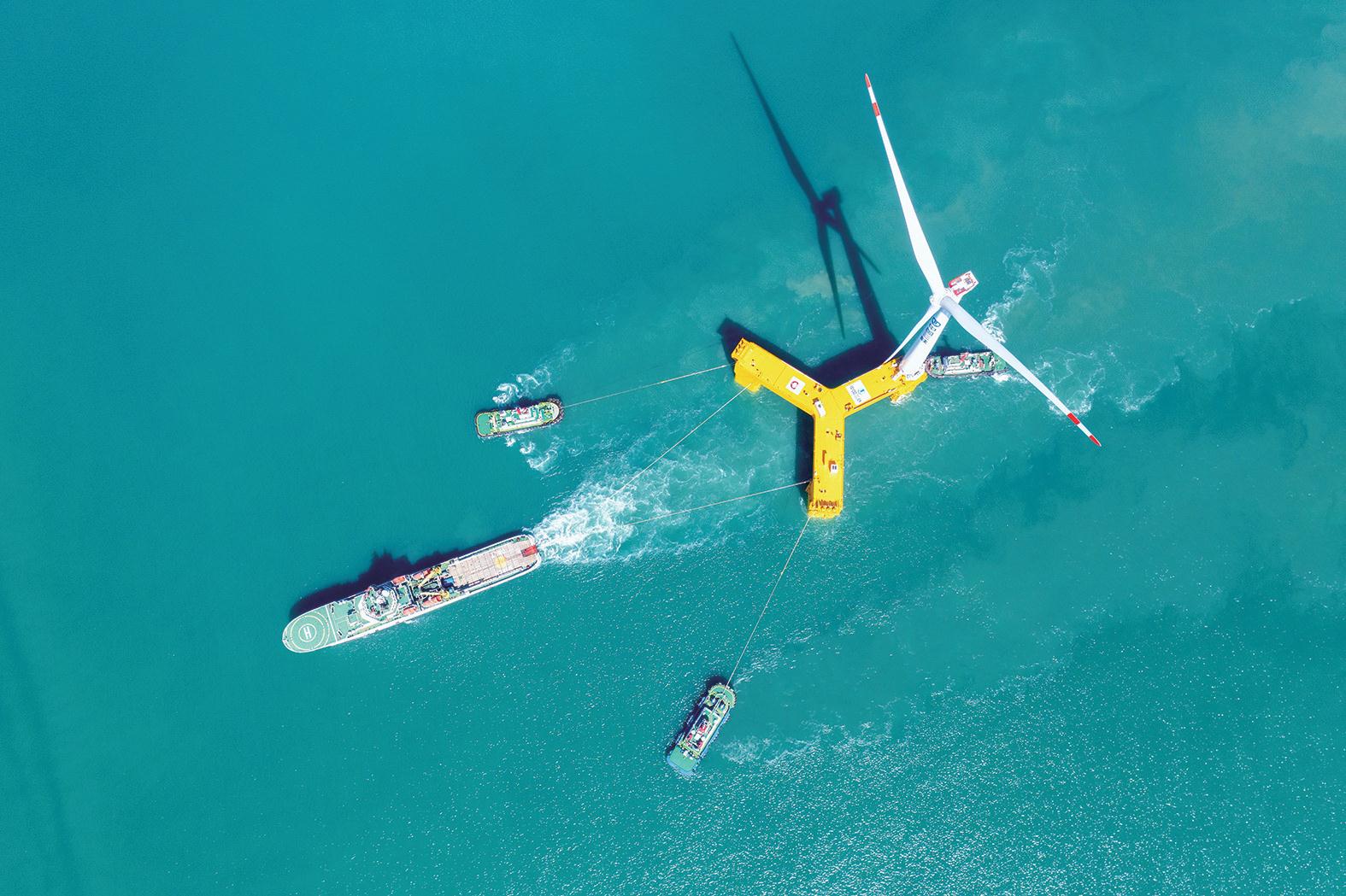
Group 1 - Guangdong's marine economy has surpassed 2 trillion yuan, becoming the first province in China to achieve this milestone, maintaining its leading position for 30 consecutive years [2] - The province has actively cultivated six major marine industries: marine electronic information, offshore wind power, marine engineering equipment, marine biology, natural gas hydrate, and marine public services, aiming to build a national marine economic development hub [2][4] - Since 2018, Guangdong has allocated nearly 2 billion yuan in special funds to support innovation in these six marine industries, resulting in breakthroughs in 281 key technologies and driving an industrial output value of 25.2 billion yuan [2] Group 2 - Guangdong has made significant advancements in offshore wind power technology, including the world's first typhoon-resistant floating wind turbine and the first deep-sea floating wind power equipment, marking a leap from "none" to "some" in this sector [4][5] - The province has also developed a series of innovative marine energy solutions, such as the world's first remote-controlled research vessel and a 2000-ton self-elevating wind power installation platform, enhancing its deep-sea energy development capabilities [5] Group 3 - The marine pharmaceuticals and biological products industry is a key component of Guangdong's strategic emerging industries, with significant investments made to support research and development in this area [7] - Guangdong has invested 236 million yuan in 83 marine biomedical projects from 2018 to 2024, fostering collaboration among universities, research institutes, and enterprises to achieve multiple technological breakthroughs [7] Group 4 - The province has made strides in the conservation of rare marine species, developing a comprehensive protection technology for coral and giant clams, significantly improving the survival rates of these species [8] - Guangdong has also achieved breakthroughs in the exploration and commercialization of natural gas hydrates, with significant technological advancements and world records in gas production [8] Group 5 - Innovative technologies such as underwater Wi-Fi networks and advanced communication chips are being developed to enhance operational efficiency in marine resource exploration [10][11] - The establishment of marine public service projects, including a national marine comprehensive test site and a marine big data platform, is expected to support the high-quality development of the marine economy in Guangdong [11]
新一轮“海上风口”,江苏要抓住什么?
Sou Hu Cai Jing· 2025-08-21 23:16
Core Insights - The total scale of China's marine economy is projected to reach 10.54 trillion yuan in 2024, with a marine GDP of 5.1 trillion yuan in the first half of this year, reflecting a year-on-year growth of 5.8% [1] - The Central Economic Committee emphasizes the need for high-quality development of the marine economy as part of China's modernization strategy [1] Group 1: Jiangsu's Marine Economy Development - Jiangsu's marine GDP is expected to exceed 1 trillion yuan for the first time in 2024, marking a significant milestone for the province [2][3] - The marine industry contributes 47.8% to Jiangsu's marine economic growth, with the shipbuilding industry being a prominent sector [3] - Jiangsu has over 70 listed companies in shipbuilding and marine engineering, with a total market value of approximately 743.5 billion yuan and cumulative fundraising of 180.9 billion yuan [3] Group 2: Shipbuilding Industry Performance - Jiangsu's shipbuilding industry achieved an industry added value of 38.08 billion yuan, accounting for 27.8% of the national total, maintaining a "16 consecutive championships" record [3] - Yangtze River Shipbuilding Group reported a record net profit of 4.2 billion yuan in the first half of 2024, with a gross profit margin of 35% [4] - Jiangsu is home to the largest offshore wind power equipment manufacturing base, with Yancheng alone accounting for over 40% of the national offshore wind power capacity [4] Group 3: Challenges and Opportunities - Jiangsu's marine economy is characterized by a relatively low overall scale and slower growth compared to other coastal provinces, with marine GDP accounting for only 7.3% of the provincial GDP [6] - The province faces limitations such as a lack of deep-water ports and competitive marine cities, which hampers its marine economic development [7] - The "coastal axis" development strategy is seen as crucial for unlocking Jiangsu's marine economic potential, with plans to enhance cooperation among coastal cities [9][10] Group 4: Future Directions - The development of the coastal axis is essential for Jiangsu to transition from a "marine big province" to a "marine strong province," emphasizing the need for high-quality marine economic growth [8] - Jiangsu aims to integrate coastal development with national strategies, focusing on coordinated growth among cities along the coastal axis [10] - The province's robust private economy and the rise of specialized small and medium enterprises in marine sectors are expected to play a significant role in fostering new marine productivity [10]
2023年以来福建法院受理各类海事海商案件7045件
Xin Hua Wang· 2025-08-21 09:20
Core Viewpoint - The Fujian Provincial High People's Court has actively engaged in maritime adjudication, handling a significant number of maritime cases to protect China's maritime rights and judicial sovereignty, with a focus on innovative legal mechanisms and ecological protection [1][2]. Group 1: Maritime Adjudication Statistics - In 2023, Fujian's maritime courts received 7,045 maritime cases and concluded 6,184, involving a total amount of 11.953 billion yuan, with cases spanning over 40 countries and regions [1]. - The court has set a precedent in maritime judicial practices by adjudicating cases related to territorial integrity and maritime rights, such as the "Minxia Fishing 01971" vessel collision case in the Diaoyu Islands [1]. Group 2: Innovative Legal Mechanisms - The Xiamen Maritime Court pioneered the "liner detention notice" model, facilitating a win-win mechanism for both parties involved in shipping disputes, thereby enhancing the efficiency of the shipping economy [2]. - The court effectively handled an administrative enforcement case related to a 3.69 billion yuan offshore wind power project, guiding administrative agencies to act in accordance with the law [2]. Group 3: Ecological Protection Initiatives - Fujian courts are committed to safeguarding marine ecological security by innovating mechanisms and platforms to create a "protection barrier" for marine ecology [2]. - The court concluded the province's first civil public interest lawsuit for marine natural resource and ecological environment damage, adopting a "marine carbon sink + alternative restoration" approach, which has been recognized as a typical case in national maritime adjudication [2]. Group 4: Future Directions - The Fujian courts plan to support the construction of a maritime power by implementing marine ecological restoration systems and enhancing judicial protection for emerging marine industries [2]. - There is an intention to participate in global maritime governance and deepen the resolution of foreign-related maritime disputes, aiming to cultivate more internationally influential cases and enhance China's voice in international maritime rule-making [2].
中国海洋经济十万亿时代 广东2万亿领跑
2 1 Shi Ji Jing Ji Bao Dao· 2025-08-20 14:14
Core Insights - The National Development and Reform Commission of China is working on the "14th Five-Year" marine economy development plan, aiming to break through key core technologies, marking a new chapter in building a marine power [1] - In 2024, China's marine production value is expected to exceed 10 trillion yuan, with a growth rate surpassing GDP by 0.9 percentage points, and the country will account for about one-third of global maritime transport volume [1] - Guangdong province is leading the marine economy with a production value exceeding 2 trillion yuan, followed by Shandong, Fujian, Zhejiang, Shanghai, and Jiangsu, which are also significant contributors to the marine economy [7] Marine Economy Overview - In 2024, the marine production value of China is projected to reach 10.54 trillion yuan, with Guangdong contributing 2 trillion yuan, making it the only province to surpass this threshold [7] - The top three marine economic provinces account for half of the national total, showcasing their significant role in the marine economy [7] Guangdong's Marine Economic Development - Guangdong has established a Marine Strong Province Committee, aiming for innovation in mechanisms and systems to enhance marine economic growth [1] - The marine production value in Guangdong has shown a steady increase, with a notable contribution from various sectors such as marine tourism, transportation, and engineering [9][11] - The province has over 80,000 marine-related enterprises, with a growing number of high-tech companies contributing to the development of new marine industries [11] Sector Performance - In 2024, the marine tourism industry in Guangdong is expected to grow by 10%, while marine power generation is projected to grow by 26.7% [9] - The marine engineering equipment manufacturing sector is also experiencing growth, with a 6.8% increase in value added [9] Technological Advancements - Guangdong is advancing in deep-sea exploration technologies, with the launch of the "Dream" deep-sea drilling vessel and the construction of the world's first deep-sea ecological system research facility [13][15] - The province is positioning itself as a key center for marine scientific innovation, focusing on deep-sea mining, natural gas hydrate extraction, and marine hydrogen production [15]

中国海洋经济十万亿时代,广东2万亿领跑
2 1 Shi Ji Jing Ji Bao Dao· 2025-08-20 14:13
Core Insights - The National Development and Reform Commission of China is working on the "14th Five-Year" marine economic development plan, aiming to break through key core technologies in the marine sector, marking a new chapter in building a marine power [3] - In 2024, China's marine GDP is expected to exceed 10 trillion yuan, growing at a rate 0.9 percentage points higher than the overall GDP, with international shipping accounting for about one-third of the global total [3][7] - Guangdong province is projected to be the first in the country to surpass 2 trillion yuan in marine GDP, followed by Shandong, Fujian, Zhejiang, Shanghai, and Jiangsu, which are also significant marine economies [7][8] Marine Economic Development - Guangdong has established a Marine Strong Province Committee, aiming for innovation in mechanisms and systems to enhance marine economic growth [4] - The marine economy in Guangdong has maintained its position as the largest in the country for 30 consecutive years, with a marine GDP share of 14.1% in 2024 [6][8] - The marine economy's scale in the top three provinces accounts for half of the national total, showcasing distinct development characteristics and advantages [8] Key Statistics - In 2024, the marine GDP of China is projected to reach 10.54 trillion yuan, with Guangdong contributing significantly [5][7] - Guangdong's marine industry added value is expected to be 739.51 billion yuan in 2024, with a nominal growth rate of 7.4% [10] - The marine tourism sector is projected to see a decline of 110.01% in 2024, while other sectors like marine engineering and marine power are expected to grow [10][11] Emerging Industries - Guangdong has over 80,000 marine-related enterprises, with a stable growth of high-tech marine enterprises, contributing to the province's new productive forces in the marine economy [13] - The offshore wind power capacity in Guangdong is expected to exceed 12 million kilowatts in 2024, leading to double-digit growth in the marine power sector [14] - Significant advancements in deep-sea technology include the launch of the "Dream" deep-sea drilling vessel and the construction of the world's first deep-sea ecological system research facility [15][17]

中国海洋经济十万亿时代,广东领跑背后的2万亿“深蓝野望”
2 1 Shi Ji Jing Ji Bao Dao· 2025-08-20 11:45
Core Viewpoint - The National Development and Reform Commission of China is working on the "14th Five-Year" marine economic development plan, aiming to enhance key core technologies and promote the construction of a marine power nation. In 2024, China's marine production value is expected to exceed 10 trillion yuan, with a growth rate surpassing GDP by 0.9 percentage points, and the country continues to lead in marine product output globally [4][8]. Group 1: Marine Economic Growth - In 2024, China's marine production value (GOP) is projected to reach 10.54 trillion yuan, with Guangdong being the first province to exceed 2 trillion yuan in marine production value [6][8]. - The top three marine economic provinces—Guangdong, Shandong, and Fujian—account for half of the national total, showcasing distinct development characteristics and advantages [9]. - Guangdong's marine production value constitutes 20% of the national total, supported by its extensive marine resources and strategic coastal cities like Guangzhou and Shenzhen [9]. Group 2: Industry Performance - In 2024, the marine industry in Guangdong is expected to achieve an added value of 739.51 billion yuan, reflecting a nominal growth of 7.4% [11]. - The marine tourism sector is projected to experience a significant decline, with a decrease of 110.01% [11]. - The marine engineering equipment manufacturing industry is anticipated to grow by 6.8%, while the marine power sector is expected to see a two-digit growth rate due to the rapid expansion of offshore wind power, which will exceed 12 million kilowatts in installed capacity [15]. Group 3: Technological Advancements - Guangdong is advancing in deep-sea technology, with the launch of the "Dream" deep-sea drilling vessel, capable of operating under severe conditions and supporting various scientific explorations [16][18]. - The province is also developing the world's first deep-sea ecological system research facility, which will enable long-term underwater experiments [18]. - Guangdong's marine enterprises are increasingly focusing on emerging industries, with a notable rise in high-tech marine companies, contributing to the province's goal of becoming a marine innovation center [14][15].

我国首条海洋油气装备智能化涂装产线投用
Ke Ji Ri Bao· 2025-08-20 09:17
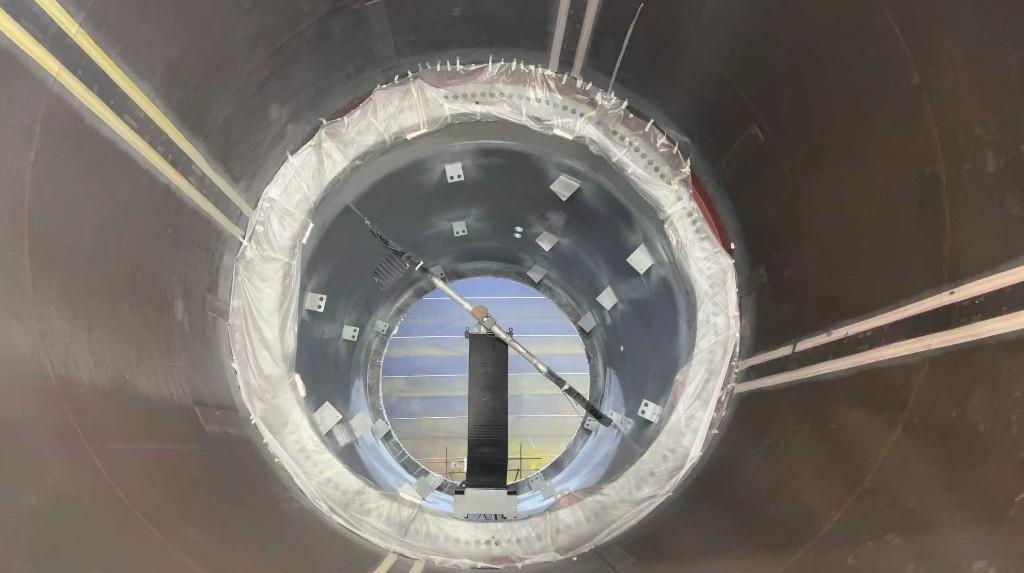
Core Viewpoint - The launch of China's first intelligent coating production line for offshore oil and gas equipment at CNOOC Engineering's Zhuhai manufacturing base marks a significant step towards the intelligent transformation of offshore oil and gas equipment manufacturing and the acceleration of new productive forces in the marine sector [1][3]. Group 1: Intelligent Coating Production Line - The intelligent coating production line is designed specifically for ultra-large tower structures and consists of four main components: roller frame, external wall spraying robot, internal wall spraying robot, and AGV intelligent track-type transfer vehicle [3]. - This production line features fully automated control, point-to-point precise spraying, autonomous programming, and obstacle avoidance capabilities, which enhance the efficiency and effectiveness of the coating process [3][4]. Group 2: Efficiency and Innovation - The new coating system can improve work efficiency by 4 to 8 times compared to traditional manual methods, addressing issues such as unstable paint film thickness and high energy consumption [4]. - The innovative application of over ten new technologies, including the development of the AGV intelligent track-type transfer vehicle, allows for complete automatic spraying of the internal walls of the tower in just 5 minutes, significantly reducing the time and potential for uneven coating [4]. Group 3: Future Developments - The company plans to explore the integration of AI autonomous learning algorithms to dynamically optimize spraying paths and paint film thickness, aiming to enhance precision and material utilization for customized production of offshore oil and gas equipment [6].

海洋经济“浙江模式”:不拼规模拼什么?|活力中国调研行
2 1 Shi Ji Jing Ji Bao Dao· 2025-08-20 04:07
Core Viewpoint - Zhejiang is restructuring its marine economy with a focus on high-quality development, leveraging its extensive coastline and marine resources to enhance its industrial capabilities and competitiveness in the marine sector [1][2][3]. Group 1: Marine Economic Development - The central government has emphasized the need for high-quality development of the marine economy, with plans to establish national marine economic development demonstration zones and policies to support marine strong provinces [1][2]. - Zhejiang's marine economy is currently ranked fourth in China, with a projected marine GDP of over 1.2 trillion yuan in 2024, trailing behind Guangdong, Shandong, and Fujian [3][4]. - The province aims to build a world-class marine industrial cluster, including two trillion-yuan and three hundred-billion-yuan clusters, but lacks a clear development plan for its marine industry [2][3]. Group 2: Industrial Structure and Challenges - Despite rich marine resources, Zhejiang's marine economy is primarily based on traditional industries, with limited high-value-added sectors such as marine biomedicine and deep processing of marine products [4][5]. - The province's marine production value is growing, but it still lags behind traditional marine economic powerhouses like Guangdong and Shandong, indicating a need for structural improvements [3][4]. - Experts suggest that Zhejiang should focus on building a modern marine industrial system that integrates advanced manufacturing and emerging industries, while also ensuring the stability of its existing industrial clusters [5][6]. Group 3: Emerging Industries and Innovations - Zhejiang is actively transforming its traditional marine industries and developing new sectors such as marine clean energy, marine new materials, and marine biomedicine [6][10]. - The province has established a marine big data application center to enhance the integration of digital technology into the marine economy, aiming to improve efficiency and innovation [12][13]. - The development of tidal energy and offshore wind power is highlighted as a key area for future growth, with significant investments planned in these sectors [10][11]. Group 4: Port and Shipping Industry - The Ningbo-Zhoushan International Shipping Center ranks seventh globally, with a cargo throughput of 1.377 billion tons in 2024, maintaining its position as the world's busiest port [7][9]. - However, Zhejiang faces challenges in its shipping services, needing to differentiate itself from Shanghai's established international shipping center by focusing on local service strengths [9][10]. - The provincial government is investing in port and shipping infrastructure, with significant funding allocated to enhance service capabilities and support high-end shipping services [9][10].