脑机接口技术

Search documents
首次实现公开赛事“意念落子” 脑电大模型助力人机交互新突破
Xin Hua Cai Jing· 2025-12-29 04:57
新华财经上海12月29日电(王骋)12月29日,在海南举行的"天天象棋杯"中国象棋协会年度总决赛现 场,一场特殊的对弈吸引了全场目光。重庆脑瘫棋手韩彬彬佩戴着轻巧的头部设备,凝视棋盘,仅 凭"意念"驱动,与他的偶像、象棋特级大师孟辰展开对局,成功运用非侵入式脑机接口技术竞技对战。 "鼻尖"到"意念",一位棋手的圆梦时刻 在赛事现场,仅靠一套普通的非侵入式脑机接口,大脑视觉皮层产生的微弱电信号经由算法精准实时解 码,最终实现棋子操控。 赛事主办方"天天象棋"制作人黄世兴表示,"从帮助色弱群体的'色彩增强模式',到服务全盲人士的'无 障碍版',再到今天助力行动不便者'意念下棋',赛事将继续探索科技普惠实践。" 从赛场到大众日常,脑机接口普惠未来 赛场之外,该脑电大模型目前已在多个领域展现出潜力:在医疗辅助场景,该模型在28项非侵入脑电疾 病筛查实验中表现优于传统算法;在交互娱乐领域,已实现97%的操作精度、低于60毫秒刷新率及超过 10个自由度的脑控体验,可流畅操控3A游戏;在辅助生活方面,远程精细脑控机械狗等技术为行动不 便者提供了新的可能性;在智能家居领域,非侵入式脑机也能成为房间的万能钥匙…… 韩彬彬是一位 ...
中国创新药 2025 “破圈”全球
Guo Ji Jin Rong Bao· 2025-12-29 03:13
Core Insights - 2025 marks a pivotal year for China's innovative pharmaceuticals, with a significant increase in international collaborations and licensing agreements, indicating a shift from a pharmaceutical giant to a stronghold in the industry [1][3] - The total amount of outbound licensing agreements exceeded $100 billion, with upfront payments reaching $8.1 billion, showcasing a transition to multi-layered cooperation models [1][3] - China's biopharmaceutical market remains the second largest globally, with innovative drugs accounting for approximately 30% of global research, reflecting a critical leap from following to competing on a global scale [1][3] Internationalization - The internationalization of China's pharmaceutical industry saw explosive growth in 2025, highlighted by a surge in business development (BD) transactions and the popularity of "A+H" listings [3][4] - The total amount of outbound licensing for innovative drugs reached over $100 billion, a 75% increase from 2024, indicating a shift from merely selling products to actively engaging in global markets [3][4] - Notable BD transactions include significant agreements between major Chinese pharmaceutical companies and international firms, such as a $12.5 billion deal between Hengrui Medicine and GSK [3][4] Innovation - In 2025, advancements in cutting-edge technologies such as antibody-drug conjugates (ADC) and dual antibodies have shown promising results in cancer treatment [7][8] - The third-generation ADC technology has become mainstream, with significant efficacy demonstrated in treating solid tumors [7] - The dual antibody sector continues to lead, with Chinese companies achieving remarkable results in clinical trials, such as a 91% improvement in progression-free survival compared to existing treatments [8] Policy Support - The policy support for innovative drugs in China has reached unprecedented levels, with a notable increase in the number of approved innovative drugs [10][11] - The National Medical Products Administration approved 69 innovative drugs in 2025, a 44% increase from the previous year, covering various therapeutic areas [10] - The payment system for innovative drugs has been significantly upgraded, enhancing accessibility and affordability for patients [10][11] Mergers and Acquisitions - The pharmaceutical sector has seen a surge in mergers and acquisitions, with over 400 transactions announced globally, totaling approximately $111 billion, marking a 50% increase from 2024 [13][14] - Domestic mergers also showed strong activity, with significant deals indicating a shift towards quality improvement and resource consolidation among leading companies [13][14] - The trend reflects a transition from scale expansion to enhancing quality and efficiency, with companies focusing on high-value clinical pipelines [14]



“北脑一号”将进行第6例患者植入
Xin Lang Cai Jing· 2025-12-28 21:31
本报记者 刘苏雅 通过植入"北脑一号",成功将脑电信号转化为"我想吃饭"等中文语句,中国在脑机技术领域正迎头赶 上,而北京科研团队更是其中佼佼者。目前,"北脑一号"智能脑机系统已植入5名脊髓损伤患者体内。 近期,第6例受试者将接受植入手术。"北脑二号"也有望在2026年进入临床验证。 《加快北京市脑机接口创新发展行动方案(2025—2030年)》提出的"到2030年,脑机接口产业生态初 步形成",正在变成现实。"生命谷"汇聚了以北京脑科学与类脑研究所为代表的顶尖基础科研力量,以 芯智达公司为代表的领军企业,以及周边多所高校的科技、人才资源。万事俱备,企业孵化与成果转化 势必全面提速。同时,国际医疗器械城的建设将及时承接产业落地,打造脑科学与脑机接口高端制造基 地。 因车祸导致下肢瘫痪近5年的张峰(化名)是接受"北脑一号"植入手术的患者之一。2025年上半年,经 过一段时间的脑机康复训练后,他借助无动力支撑器具和助行器逐渐恢复行走。他走出的每一小步,都 是脑机接口研究的"一大步"。 其余4名受试者也实现了不同程度的突破:在国际上首次实现言语障碍患者的中文解码,脊髓损伤患者 可通过脑控玩游戏,四肢截瘫患者经康复训 ...


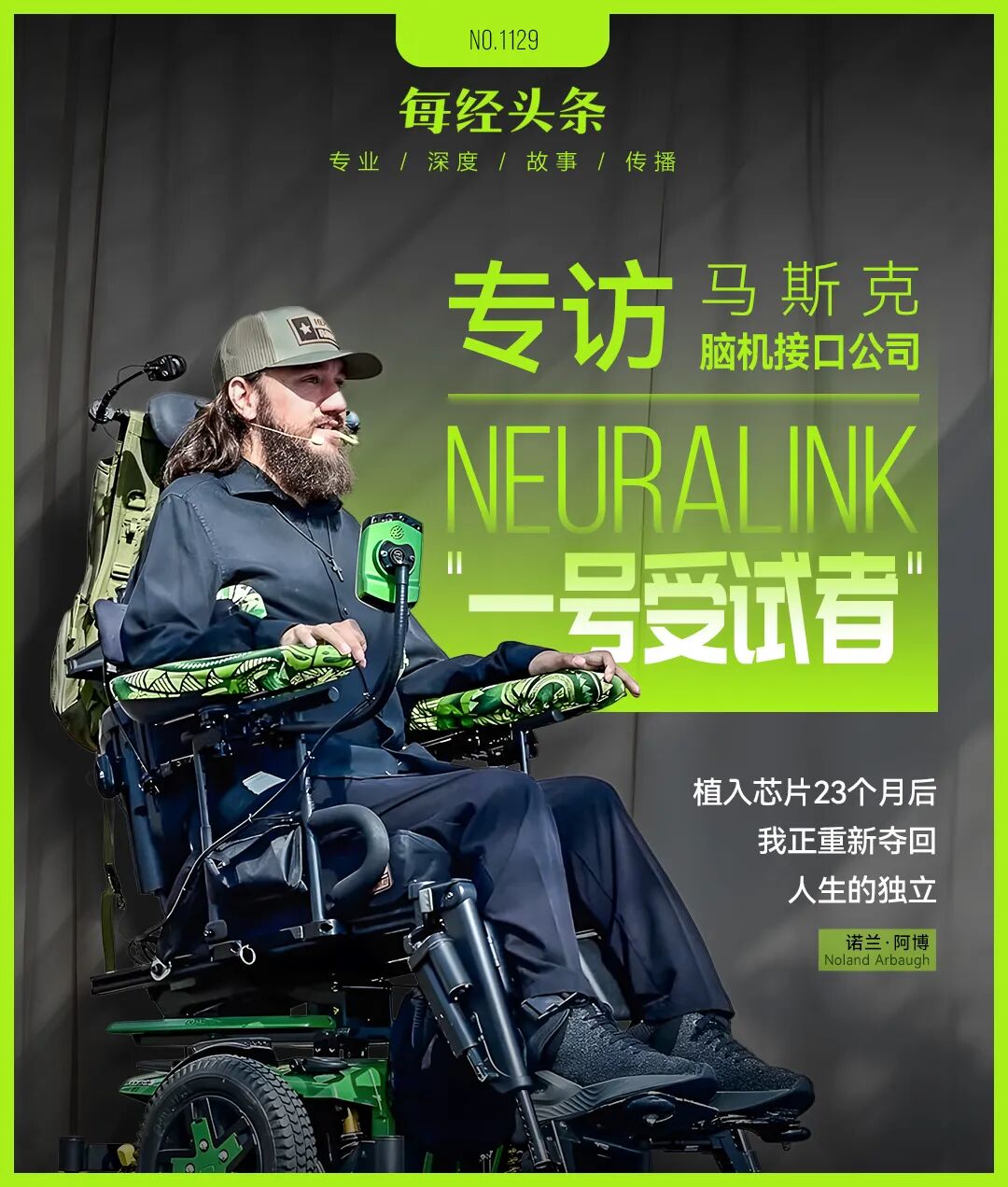
对话马斯克旗下脑机接口公司“一号受试者”:大脑植入芯片23个月 正重新夺回人生的独立
Mei Ri Jing Ji Xin Wen· 2025-12-28 17:41
"就在那一刻,这项技术在我眼中彻底变成了科幻般的存在。"当诺兰·阿博(Noland Arbaugh)第一次仅 凭意念移动电脑光标时,发出了这番感慨。 2016年,诺兰·阿博因跳水事故导致肩部以下失去活动能力。2024年1月28日,诺兰·阿博接受了埃隆·马 斯克旗下脑机接口公司Neuralink的Link芯片植入手术,成为实验的"一号受试者"。 23个月后,这枚被他命名为"Eve"的硬币大小的设备,不仅让他重新连接了数字世界,更重要的是,正 让他从"家人的累赘"一步步走向生活的独立,并有望成为首位"双植入"患者。 日前,Neuralink技术迭代加速,植入单根电极线的时间从17秒缩短至1.5秒。排队等待植入的申请者已 超过一万名,而预计2025年年底前,仅有20名患者完成脑机接口植入手术。 近日,诺兰·阿博接受了《每日经济新闻》记者(以下简称NBD)独家专访。从最初仅凭意念移动光标 的"科幻时刻",到脑机接口技术带给自己的变化,再到该技术的伦理问题,这位"脑机人"分享了他的独 特经历、心路历程与深层思考。 谈生活改变:从"累赘"到生活逐步自理 NBD:当您第一次仅凭意念操控电脑光标时,有什么感受? 诺兰·阿博: ...
马斯克脑机接口重大突破!万人排队「开颅插针」
Sou Hu Cai Jing· 2025-12-28 13:45
最近,马斯克的Neuralink再次投下重磅炸弹。在一场20分钟的技术演示中,一系列颠覆性的数据被首次 揭秘: ——单根电极植入时间:从17秒,飙到1.5秒! ——植入深度:突破50毫米,直达大脑更深层神经元! ——制造成本:核心部件锐减95%,为规模化量产铺平道路! 目前,全球已有超过一万人排队「开颅插针」,等待成为"赛博格"。 当然,Neuralink当前的目标是明确的:帮助瘫痪患者重获新生。但结合马斯克一贯的宏大叙事——尤其 是他创办SpaceX探索火星的计划,外界普遍认为,医疗救助仅仅是第一步。 有分析人士认为,其终极构想或许是为人类意识寻找一种超越肉体和物理空间的新形态。例如,通过脑 机接口实现意识的数字化,进而远程操控火星上的机器人"分身",甚至将意识直接传输到另一个星球, 以此规避星际旅行的风险,实现文明的跨星球存续。 现在,让我们回到现实,看看这项技术已经走到了哪一步。 ▍「开颅插针」飙至1.5秒,手术机器人是核心壁垒 当公众的注意力大多集中在那枚植入头骨的25mm小圆片时,Neuralink用一段视频清晰地指出:那台沉 默的手术机器人,才是其真正的核心技术与难以逾越的工程壁垒。 整个手术流程 ...
马斯克脑机接口重大突破!万人排队「开颅插针」
机器人大讲堂· 2025-12-28 06:58
Core Insights - Neuralink aims to help paralyzed patients regain mobility, but its ultimate vision may extend to transcending physical limitations through brain-machine interfaces [3][27] - Over 10,000 individuals are currently on the waiting list for Neuralink's procedures, highlighting the demand for this technology [28] Group 1: Technology and Innovation - The core technology of Neuralink is a surgical robot that performs the implantation of electrodes with precision, significantly reducing the time taken for each electrode from 17 seconds to 1.5 seconds [9][5] - The robot can implant electrodes at depths exceeding 50mm, which is crucial for advanced functionalities like restoring vision [18] - Neuralink has developed a complex visual system that integrates multiple microscopes and OCT technology to enhance the robot's precision during surgery [12][14] Group 2: Clinical Applications - The first human subject, Noland Arbaugh, successfully controlled a computer mouse using only his thoughts one month after implantation, demonstrating the practical application of the technology [19][21] - Approximately 13 patients with conditions such as spinal cord injuries and ALS have already received Neuralink's brain-machine interface, allowing them to regain interaction capabilities [21][22] - Patients using the brain-machine interface report an average daily usage of 8 hours, indicating its integration into their daily lives [24] Group 3: Future Goals and Challenges - Neuralink's long-term goals include developing systems for sensory restoration and enhancing cognitive abilities, aiming to read and write signals from any brain region [25][27] - The company faces significant engineering challenges in scaling its operations from a few patients to thousands, requiring automation in manufacturing, surgery, and maintenance processes [29][30] - Neuralink is working to increase the number of channels in its implants from 1,000 to tens of thousands, which is essential for more advanced functionalities [33]
新华社出图·年度记忆丨闪耀世界的中国科技之光
Xin Hua She· 2025-12-26 06:24
Group 1 - China's innovation index has entered the global top ten for the first time, showcasing rapid growth in technological innovation capabilities [1] - The year 2025 marks the conclusion of the "14th Five-Year Plan," with a focus on achieving breakthroughs in key core technologies and enhancing the integration of technological and industrial innovation [20] - Significant advancements in space exploration have been made, including successful tests of manned lunar exploration vehicles and the launch of major space science satellite missions [3][5][17] Group 2 - The 2025 World Internet Conference showcased advancements in robotics and artificial intelligence, indicating a strong presence of innovative technologies in various sectors [6][21] - The launch of a new generation of ultra-high-speed real-time oscilloscopes, achieving bandwidths exceeding 90GHz, highlights China's leadership in the global electronic communication industry [9] - The successful operation of the Jiangmen Neutrino Experiment, the world's first large-scale neutrino facility, represents a significant milestone in high-precision scientific research [14]
心玮医疗20251225
2025-12-26 02:12
Summary of New Wei Medical Conference Call Company Overview - **Company**: New Wei Medical - **Industry**: Medical Devices, specifically focusing on brain-computer interface (BCI) technology and drug balloon stents Key Points and Arguments Brain-Computer Interface (BCI) Development - New Wei Medical plans to obtain the inspection report for its BCI product in Q1 2026 and will communicate clinical plans with hospitals in Q2 2026, aiming for the first patient to undergo implantation in the same year, targeting conditions like ALS and stroke-related limb dysfunction [2][3] - The company is facing regulatory challenges with its BCI product and is engaging with review agencies through a project to ensure smooth approval processes, referencing similar companies' experiences [2][6] - Stroke is the leading cause of disability and death in China, with approximately 3 million new cases annually and over 20 million existing patients, many of whom suffer from limb dysfunction post-treatment [9] Clinical Development Plans - New Wei Medical aims to finalize clinical plans with top hospitals by June 2026, with ethical approvals expected within three months and patient recruitment starting in Q4 2026 [5] - The clinical trial will involve 20 to 30 patients, with follow-up periods of 6 to 12 months to assess safety and efficacy [5][6] Financial Projections - The company expects a revenue growth of 30% to 35% in 2026, projecting total revenue between 520 million to 530 million yuan [4][21] - Mid-term goals include achieving over 1 billion yuan in revenue by 2028, with an operating profit margin exceeding 20% [4][22] Product Pricing and Market Strategy - The invasive implantation cost is approximately 6,000 yuan, with the final product price expected to be between 200,000 to 300,000 yuan, referencing DBS products for pricing strategy [10][17] - New Wei Medical plans to gradually reduce prices to increase market penetration, targeting a significant population of stroke and ALS patients [17] Regulatory and Technical Challenges - The BCI product faces high regulatory scrutiny due to its innovative nature, with ongoing discussions with regulatory bodies to ensure compliance [6][10] - The company has validated the safety and signal transmission stability of its technology through animal trials, with plans for human trials in 2026 [3] Research and Development - The BCI product consists of a domestically produced electrode stent and an internationally sourced signal processing unit, with ongoing collaborations with domestic chip design companies [11][12] - The company has invested several million yuan annually since 2021 into the BCI project, with a dedicated team of over 10 people established for its development [18] Future Investment Directions - New Wei Medical will continue to focus on the neuro-intervention sector, exploring partnerships and acquisitions to enhance its product offerings [19][20] - The company plans to apply for A-share listing in 2026 to improve liquidity and support growth [25] Competitive Positioning - New Wei Medical's drug balloon stent is expected to receive approval by Q4 2026, positioning it as a significant growth driver [24] - The company aims to maintain a competitive edge in the BCI market by leveraging government support and focusing on product innovation [24] Additional Important Information - The company anticipates that the new BCI business will gradually contribute to revenue, although the exact impact will depend on market promotion efforts [21] - New Wei Medical's operational strategy includes maintaining stable management and R&D expenses to support growth [23]
对话马斯克脑机接口“一号受试者”:大脑植入芯片23个月,我正重新夺回人生的独立
Mei Ri Jing Ji Xin Wen· 2025-12-25 09:58
每经记者|兰素英 每经编辑|高涵 "就在那一刻,这项技术在我眼中彻底变成了科幻般的存在。" 当诺兰·阿博(Noland Arbaugh)第一次仅凭意念移动电脑光标时,发出了这番感慨。 2016年,诺兰·阿博因跳水事故导致肩部以下失去活动能力。2024年1月28日,他接受了埃隆·马斯克旗下脑机接口公司Neuralink的Link芯片植入手术,成为 实验的"一号受试者"。 23个月后,这枚被他命名为"Eve"的硬币大小的设备,不仅让他重新连接了数字世界,更重要的是,正让他从"家人的累赘"一步步走向生活的独立,并有 望成为首位"双植入"患者。 近日,诺兰·阿博接受了《每日经济新闻》记者(以下简称NBD)独家专访。从最初仅凭意念移动光标的"科幻时刻",到脑机接口技术带给自己的变化, 再到该技术的伦理问题,这位"脑机人"分享了他的独特经历、心路历程与深层思考。 谈意念控制初体验:太科幻了 诺兰·阿博 图片来源:受访者供图 NBD:当你第一次仅凭意念操控电脑光标时,有什么感受? 诺兰·阿博:这种体验分成两个阶段。 第一阶段,我并没有像大家想象的那样感到无比震撼。 日前,Neuralink技术迭代加速,植入单根电极线的时间 ...
医药生物行业周报:国内侵入式脑机接口再迎突破,产业发展加速-20251224
Shanghai Securities· 2025-12-24 12:04
Investment Rating - The industry investment rating for the pharmaceutical and biotechnology sector is "Hold" [2]. Core Insights - The report highlights significant breakthroughs in the domestic brain-computer interface (BCI) technology, indicating an acceleration in industry development and international recognition [5]. - The report emphasizes the transition of invasive brain-computer interfaces from laboratory settings to market approval processes, suggesting a rapid expansion of application scenarios [6]. Summary by Relevant Sections Industry Overview - The report discusses the recent advancements in invasive brain-computer interface technology, including the first domestic medical device entering the FDA's breakthrough therapy pathway, which enhances the international recognition of China's BCI technology [5]. - It mentions successful clinical trials using high-throughput wireless invasive BCI systems, enabling patients with high-level paralysis to control smart wheelchairs and robotic dogs through brain signals, achieving a 15%-20% improvement in brain control performance [5]. Investment Recommendations - The report suggests focusing on companies such as Innovation Medical, Aipeng Medical, and Sanbo Brain Science, as they are positioned to benefit from the advancements in the BCI sector [6].