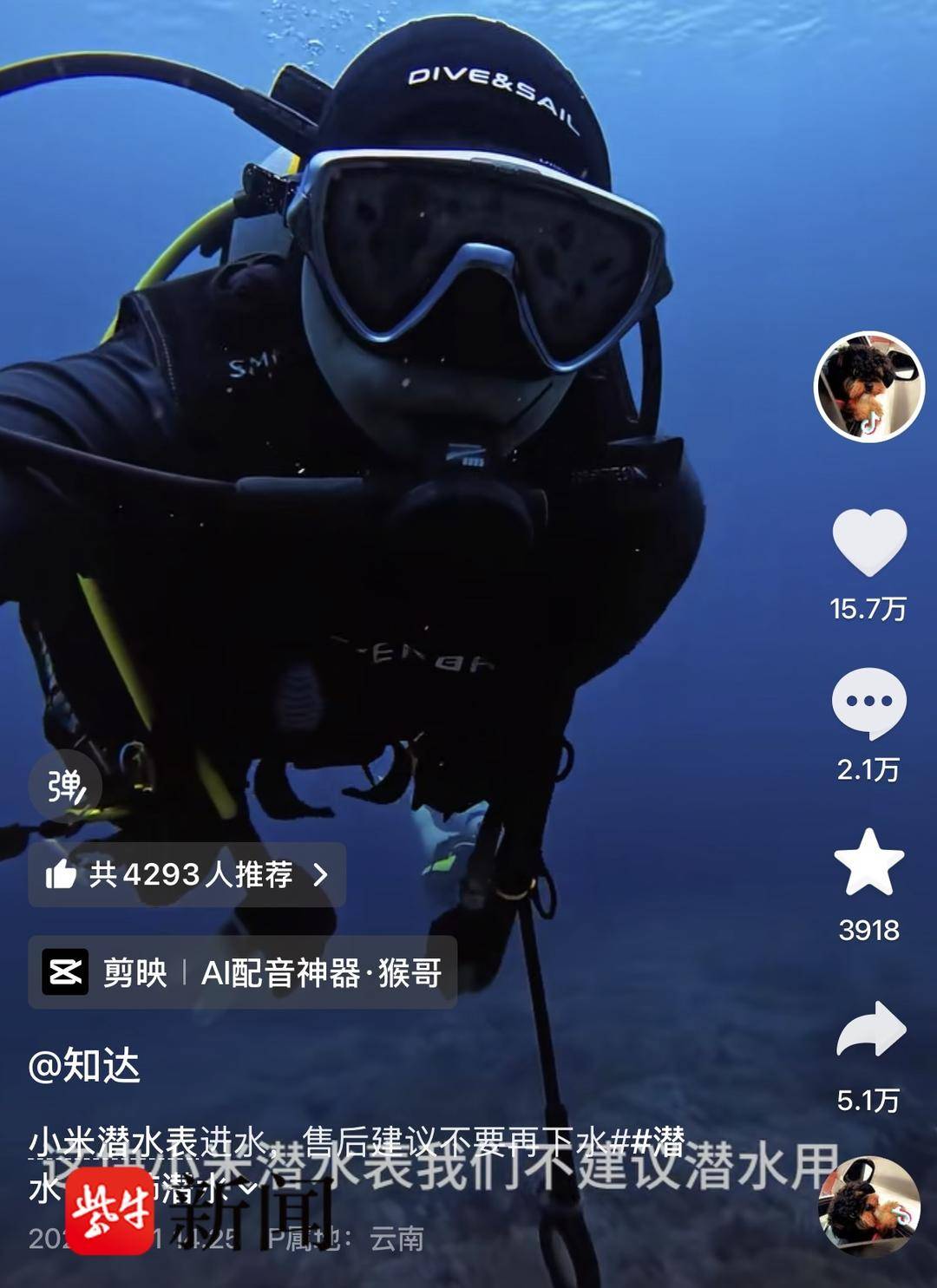
虚假宣传

Search documents
“潜水手表不能潜水”风波再起,小米否认虚假宣传,南京律师已提交起诉书
Yang Zi Wan Bao Wang· 2025-11-21 14:42
Core Viewpoint - The controversy surrounding Xiaomi's diving watch has escalated due to user complaints about water damage, leading to a lawsuit alleging false advertising regarding the watch's waterproof capabilities [1][6][15] Group 1: Incident Overview - A user reported that their Xiaomi Watch S4 Sport, advertised with a 40-meter diving capability, suffered water damage after four days of use while diving [2][5] - The customer service response indicated that the watch is not recommended for diving, which sparked widespread discussion and ridicule online [4][5] Group 2: Legal Action - Lawyer Hu Youru announced plans to sue Xiaomi for false advertising, claiming the watch's 5ATM waterproof rating is misleading given the typical requirements for swimming and professional diving [6][11] - The lawsuit highlights discrepancies between the advertised features and the actual performance of the watch, particularly regarding its waterproof certification [11][13] Group 3: Xiaomi's Response - Xiaomi issued a statement denying any false advertising, claiming that the customer service recording was misrepresented and that the watch is certified for various diving modes [13][14] - The company acknowledged service shortcomings but maintained that the watch meets the EN13319 international diving certification standards [14][15] Group 4: Ongoing Developments - Hu Youru confirmed that he has submitted the lawsuit and plans to provide additional materials as required by the court [15] - The core issue remains whether the watch's 5ATM rating is sufficient for diving, with Hu expressing doubts about its safety and performance [15]


遭遇虚假宣传别慌!这些投诉渠道帮你高效维权
Xin Lang Cai Jing· 2025-11-17 09:22
Core Viewpoint - The article discusses the issue of false advertising in consumer scenarios and provides a comprehensive guide on effective complaint channels to resolve disputes [1][2][5] Group 1: Initial Communication - The first step in addressing false advertising is to communicate directly with the merchant through official customer service channels [1][2] - Examples of communication methods include contacting customer service on e-commerce platforms, visiting physical stores with promotional materials, and calling the merchant's hotline [1][2] - A case is presented where a consumer received a refund after reporting a weight loss product that did not deliver promised results [1] Group 2: Advanced Rights Protection - The 12315 national platform serves as a primary channel for consumer rights protection, offering a structured complaint process with enforceability [2][3] - Consumers can submit complaints via phone or online, and must provide evidence such as promotional screenshots and purchase receipts [2] - A case is highlighted where a training institution was penalized for false advertising after a complaint was filed through 12315 [3] Group 3: Third-Party Complaint Platforms - Black Cat Complaints, a third-party platform, enhances the visibility of complaints, prompting quicker responses from companies [4] - The process involves using a mini-program to submit complaints, with tips on how to effectively describe the issue [4] - Industry-specific complaint channels are recommended for targeted issues, such as tourism and financial products [4] Group 4: Legal Measures - If previous channels fail, legal actions such as filing a lawsuit or arbitration can be pursued [5] - Necessary materials for court include a complaint statement and evidence list, with specific courts designated based on the defendant's location [5] - Collective lawsuits can be initiated for systemic false advertising cases [5] Group 5: Key Principles for Rights Protection - Evidence is crucial at all stages, including saving promotional materials and maintaining records of purchases and communications [5] - Timeliness is emphasized, with a recommendation to act quickly upon discovering false advertising [5] - A strategic approach combining initial communication, formal complaints, and legal action is advised for effective resolution [5]
财经调查丨被炒作成“神药”,虎头蜂酒治病被曝虚假宣传
Sou Hu Cai Jing· 2025-11-16 12:38
Core Viewpoint - The article highlights the dangerous nature of the tiger hornet, also known as the wasp, and discusses the misleading marketing practices surrounding its sale for purported medicinal benefits, which are not supported by evidence [1]. Industry Summary - The tiger hornet is known for its aggressive behavior and has been linked to serious injuries and fatalities [1]. - Some businesses are exploiting the tiger hornet's reputation by selling products like tiger hornet wine, claiming they have healing properties, which is described as a marketing gimmick [1]. - The primary profit source for hornet farming appears to be the sale of hornet pupae rather than the medicinal products [1]. Company Summary - A manager from a hornet farming operation in Qiwang County, Leshan, Sichuan, stated that the tiger hornet wine sold online lacks any real therapeutic effect and is merely a tactic to attract customers [1]. - Staff from a honeybee farm in Baoshan, Yunnan, confirmed that claims regarding the medicinal benefits of tiger hornet wine are false, emphasizing that it does not function as a medicine and is based on psychological effects [1].
警惕“大厂离职”背后的这种套路
Xin Hua She· 2025-11-16 01:43
新华社消息,"25岁的我勇敢从大厂离职""37岁,年薪百万,我却从互联网大厂离职""从大厂裸辞两年 的我,如今过得怎么样"……近期,"大厂离职"成为社交媒体上的热词。但与此同时,有人虚构大厂前 员工、高管身份,通过"蹭大厂流量"提供名不副实的服务,以求实现商业牟利。 发现相关情况后,涉事教育公司被诉至湖南省长沙市开福区人民法院。法院认为,被告行为在客观上欺 骗、误导消费者,易对相关公众造成认知偏差,增加了公众选择服务提供者时的决策成本,同时抢夺了 同行业其他经营者的公平交易机会,扰乱了公平竞争的市场秩序,侵害了经营者与相关公众的合法权 益,构成引人误解的虚假宣传行为。 今年7月,法院判决被告在媒体上刊登声明,消除因侵权行为对原告造成的不良影响,并向原告支付经 济损失及合理开支5万元。 抖音集团相关负责人对记者表示,近年来,虚构公司前员工身份对外引流获利的情况屡见不鲜。近期, 又有人以公司高管名义在社交媒体上大量注册账号引流,对外开展培训并收取高额费用。"经内部核 实,此人连公司试用期都未通过,却对外声称是公司的人力资源总监。" "我们去年通过多种方式对外辟谣冒充骑手和前员工的事件超过100起。"一家外卖企业相 ...
小米之“惑”
Jing Ji Guan Cha Wang· 2025-11-14 14:03
Core Viewpoint - Xiaomi is facing a significant trust crisis due to misleading marketing practices and legal disputes, which could harm its brand reputation and consumer trust in the long run [1][4][7]. Group 1: Marketing and Brand Image - Recent allegations suggest that Xiaomi's "giant energy-saving" air conditioner label misleads consumers, as it does not reflect actual performance metrics [1]. - Xiaomi's dual brand identity as both a cost-effective internet retail brand and a high-end product service brand creates confusion in its market positioning [5][10]. - The company's marketing strategies, including the use of "hunger marketing," have drawn criticism for potentially misleading consumers and creating a negative perception [23][24]. Group 2: Legal and Regulatory Challenges - Xiaomi has faced legal challenges, including a lawsuit from a car owner regarding misleading advertising, which has been interpreted as an attempt to complicate consumer rights [1]. - Reports indicate that Xiaomi has been targeted by regulatory scrutiny for its marketing practices, with potential new regulations on false advertising being discussed [14]. Group 3: Financial Performance and Market Sentiment - According to a report from Goldman Sachs, Xiaomi has become a consensus short target among hedge funds, with its stock price dropping nearly 30% since June due to rising chip costs and declining profit margins [3]. - The company has seen a significant increase in consumer complaints, particularly in its home appliance sector, indicating growing dissatisfaction with product quality [26]. Group 4: Product Development and Innovation - Xiaomi's strategy of maintaining low profit margins on hardware has been a double-edged sword, as it struggles to compete in high-end markets where quality and innovation are paramount [9][12]. - The company has made strides in chip development, with its self-developed 3nm chip "Xuanjie O1" entering mass production, but it still relies heavily on external suppliers for critical components [25]. Group 5: Industry Position and Competitive Landscape - Xiaomi's approach of aggressive pricing and market entry has raised concerns about its impact on industry standards and the long-term viability of competitors [31][32]. - The company is caught in a struggle between being perceived as a low-cost provider and a premium brand, which complicates its competitive strategy in various sectors, including smartphones and electric vehicles [12][30].
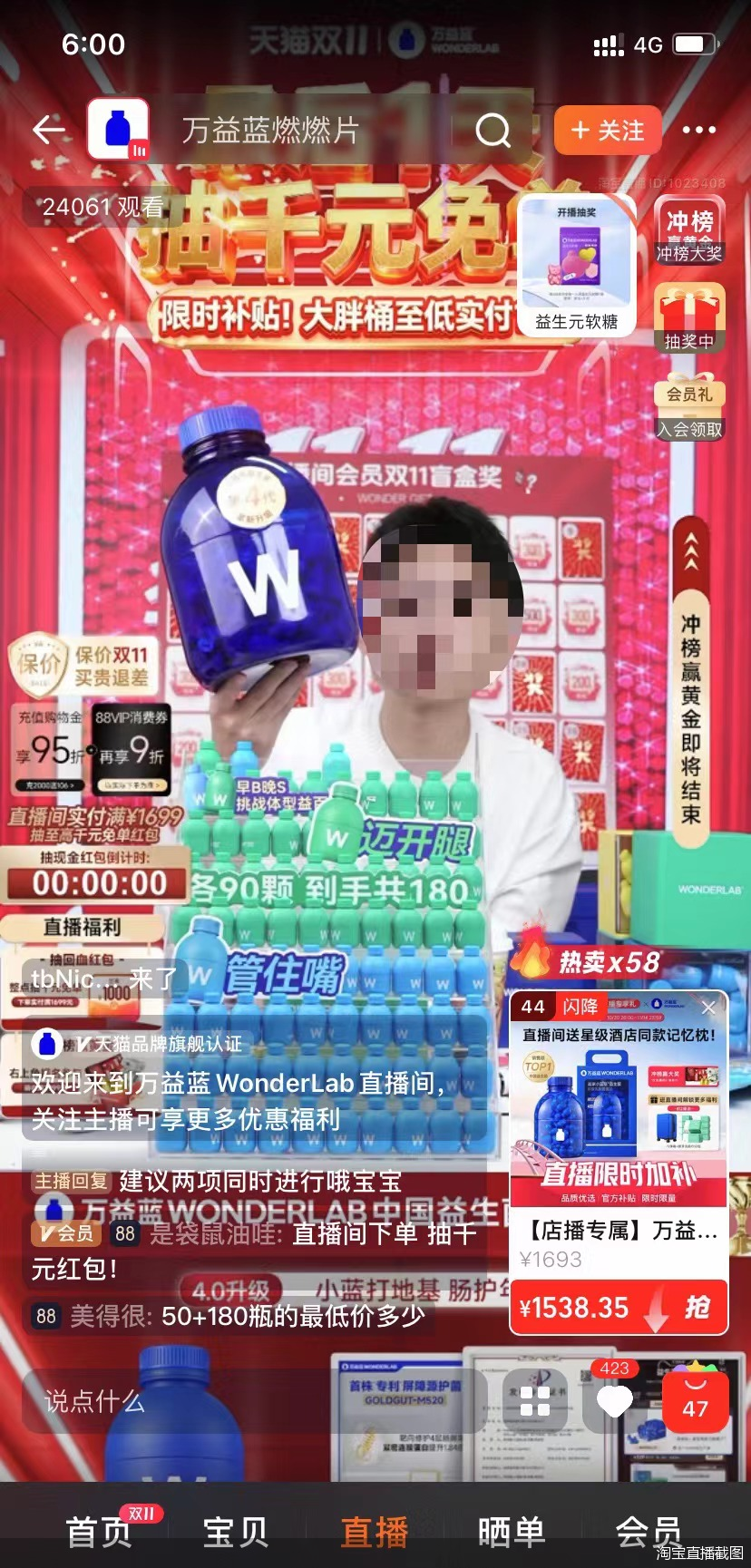
万益蓝的瘦身功效疑云
Bei Jing Shang Bao· 2025-11-12 15:47
Core Insights - WonderLab, a leading brand in the probiotic sector, achieved significant sales during the "Double 11" shopping festival, with its "B420+S100" probiotic combination selling over 50,000 sets at a post-coupon price of 477.26 yuan [1][3] - Despite high sales and pricing, WonderLab faces criticism regarding the effectiveness of its products, with 117 complaints on the Black Cat complaint platform primarily about lack of weight loss and side effects [1][4] - Medical experts assert that probiotics are primarily used for diarrhea and gut dysfunction, not weight loss, indicating that marketing claims linking probiotics to weight loss may be exaggerated [5][6] Product Performance and Pricing - The "B420+S100" probiotic combination is priced at 477.26 yuan for a month's supply, with individual components priced at 224.42 yuan and 263.62 yuan respectively [3][4] - Comparatively, other brands like Lifespace and Beijing Tongrentang offer similar probiotics at lower prices, indicating that WonderLab's products are relatively expensive [3][4] Marketing and Consumer Perception - WonderLab's marketing strategies include aggressive promotions and influencer partnerships, contributing to its rapid rise in sales, with over 600 million bottles sold by March 2025 [8][9] - The brand's promotional language has been criticized for misleading consumers about the weight loss benefits of its products, which are classified as ordinary food and not as therapeutic agents [7][10] Regulatory and Compliance Issues - The manufacturing subsidiary of WonderLab faced penalties for producing non-compliant products, raising concerns about quality control and regulatory adherence [10] - Despite claims of clinical trials supporting the efficacy of its probiotics, the company has not publicly provided detailed experimental data, leading to skepticism about its marketing claims [6][10]

明星肖像被擅用、AI 仿名人直播,法官解读双十一违法行为
Xin Jing Bao· 2025-11-12 09:17
打开电商平台,"奥运冠军推荐土鸡蛋""央视主持人带货"等直播间屡见不鲜,殊不知这些"名人"可能都 是AI生成的虚拟形象。消费者基于对知名人士的信任下单消费,事后发现收到的商品与宣传严重不 符。 王一飞表示,商家使用AI生成名人形象推荐商品的行为,已经构成多重侵权。首先,商家未经允许用 AI技术生成名人肖像与声音宣传商品,使被仿冒者的人格形象与商品形成紧密关联,使消费者误以为 该名人是商品的推荐者,利用名人的形象、社会影响力等吸引消费者关注,增加交易机会,已经侵犯了 人物肖像权及声音权;若所推荐商品为假冒伪劣产品,导致被仿冒者社会评价降低,则还侵犯了名誉 权。被侵权人有权要求商家停止侵害、赔礼道歉、恢复名誉、赔偿损失。 11月10日,演员刘嘉玲在社交平台发布两张淘宝店铺截图,喊话某网店未经授权擅自使用梁朝伟的照片 进行商业宣传,此举迅速引发网友热议。 新京报记者了解到,"双十一"购物热潮,商家为了更好地宣传、增强消费者购物体验使用多种方法也出 现不少问题,不仅存在明星肖像权的侵犯,更有利用AI技术仿冒名人带货、虚假宣传等一系列乱象, 此外也有消费者利用AI恶意骗取退款等情况。11月11日,新京报记者邀请北京市第 ...
家长质疑教培机构LingoAce逃避监管
Bei Jing Shang Bao· 2025-11-12 03:36
"每天25分钟,欧美外教一对一,0基础娃带出英语思维。"近期,线上英语一对一重新在社交平台爆 火。北京商报记者调查后却发现,一家名为LingoAce、动辄万元一个课包的线上英语培训机构,虽然面 向中国学生授课,但在销售课包时却以美元结算收款。在中国境内有公司的情况下,家长更是在付款后 才通过付款信息发现收款方为境外公司。不仅如此,企业和销售人员从未向家长提供合同或收据,家长 想要退课时机构还玩起"价格游戏":购课宣传时按"基础课时+赠课"计算课单价,退费时则按"基础课 时"扣费,课单价差20%。 律师指出,通过美元结算并使用跨境资金收取平台收取学费,可能构成规避境内预收费监管的行为。同 时,若机构在宣传中使用误导性表述,涉嫌虚假宣传,应承担法律责任。跨境教育背后的收费乱象,正 成为家长和学生难以避开的"消费深坑"。 境内培训、美元结算 进入三年级,程雨第一次接到班主任的电话,是因为儿子的英语口音。"老师很温柔,提出孩子的笔试 成绩很好,但作为一门语言,课上无法表达整句,部分单词发音有些特殊的口音,建议家长花些时间进 行纠正。"其实儿子的英语表达问题,一直也是程雨的心病:绘本也读了,动画片也看了,可自己和丈 夫 ...
“嗨吃少烦恼”的万益蓝是瘦身宝,还是智商税?
Bei Jing Shang Bao· 2025-11-11 15:21
Core Viewpoint - WonderLab, a leading brand in the probiotic sector, has achieved significant sales during the "Double 11" shopping festival, but faces controversy regarding the effectiveness of its products, particularly in weight loss claims [1][7][11]. Sales Performance - As of November 11, 2025, WonderLab's "B420+S100" probiotic combination was the top seller on Taobao, with over 50,000 units sold at a post-coupon price of 477.26 yuan per set [1][4]. - The pricing of WonderLab's products is relatively high compared to competitors, with the B420 probiotic priced at 7.48 yuan per bottle, while similar products from other brands are cheaper [6][4]. Consumer Complaints - There are 117 complaints related to WonderLab on the Black Cat Complaints platform, primarily concerning ineffective weight loss and side effects [1][7]. - A consumer reported spending over 1,000 yuan on the B420+S100 combination without any weight loss, suggesting the product may not deliver on its promises [7]. Scientific Backing and Claims - Medical professionals assert that probiotics are primarily used for diarrhea and gut function disorders, not for weight loss, indicating that marketing claims linking probiotics to weight loss are exaggerated [8][9]. - Clinical studies cited by WonderLab show limited weight loss effects, with improvements in gut function rather than direct weight loss [7][9]. Marketing Practices - WonderLab's marketing strategies include using phrases that imply weight loss benefits, despite disclaimers stating that the products are ordinary foods without therapeutic claims [11][13]. - The brand has been criticized for misleading advertising, as promotional materials suggest weight loss effects while the product details clarify that it does not guarantee such outcomes [13][11]. Company Background - WonderLab was established in 2019 and has rapidly grown, achieving over 600 million bottles sold by March 2025, becoming the top seller in China's probiotic market [14]. - The company has undergone multiple rounds of financing, attracting investments from notable firms like IDG Capital and Temasek [14]. Regulatory Issues - A subsidiary of WonderLab faced penalties for producing non-compliant products, raising concerns about quality control in its manufacturing processes [15][17]. - The company has not responded to inquiries regarding the compliance and effectiveness of its B420 probiotic products [21].