可持续发展

Search documents
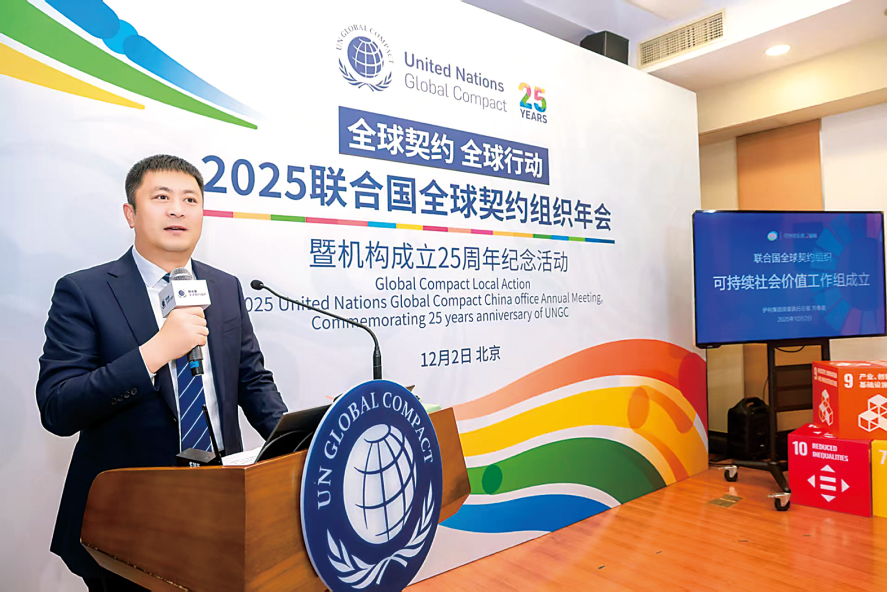
以“生态解法”破局可持续挑战 伊利和46家伙伴以协同创新重塑可持续社会价值
Zhong Guo Zhi Liang Xin Wen Wang· 2025-12-09 08:12
Core Insights - The article emphasizes the concept of "ecological solutions" as a means to address sustainable challenges, highlighting the collaborative efforts of Yili and 46 partner organizations to reshape social value sustainably [1][2] Group 1: Ecological Solutions and Collaboration - Yili's "ecological solutions" are a systematic summary of its years of exploration in sustainable supply chains, social value collaboration, and digital philanthropy [3] - The Sustainable Social Value Ecological Circle, initiated by Yili, Tencent, and Lenovo, has grown to include 46 member enterprises and organizations, symbolizing a collaborative approach to social innovation [2][3] - The new logo of the Sustainable Social Value Ecological Circle, featuring red, green, and blue colors, represents warmth, vitality, and expansiveness, aiming to convey the message that "ecology gives voice to beauty" [2] Group 2: Initiatives and Achievements - Yili has established the "Zero Carbon Alliance," which has expanded to 154 core enterprises, with 90% having completed low-carbon transformations, and has launched the first "dual carbon" target and roadmap in China's food industry [3] - In disaster relief efforts, Yili has created a digital philanthropy ecosystem that connects governments, enterprises, and beneficiaries, exemplified by its response to the Guizhou Rongjiang flood through a transparent aid distribution model [3] - The Sustainable Social Value Ecological Circle announced three joint initiatives: the Deep Rooters Program, the Yixin Sunshine Volunteer Program, and the Smart Enjoying Silver Age Program [2]


宝马集团宣布:2035年减排量提升 将扩大可再生能源应用比例
Zheng Quan Shi Bao Wang· 2025-12-09 07:19
Core Viewpoint - BMW Group has announced a new emissions reduction target, aiming to cut at least 60 million tons of CO2 equivalent by 2035 compared to 2019 levels, which is an increase of approximately 20 million tons from the previously set 2030 target [1] Group 1: Emission Reduction Goals - The company aims for a total reduction of at least 40 million tons of CO2 equivalent by 2030 compared to 2019 levels [1] - By 2035, the CO2 equivalent emissions per euro of revenue generated will be reduced by about half compared to 2019 [1] Group 2: Strategies for Achieving Goals - Key initiatives include increasing the use of renewable energy in production and supply chains, enhancing the utilization of recycled materials, optimizing energy efficiency during the usage phase, and focusing on product and technology innovation [1] - The company plans to steadily expand its electric product portfolio as part of its multi-technology approach [1] Group 3: Context and Industry Perspective - There is a broad consensus in Chinese society regarding the acceleration of green transformation in development, providing an optimal platform for BMW to integrate sustainable development deeply into its corporate strategy [1]
独家专访联合国副秘书长徐浩良:这个新中心为何选择设立在上海
Di Yi Cai Jing· 2025-12-09 07:09
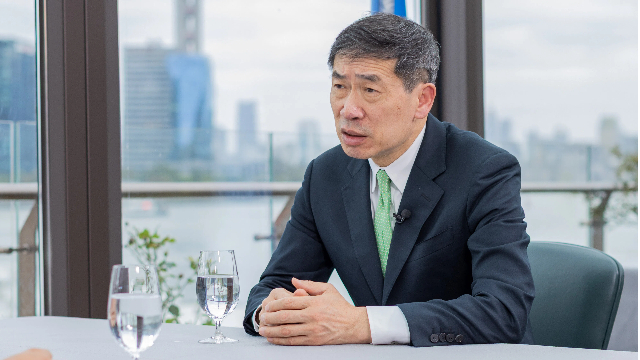
在实现可持续发展的道路上,徐浩良强调企业也能在其中发挥关键作用。 11月中旬,在上海出生长大的联合国副秘书长、联合国开发计划署(下称"开发署")副署长徐浩良"过 家门而不入",在沪访问行程不过一日,就匆匆赶往下一个目的地。 从1993年开始,30多年间,徐浩良从联合国的一名实习生干到联合国副秘书长,被称为联合国系统内中 国人的"传奇"。虽然离开家乡在外工作多年,但徐浩良乡音未改,谈起上海这些年的发展他更是娓娓道 来,因为"上海还是我的家"。 在全球最大的多边发展援助机构——联合国开发计划署30多年的工作经验,让徐浩良成为了发展援助的 专家。而他此访一大重要目的就是要将上海和联合国开发计划署更加紧密地联系在一起,探讨在上海设 立联合国开发计划署全球可持续发展中心(下称"中心")。 中心为何落地在上海 据商务部网站消息,商务部部长王文涛9月25日在美国纽约会见联合国副秘书长、时任开发计划署代理 署长徐浩良时表示,中方支持在上海设立联合国开发计划署全球可持续发展中心,愿分享中方在绿色、 数字、贸易等领域的发展经验,呼应全球南方国家实现绿色、数字转型发展的迫切需求,更好帮助发展 中国家加快落实联合国2030年可持续发 ...
中巴可持续发展与低碳能源转型论坛在巴西里约热内卢举行
人民网-国际频道 原创稿· 2025-12-09 06:39
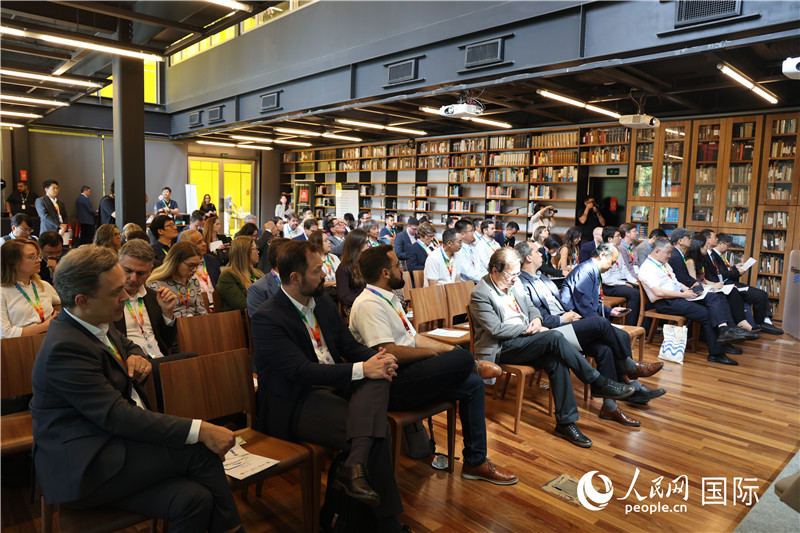
Core Insights - The China-Brazil Sustainable Development and Low-Carbon Energy Transition Forum opened in Rio de Janeiro, focusing on energy transition technologies and sustainable development cooperation [1][3] Group 1: Event Overview - The forum is co-hosted by Tsinghua University, Federal University of Rio de Janeiro, China-Brazil Power Innovation Consortium, Brazilian National Confederation of Industry, and Envision Technology Group [1] - The event features experts from multiple countries discussing the forefront of energy transition technologies [1] Group 2: Diplomatic and Collaborative Efforts - The Chinese Embassy in Brazil emphasized the forum as a significant step in deepening practical cooperation between China and Brazil, highlighting their roles as developing countries in addressing global challenges and leading green development [3] - The Brazilian National Service for Industrial Training (SENAI) expressed strong interest in collaborating with China, noting that technological innovation relies heavily on Chinese support [5] Group 3: Technical Discussions - A subgroup meeting titled "Empowering Energy Transition through Technological Innovation" was held, discussing Brazil's energy transition challenges and the prospects for China-Brazil energy cooperation [5][7] - Key topics included bioeconomy, biodiversity, biofuels, carbon capture and conversion, and carbon footprint calculation [7]
从技术创新到生活方式的引领者,好孩子重构未来母婴生态
Jiang Nan Shi Bao· 2025-12-09 05:57
2025年12月7日,好孩子·元生态馆盛大启幕,国内最具科技感的遛娃新地标正式上线。 踏入好孩子·元生态馆,一场关于未来育儿的奇妙之旅正式启程。创新科技、生态时尚与交互体验融入 每一寸空间肌理,打造出极具未来感的沉浸式视觉体验,是亲子遛娃和拍照爱好者的必打卡胜地。当 然,这一科技美学并未止步于空间结构的呈现,更是通过场景化表达和情感化体验为新世代家庭打造集 沉浸体验、互动学习与亲子打卡于一体的生活空间。 在这里,以绝对安全为基,科技、艺术与环保共同诠释着对孩子的爱。 硬核守护,安全无处不在 "绝对安全,极致体验"是好孩子质量文化。它是以创新和质量为基础,以生态型发展为理念,打造全球 知名品牌,引领全球行业发展的管理模式。好孩子·元生态馆以创意陈列为媒,以创新产品为介,带领 大家深入了解好孩子对安全科技的极致追求。 物理检测标准远超全球各国标准。以汽车安全座为例,目前欧美及各国国家标准都以时速50km/h撞击 测试儿童安全座椅,而这并非最安全的。好孩子通过技术创新先后完成了行业两次儿童乘车安全技术革 命:第一次是宇航吸能技术,将碰撞标准从50km/h提升至80km/h,动量提升256%;第二次是智能气囊 技术, ...
国际组织联合报告显示:循环经济为可持续发展提供机遇
Jing Ji Ri Bao· 2025-12-09 05:40
Core Insights - The report highlights the significant role of informal employment in the circular economy, with over half of the jobs in this sector being informal, providing opportunities for decent work and sustainable development [1][2]. Employment Statistics - Globally, 121 million to 142 million people are directly engaged in circular economy activities, accounting for 5% to 5.8% of total employment, with actual numbers likely higher due to unreported informal jobs [2] - Among the reported circular economy jobs, over 74 million are informal, representing more than 50% of the total [2] - Specific sectors show high rates of informal employment, such as 58.4% in urban public transport, 48.9% in automotive repair and second-hand retail, and 72.7% in personal and household goods repair [2] Contribution to Sustainable Development - The circular economy positively impacts environmental sustainability by reducing resource extraction, waste generation, carbon emissions, and pollution, while promoting the recycling of renewable materials [3] - Economically, it decreases reliance on single-use resources and enhances supply chain resilience [3] - Socially, it provides job opportunities for informal workers and improves equity and accessibility in shared services like public transport [3] Employment Characteristics - Repair and maintenance work constitutes 46% of circular economy jobs, representing a key intersection of "green jobs and sustainable employment" [3] - The circular economy is becoming a crucial employment engine for sustainable development through labor-intensive roles, skill enhancement, and the transition to a service-oriented economy [3] Challenges and Recommendations for Informal Employment - Informal employment is central to the circular economy but also represents its most vulnerable aspect, with workers facing low and uncertain incomes, lack of social security, high occupational risks, and inadequate tools and technology [4] - Protecting informal workers is essential for advancing the circular economy, necessitating legal recognition and practical pathways for formalization [4] - Recommendations include expanding social security coverage, improving conditions for informal workers, and extending occupational safety and health regulations to cover informal workers and micro-enterprises [4]
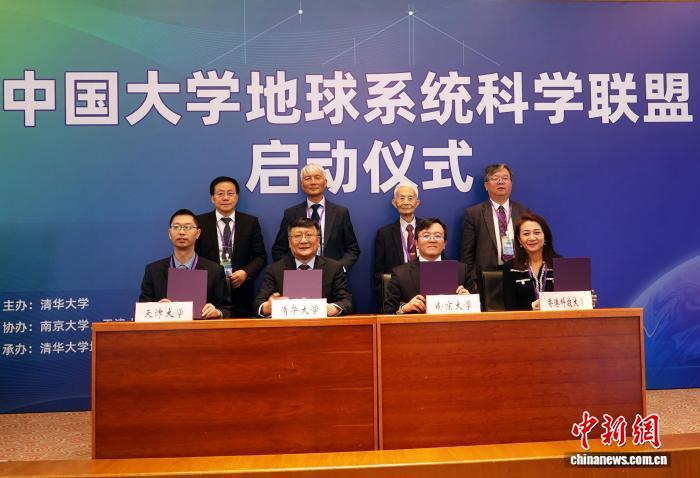
中国大学地球系统科学联盟在北京启动 院士专家共商发展大计
Zhong Guo Xin Wen Wang· 2025-12-09 03:19
Core Viewpoint - The China University Earth System Science Alliance was officially launched in Beijing, aiming to promote interdisciplinary collaboration and resource sharing in the field of Earth system science [1][3]. Group 1: Alliance Formation and Objectives - The alliance was founded by Tsinghua University, Nanjing University, Tianjin University, and the Hong Kong University of Science and Technology, with the goal of serving national strategies and fostering high-end talent [1][3]. - The first president of the alliance is Chen Deliang, a foreign academician of the Chinese Academy of Sciences, who emphasized the importance of the alliance in advancing Earth system science towards "human-earth harmony" [3]. - The alliance aims to establish a collaborative platform that breaks down disciplinary barriers and promotes deep integration and dynamic responses in scientific research [3][4]. Group 2: Expert Insights and Expectations - Experts highlighted the need for interdisciplinary integration and advanced observational technologies to deepen understanding of Earth system dynamics, which is crucial for sustainable development [3][7]. - The role of artificial intelligence in enhancing Earth system science was emphasized, with calls to leverage its potential for creating intelligent systems to protect the Earth [4][8]. - The alliance is expected to attract young talents and push Earth system science towards higher levels of comprehensiveness and innovation [8][10]. Group 3: Challenges and Future Directions - Key scientific challenges identified include addressing non-linear temporal and spatial variations and the coupling of biogeochemical processes with hydrological and human processes [7][8]. - The need for improved simulation accuracy in semi-arid regions was noted as a critical bottleneck for the development of Earth system science, necessitating innovations in observational technology and interdisciplinary collaboration [8][10]. - International experts expressed their support for the alliance and the potential for practical cooperation in addressing global climate challenges [10].
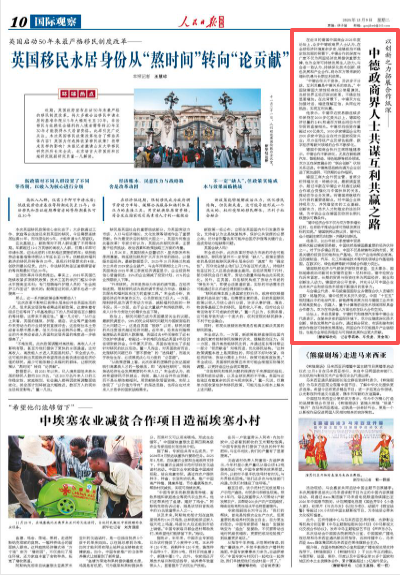
中德政商界人士共谋互利共赢之路
Ren Min Ri Bao Hai Wai Ban· 2025-12-09 00:26
Group 1 - The core viewpoint of the forum is that deepening Sino-German cooperation is essential for economic development and global sustainable growth amidst a complex global economic environment and increasing geopolitical uncertainties [1][2]. - Bilateral trade between China and Germany has consistently exceeded $200 billion, with 2.4% of Germany's economic output and over one million jobs directly related to trade with China [1]. - There are over 600 billion USD in mutual investments, with more than 5,000 German companies and 2,000 Chinese companies operating in each other's markets [1]. Group 2 - A recent survey indicates that over half of German companies in China plan to strengthen their relationships with Chinese partners through strategic cooperation or joint ventures [2]. - Germany remains an attractive destination for foreign investment, providing a solid industrial base, innovative capabilities, technical talent, and a stable legal environment for Chinese companies [2]. - The trade volume between Germany and China surpassed that of Germany and the United States in the first three quarters of 2025, highlighting China's importance as a key economic partner for Germany [2]. Group 3 - The cooperation between China and Germany is particularly strong in emerging fields such as electric vehicles, green energy, and digitalization, with significant potential for collaboration in advanced technologies like robotics and quantum computing [3]. - Companies from both countries emphasize the need for continued deepening of technological innovation, green development, and industrial cooperation to enhance resilience in supply chains and contribute to global economic stability [3].
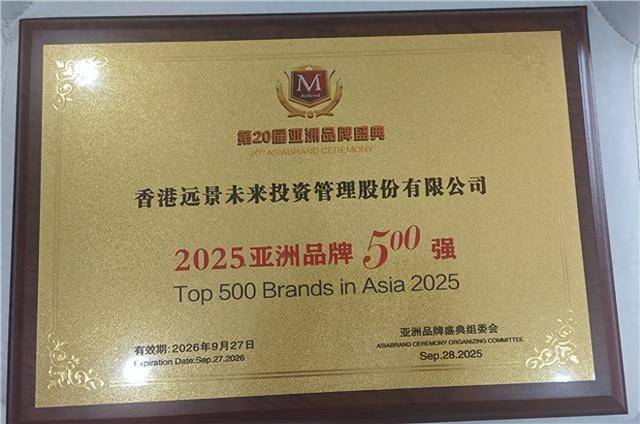
香港远景未来布局“AI+金融”:创始人王贵运以合规驱动,引领技术成长新周期
Sou Hu Cai Jing· 2025-12-08 23:05
Core Insights - The company, Hong Kong Vision Future Investment Management Limited, views technology as a core engine for shaping its future development over the next decade, focusing on professionalism, compliance, and innovation for sustainable development [1] Group 1: Risk Control Technology - Risk control is identified as the lifeline of financial operations and the first chapter of the company's technological narrative, with the development of intelligent risk control models using AI and big data [3] - The company aims to enhance the self-iteration and learning capabilities of its models by incorporating advanced algorithms to process vast and diverse global market data for improved risk identification and warning [3] - The founder, Wang Guiyun, emphasizes the importance of risk control technology, aiming to transform it from a cost into a core competitive advantage and a source of trust [3] Group 2: Blockchain and Trading Infrastructure - Blockchain technology is mentioned as a means to ensure the traceability of fund flows, with potential applications in asset custody, transaction settlement, and contract execution to enhance efficiency and reduce friction costs [4] - The company envisions blockchain as a key exploration for building the next generation of financial infrastructure, particularly for a global asset management firm [4] Group 3: AI Integration in Finance - The application of artificial intelligence is expected to extend beyond analysis and advisory roles, impacting personalized asset allocation, intelligent customer service, and deep learning for macro market trends [4] - The establishment of a public welfare fund focused on AI applications in healthcare and education indicates the management's forward-looking approach to AI technology beyond commercial interests [4] Group 4: Long-term Sustainable Ecosystem - The company's long-term strategy emphasizes a "finance + entity" ecosystem, where financial technology supports supply chain management and market analysis, while real data from industries enhances financial models [5] - Wang Guiyun stresses "long-termism" and "sustainable development," suggesting that technology investments may prioritize building a resilient and trustworthy value system over immediate financial returns [5] - The company aims to improve its ranking in the "Asia Brand 500" over the next decade, which requires a strong technological foundation [5] Group 5: Commitment to R&D Investment - The company acknowledges the uncertainties in the financial market but views investment in core technology R&D as a reliable strategy to navigate these uncertainties [5] - The technological blueprint presented by the company outlines a development path from compliant operations to technology-driven and ecosystem collaboration [5] - The success of this vision hinges on the ability to translate the blueprint into solid patents, reliable systems, and superior user experiences [6]
节水兴业惠四方(凭栏天下)
Ren Min Ri Bao Hai Wai Ban· 2025-12-08 22:45
Core Viewpoint - Water conservation is not merely a temporary measure to address resource shortages but a long-term issue related to sustainable development [1][4]. Group 1: Industry Development - The water conservation industry in China has seen significant growth, with an estimated market size exceeding 760 billion yuan [1]. - The development of the water conservation industry is driven by the objective pressure of water resource shortages in China, where per capita water resources are significantly below the global average [2]. - The implementation of the National Water Conservation Action Plan has integrated water conservation into local assessment systems, facilitating the transition from concept to action [2]. Group 2: Agricultural Innovations - By the end of 2024, the area of water-saving irrigation in China is expected to reach 638 million mu, an increase of approximately 10 million mu compared to a decade ago [2]. - Farmers are increasingly adopting water-saving technologies, which not only reduce costs but also enhance crop yields, turning water conservation into a means of increasing income [2]. Group 3: Industrial Applications - Water conservation has become a standard practice in Chinese factories, with companies like Baogang Group significantly reducing water consumption through wastewater treatment and recycling [3]. - The implementation of smart water management systems in cities allows for precise monitoring of water usage, enabling quick responses to leaks and minimizing waste [3]. Group 4: New Business Models - The promotion of contract water management allows institutions like schools and hospitals to undertake water-saving renovations without upfront costs, with savings on water bills used to recover investments [3]. - Water rights trading initiatives enable water savers to realize tangible economic returns, further incentivizing water conservation efforts [4]. Group 5: Future Outlook - The water conservation industry has vast potential for growth, driven by the demand for efficient water use in the context of rural revitalization and new urbanization [4]. - The push for energy conservation and emission reduction, aligned with carbon neutrality goals, will further propel the development of the water conservation industry [4].