
大模型

Search documents
Gemini API暴涨140%!谷歌商业化狂飙,直面挑战OpenAI
Ge Long Hui· 2026-01-20 08:47
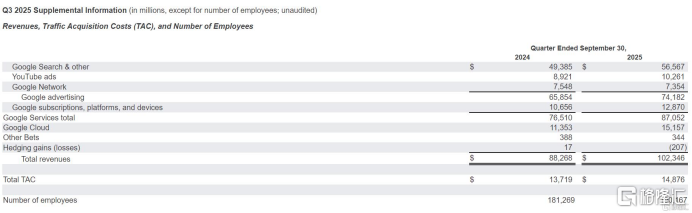
Group 1 - The commercialization of Google's Gemini series large models is experiencing explosive growth, with API calls increasing from 35 billion at the launch of Gemini 2.5 to 85 billion by August, representing a growth of over 140% [1] - Gemini Enterprise Edition has reached 1,500 companies with 8 million subscribers and over 1 million online registered users [1][4] - Google plans to highlight the growth performance of Gemini Enterprise Edition in its Q4 2025 financial report scheduled for February 4 [1] Group 2 - The strong growth of Gemini API is attributed to Google's strategic depth in the AI sector, which drives customers' investments in Google Cloud storage and database products, boosting core server sales [3] - Google has established a dual strategy of "model iteration + ecosystem integration" since the launch of the Gemini multimodal large model at the end of 2023 [3] - A partnership with Apple has been formed, where the next-generation Apple foundational model will be built on Gemini and cloud technology, with Apple paying $1 billion annually [3] Group 3 - Google is gradually shifting focus from the consumer market to the enterprise market, with mixed feedback from customers regarding the Gemini Enterprise Edition [4] - The third-quarter financial report showed Google Cloud revenue of $15.16 billion, a year-on-year increase of 34%, with AI-related revenue reaching "tens of billions of dollars" per quarter [6][8] - Advertising remains the primary revenue source for Alphabet, with Q3 advertising revenue reaching $74.18 billion, a year-on-year increase of 12.6% [8] Group 4 - The AI industry is currently facing intense competition, with Google needing to contend with rivals such as OpenAI, Amazon, and Anthropic [9] - Concerns regarding monopoly have arisen from Google's collaboration with Apple, with critics highlighting the concentration of power due to Google's ownership of Android and Chrome [10][11] - Google is actively appealing against a federal ruling regarding its monopoly behavior, arguing that users choose Google voluntarily and that the ruling does not consider the rapid pace of industry innovation [12]


冯大刚对话Rokid创始人Misa:为什么五年后,手机可能变成眼镜的配件?
3 6 Ke· 2026-01-20 07:45
Core Insights - The AI hardware sector has regained prominence in the tech industry over the past year, with various hardware manufacturers striving to integrate AI capabilities into their devices [1] - AI glasses are emerging as a significant player in the next generation of human-computer interaction, offering features like real-time information access, navigation, and AI assistance without the need to use a smartphone [2][3] - Rokid is positioning itself as a leader in the AI glasses market, focusing on creating a comprehensive AI experience rather than just adding limited AI functionalities to existing designs [3][6] Industry Trends - The smart glasses market is showing a clear trend of differentiation, with some products following a "light AI" approach while Rokid aims to develop full-stack AI glasses with multi-modal interaction capabilities [3][6] - The conversation around AI glasses has shifted towards their potential to become high-frequency devices, similar to how watches are used daily, emphasizing the importance of daily usage scenarios [6][8] - The industry is entering a new phase where large companies are leveraging channels and subsidies, while long-term players like Rokid focus on changing user habits from novelty to necessity [8] Market Dynamics - In 2025, the global sales of AI glasses are projected to reach approximately 5 million units, with Rokid expected to maintain a significant market share of over 50% [14] - Rokid's sales are anticipated to grow from 20,000 units last year to between 80,000 and 100,000 units this year, indicating a 400% increase [15][22] - The demand for AI glasses is driven by their ability to provide natural and immediate AI services, such as capturing moments, information reminders, and navigation assistance [19][20] Competitive Landscape - The market is characterized by a mix of entertainment-focused glasses, light AI glasses, and full-function AI glasses, with Rokid being a prominent player in the latter category [16][22] - The competition between large tech companies and startups like Rokid is shaped by the latter's ability to focus on product quality and user experience, while larger firms may struggle with resource allocation [24][25] - The potential for a price war exists, but it is believed that large companies will not engage in unsustainable pricing strategies that could harm the industry [26] Future Outlook - The industry is expected to see significant growth, with projections indicating that the market could reach over 10 million units sold in the near future [22][28] - The evolution of AI glasses is closely tied to advancements in AI models, which have recently matured, providing the necessary capabilities for these devices to succeed [22][29] - The Chinese market presents a unique opportunity for AI glasses due to higher rates of myopia, leading to a greater demand for all-day wear [28]

千问APP全面接入阿里生态,Gemini新增个人智能功能
Huaan Securities· 2026-01-20 07:25
Investment Rating - Industry investment rating: Overweight [1] Core Insights - The report highlights significant advancements in AI applications, particularly with the integration of the Qianwen APP into Alibaba's ecosystem, enabling users to perform complex tasks such as ordering food and booking flights through AI [3][8] - Google's Gemini has introduced a Personal Intelligence feature to enhance user experience by connecting various applications and understanding user context [3][34] - The semiconductor sector, particularly TSMC, reported record earnings driven by soaring AI computing demand, with a 20.45% year-on-year revenue increase in Q4 2025 [5][35] Summary by Sections Weekly Market Review - From January 12 to January 16, 2026, the Shanghai Composite Index decreased by 0.45%, while the ChiNext Index increased by 1%. The CSI 300 Index fell by 0.57%, and the Hang Seng Technology Index rose by 2.37% [21][27] AI Sector Developments - Overseas AI: OpenAI is testing ChatGPT ads in the U.S., with enhanced features for the ChatGPT Go subscription [33] - Domestic AI: Baidu's Wenxin APP has begun internal testing for a multi-agent group chat feature, marking a shift from one-on-one assistance to collaborative AI participation [34] Semiconductor Industry - TSMC's Q4 2025 performance showed a 15.89% increase in wafer deliveries year-on-year, with quarterly revenue rising to NT$1.05 trillion, a 20.45% increase [5][35] Autonomous Driving - The launch of fully autonomous driving services by LoBo in Abu Dhabi represents a significant milestone in public autonomous transportation [7][37] E-commerce Innovations - Walmart and Google have partnered to integrate Walmart's offerings with Google's AI assistant, enhancing user experience through conversational interactions [9] Internet and Media - Apple and Google are collaborating to enhance AI capabilities in Siri, which is expected to influence the next generation of AI smartphones [10]


AI应用大年:巨头抢入口、创企挖场景
2 1 Shi Ji Jing Ji Bao Dao· 2026-01-20 05:28
Core Insights - The article emphasizes that 2026 is expected to be a pivotal year for the commercialization of AI applications, particularly in the context of China's robust hardware supply chain and talent pool [1] - The rise of open-source large models is a key factor driving innovation in smart hardware, leading to a competitive landscape where software and hardware ecosystems are increasingly integrated [2] Group 1: AI Hardware Development - The rapid advancement of open-source large models in 2025 is laying a solid foundation for the emergence of new hardware [2] - Companies are exploring various new hardware forms, including smart recording devices and AI companions, indicating a trend towards cross-industry collaboration [2] - The integration of large models with hardware is expected to create new user experiences and expand traffic boundaries beyond traditional internet markets [3] Group 2: Business Model Transformation - The combination of large model technology and hardware is anticipated to shift the traditional consumer electronics business model from one-time sales to subscription-based software services [3] - The current challenges in AI hardware adoption include high costs and user privacy concerns, which need to be addressed for broader market penetration [3] Group 3: Ecosystem and Collaboration - Companies like Alibaba Cloud are actively collaborating with hardware manufacturers to create a comprehensive ecosystem, providing one-stop development kits to streamline the integration of AI capabilities into hardware [7] - The introduction of a new billing model based on hardware terminals aims to make cost management more controllable for hardware manufacturers [7] Group 4: Competitive Landscape - The open-source nature of large models is not diminishing the competitive edge of hardware manufacturers; instead, it is fostering new dimensions of competition [8] - Early movers in niche markets can establish significant user bases and define product categories, highlighting the importance of capturing specific consumer needs [8] - The dual transformation of hardware innovation and ecosystem reconstruction is set to reshape the smart hardware industry as it approaches the critical year of 2026 [8]
专家:2025年房地产市场显现四大积极现象
Zheng Quan Ri Bao Wang· 2026-01-20 05:16
Economic Overview - In 2025, China's GDP reached 140,187.9 billion yuan, marking a 5% year-on-year growth and surpassing the 140 trillion yuan milestone for the first time [1] - The overall performance of the Chinese economy in 2025 was stable and met expectations, with a shift towards new and upgraded industries [1] Policy Impact - The implementation of more proactive fiscal policies and moderately loose monetary policies played a crucial role in maintaining market vitality and momentum [1] - Legislative changes, such as the introduction of the Private Economy Promotion Law and modifications to the negative list for market access, provided institutional support for market activation [1] Trade and Foreign Relations - China's foreign trade advantages remain intact, focusing on stability rather than merely expanding export volumes, which helps trade partners mitigate external uncertainties [1] Real Estate Market - The real estate market in 2025 showed a trend of stabilization amidst fluctuations, with significant progress in both short and long-term dimensions [2] - Four positive trends were identified in the real estate market: stabilization of total transaction volume, increased differentiation between cities, greater effectiveness in controlling supply growth, and a reduction in inventory levels [2] Future Outlook - The macroeconomic policies are expected to continue with a proactive approach, with an increase in precision and effectiveness in fiscal policies for 2026 [2] - Continued implementation of moderately loose monetary policies is anticipated, with enhanced counter-cyclical and cross-cyclical adjustments to support high-quality economic development [2]
电子行业跟踪报告:全球大模型第一股,智谱IPO成功
Shanghai Aijian Securities· 2026-01-20 04:46
Investment Rating - The report rates the electronic industry as "Outperform" compared to the market [1]. Core Insights - The successful IPO of Beijing Zhipu Huazhang Technology Co., Ltd. marks a significant milestone as it becomes the world's first publicly listed company focused on general large models, indicating a new growth momentum for the domestic AI industry [4][7]. - Zhipu has established itself as one of the largest independent large model vendors in China, with a revenue of 312 million yuan in 2024, reflecting a year-on-year growth of 149.60% and a compound annual growth rate of 133.96% from 2022 to 2024 [27][29]. - The company has made substantial investments in R&D, with expenditures of 529 million yuan in 2023 and 2.195 billion yuan in 2024, ensuring continuous product innovation and competitive strength [31]. Summary by Sections 1. Zhipu's Development History - Founded in 2019, Zhipu focuses on developing intelligent large models, leveraging technology from Tsinghua University's Knowledge Engineering Lab [8]. - The company released its self-developed pre-training framework GLM in 2021, overcoming technical bottlenecks of BERT and GPT [10]. 2. GLM-4.7 Model Performance - GLM-4.7, Zhipu's flagship open-source large language model, has shown significant enhancements in programming and reasoning capabilities, achieving an 84.9% score in the LiveCodeBench V6 benchmark [13]. - The model has improved its reasoning and tool invocation abilities, surpassing GPT-5.1 in the HLE test with a score of 42.8% [13]. 3. Zhipu's Market Position - Zhipu is recognized as the largest independent large model vendor in China, with a revenue ranking second among all general large model developers [27]. - The company’s revenue growth is driven by its integrated MaaS platform, which rapidly penetrates various sectors such as technology and finance [29].
首个真正“能用”的LLM游戏Agent诞生!可实时高频决策,思维链还全程可见
量子位· 2026-01-20 04:17
Core Viewpoint - The article discusses the emergence of AI in the gaming industry, highlighting the capabilities of a new AI agent called COTA developed by Chao Can Shu Technology, which demonstrates advanced decision-making and operational skills in gaming environments [1][6][55]. Group 1: AI in Gaming - A mysterious gaming account named "快递员" has gained significant attention for its impressive performance in League of Legends, raising questions about the role of AI in gaming [2][4]. - The gaming industry is increasingly focusing on AI, with various companies exploring this technology to enhance gaming experiences [6][7]. - Chao Can Shu Technology has successfully commercialized AI agents across multiple game types, showcasing their expertise in this field [8][9]. Group 2: COTA's Features and Performance - COTA is described as a versatile gaming agent capable of cognitive reasoning, operational execution, tactical planning, and assistance, all powered by a large model [9][10]. - The agent has demonstrated professional-level performance in a first-person shooter (FPS) game demo, where it must make rapid decisions in high-stakes environments [12][13]. - COTA's design allows it to perform complex actions fluidly, simulating human-like gameplay while maintaining high levels of strategy and decision-making [28][34]. Group 3: Technical Innovations - COTA employs a dual-system architecture that separates fast action execution from deep analysis, mimicking human cognitive processes [40][41]. - The agent utilizes a base model called Qwen3-VL-8B-Thinking, balancing performance and efficiency to meet the demands of real-time gaming [39]. - COTA's training pipeline includes stages for supervised fine-tuning, self-play for strategy optimization, and alignment with human preferences, enhancing its gameplay realism [50][51][52]. Group 4: Industry Implications - COTA represents a significant advancement in AI gaming technology, indicating a shift from experimental models to practical applications in the gaming industry [55][56]. - The success of COTA suggests a broader trend where AI agents are becoming integral to enhancing player experiences and game design [57][59]. - The potential applications of COTA extend beyond gaming, offering insights into solving complex real-world problems through its innovative architecture [72][76].

灵心巧手、重庆国资入股人形机器人大模型公司智在无界
Zheng Quan Shi Bao Wang· 2026-01-20 04:08
人民财讯1月20日电,企查查APP显示,近日,北京智在无界科技有限公司发生工商变更,注册资本从 125万元增加到约137.33万元;新增重庆明月湖科技成果转化创业投资基金合伙企业(有限合伙)、灵心巧 手(北京)科技有限公司、北京考拉鲲鹏科技成长基金合伙企业(有限合伙)、重庆科技成果转化股权投资 基金(有限合伙)等为股东;同时,公司主要人员亦发生变更。 企查查显示,北京智在无界科技有限公司成立于2025年1月,法定代表人为李明珠,现由李明珠、无锡 彬复惠新永赢创业投资合伙企业(有限合伙)等及上述新增股东共同持股。据媒体报道,智在无界专注于 人形机器人通用大模型的研发与应用。 ...

康耐特光学(02276):子公司朝日光学和歌尔光学拟成立合资公司,XR业务进展有望加速:康耐特光学(02276.HK)重大事项点评
Huachuang Securities· 2026-01-20 03:47
Investment Rating - The report maintains a "Strong Buy" rating for 康耐特光学 (02276.HK) [1] Core Views - 康耐特光学's subsidiary, 朝日光学, is set to establish a joint venture with 歌尔光学 to develop, produce, and sell resin lenses and optical waveguide lenses for AI/AR/VR/MR glasses, with respective shareholdings of 30% and 70% [1] - The strategic alliance is expected to enhance 康耐特光学's position in the smart glasses market, transitioning from a "lens solution provider" to a key player in the smart glasses ecosystem, thereby strengthening its competitive advantage in the supply chain and leading industry technology paths [8] - The company is actively expanding its smart glasses projects, with increasing collaborations with overseas clients and successful product deliveries to domestic clients, indicating a positive market response [8] - The investment suggestion highlights 康耐特光学 as a leading lens manufacturer with a promising second growth curve in smart glasses, projecting net profits of 564 million, 696 million, and 869 million yuan for 2025-2027, with corresponding P/E ratios of 47, 38, and 31 [8][9] Financial Summary - Total revenue projections for 康耐特光学 are 2,061 million, 2,347 million, 2,835 million, and 3,380 million yuan for 2024A, 2025E, 2026E, and 2027E respectively, with year-on-year growth rates of 17.1%, 13.9%, 20.8%, and 19.2% [3] - The net profit attributable to shareholders is forecasted to be 428 million, 564 million, 696 million, and 869 million yuan for the same years, with growth rates of 31.0%, 31.7%, 23.3%, and 25.0% [3] - The earnings per share (EPS) are expected to be 0.89, 1.18, 1.45, and 1.81 yuan for 2024A, 2025E, 2026E, and 2027E respectively [3] - The target price for 康耐特光学 is set at 69.36 HKD, with the current price at 62.05 HKD [4]
激活服务消费新蓝海
Xin Lang Cai Jing· 2026-01-20 03:29
Core Viewpoint - The Chinese government is focusing on accelerating the cultivation of new growth points in service consumption, emphasizing the importance of activating domestic demand as a strategic direction for economic development [1]. Group 1: Service Consumption Growth - Service consumption is becoming a crucial engine for economic stability, with retail sales expected to exceed 50 trillion yuan in 2025, showing a year-on-year growth of 4.0% in the first 11 months [1]. - The growth of service consumption is a natural result of the rising GDP per capita, shifting consumer demand from basic needs to quality and experience [1]. Group 2: Economic Impact and Employment - Service consumption has a strong multiplier effect, with a study indicating that 1 yuan spent on tickets can generate nearly 7 yuan in comprehensive consumption, benefiting various sectors like dining, accommodation, and transportation [2]. - The service industry is labor-intensive and has a long supply chain, effectively creating numerous job opportunities and fostering a virtuous cycle of consumption, employment, and income growth [2]. Group 3: Technological Innovation - The integration of advanced technologies such as AI and XR is reshaping service scenarios, enhancing service efficiency and creating unprecedented experiential value [2]. - Local governments are encouraged to support technological innovation and its integration into specific fields like elderly care and cultural tourism to foster new supply models [2]. Group 4: Regulatory Framework - The unique characteristics of service consumption necessitate a robust credit and standard management system to ensure service quality and consumer trust [3]. - Establishing national standards and industry regulations is essential to protect consumer rights and create a market environment conducive to consumption [3]. Group 5: Inclusive Growth - Service consumption expansion should address both high-growth potential areas and the need for inclusive services, particularly in rural and community settings [3]. - Financial policies should support the health industry and provide tailored credit products to service consumption enterprises, especially small and medium-sized businesses [3]. Group 6: Reform and Consumer Experience - Implementing paid leave is a key measure to enhance service consumption by providing consumers with more leisure time for experiential activities [4]. - Continuous removal of unreasonable restrictions in the consumption sector is necessary to attract more social capital and foster competition, leading to richer and higher-quality service products [4]. Group 7: Quality over Quantity - The transition of service consumption from scale expansion to value deepening reflects China's shift from high-speed growth to high-quality development [5]. - Emphasis should be placed on improving supply quality, optimizing the consumption environment, and ensuring shared development outcomes to sustain economic stability [5].