反垄断

Search documents
渠道退潮时:美国法院裁定苹果违反禁令,iOS外部支付或迎深度开放
2 1 Shi Ji Jing Ji Bao Dao· 2025-05-06 12:33
Core Viewpoint - The recent ruling by the California District Court against Apple regarding its App Store practices has significant implications for developers and the competitive landscape of digital payments, allowing developers to direct users to external payment channels without incurring Apple's commission [1][3][4]. Legal Developments - The court found that Apple failed to comply with previous orders to provide developers with external payment options and imposed a ban on charging commissions for purchases made through these channels [1][2]. - The ruling highlighted Apple's attempts to maintain its revenue through anti-competitive practices, including imposing new barriers and discouraging users from using alternative payment methods [2][3]. Impact on Developers - Developers within the iOS ecosystem are now authorized to guide users towards external payment options, potentially increasing their revenue by avoiding Apple's 27% commission on external purchases [3][4]. - Companies like Epic Games have already announced plans to eliminate fees for developers on their platform, indicating a shift towards more favorable terms for developers [6][10]. Market Dynamics - The ruling is expected to reshape the competitive landscape, as developers may increasingly adopt external payment methods, leading to a decline in Apple's control over app distribution and payment processing [3][4][9]. - Chinese developers are also closely monitoring the situation, with some considering implementing external payment options for their games in the U.S. market [9][10]. Regulatory Environment - The ruling comes amid increasing scrutiny and regulatory actions against major tech companies, including a recent €5 billion fine imposed by the EU on Apple for similar anti-competitive practices [10][11]. - The evolving regulatory landscape is likely to pressure dominant platforms like Apple and Google to lower their commission rates and adapt to new market conditions [11].

美司法部挥刀斩垄断:谷歌(GOOGL.US)广告业务或遭强制拆分
智通财经网· 2025-05-06 07:03
Core Viewpoint - The U.S. Department of Justice (DOJ) has filed a motion in federal court requiring Google to divest two core assets of its online advertising business: the AdX advertising exchange platform and the publisher ad server, following a ruling that found Google engaged in illegal monopolistic behavior in the digital advertising market [1][2]. Group 1: DOJ's Actions and Rationale - The DOJ's request for divestiture stems from a ruling by Judge Leoni Brinkman, which identified Google's monopolistic practices in the digital advertising exchange and server sectors [1]. - The DOJ emphasized that Google's long-term abuse of market dominance has created a "self-preferencing" closed ecosystem, where it provides special privileges to its own advertising products, thereby forcing advertisers and publishers to rely heavily on its services [1][2]. Group 2: Google's Response and Proposed Solutions - Google has not publicly responded with a specific plan but has suggested compliance through technical openness and third-party oversight, including a commitment to open the AdX platform to all bidding systems without discrimination [2]. - The DOJ rejected Google's proposal for a "technical compatibility commitment," arguing that such measures would not fundamentally address the monopolistic structure, asserting that only the divestiture of illegally obtained monopolistic assets can restore market competition [1][2]. Group 3: Implications for the Advertising Industry - Analysts in the advertising technology sector suggest that the separation of the ad server from the exchange platform could reshape the digital advertising value chain, potentially leading to the emergence of more neutral advertising infrastructure service providers [2]. - Legal experts caution that enforcing the separation of a complex technological ecosystem may face execution challenges and could inadvertently harm small and medium-sized enterprises that depend on Google's technology during the divestiture process [2]. Group 4: Broader Context and Future Developments - The case is part of a broader DOJ antitrust lawsuit against Google initiated in 2023, with Judge Brinkman having already identified three illegal practices by Google in the advertising technology market [2]. - The outcome of this case is being closely monitored by the global digital advertising market, with other jurisdictions like the EU and the UK also investigating Google's advertising business, which may set important precedents for multinational tech antitrust enforcement [2].

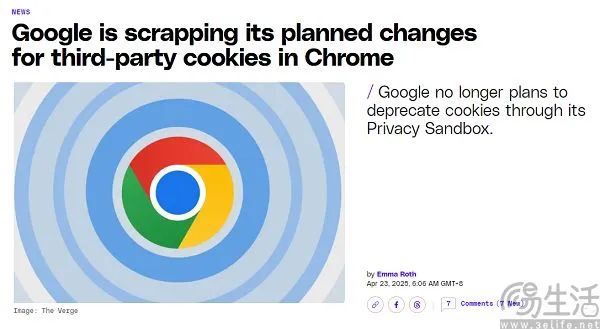
谷歌放弃淘汰第三方Cookie,隐私保护也得让位反垄断
3 6 Ke· 2025-05-06 03:36
Core Viewpoint - The termination of Google's Privacy Sandbox project, which aimed to phase out third-party cookies in Chrome, reflects significant industry resistance and regulatory pressures, highlighting the complexities of balancing user privacy with advertising business models [3][12]. Group 1: Background and Context - The "Facebook data scandal" in 2018 marked a pivotal moment for internet privacy, leading to a consensus on the importance of privacy security across the industry [1]. - Apple's introduction of intelligent tracking prevention in Safari in 2020 and Google's initial commitment to eliminate third-party cookies in 2021 were significant steps towards enhancing user privacy [1]. Group 2: Technical Aspects of Cookies - Cookies, developed by Netscape in 1994, serve as a means of information exchange between browsers and servers, primarily used to record user identities [5]. - First-party cookies enhance user experience by remembering login states and preferences, while third-party cookies allow advertisers to track user behavior across different websites [5][6]. Group 3: Industry Reactions and Implications - Google's decision to abandon the Privacy Sandbox project faced opposition from various stakeholders, including GitHub, the Electronic Frontier Foundation (EFF), and Microsoft, indicating widespread concern over the implications of such a move [3][9]. - The potential implementation of the Privacy Sandbox could have fundamentally restructured digital advertising by limiting advertisers' access to specific user data, thereby consolidating Google's control over user behavior insights [11]. Group 4: Regulatory Influence - The U.S. Department of Justice's antitrust actions against Google have intensified scrutiny on the company's practices, leading to concerns that the Privacy Sandbox could reinforce Chrome's market dominance under the guise of privacy protection [12].


美国司法部寻求剥离谷歌的ADX广告交易平台,并逐步剥离DFP发布商广告服务器。
news flash· 2025-05-06 03:28
美国司法部寻求剥离谷歌的ADX广告交易平台,并逐步剥离DFP发布商广告服务器。 ...
仙琚制药,被罚没1.95亿元
Zhong Guo Ji Jin Bao· 2025-05-05 12:08
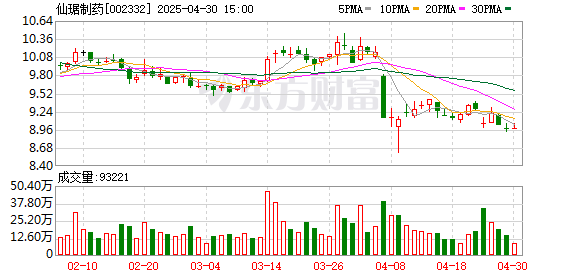
Core Viewpoint - Xianju Pharmaceutical has been fined a total of 195 million yuan due to a monopoly agreement with competitors, which significantly impacts its net profit for 2024, accounting for nearly 50% of the projected net profit [2][5][6]. Financial Impact - The total penalty of 195 million yuan includes the confiscation of illegal gains of 23.7467 million yuan and a fine of 171.6 million yuan, which is 8% of the company's 2023 sales [2][5]. - This penalty represents 4.88% of the company's audited revenue for 2024, which is 4.007 billion yuan, and 49.17% of the net profit attributable to shareholders, which is 397 million yuan [5][6]. Company Performance - For the year 2024, Xianju Pharmaceutical reported a revenue of 4.007 billion yuan, a decrease of 2.98% year-on-year, and a net profit of 397 million yuan, down 29.46% year-on-year [8]. - The net profit excluding non-recurring gains and losses was 549 million yuan, reflecting a year-on-year increase of 2.15% [8]. - The net cash flow from operating activities was 399 million yuan, a decrease of 33.05% year-on-year [8]. Compliance and Remediation - Xianju Pharmaceutical has implemented several corrective measures, including stopping the illegal pricing behavior, adjusting the prices of dexamethasone phosphate sodium raw materials, and enhancing internal compliance management [9]. - The company has established an antitrust compliance management guideline and conducted comprehensive risk assessments and specialized training to strengthen compliance [2][9]. Market Position - As of April 30, the stock price of Xianju Pharmaceutical was 8.98 yuan, with a total market capitalization of 8.883 billion yuan [9].

三星手机预装Gemini AI,也是谷歌花钱买的
3 6 Ke· 2025-05-03 02:50
Core Viewpoint - Google is facing significant scrutiny and challenges similar to those encountered by Microsoft over two decades ago, particularly in the context of antitrust issues, following its loss in a lawsuit against the U.S. Department of Justice last summer [1] Group 1: Google and Samsung Partnership - Google is reportedly paying "huge sums" to Samsung monthly to pre-install its Gemini AI on Samsung devices, along with revenue sharing from Gemini AI subscriptions [3] - Samsung's Galaxy S25 series has integrated Gemini AI as the default AI assistant, sidelining its own Bixby AI, indicating a strong partnership driven by financial incentives from Google [5] - The collaboration between Samsung and Google on mobile AI began with the Galaxy S24 series, which featured the well-received "Circle to Search" function powered by Gemini AI [3][5] Group 2: Antitrust Implications - The U.S. Federal Court's ruling against Google in the antitrust case was influenced by evidence showing that default settings significantly impact user behavior and market dominance [7] - Google's payment to Apple to make its search engine the default on iPhones was a critical factor in the court's determination of Google's monopoly in the search engine market [7] Group 3: Market Strategy and Challenges - Google aims to establish Gemini AI's presence in the mobile sector, recognizing that its Pixel devices alone cannot support the AI's growth [10] - Despite being a leader in the Android ecosystem, Google faces competition from other brands like Xiaomi, Vivo, and OPPO, which have their own AI strategies [10] - Samsung's acceptance of Google's financial offer is partly due to the underdevelopment of its own Gauss AI model, which has not gained significant recognition in the market [12][14]

Spotify updating app for US users after court ruling in Apple case
Fox Business· 2025-05-02 20:16
Core Insights - Spotify announced that Apple approved an app update allowing the music streaming service to display pricing information and purchase links more transparently after a court ruling [1][3][11] - A federal judge found Apple in "willful violation" of a 2021 injunction, requiring the company to stop restricting app developers from communicating pricing and subscription options to users [2][13] - The update enables Spotify to offer lower prices, more control, and easier access to subscription options for U.S. consumers, marking a significant milestone for developers [6][7] Company Developments - Spotify can now show U.S. users detailed pricing for subscriptions and promotional offers, enhancing consumer choice [7][9] - The app update allows users to upgrade from free accounts to premium plans and switch between different subscription types [9][11] - Spotify can accept payment methods beyond Apple's system, providing users with more purchasing options and potentially benefiting creators [11][12] Industry Context - The ruling is seen as a victory for consumers, artists, and developers, as it removes significant anticompetitive barriers imposed by Apple [3][13] - Apple plans to appeal the judge's ruling but will comply with the court order in the interim [13]


美国司法部要求联邦法官分拆谷歌的广告技术业务,希望谷歌与竞争对手分享关键的广告数据。
news flash· 2025-05-02 16:41
Group 1 - The U.S. Department of Justice is requesting a federal judge to split Google's advertising technology business, aiming to enhance competition in the market [1] - The proposal includes a requirement for Google to share critical advertising data with its competitors, which could significantly alter the landscape of digital advertising [1]
美国法官:将于9月22日庭审谷歌公司广告反垄断的解决方案。
news flash· 2025-05-02 16:02
Core Viewpoint - A U.S. judge has scheduled a hearing for September 22 regarding Google's advertising antitrust resolution [1] Group 1 - The hearing will address the proposed solutions to the antitrust issues surrounding Google's advertising practices [1]
Apple Earnings A Beat But Stock Slips As Wall Street Awaits Tim Cook Tariff Guidance
Deadline· 2025-05-01 20:53
Core Insights - Apple reported strong fiscal second quarter results with net income of $24.78 billion, an increase from $23.6 billion, and revenue of $95.4 billion, up from $90.7 billion year-over-year [2] - The Services division showed growth but fell short of expectations, contributing to a slight decline in Apple stock during late trading [2][3] - CEO Tim Cook highlighted the introduction of new products and a significant reduction in carbon emissions by 60% over the past decade, but investors are particularly focused on the potential impact of tariffs on the business [3] Financial Performance - Net income for the quarter was $24.78 billion, a year-over-year increase of approximately 5% from $23.6 billion [2] - Revenue reached $95.4 billion, reflecting a growth of about 5% compared to $90.7 billion in the same quarter last year [2] Product and Market Dynamics - The Services division, which includes platforms like Apple TV+ and Apple Music, experienced double-digit growth but did not meet market expectations [3] - Apple has been expanding iPhone production in India as a response to global import taxes, which have created uncertainty in the market [4] Regulatory and Legal Challenges - Apple faces ongoing legal challenges, including a recent ruling against the company in an antitrust case involving Epic Games, which may lead to further scrutiny and potential criminal investigation [6]