谷歌广告

Search documents
谷歌:云营收加速增长,资本开支指引激进
GF SECURITIES· 2026-02-09 05:41
Investment Rating - The report assigns a "Buy" rating to Google (GOOGL) with a current price of $322.86 and a fair value of $362.78 [4]. Core Insights - Google's cloud revenue is accelerating, and the capital expenditure guidance is aggressive, raising concerns about the return on investment (ROI) from AI infrastructure investments [5][12]. - The company reported strong revenue and net profit for Q4 2025, with revenue of $113.83 billion, exceeding expectations by 2.15%, and a year-on-year growth of 17.99% [5][13]. - The cloud segment showed significant growth, with Q4 2025 cloud revenue reaching $17.664 billion, a year-on-year increase of 47.8% [5][23]. - The advertising revenue growth is mixed, with strong performance in search ads but a slowdown in YouTube ad revenue [5][20]. - Despite concerns over capital expenditures, the financial pressure is manageable, and the returns from AI investments are promising [5][63]. Summary by Sections Q4 2025 Performance Review - Revenue and net profit exceeded expectations, with operating income at $35.934 billion and a net profit of $34.455 billion, reflecting a year-on-year increase of 29.84% [5][14]. - The cloud segment's operating profit margin improved significantly to 30.1%, up from 23.7% in Q3 2025 [5][23]. - Capital expenditures for Q4 2025 were $27.9 billion, a 95.1% increase year-on-year, with a projected capital expenditure of approximately $180 billion for 2026 [5][24]. Business Analysis - Google's advertising business remains a solid revenue foundation, with search ads contributing significantly to overall revenue [5][42]. - The cloud business is positioned as a new growth engine, driven by strong demand for AI services, with projected revenue growth rates of 46.1% for 2026 [5][63]. - The Other Bets segment is still in a loss phase, but investments in AI and other innovative sectors are expected to yield long-term growth [5][57]. Profit Forecast and Investment Recommendations - The report forecasts Google's net profit for 2026-2028 to be $139.7 billion, $163.5 billion, and $196.3 billion, respectively, with corresponding price-to-earnings ratios of 28x, 24x, and 20x [5][66]. - The overall revenue growth is projected at 17.8% for 2026, with operating margins improving gradually [5][66].
欧盟频开罚单美国态度强硬 欧美关系现数字监管裂痕
Ren Min Ri Bao· 2025-12-24 06:00
Core Points - The European Union (EU) has issued its first non-compliance decision under the Digital Services Act, imposing a fine of €120 million on the social media platform X, owned by Elon Musk, for transparency violations [1] - The EU's investigation into X focuses on the effectiveness of measures taken to combat illegal content and misinformation [1] - The fine is broken down into three parts: €45 million for misleading "blue check" certification, €35 million for non-compliance in advertising transparency, and €40 million for not providing public data access to eligible researchers [1][2] Group 1: EU Actions and Regulations - The EU has been actively enforcing digital regulations, including the Digital Services Act and the Digital Markets Act, against American tech companies [3] - In September, the EU fined Google €2.95 billion for advertising violations and required a corrective action plan [3] - Ongoing investigations include Facebook and Instagram for insufficient public data access and a new inquiry into Google's search results fairness [3] Group 2: US-EU Tensions - The US government has reacted strongly against the EU's fines, claiming that the regulations are unfair to American tech companies [2][4] - The US Secretary of Commerce linked potential reductions in steel and aluminum tariffs to changes in the EU's digital regulatory approach, indicating a direct trade-off [4] - Observers note that the fines reflect a broader struggle for digital sovereignty between the US and EU, with the EU seeking to enhance its digital autonomy in response to the expansion of US tech giants [4]

欧盟为捍卫数字主权频开罚单 美国为维护霸主地位态度强硬 跨大西洋关系现数字监管裂痕(国际视点)
Ren Min Ri Bao· 2025-12-23 22:31
Group 1 - The European Union (EU) has issued its first non-compliance decision under the Digital Services Act, fining Elon Musk's social media platform X €120 million for transparency violations [1] - The EU's investigation into X, initiated on December 18, 2023, focuses on the effectiveness of measures taken to combat illegal content and misinformation [1] - X's violations include misleading design regarding "blue check" certification, non-compliance in advertising database transparency, and failure to provide public data access to qualified researchers, resulting in fines of €45 million, €35 million, and €40 million respectively [1] Group 2 - Following the announcement, Musk criticized the EU's fine, and the U.S. government condemned the EU's regulatory actions as unfair to American tech companies [2] - EU officials assert that the penalties are proportionate to X's user scale and are not targeted specifically at U.S. companies, emphasizing that all firms operating in the EU must adhere to the same standards [2] - The EU has been actively enforcing digital regulations, including significant fines against Google and investigations into other tech companies like Meta and Amazon [2] Group 3 - The EU is assessing Amazon and Microsoft to determine if they qualify as "gatekeepers" in cloud computing, which could lead to market investigations and penalties for non-compliance [3] - Tensions between the U.S. and EU over digital regulation have extended to traditional trade areas, with U.S. tariffs on steel and aluminum linked to EU's regulatory approach [3] - The EU has rejected U.S. claims of "extortion" regarding digital regulations, asserting that these laws are essential for sovereignty and should not be used as bargaining chips [3] Group 4 - Observers note that the increasing fines reflect a broader struggle for digital sovereignty between the U.S. and EU, with the EU seeking to enhance its digital autonomy in response to the expansion of U.S. tech giants [4] - The U.S. has criticized EU regulations as unfair, with recent national security reports highlighting challenges to the "America First" strategy posed by European digital policies [4] - The divergence in worldviews between Europe and the U.S. is seen as a growing trend, with calls for Europe to achieve greater sovereignty and independence [4]

美国商务部长再次抨击欧盟数字监管法规
Xin Hua She· 2025-12-04 06:23
Core Points - The U.S. Secretary of Commerce, Howard Lutnick, criticized the EU's digital regulations, claiming they are causing significant losses for Europe itself [1] - Tensions have escalated between the U.S. and EU regarding digital regulations, with the U.S. accusing the EU of unfair treatment towards American tech companies [1] - Lutnick suggested that if Europe adopted regulations similar to those of the Trump administration, it could attract substantial investments in artificial intelligence [1] Group 1 - The EU has been enforcing a series of actions against American tech companies under the Digital Services Act and the Digital Markets Act this year [2] - In September, the EU fined Google €2.95 billion for antitrust violations related to advertising and required a corrective action plan [2] - In October, the EU Commission preliminarily found that a U.S. metaverse platform failed to provide adequate public data access, with its subsidiaries Facebook and Instagram also violating obligations [2] Group 2 - In November, the EU Commission announced a new investigation into Google to assess whether its search results are fair to the media industry [2]

谷歌"全栈"反击,强势夺回AI主导权
Hua Er Jie Jian Wen· 2025-11-25 09:53
Core Viewpoint - The market has long underestimated Google's "full-stack" AI capabilities, which are self-sufficient from chip development (TPU v7p) to model creation (Gemini 3.0) and application deployment (search + Waymo) [1] Group 1: AI Ecosystem and Financial Performance - Google's self-sufficient AI ecosystem is translating into tangible financial returns, with TPU deployment significantly reducing inference costs and stabilizing search market share above 90% [1][5] - The robust advertising cash flow supports high capital expenditures, enabling further investment in AI [1][8] - The cloud business is experiencing growth driven by Google's proprietary TPU and software ecosystem, with cloud revenue reaching $15.2 billion in Q3, a 34% year-over-year increase [3] Group 2: Competitive Positioning - TPU v7p, with an FP8 computing power of 4.5 PF, directly competes with Nvidia's B300 chip, showcasing Google's technological advancements [2] - Unlike competitors relying on external computing resources, Google has been deploying TPU since 2016, now expanding to third-party cloud services [2] Group 3: Search and Advertising Business - Google's search market share has rebounded to over 90%, with the Gemini 3.0 model enhancing user engagement and advertising capabilities [5][9] - Gemini's monthly active users have reached 650 million, and its integration with Chrome is expected to drive further user traffic [5] Group 4: Broader AI Initiatives - Google's AI initiatives extend beyond core services, with Waymo operating over 2,500 autonomous vehicles and achieving over 300,000 orders per week [9] - The AlphaFold project is making significant strides in protein structure prediction, impacting AI drug development [9] Group 5: Revenue Projections - Based on the comprehensive ecosystem, revenue forecasts for Google have been raised, with expected revenue of approximately $405.2 billion in 2025 and net profit projections of $131.5 billion [9]


如果没有阿里巴巴国际站,如何经营做好自己的外贸?
Sou Hu Cai Jing· 2025-11-24 03:42
Core Viewpoint - The disappearance of Alibaba International Station could lead to better profitability for foreign trade businesses by forcing them to establish their own customer channels and brands instead of relying on a platform [2]. Group 1: Building an Independent Presence - Step 1: Transform the independent site into a "permanent showroom" as it is owned property compared to rented Alibaba stores [3]. - Essential Pages: Include "About Us" with real factory videos and team photos to build trust [4], a "Product Center" with high-quality images and detailed specifications [5], "Case Studies" to showcase problem-solving capabilities [6], and a "Blog/Information Center" to attract free traffic from Google [7]. Group 2: Leveraging Google for Traffic - Step 2: Utilize Google as a "top salesperson" by focusing on search engine optimization (SEO) and Google Ads [8]. - Free Strategy: Continuously publish articles addressing customer issues on the blog to enhance visibility [9][10]. - Paid Strategy: Target specific long-tail keywords in Google Ads to drive traffic directly to product pages [11][12]. Group 3: Engaging on Social Media - Step 3: Actively engage on social media platforms where customers are present [13]. - LinkedIn: Optimize company and personal profiles, connect with target company managers, and build a professional image through engagement [13]. - Facebook/Instagram: Showcase factory capabilities and team culture through engaging short videos [14]. - Industry Forums: Participate in relevant online communities to establish expertise [15]. Group 4: Proactive Customer Development - Step 4: Use customs data to identify real importers and their purchasing habits [16][17]. - Google Maps: Search for distributors/importers in target countries to gather company information [18]. - LinkedIn: Identify key personnel in target companies for outreach [19]. - Development Emails: Craft personalized emails demonstrating research on potential clients and offering relevant case studies [20]. Group 5: Converting Inquiries to Orders - Step 5: Focus on professionalism and patience to convert inquiries into orders [21]. - Professional Quotations: Provide clear and detailed quotations to reflect professionalism [21]. - Sample Strategy: Ensure high-quality samples are sent promptly, even at a loss [22]. - Building a Private Customer Database: Collect emails from inquiries for ongoing marketing efforts [23]. Group 6: Long-term Benefits - The absence of Alibaba may lead to increased workload initially, but it results in higher profits without platform commissions [24]. - Businesses will own their customer data, allowing for repeated follow-ups [25]. - Establishing a brand identity that customers remember, rather than being just another store on Alibaba [26].


巴菲特,退休前大动作!罕见大举买入
Mei Ri Jing Ji Xin Wen· 2025-11-16 06:55
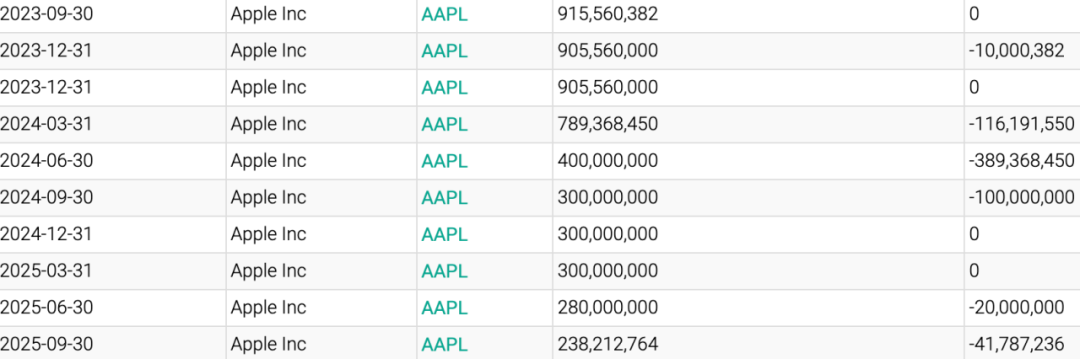
Core Insights - Berkshire Hathaway, led by Warren Buffett, has continued to sell off shares of Apple while investing $4.3 billion in Alphabet, Google's parent company [1][6] - The company's total stock holdings increased to $267 billion in Q3, up 3.4% from the previous quarter [2] - Berkshire has reduced its Apple holdings significantly, from 905 million shares to 238 million shares, decreasing its stake from over 50% to 22.69% [4][5] Group 1: Stock Transactions - In Q3, Berkshire increased its holdings in six stocks and reduced its holdings in five, including a complete exit from D.R. Horton [3] - The company sold 37.19 million shares of Bank of America, reducing its stake by nearly 45% over the past year [5] - Berkshire's new investment in Alphabet consists of 17.84 million shares, making it the company's tenth-largest holding [6] Group 2: Market Context and Strategy - The ongoing sell-off of stocks by Berkshire over the past 12 quarters may indicate Buffett's concerns about high valuations in the U.S. stock market [4] - Buffett's traditional valuation metric, the ratio of total market capitalization to GNP, has reached a historical high, which he describes as "playing with fire" [4] - Despite the sell-offs, Apple remains Berkshire's largest holding, valued at approximately $60.66 billion [4] Group 3: Leadership Transition - Warren Buffett is set to step down as CEO by the end of the year, passing the role to Greg Abel, who has expressed regret over not investing in Google earlier [1][8] - Buffett's recent public letter expressed confidence in Abel's leadership and optimism about Berkshire's future [8] - The company holds a record $381.6 billion in cash, indicating a strong liquidity position despite market challenges [9]

巴菲特,退休前大动作!罕见大举买入→
Mei Ri Jing Ji Xin Wen· 2025-11-16 03:17
Core Viewpoint - Berkshire Hathaway, led by Warren Buffett, continues to sell off Apple shares while investing $4.3 billion in Alphabet, reflecting a strategic shift in its investment approach [1][4][7]. Group 1: Stock Transactions - In Q3, Berkshire Hathaway reduced its Apple holdings from 280 million shares to 238.2 million shares, selling nearly three-quarters of its original 905 million shares [5][6]. - The total market value of Berkshire's stock portfolio increased to $267 billion, up 3.4% from the previous quarter [4]. - Berkshire also sold shares in American Bank, Verizon, and DaVita, while increasing its stake in Chubb by 429,000 shares [4][6]. Group 2: Investment in Alphabet - Berkshire established a new position in Alphabet by purchasing 17.84 million shares, making it the company's tenth-largest holding [7]. - Alphabet's stock has surged 46% this year, driven by strong growth in its cloud business amid the AI boom [7]. - Alphabet reported Q3 revenue of $102.35 billion, a 16% year-over-year increase, exceeding Wall Street expectations [7]. Group 3: Leadership Transition - Warren Buffett will hand over the CEO position to Greg Abel by the end of the year, expressing confidence in Abel's leadership [2][10]. - Buffett acknowledged his regret for not investing in Google earlier, despite recognizing its advertising potential [9]. Group 4: Market Outlook - Buffett has expressed concerns about the high valuations in the stock market, noting that the total market capitalization of publicly traded stocks relative to the GNP has reached historical highs [5]. - Berkshire holds a record cash reserve of $381.6 billion, indicating a cautious approach to current market conditions [11].

巴菲特最新持仓披露
新华网财经· 2025-11-15 03:50
Core Viewpoint - Berkshire Hathaway, led by Warren Buffett, has made significant changes to its investment portfolio in the third quarter, including substantial sales of Apple stock and new investments in Alphabet, reflecting a cautious stance on high valuations in the stock market [2][5]. Group 1: Portfolio Changes - As of the end of the third quarter, Berkshire held 41 stocks with a total market value of $267 billion, an increase of 3.4% from the previous quarter [4]. - The company increased its holdings in 6 stocks and reduced its positions in 5 stocks, while establishing a new position of 17.84 million shares in Alphabet and completely selling out of D.R. Horton [4][8]. - Berkshire has been a net seller of stocks for 12 consecutive quarters, indicating concerns about the high valuations in the U.S. stock market [3][5]. Group 2: Apple Stock Reduction - Apple remains Berkshire's largest holding with a market value of approximately $60.66 billion, but the number of shares has decreased from 280 million to 238.2 million, representing a reduction of nearly three-quarters of its original 905 million shares [7]. - The proportion of Apple in Berkshire's portfolio has dropped from over 50% to 22.69% [7]. - Buffett's reduction in Apple stock has been attributed to tax reasons, but there are speculations that it also reflects concerns about Apple's high valuation [7]. Group 3: Investment in Alphabet - Berkshire's new investment in Alphabet, totaling 17.84 million shares, makes it the company's tenth-largest stock holding [8]. - This move is surprising given Buffett's traditional value investing approach and cautious stance towards high-growth tech stocks, suggesting a shift in investment strategy possibly influenced by other investment managers within Berkshire [8][10]. - Alphabet's stock has surged by 46% this year, driven by robust growth in its cloud business amid the AI boom [9].
巴菲特最新持仓披露
财联社· 2025-11-15 02:13
Core Viewpoint - Berkshire Hathaway, led by Warren Buffett, has made significant changes to its investment portfolio in Q3, including a notable reduction in Apple shares and a new investment in Alphabet, reflecting a cautious stance on high valuations in the stock market [2][4]. Group 1: Portfolio Changes - As of the end of Q3, Berkshire held 41 stocks with a total market value of $267 billion, an increase of 3.4% from the previous quarter [3]. - The company increased its holdings in 6 stocks and reduced its positions in 5 stocks, notably acquiring 17.84 million shares of Alphabet and completely selling its stake in D.R. Horton [3][6]. - Berkshire has been a net seller of stocks for 12 consecutive quarters, indicating concerns about high market valuations [4]. Group 2: Apple Holdings - Apple remains Berkshire's largest holding with a market value of approximately $60.66 billion, but the number of shares has decreased from 280 million to 238.2 million, representing a reduction of nearly three-quarters of its original stake [5]. - The proportion of Apple in Berkshire's portfolio has dropped from over 50% to 22.69% [5]. - Buffett's reduction in Apple shares has been attributed to tax reasons, but there are speculations that it also reflects concerns over Apple's high valuation [5]. Group 3: Investment in Alphabet - Berkshire's new investment in Alphabet, totaling 17.84 million shares, has made it the company's tenth-largest stock holding [6]. - This move is surprising given Buffett's traditional value investing approach and cautious stance towards high-growth tech stocks, suggesting a shift in investment strategy possibly influenced by his investment managers [6][7]. - Alphabet's stock has surged by 46% this year, driven by robust growth in its cloud business amid the AI boom [7].