
国产化替代

Search documents
东方钽业: 宁夏东方钽业股份有限公司2025年度向特定对象发行A股股票募集资金使用可行性分析报告
Zheng Quan Zhi Xing· 2025-06-23 14:39
Fundraising Plan - The company plans to raise a total of up to 1.2 billion RMB through a private placement of A-shares, with the funds allocated to three construction projects and working capital [1] - The total investment for the projects is estimated at 1.37358 billion RMB, with 1.2 billion RMB sourced from the fundraising [1] Project Overview and Feasibility Analysis - The fundraising projects aim to support domestic economic circulation and ensure the security of national industrial chains, aligning with national development strategies [2][3] - The wet metallurgy project will produce key raw materials such as potassium fluotantalate and niobium oxide, essential for subsequent production processes in high-temperature alloys, semiconductors, and defense industries [2][3] - The projects are expected to optimize the product structure and upgrade the company's industrial capabilities, addressing the growing demand in the tantalum and niobium sector [2][3] Industry and Market Context - The projects are supported by national and local industrial policies that emphasize the development of rare metals and new materials, which are critical for various high-tech applications [5][6] - The company is positioned to meet the increasing market demand for high-value-added products in sectors like semiconductors and aerospace, enhancing its competitive edge [4][7] Financial Projections - The company anticipates a compound annual growth rate (CAGR) of 10% in revenue over the next three years, with projected revenues of approximately 1.41 billion RMB in 2025 and 1.70 billion RMB in 2027 [16][18] - The fundraising will also address the projected working capital gap of 232.66 million RMB from 2025 to 2027, ensuring sufficient liquidity for operations [19][20] Operational Impact - The fundraising projects are expected to enhance the company's operational capabilities, improve financial stability, and reduce financial risk by optimizing the capital structure [20][21] - The implementation of these projects will solidify the company's market position and support long-term sustainable growth [21]

Wolfspeed正式宣布破产;摩尔线程完成上市辅导;三星DDR4可能供不应求到Q3…一周芯闻汇总(6.16-6.22)
芯世相· 2025-06-23 04:00
Core Viewpoint - The article discusses significant developments in the semiconductor industry, highlighting investments, market trends, and technological advancements that could impact future growth and competition in the sector [8][10][12]. Investment and Policy Developments - Guangzhou Development Zone and Huangpu District have introduced policies to support the domestic production of semiconductor manufacturing materials and equipment, encouraging the development of high-end semiconductor materials [8]. - The U.S. semiconductor manufacturer Wolfspeed has announced bankruptcy, while Texas Instruments plans to invest over $60 billion in building seven semiconductor factories in the U.S. [9][12]. - South Korea's government plans to invest over 16 trillion KRW (approximately $11.56 billion) over the next five years to enhance its AI infrastructure [10]. Market Trends and Supply Chain Dynamics - Samsung is reducing DDR4 supply, leading to a potential shortage that may last until Q3 2025, with prices for DDR4 components significantly increasing [17]. - CounterPoint Research reports that the domestic market share of Chinese automotive remote communication control units (TCUs) is expected to reach 58% by Q1 2025, with a 16% year-on-year sales growth [11]. - The average price of enterprise SSDs has dropped by nearly 20% in Q1 2025 due to reduced orders from major clients, impacting the revenue of leading SSD manufacturers [18]. Technological Advancements - The Chinese Academy of Sciences has made breakthroughs in high thermal conductivity graphite films, which could support thermal management in 5G chips and power semiconductors [20]. - A new ultra-high parallel optical computing integrated chip has been developed, achieving significant advancements in photon computing capabilities [20]. Company-Specific Developments - Intel plans to cut up to 20% of its factory workforce, which may affect its core business operations significantly [12]. - NIO is restructuring its chip business into an independent entity, named Anhui Shenji Technology Co., Ltd., to attract strategic investors [14]. - Japan Display (JDI) has approved a plan to spin off its automotive business to focus on semiconductor-related technologies [16].



复合肥、尿素、氟化工、催化剂
2025-06-23 02:09
Summary of Conference Call Records Industry Overview Fertilizer Industry - The compound fertilizer industry has seen a strong performance in Q1, with leading companies experiencing growth. Q2 sales and gross margins are expected to exceed expectations. The rise in export prices for monoammonium phosphate and diammonium phosphate is anticipated to stabilize or slightly increase the performance of compound fertilizer companies in Q2, with a year-on-year growth in H1. The concentration of leading companies is a key factor driving market share growth [4][5] - Long-term trends indicate that the compound fertilizer sector, unlike single nutrient fertilizer producers, emphasizes brand and sales channels, exhibiting consumer product characteristics. The increasing market share of leading companies and the overall rise in compound fertilizer usage are expected to continue, supported by policies promoting grain production and the expansion of arable land [4] Urea Industry - The international urea market has been significantly impacted by the Russia-Ukraine conflict, leading to supply constraints. Production halts in Egypt and Iran have exacerbated the situation, driving prices up. Despite weakened demand in North America, the market is supported by Indian tenders and demand from Europe and Brazil [6][7] - Recent price trends show a notable increase in urea prices, with external prices rising between $50 to $100. Domestic export prices have reached $420 per ton, and the value of domestic urea quotas has significantly increased from 300 to over 900 yuan [9][10] Refrigerant Industry - The refrigerant market has seen a continuous price increase in Q2, with R32 retail prices rising to 51,000 to 53,000 yuan per ton. The long-term contract prices for R32 and 410A have also increased, although they remain slightly below current retail prices. The demand structure for Q3 is expected to differ from Q2, with a significant portion of sales coming from the repair market and overseas exports [2][3] Key Companies and Their Performance Hualu Hengsheng - Hualu Hengsheng is expected to see a recovery in price differentials and has plans to focus on high-value-added products. The company has laid out a strategy for long-term projects that are expected to contribute significantly to profits starting in Q3 of next year [10][11] Hai Li De - Hai Li De's polyester industrial yarn market has shown recovery, with production rates increasing from 60% to 75%-80%. The company has also seen a rise in sales to the U.S. market, with significant year-on-year growth expected in Q2 [22][23] Que Cheng Co. - Que Cheng Co. operates in a stable white carbon black market with strong customer loyalty. The company has seen steady sales growth and is actively developing new products, with expectations for continued growth in Q2 [25] Jiuhua Co. - Jiuhua Co. has reported a positive trend in export orders and anticipates continued price increases in refrigerants, suggesting strong performance in the upcoming quarters [3] Additional Insights - The compound fertilizer sector is expected to benefit from increased domestic demand due to the import substitution of fruits and the overall rise in agricultural production [4] - The urea market is facing a complex supply-demand situation, with significant contributions from geopolitical factors affecting production in key exporting countries [6][7][8] - The refrigerant market is characterized by a shift in demand patterns, with a notable increase in repair and export markets expected to influence pricing and profitability [2][3]
中国CIS崛起,索尼带头反击
半导体行业观察· 2025-06-23 02:08
Core Viewpoint - Sony's 2024 fiscal year performance report indicates that due to lower-than-expected sales from major clients and intensified competition from Chinese high-end CIS manufacturers, its market share in the CIS sector remains flat compared to the previous year, delaying its goal of achieving a 60% market share by 2025 [1][9]. Industry Overview - The current dynamics in the CIS market reflect a significant shift from a Japan-Korea dominated landscape to a more competitive environment with the rise of Chinese companies like Weier Technology, SmartSens, and Gekewei, which are transitioning from followers to competitors [2][8]. - Historically, the CIS market has seen various phases, starting from the commercialization of CCD technology in the 1970s to the emergence of CMOS technology in the 1990s, which laid the groundwork for the industry's growth [4][5]. Market Dynamics - The smartphone boom has driven explosive growth in the CIS market, with global sales increasing threefold from 2010 to 2019, making it one of the fastest-growing semiconductor categories [5][6]. - Sony and Samsung emerged as market leaders, with Sony capturing over 70% of the high-end mobile CIS market by 2022, while Samsung held a 19% market share [7][8]. Competitive Landscape - Chinese manufacturers have gained significant ground, with domestic CIS market share rising from 8% in 2018 to 25% in 2023, driven by advancements in technology and increased demand in sectors like security and automotive [9][10]. - The competition is intensifying, with Sony facing pressure from Chinese firms that are leveraging cost advantages and improving technology to penetrate high-end markets [9][10]. Future Outlook - Sony anticipates a compound annual growth rate (CAGR) of approximately 9% for its CIS business from 2024 to 2030, despite the postponement of its market share target [15][18]. - The company is focusing on enhancing product performance across five key areas: sensitivity/noise, dynamic range, resolution, read speed, and power consumption, while also investing in new manufacturing processes [15][22]. Strategic Initiatives - Sony is expanding its production capacity in Thailand and collaborating with TSMC in Japan to strengthen its manufacturing base [14][15]. - The company is positioning its automotive camera business as a strategic focus area, aiming for a 43% market share by 2026, up from 37% in 2024 [36][38]. Technological Innovations - Sony is investing in advanced manufacturing techniques, including multi-layer technology and new process nodes, to enhance sensor performance and meet evolving market demands [27][30]. - Canon is also making strides in sensor development, focusing on high dynamic range SPAD sensors and maintaining its commitment to in-house sensor R&D [48][55]. Conclusion - The CIS market is undergoing a transformation characterized by technological innovation and increased competition, particularly from Chinese manufacturers. Companies like Sony and Canon are actively adapting their strategies to maintain leadership in this evolving landscape [72].

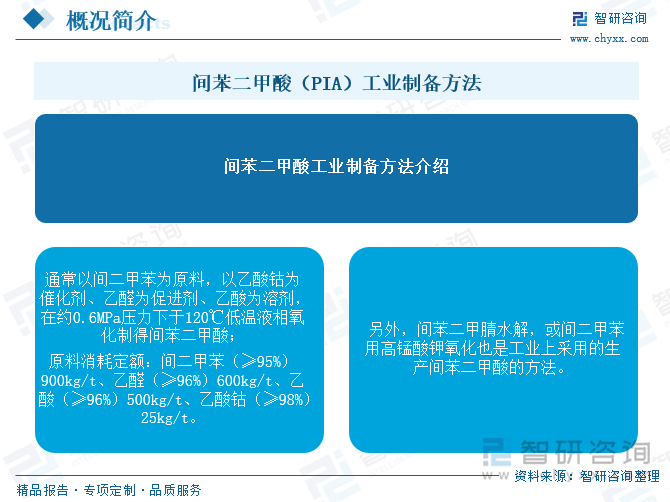
2025年中国间苯二甲酸行业产业链图谱、产能、进出口及发展趋势研判:聚酯瓶片产量增长持续拉动行业发展,但国产能力不足导致市场仍大量依赖进口补充[图]
Chan Ye Xin Xi Wang· 2025-06-23 01:27
Industry Overview - Isophthalic acid (PIA) is a white crystalline powder or needle-like crystal, widely used in various downstream applications, with polyester bottle chips being the largest demand market, accounting for over 40% of annual consumption [1][9] - China is the world's largest producer, consumer, and exporter of polyester bottle chips, providing a vast space for the isophthalic acid industry [1][9] - The production of polyester bottle chips is expected to grow by 18.17% year-on-year in 2024, reaching 15.49 million tons, which will drive a 13.52% increase in domestic isophthalic acid apparent consumption [1][9] Production and Capacity - The isophthalic acid industry in China entered a capacity expansion cycle from 2020 to 2021, with major players like Hengyi Petrochemical and Ningbo Taihua completing new capacity construction [7] - From 2022 to 2024, the production capacity is expected to stabilize at around 550,000 tons, with no new production facilities added during this period [7][19] Import and Export Dynamics - Historically, China has relied heavily on imports to meet isophthalic acid demand, with import volumes consistently above 200,000 tons [11] - However, in 2024, due to a significant increase in domestic production, imports are projected to decrease to 234,600 tons, a year-on-year decline of 12.89% [11] - The dependency on imports will drop to 34.47%, a significant reduction from 85% in 2018, indicating improved domestic production capabilities [11] Competitive Landscape - The isophthalic acid industry is characterized by high barriers to entry, with a concentrated oligopoly structure where a few companies dominate the market [13] - In 2024, Hengyi Petrochemical and Ningbo Taihua are expected to control over 90% of the total production capacity, with Hengyi Petrochemical leading at 300,000 tons, accounting for 54.55% of the total capacity [13][15] Market Demand Trends - The demand for isophthalic acid is expected to continue growing, driven by its applications in polyester bottle chips, alkyd resins, and unsaturated polyester resins [20] - The increasing production capacity of polyester bottle chips will further boost the demand for isophthalic acid [20] - Additionally, the push for high-performance materials in pharmaceuticals and electronic chemicals will create new growth points for market demand [20] Environmental and Sustainability Considerations - The isophthalic acid industry is facing pressure to transition towards greener and more sustainable practices due to stricter environmental regulations [21] - Companies are investing in environmentally friendly technologies and cleaner production processes to reduce waste and emissions [21] - Government policies are encouraging the adoption of green refining technologies, promoting a low-carbon and environmentally friendly development direction for the industry [21]

【私募调研记录】盘京投资调研赛恩斯、咸亨国际
Zheng Quan Zhi Xing· 2025-06-23 00:10
Group 1: Company Insights - Sains Environmental Co., Ltd. specializes in heavy metal pollution prevention, with a positive growth trend in its EPC business and stable gross margin levels [1] - The operational service business is experiencing high growth due to a number of EPC projects transitioning to the operational phase, with a strong upward trend expected to continue this year [1] - Xianheng International's core competitive advantages include a service penetration strategy, multi-channel brand promotion, high R&D investment, and team building [2] Group 2: Financial Performance - Xianheng International's cumulative cash dividend ratio over the past three accounting years is as high as 200%, with a planned dividend of 0.36 yuan per share in 2024, totaling 145 million yuan [2] - The company aims to enhance sales gross margin and control costs by deepening scenario recognition, introducing professional talent, optimizing the supply chain, and expanding into new fields [2] Group 3: Investment Management - Panjing Investment, established in 2016, is recognized as one of China's leading private equity fund managers, focusing on investment opportunities in Chinese listed companies and having a broad layout in overseas markets, especially in Chinese concept stocks [3] - The company emphasizes research-driven investment decisions, building a leading internal research team and maintaining strong relationships with top brokerage research institutions [3]


新材料投资:100+页PPT详解17种化工新材料潜在投资机会
材料汇· 2025-06-22 15:11
Core Viewpoint - The new materials industry is experiencing rapid growth, with significant opportunities arising from technological advancements, policy support, and the need for domestic production capabilities in response to international trade tensions [2][9][13]. Group 1: Industry Overview - The global new materials industry reached a value of $2.8 trillion in 2019, with a competitive landscape divided into three tiers: developed countries in the first tier, rapidly developing countries like China in the second tier, and emerging economies in the third tier [8][12]. - China's new materials industry generated a total output value of 6.4 trillion yuan in 2021, with an average annual growth rate of 23.1% from 2010 to 2021, and is projected to reach 7.5 trillion yuan in 2022 [9][10]. Group 2: Semiconductor Sector - The global semiconductor market was valued at $595 billion in 2021, with expectations to grow to $790 billion by 2026, driven by advancements in 5G and automotive electronics [3][16]. - The semiconductor materials market in China reached $11.9 billion in 2021, growing by 22.2% year-on-year, indicating a significant increase in domestic demand [31][32]. Group 3: Display Materials - The global OLED materials market is expected to grow from approximately $900 million in 2019 to about $2.6 billion by 2024, with a compound annual growth rate (CAGR) of 23.6% [4]. - Domestic companies like Wanrun and Ruile New Materials are leading suppliers in the liquid crystal and OLED material sectors, with significant market shares [4][15]. Group 4: New Energy Materials - The new energy sector is rapidly evolving, with key materials such as composite copper foil, conductive carbon black, and sodium battery materials expected to see substantial market growth [5][15]. - The market for photovoltaic materials is projected to reach 20 billion yuan by 2025, driven by increasing demand for solar energy solutions [15]. Group 5: Environmental Materials - Traditional chemical applications are witnessing upgrades, with domestic companies like Zhongchumai and Jianlong Weina capitalizing on opportunities in molecular sieves and lubricating oil additives [6][15]. - Aerogels, known for their exceptional insulation properties, are gaining traction in construction and electric vehicle markets, with companies like Chenguang New Materials entering this space [6][15].



刚刚,“芯片首富”,收获第二个IPO
Sou Hu Cai Jing· 2025-06-20 09:29
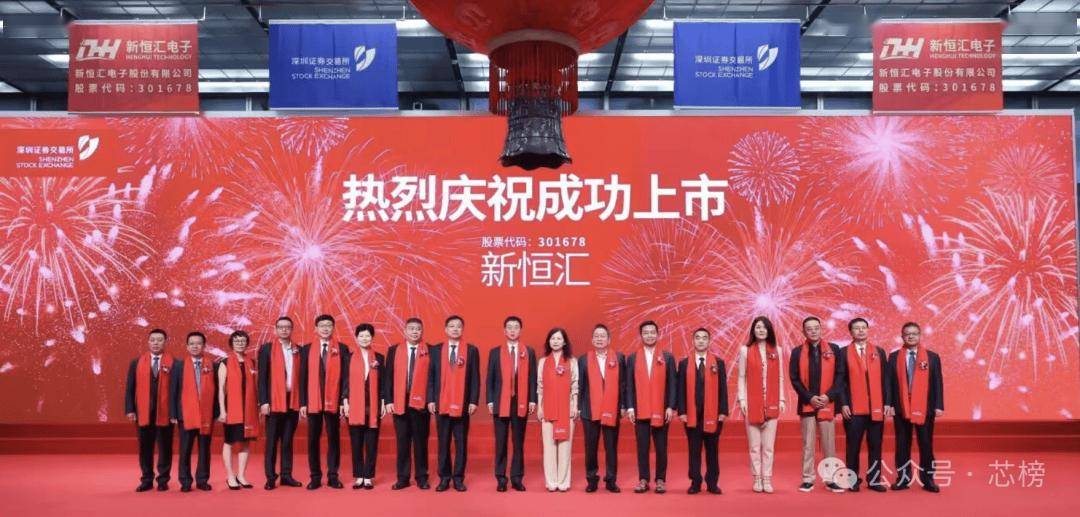
Group 1 - New Henghui's market capitalization exceeds 10 billion, with a closing increase of 229%, focusing on semiconductor packaging materials [2][4] - The core project of fundraising is the industrialization of high-density QFN/DFN packaging materials, aiming to break through technical barriers in high-end packaging materials [5] - The company has a monthly production capacity of 35 million eSIM chips, which will further enhance the domestic substitution rate of high-end packaging materials after the new project is put into production [5] Group 2 - New Henghui's main business is centered around chip packaging materials, forming a three-pronged driving pattern of smart card business, etched lead frames, and IoT eSIM packaging [6] - The smart card business is expected to contribute over 70% of revenue in 2024, with a global market share of 32% for flexible lead frames, ranking second [6] - The etched lead frame business, launched in 2019, has strong synergy with smart card packaging processes and is applied in power semiconductors and sensors [7] Group 3 - New Henghui's revenue has shown steady growth over the past three years, with projected revenues of 684 million, 767 million, and 842 million for 2022-2024, and net profits of 110 million, 152 million, and 186 million [8] - The company’s earnings are expected to be driven by the etched lead frame and eSIM packaging businesses, which are anticipated to grow significantly in the automotive electronics and IoT sectors [8] - The current issuance price-to-earnings ratio of 17.76 is significantly lower than the industry average of 37.99, providing valuation support for the stock price [8] Group 4 - The controlling shareholders of New Henghui are Yu Renrong and Ren Zhijun, holding a combined 51.25% of shares, with Yu Renrong being the largest shareholder [9] - Ren Zhijun has experience in the entire semiconductor industry chain, having previously served as vice chairman of Unisoc [9] - The shareholder list includes notable semiconductor investment institutions and government-backed capital, indicating recognition of the company's technological strength [11]
中科飞测: 深圳中科飞测科技股份有限公司2024年年度股东大会会议资料
Zheng Quan Zhi Xing· 2025-06-20 09:22
Core Viewpoint - The 2024 Annual General Meeting of Shareholders for Shenzhen Zhongke Feicai Technology Co., Ltd. is set to discuss various proposals, including financial reports, profit distribution, and the appointment of auditors, amidst a challenging financial performance in 2024. Group 1: Meeting Procedures and Regulations - The meeting will ensure the verification of attendees' identities to maintain order and efficiency [1][2] - Only authorized personnel, including shareholders and company representatives, will be allowed to enter the meeting [1][2] - Attendees must sign in 30 minutes prior to the meeting and present necessary identification documents [2][3] Group 2: Meeting Agenda - The agenda includes the review and voting on several proposals, such as the 2024 Board of Directors' work report and the 2024 Supervisory Board's work report [6][8] - The company will present its 2024 annual report and summary, along with a proposal for profit distribution, which indicates no dividends due to a net loss [9][10] - The meeting will also address the financial budget for 2025 and the appointment of the auditing firm for the upcoming year [12][14][15] Group 3: Financial Performance - In 2024, the company reported a net loss attributable to shareholders of RMB -11.5251 million, a decrease of 108.21% compared to the previous year [21][36] - The total revenue for 2024 was RMB 1.3804 billion, reflecting a year-on-year increase of 54.94% [36] - The company’s operating cash flow was negative at RMB -312.701 million, indicating significant operational challenges [36] Group 4: Future Plans and Proposals - The company plans to apply for a credit limit of up to RMB 5 billion from financial institutions to support business operations in 2025 [15] - A proposal to amend the company's registered capital and revise the articles of association will be presented for approval [18][19] - The board aims to enhance governance and operational efficiency in the upcoming year, focusing on risk management and compliance with regulations [31][32]

资本助力罗洋巴姆,高稳定性仪表领航工业智能化新征程
Jin Tou Wang· 2025-06-20 08:22
Industry Overview - The "Made in China 2025" strategy and the push for high-end manufacturing's intelligent transformation have significantly increased the focus on industrial automation as a key area for enhancing production efficiency and ensuring product quality [1] - The industrial automation instrument industry is experiencing unprecedented development opportunities due to national policies favoring smart manufacturing and industrial internet, as well as support for high-end equipment research during the 14th Five-Year Plan [1] - The global wave of Industry 4.0 and smart manufacturing is driving profound changes in the manufacturing sector, with industrial automation instruments becoming increasingly critical [1] Company Profile - Tianjin Luoyang Bam Automation Technology Co., Ltd. (Luoyang Bam) recently held a notable capital seminar in Shenzhen, attracting attention from various investment institutions and industry experts [2] - The seminar showcased Luoyang Bam's deep expertise in high-stability industrial automation instruments and its ambitious vision for future development, marking a significant step in promoting domestic substitution and leading industry innovation [2] - Luoyang Bam has been committed to the research and manufacturing of high-stability industrial automation instruments, aiming to provide high-quality and reliable automation solutions for clients [2] Technological Advancements - Luoyang Bam is actively pursuing breakthroughs in key areas such as sensor technology and core processing circuits, developing a roadmap for the next generation of instruments [3] - The company has demonstrated core technologies, including sensors based on resonant single-crystal silicon piezoelectric crystals and core processing circuits with self-damping adjustment, which enhance product stability and precision [3] - Luoyang Bam is also focused on creating a collaborative platform for the entire lifecycle of industrial automation instruments, integrating advanced technologies like IoT, big data, and AI for intelligent monitoring and predictive maintenance [3] Future Development Plans - Luoyang Bam plans to deepen its technological layout in high-stability industrial automation instruments and expand applications across multiple industrial sectors [4] - The company aims to seek in-depth cooperation with the capital market to accelerate project advancement and significantly increase its domestic market share while gradually expanding into international markets [4] - The leadership structure, featuring a father-son team, is seen as a unique advantage that provides the company with a strong family heritage and stable development genes, enhancing its competitive edge in the market [4] Market Potential - The successful seminar highlighted Luoyang Bam's outstanding R&D capabilities and quality performance in high-stability industrial automation instruments, signaling significant development potential and growth opportunities to the capital market [5] - With capital infusion and comprehensive resource integration, Luoyang Bam is set to deepen technological innovation and market expansion, contributing to the prosperity of the industrial automation instrument industry [5]