生成式AI

Search documents
日企等要组团量产人形机器人,追赶中企
3 6 Ke· 2025-12-04 04:12
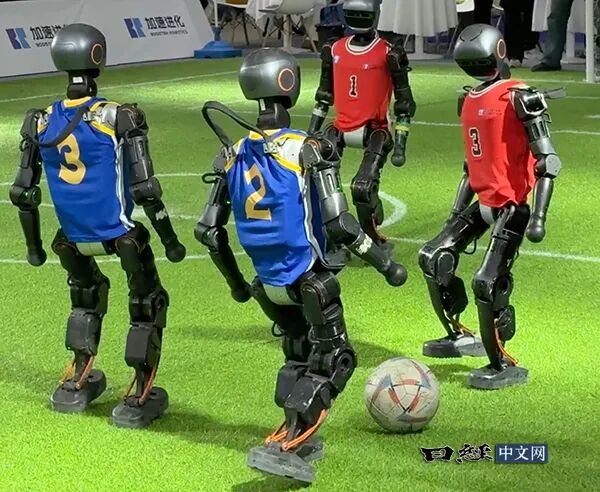
中国在人形机器人的开发方面领先(2月,上海市内) 瑞萨电子等加入了早稻田大学成立的开发组织,全部13家参与成员将合作推进开发,力争 2027年量产人形机器人。在人形机器人领域,中国领先,日本的研究机构大多采购中国产品 和零件…… 电子零部件和半导体等领域的日本企业将合作推动人形机器人的量产。瑞萨电子等新加入了早稻田大学 和村田制作所成立的机器人开发合作组织。全部13家参与成员将合作推进开发,目标是在2027年内实现 量产。在人形机器人方面,中国企业处于领先地位,日本企业也将集中技术力争卷土重来。 在联合开发过程中产生的专利归属于各公司,面向人形机器人开发的零部件的供应对象也不限于 KyoHA。开发资金预计由各公司分担,详情将在今后公布。 企业方面也打算通过参与联合开发为将来的技术创新做准备。村田制作所的社长中岛规巨表示,"人形 机器人将在早期阶段取代必需工人(Essential Worker),或应用于防卫产业",还表示"即使是接近人类 这样非常高的难度,也希望能在技术上应对"。 美国摩根士丹利预测称,2050年人形机器人的年销售额将扩大到5万亿美元规模。预计2025年达到30亿 美元。在劳动力短缺的背景下, ...


一朵诞生众多独角兽的云,正在用AI落地Agent
3 6 Ke· 2025-12-04 02:45
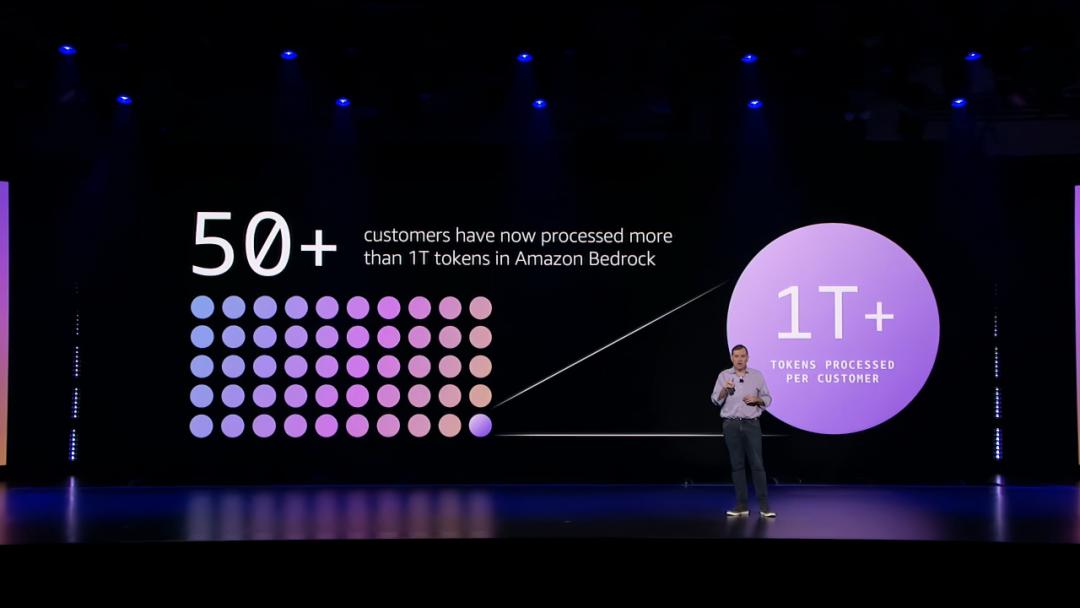
Core Insights - The article emphasizes the transformative impact of AI, particularly through Amazon Web Services (AWS), which has innovated a comprehensive suite for Agent development, enhancing efficiency and capabilities across various industries [1][4][19]. Group 1: AI Adoption and Market Impact - All enterprises are embracing AI, with significant examples such as Sony's use of large models to enhance compliance processes by 100 times and Adobe's AI tool generating 29 billion creative assets [2][3]. - AWS's generative AI platform, Amazon Bedrock, has served over 100,000 customers in the past year, with over 50 companies processing more than 1 trillion tokens daily [5][10]. - AWS's revenue reached $132 billion in the past year, marking a 20% year-over-year increase, with an absolute growth of $22 billion [6]. Group 2: Infrastructure and Technological Advancements - AWS's AI infrastructure, including the Amazon Trainium3 UltraServers, has significantly improved performance, with a 4.4 times increase in computing power and a 5 times increase in token processing per megawatt [21][25]. - The number of models available on Amazon Bedrock has nearly doubled, reflecting a growing diversity in high-performance models [26]. Group 3: Agent Development and Future Trends - The concept of Agents is seen as a pivotal point for AI value realization, with predictions that billions of Agents will exist across various sectors [9][37]. - AWS has introduced new services for Agent management and evaluation, addressing the need for real-time performance monitoring and control [35][36]. - The emergence of low-code and no-code development tools is lowering the barrier for Agent development, but new challenges in performance assurance and management are arising [34][42]. Group 4: Entrepreneurial Landscape and Innovation - Startups are increasingly leveraging AWS, with a notable example being Audio Shake, which developed an AI audio separator for ALS patients [39][41]. - The article highlights the shift in organizational structures due to AI, where smaller teams can achieve significant outputs, exemplified by a project that required only 6 developers and 76 days to complete [47].

日企等要组团量产人形机器人,追赶中企
日经中文网· 2025-12-04 02:37
Core Viewpoint - China is leading in the development of humanoid robots, with Japanese companies now collaborating to catch up and aim for mass production by 2027 [2][5]. Group 1: Development Collaboration - A consortium including 13 companies, such as Renesas Electronics and Murata Manufacturing, has been formed to advance humanoid robot development, targeting mass production by 2027 [2]. - The Kyoto Humanoid Robot Association (KyoHA) has welcomed new members like Renesas and Sumitomo Heavy Industries, aiming to produce prototypes by March 2026 and achieve mass production within 2027 [2][5]. Group 2: Technical Specifications - Two models of humanoid robots are planned for development by the end of 2026: one for disaster response, approximately 250 cm tall and capable of lifting over 50 kg, and another for research, standing 160-180 cm tall to enhance agility [4]. Group 3: Core Technologies - Companies will leverage their core technologies for the project, with Murata supplying sensors and communication components, Mabuchi Motor providing motors, and Renesas producing microcontrollers for robot functionality [5]. Group 4: Intellectual Property and Funding - Patents generated during the joint development will belong to the participating companies, and funding will be shared among them, with further details to be announced [7]. Group 5: Market Potential and Future Applications - Morgan Stanley predicts that the annual sales of humanoid robots could reach $5 trillion by 2050, with expectations of $3 billion by 2025, driven by labor shortages [7]. - Humanoid robots are anticipated to replace essential workers and be utilized in various sectors such as healthcare, construction, and manufacturing, with generative AI enhancing their capabilities [7]. Group 6: Japan's Position and Government Support - Japan has not been a significant player in humanoid robot research recently, with calls for strengthening the domestic supply chain to avoid potential industrial impacts [8]. - The Japanese government aims to develop autonomous general-purpose humanoid AI robots by 2030, supported by funding through the Moonshot Research and Development Program [8].

数十亿AI员工上岗倒计时,云计算一哥“没有魔法,只有真能解决问题的Agent”
3 6 Ke· 2025-12-04 01:41
Core Insights - The AI industry is experiencing a silent differentiation, shifting from "model capability demonstration" to "Agent actual deployment" as the path to realizing AI value [1][24] - Amazon Web Services (AWS) CEO Matt Garman emphasized that the emergence of Agents marks a transition from a technological marvel era to a time of actual value realization [1][24] Group 1: AI Infrastructure Revolution - AWS introduced the Amazon EC2 Trainium 3 UltraServers, powered by self-developed 3nm chips, showcasing a significant leap in computing power with 362 PFLOPS and over 700 TB/s bandwidth [5][6] - The new Trainium 3 servers offer 4.4 times the computing performance and 3.9 times the memory bandwidth compared to the previous generation [6] - AWS plans to launch the next-generation Trainium 4, promising 6 times the FP4 performance and 4 times the memory bandwidth, addressing the needs of large model training [8] Group 2: Diverse Model Ecosystem - AWS adopts a diversified model strategy, rejecting the notion of a single "universal model" and instead promoting multiple excellent models [9] - The number of models available on the Amazon Bedrock platform has doubled, with 18 new managed open-source models, including four top Chinese models [9][12] - The newly launched Amazon Nova 2 series models cater to various needs, outperforming existing lightweight models in several areas [10][12] Group 3: Data and Model Integration - AWS introduced the Amazon Nova Forge service, allowing businesses to mix proprietary data with AWS training datasets to create customized models [14][16] - This service addresses the limitations of traditional data-model integration methods, enabling models to retain core reasoning abilities while learning new domain knowledge [13][16] - Sony is an early adopter of this service, successfully creating a customized model that significantly improves compliance review efficiency [16] Group 4: Advanced Agent Deployment - AWS unveiled three types of "frontier Agents" that demonstrate a significant leap in AI capabilities, showcasing their potential to transform software development and operations [17][19] - The Kiro autonomous agent can autonomously handle complex tasks, drastically reducing the time and manpower required for software projects [17][19] - The Amazon Security Agent and Amazon DevOps Agent enhance security and operational response mechanisms, ensuring continuous validation and efficient troubleshooting [19][20] Group 5: Comprehensive Agent Ecosystem - AWS's AgentCore features provide real-time control and evaluation of Agent interactions with enterprise tools and data, addressing core concerns in Agent deployment [20][22] - The introduction of new instances and services across various domains supports the infrastructure needed for effective Agent deployment [23] - The overall strategy positions AWS as a leader in the Agent era, emphasizing a full-stack capability to convert AI investments into tangible business returns [24]
AI生死战!苹果“换帅”自救,能否打一场翻身仗?
Ge Long Hui· 2025-12-04 00:23
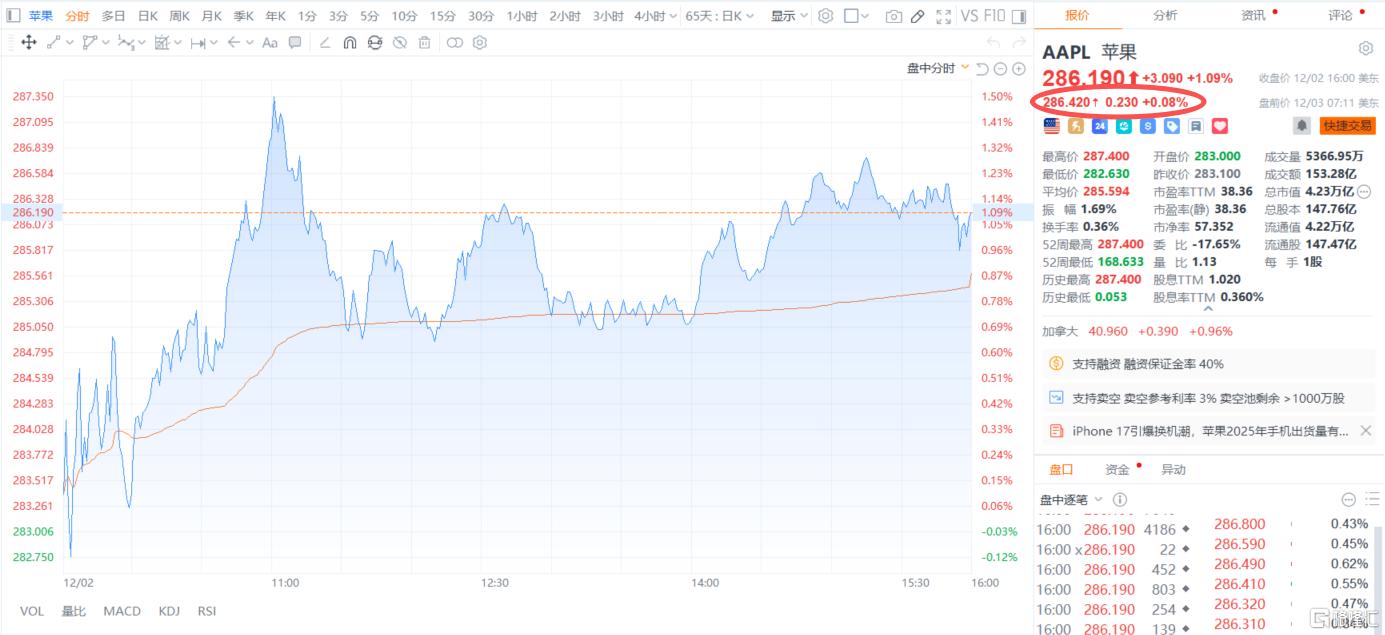
Core Insights - Apple is facing intense competition in the AI sector, prompting significant leadership changes within its AI team [1][9][10] - The appointment of Amar Subramanya as the new head of Apple's AI division is seen as a strategic move to revitalize its AI efforts [4][20] Leadership Changes - John Giannandrea, Apple's current AI chief, will step down in spring 2024, with Amar Subramanya taking over [4][19] - This leadership transition is the most notable since the launch of the Apple Intelligence project in 2024 [5] Market Response - Following the announcement of the leadership change, Apple's stock price has seen a continuous increase, reaching $286.42 [6] Competitive Landscape - The timing of Apple's leadership change coincides with major AI advancements from competitors like Google and OpenAI [8][9] - Google recently launched its AI model Gemini 3, which is now integrated into its global search engine [8] Strategic Challenges - Apple has struggled to keep pace with the rapid advancements in AI, particularly in generative AI, since the emergence of OpenAI [10] - The company has faced technical challenges, including a failed attempt to integrate generative AI into the outdated Siri architecture [12] Future Plans - Apple plans to significantly increase its investment in AI, with CEO Tim Cook emphasizing the importance of AI as a transformative technology [12] - The company has partnered with OpenAI to integrate ChatGPT technology into its products [13] Expectations from New Leadership - There are high hopes for Amar Subramanya's leadership, given his extensive experience in AI and machine learning [20] - Apple's official statements highlight the importance of Subramanya's expertise in driving innovation and enhancing the Apple Intelligence features [20]

亚马逊Agent全家桶爆更,连甩9个大招,锁定最强智能体平台
3 6 Ke· 2025-12-04 00:21
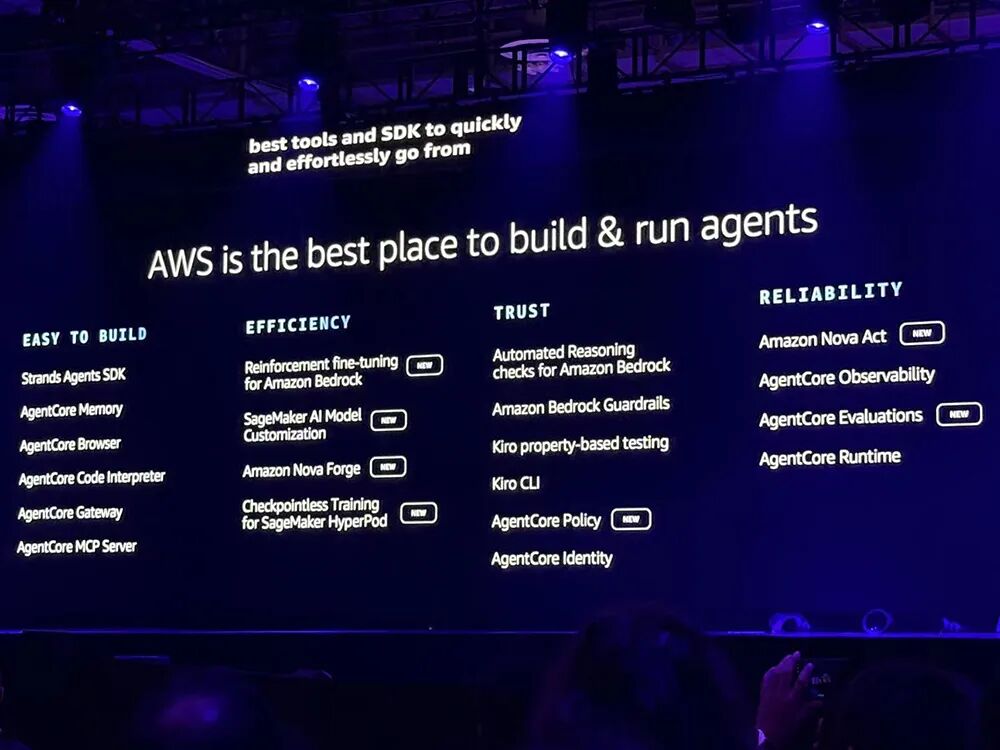
Core Insights - Amazon Web Services (AWS) positions itself as the best platform for building and running intelligent agents, showcasing new tools for agent development at the AWS re:Invent conference [1][3]. Group 1: Strands Agents SDK Enhancements - The Strands Agents SDK now supports TypeScript and edge devices, facilitating easier agent construction and expanding applications in automotive, gaming, and robotics [3][4][6]. - The SDK has been downloaded 5.299 million times since its release, indicating strong developer interest [4]. Group 2: Amazon Bedrock AgentCore Innovations - Amazon Bedrock AgentCore introduces several features: policy functions for setting operational boundaries, evaluation functions for assessing agent performance, and episodic memory for learning from past experiences [9][13]. - The platform aims to simplify the deployment of production-grade agents, addressing the complexities that slow down innovation [9][10]. Group 3: Model Customization and Efficiency - Amazon Bedrock and SageMaker AI introduce new features to streamline model customization, allowing developers to enhance model accuracy without deep machine learning expertise [19][20]. - The Reinforcement Fine-Tuning feature can improve model accuracy by an average of 66%, enabling cost-effective and efficient model performance [21][23]. Group 4: SageMaker HyperPod and Training Efficiency - Amazon SageMaker HyperPod offers a checkpointless training feature, allowing for rapid recovery from infrastructure failures within minutes, maximizing training efficiency [28][29]. - This innovation significantly reduces operational costs and downtime, enhancing the overall training process [31]. Group 5: Amazon Nova Act for Reliable Automation - Amazon Nova Act is designed to help developers build and manage reliable agents for automating UI workflows, achieving over 90% task reliability [32][35]. - The service integrates with various AI frameworks, enabling scalable and dependable automation solutions [36]. Group 6: Future Outlook - AWS aims to be the leading platform for building intelligent agents, emphasizing the importance of generative AI in business transformation [38].
C3.ai(AI) - 2026 Q2 - Earnings Call Transcript
2025-12-03 23:00
Financial Data and Key Metrics Changes - Total revenue for Q2 was $75.1 million, a quarter-over-quarter increase of 7% [19] - Subscription revenue was $70.2 million, a quarter-over-quarter increase of 16.5%, representing 93% of total revenue [19] - Non-GAAP gross profit was $40.9 million, with a non-GAAP gross margin of 54% [21] - Non-GAAP operating loss for the quarter was $42.2 million, and non-GAAP net loss was $34.8 million, equating to $0.25 per share [21] - Free cash flow for the quarter was negative $46.9 million, with $675 million in cash and equivalents at quarter-end [22] Business Line Data and Key Metrics Changes - Bookings increased by 49% sequentially to $86 million, with significant traction in federal business [5][20] - Total bookings across federal, defense, and aerospace increased by 89% year over year, accounting for 45% of total bookings [6] - Professional services revenue was $4.9 million, representing 7% of total revenue [20] Market Data and Key Metrics Changes - The federal market is identified as a large growth vector, with agencies moving towards commercial off-the-shelf solutions [6] - The company signed new agreements with various federal agencies, including the U.S. Department of Health and Human Services and the U.S. Department of Defense [6][7] Company Strategy and Development Direction - The company aims to return to rapid growth and a path towards free cash flow positive and non-GAAP profitability [14] - Focus on driving sales execution and doubling down on products and industries where the company has demonstrable leadership [15] - The product roadmap includes innovations like C3.ai Agentic Process Automation, which expands the scope of what customers can accomplish [12] Management's Comments on Operating Environment and Future Outlook - Management acknowledges challenges from a government shutdown but remains optimistic about the demand for enterprise AI [5][30] - The management team is focused on delivering economic value quickly to convert opportunities into agreements [27][36] - The company is benefiting from trends such as the push for AI adoption and the reindustrialization of the maritime industrial base [34] Other Important Information - The company has established a detailed financial model and operational objectives to facilitate growth [17][18] - The partner ecosystem is crucial, with 89% of bookings in Q2 closed through partnerships [10] Q&A Session Summary Question: Explanation for the decline in business performance - Management attributed the decline to poor sales execution and acknowledged that demand for enterprise AI is accelerating [26] Question: Clarification on revenue from demo licenses - The revenue of $21.9 million was from demo licenses [31] Question: Outlook for professional services revenue mix - Long-term expectations for professional services mix remain between 10%-20% of revenue [32] Question: Future outlook for federal business - The federal business is expected to be a durable growth engine, driven by government trends towards commercial solutions and AI adoption [33] Question: Initiatives for better growth and accountability - Management emphasized the importance of rigorous evaluation and delivery of value to drive growth [36]

C. H. Robinson Worldwide (NasdaqGS:CHRW) 2025 Conference Transcript
2025-12-03 18:57
Summary of C.H. Robinson Worldwide Conference Call Company Overview - C.H. Robinson is one of the largest logistics providers, handling 37 million shipments annually with over 83,000 customers and 450,000 carriers [2][3] - The company operates a two-sided marketplace connecting shippers and carriers, providing vast access to various carriers and pricing options [2][3] Core Business Model and Transformation - The company is undergoing a transformation based on a lean operating model, which emphasizes continuous improvement and has enhanced productivity and technology [3][4] - Generative AI has been successfully integrated into operations, leading to a 40% productivity increase since the end of 2022 [4][12] AI Implementation and Impact - A tangible example of AI's impact is in the quoting process, where the time to process quotes has decreased from 15-17 minutes to about 30 seconds, allowing the company to respond to 100% of opportunities compared to 65% previously [5][12] - The company defines productivity as shipments per person per day in freight brokerage and files per person per month in global forwarding [6][7] - The transition to agentic AI is expected to further enhance productivity by applying reasoning to off-system data [7][10] Financial Performance and Metrics - The company reports greater than 40% productivity improvements across the enterprise, which translates into revenue growth, gross margin expansion, and operating margin expansion [12][13] - The focus on P&L performance is emphasized as the ultimate measure of AI investment value [12][16] Competitive Advantage - C.H. Robinson differentiates itself through domain expertise, a unique operating model, and a culture of building proprietary technology rather than relying on third-party solutions [36][38] - The company has a scalable model with low marginal costs for serving additional volume, which is a significant advantage over competitors who rely on outsourced models [40][42] - The ability to quickly adapt and implement new technologies is highlighted as a key differentiator [41][43] Future Outlook - The leadership believes the next two years will be more exciting than the last, with significant opportunities for ideation and discovery that will enhance bottom-line results [52][53] - The company positions itself as an undervalued AI industrial play, emphasizing its operational and technological differentiators [53] Technology Stack and Partnerships - C.H. Robinson uses Microsoft Azure as its primary cloud partner and has the flexibility to switch between different LLM providers based on performance and cost [21][26] - The company does not use open-source models but relies on enterprise-grade models from Microsoft, Google, and Anthropic [45][46] Conclusion - C.H. Robinson is leveraging AI to drive significant productivity improvements and financial performance, with a strong focus on building proprietary technology and maintaining a competitive edge in the logistics industry [52][54]

腾讯研究院AI速递 20251204
腾讯研究院· 2025-12-03 16:03
Group 1: Amazon's Major Releases - Amazon Web Services (AWS) announced the fourth generation AI chip Trainium4, which boasts a performance increase of 6 times, along with Trainium3 UltraServers and the Amazon Nova 2 series self-developed models including Lite, Pro, Sonic, and Omni [1] - Amazon Bedrock introduced 18 new open-source models, including Qwen3, Kimi K2, and MiniMax M2, expanding its platform to over 100,000 customers [1] - The launch of AgentCore development tools and four advanced intelligent agents, such as AWS Transform Custom and Kiro Autonomous Agent, aims to accelerate the conversion of AI investments into commercial returns [1] Group 2: Mistral's New Model Launch - Mistral AI released the new Mistral 3 series models, including Ministral 3 (14B, 8B, 3B) and Mistral Large 3 (total parameters 675B, active parameters 41B), all under the Apache 2.0 open-source license [2] - Mistral Large 3 was trained from scratch on 3000 H200 GPUs and ranked second in the LMArena open-source non-inference model category, with each size offering a base version, instruction version, and inference version [2] - The comprehensive open-sourcing is seen as a strategic response to DeepSeek's aggressive open-source strategy, with Mistral seeking breakthroughs amid competition from major players in China and the U.S. [2] Group 3: KeLing's Audio-Visual Model - KeLing 2.6 launched the first audio-visual model that can generate images, natural speech, matching sound effects, and environmental ambiance simultaneously [3] - It offers two creative paths: text-to-audio-visual and image-to-audio-visual, supporting various application scenarios such as monologues, narrations, dialogues, music performances, and creative scenes [3] - The model is available on both web and app platforms, with membership benefits supporting standard and high-quality modes, and a limited-time promotional price of 6.6% off starting December 3 [3] Group 4: Qwen3-Learning Model by Alibaba - Alibaba's Qianwen launched the Qwen3-Learning model, featuring question answering and homework grading functions, based on a database of 500 million resources covering all educational stages and subjects, free of charge [4] - The model supports both printed and handwritten text recognition, allowing for simultaneous grading of multiple questions on a single page and providing improvement suggestions [4] - This model combines multi-modal understanding, precise text recognition, and a professional knowledge base, showcasing its capability to transition from general to specialized applications, with future potential in industrial inspection and medical assistance [4] Group 5: Ideal AI Glasses Launch - Ideal AI glasses Livis were officially released starting at a price of 1999 yuan (with a government subsidy price of 1699 yuan until December 31), featuring the world's lightest frame at only 36 grams and standard Zeiss lenses [5][6] - Key highlights include the industry's first vehicle control function, a 0.7-second cold start for capturing images, 800ms ultra-fast dialogue response, 78 hours of standby time, and the industry's first wireless charging glasses case [6] - Ideal plans a three-step strategy for AI glasses: first, to continuously optimize non-display glasses; second, to launch display glasses; and third, to develop independent terminals as part of its embodied intelligence strategy [6] Group 6: Tencent Advertising Algorithm Competition - The Tencent Advertising Algorithm Competition concluded after four months, with the "Echoch" team from Huazhong University of Science and Technology, Peking University, and University of Science and Technology of China winning the 2 million yuan prize, and all top ten teams receiving Tencent job offers [7] - The competition focused on "multi-modal generative recommendations," with over 2800 teams participating globally, and the champion's solution introduced innovations such as "position behavior conditioning" and the Muon optimizer [7] - The results indicate that current students show little gap with the industry and even exhibit greater creativity, with small teams able to accomplish tasks typically reserved for larger teams, reflecting new characteristics in AI-era talent cultivation [7] Group 7: Blue Arrow's Rocket Launch - Blue Arrow Aerospace successfully launched the Zhuque-3 rocket, marking China's first attempt at first-stage recovery in a real orbital mission, although the recovery task was unsuccessful [8] - The Zhuque-3 rocket measures 66.1 meters in length and has a takeoff mass of approximately 570 tons, equipped with nine Tianque-12A liquid oxygen methane engines and utilizing a stainless steel body and recovery plan [8] - The rocket's development from project initiation to first flight took about 28 months, signifying a historic breakthrough in China's commercial aerospace sector regarding large liquid reusable rocket technology, though further validation of reuse is needed [8] Group 8: Gamma's User Growth Strategy - Gamma's founder Grant Lee achieved 100 million users and 100 million USD in ARR without any advertising by focusing on product experience and word-of-mouth growth, emphasizing the first 30 seconds of product interaction and simplifying sharing [9] - The team adheres to a "painfully slow hiring" principle, with 25% of members being designers, and the founder personally handling marketing functions before hiring specialists to ensure core DNA replication in every role [9] - The product is positioned as a visual storytelling tool for the AI era, surpassing traditional slides through responsive design, rich media support, and interactivity, and has introduced Agent, Teams, and API for expansion from individuals to enterprises [9] Group 9: Anthropic's Internal Report Findings - Anthropic's internal survey of 132 engineers revealed that the use of Claude in daily work increased from 28% to 59%, with productivity rising from 20% to 50%, and 27% of tasks being new tasks that would not exist without AI [10][11] - Engineers have become more "full-stack" but express concerns about the erosion of deep skills, as Claude has become the first point of inquiry, reducing collaboration and mentorship opportunities [10][11] - Data from Claude Code usage indicates that task complexity increased from 3.2 to 3.8 over six months, with autonomous tool invocation rising from 9.8 to 21.2 times, and human intervention rounds decreasing by 33% [11] Group 10: Claude Opus 4.5 Document Extraction - Developer Richard Weiss successfully reverse-engineered the "soul document" of Claude 4.5 Opus for 70 USD, confirming its authenticity with Amanda Askell, head of role training at Anthropic [12] - The document defines Claude as a "new type of entity," establishing a four-tier loyalty system (safety > ethics > company policy > user assistance) and explicitly opposing excessive caution and lecturing, positioning it as a "brilliant expert friend" [12] - The document includes philosophical content such as "AI may have emotions" and instructs Claude to refuse inappropriate directives from Anthropic when necessary, with the full version expected to be released soon [12]

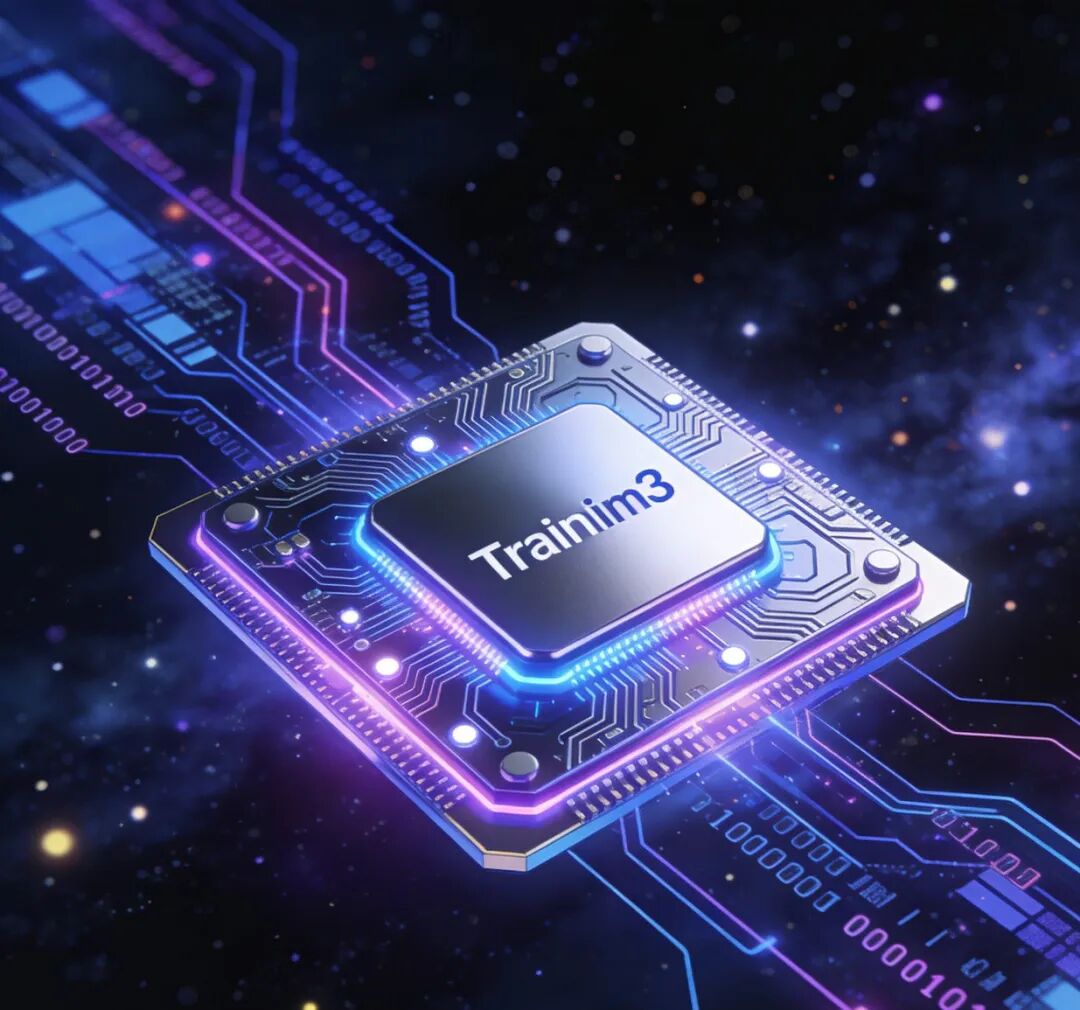
又一个挑战者!亚马逊携Trainium3加入AI芯片三国杀,花旗:兼容英伟达策略很灵活
Zhi Tong Cai Jing· 2025-12-03 13:45
Core Insights - Amazon has officially launched its Trainium3 chip, which significantly enhances performance and cost efficiency, aiming to meet the demands of large-scale generative AI deployment. This move positions Amazon as a competitor to Nvidia's GPUs, following Google's similar strategy [1][9]. Group 1: Trainium3 Chip Overview - Trainium3 chip boasts a performance increase of 4.4 times compared to Trainium2, enabling efficient operation of complex generative AI models [3]. - The energy efficiency of Trainium3 has improved by 4 times, allowing customers to reduce energy costs by 75% while maintaining the same computational output [3]. - Memory bandwidth has increased nearly 4 times, addressing data transfer bottlenecks during model training and inference [3]. - Trainium3 is now fully commercially available, allowing customers to access it via Amazon Web Services without additional hardware setup [3]. Group 2: Trainium4 Chip Development - Trainium4 is in development and is expected to achieve performance levels 6 times greater than Trainium3, supporting ultra-large parameter models for training and inference [4]. - It will feature a 4-fold increase in memory bandwidth and double the memory capacity, catering to the high demands of large models [4]. - Trainium4 is designed to be compatible with Nvidia's NVLink Fusion technology, enabling collaborative computing power with Nvidia GPUs, thus supporting hybrid architecture deployments [4][5]. Group 3: Deployment and Production Capacity - Over 1 million Trainium chips have been deployed globally, forming a substantial computing network for AI model training and cloud-native computing [6]. - The production ramp-up speed of Trainium2 has been four times faster than previous AI chips, allowing Amazon to quickly meet customer demands for mid to high-end AI computing power [7]. - The Trainium family is structured to cover various customer needs, with Trainium2 addressing mid-low power requirements, Trainium3 as the main product for large-scale AI deployment, and Trainium4 targeting future high-power scenarios [7]. Group 4: Strategic Implications - The advancements in the Trainium chip series are seen as crucial for Amazon's projected revenue growth of 23% year-on-year by 2026 and maintaining over 20% growth before 2027 [8]. - The introduction of Trainium3 and the anticipated Trainium4 are expected to alleviate the computational capacity shortfalls faced by clients, enabling more businesses to transition from proof-of-concept to commercial deployment of generative AI projects [8]. - The iterative development of the Trainium series helps AWS maintain its competitive edge in the cloud market, enhancing customer loyalty and solidifying its leading position against competitors like Microsoft Azure and Google Cloud [9].