
数字化转型

Search documents
2026年梅赛德斯-奔驰将在中国市场引入超15款全新和改款产品
Yang Shi Wang· 2026-01-14 02:57
Core Insights - In 2025, Mercedes-Benz delivered over 575,000 new vehicles in the Chinese market, maintaining a leading share in the core luxury market and the high-end luxury car market [1] - The year 2026 marks the 140th anniversary of the invention of the automobile and the 40th anniversary of the brand's entry into the Chinese market, with plans to introduce over 15 new and updated models [3] - The all-new Mercedes-Benz electric GLC SUV, the first mass-produced model on the MB.EA platform, will be launched in a long-wheelbase version in China [5] Product Strategy - Mercedes-Benz will adhere to a product strategy of "oil-electric parity" and "oil-electric intelligence," gradually renewing its product lineup [3] - New models based on the MB.EA, AMG.EA, and VAN.EA electric platforms will be introduced [3] - Starting in 2026, all models equipped with the MB.OS system will receive over-the-air software updates [7] Digital Transformation - The company is focusing on quality improvement and efficiency, upgrading its retail network while enhancing customer service experiences [7] - Over 30 dealer network upgrades were completed in 2025, with new outlets established in previously underserved markets [7] - AI tools will be integrated to enhance service, retail, and business management efficiency [7] Sustainability Initiatives - Mercedes-Benz is committed to sustainable development, with Beijing Benz entering the "dual 6 million" era in production and achieving carbon neutrality in its manufacturing processes [8] - The company is actively participating in social sustainability initiatives, including a three-year public welfare cooperation with the Sanjiangyuan National Park [8] - In 2026, the company will continue its "influence public welfare" practices, benefiting over 100 schools through youth quality education projects [10]


财务公司工作会议里的那些“关键词”
Jin Rong Shi Bao· 2026-01-14 02:04
Core Insights - The financial companies are focusing on digital transformation and risk management to enhance their services and support the high-quality development of the real economy [1][4][6] Group 1: Digital Transformation - Financial companies are accelerating their digital transformation efforts, with notable projects such as Hubei Communications Investment Group's AI assistant "Chutian Shushu" and China Nuclear Finance's ERP system achieving significant milestones [1][2] - China Merchants Industry Finance's "Stardust Platform" and "Star Intelligence AI Platform" have been recognized for their contributions to digital innovation in areas like logistics and risk management [2] - The industry is committed to leveraging technology to improve financial service quality, aligning with national economic strategies [2][3] Group 2: High-Quality Development - Financial companies are prioritizing the optimization of treasury systems to enhance capital allocation efficiency, which is crucial for supporting the real economy [4][5] - The focus on risk management is becoming increasingly important, with companies like Baowu Finance implementing dynamic monitoring systems to ensure financial safety [5][6] - The goal for 2026 includes advancing financial digital transformation and enhancing data governance capabilities across various financial companies [3][5]
万亿元消费城市之争,中部不再“缺位”
Mei Ri Jing Ji Xin Wen· 2026-01-14 02:01
Core Viewpoint - Wuhan is positioning itself as a competitive consumer city, aiming to achieve a retail sales target of over 1.07 trillion yuan by 2027, with a projected GDP growth of around 6% in 2025, marking the highest growth rate in four years [1][2]. Group 1: Economic Growth and Consumer Market - Wuhan's retail sales of consumer goods are expected to exceed 900 billion yuan in 2025, reflecting a growth of approximately 5% [1]. - The city aims to reach a retail sales target of over 1.07 trillion yuan by 2027, indicating a significant step towards becoming a trillion-yuan consumer city [1][2]. - In 2024, Wuhan's retail sales reached approximately 793.2 billion yuan, showcasing a strong recovery and growth trajectory [2]. Group 2: Emerging Consumer Trends - The rise of "internet celebrity" products, such as the "garlic bird" plush toy, has helped Wuhan gain visibility in the consumer market, achieving over 1 million yuan in sales in a single month [3]. - The cherry blossom season in Wuhan has attracted over 1 million visitors, with a 16.8% increase in attendance compared to the previous year, indicating a growing trend in tourism-related consumption [4]. - The integration of cultural and tourism events, such as the cherry blossom marathon, has created new outdoor consumption scenarios, enhancing the city's appeal [4]. Group 3: Tourism and External Consumer Attraction - In 2025, 77.33% of visitors to the East Lake Cherry Blossom Garden were from outside Wuhan, generating direct consumption of 120 million yuan and a total consumption effect of nearly 300 million yuan [7]. - During the National Day and Mid-Autumn Festival in 2025, Wuhan received approximately 34.6 million tourists, achieving a tourism revenue of 21.7 billion yuan, with a year-on-year growth of 16.35% [7]. - Wuhan's tourism performance in 2024 included 360 million visitors and a revenue of 420 billion yuan, significantly surpassing that of Hangzhou and Nanjing [8]. Group 4: Local Consumption and Economic Structure - Despite strong tourism figures, local consumer spending remains lower than that of Nanjing and Hangzhou, with per capita spending in Wuhan at 39,600 yuan compared to 44,600 yuan and 53,000 yuan respectively [13]. - The per capita disposable income in Wuhan is 59,700 yuan, lagging behind Nanjing and Hangzhou, which are 75,200 yuan and 76,800 yuan respectively [13]. - The digital transformation in Wuhan's manufacturing sector has led to a 9.51% increase in online retail sales, reaching approximately 268.1 billion yuan in the first eight months of 2025 [10]. Group 5: Future Opportunities and Challenges - Wuhan's geographical advantage as a transportation hub allows it to attract consumers from surrounding provinces, enhancing its role as a new product and scene development center [9]. - The city is focusing on the development of the new energy vehicle industry, leveraging its historical strengths in manufacturing to capture emerging market opportunities [14]. - There is potential for growth in high-tech sectors such as low-altitude economy and artificial intelligence, which could drive new consumer products and high-net-worth demographics [14].
普惠深耕与科技赋能:消费金融公司锚定高质量发展
Jin Rong Shi Bao· 2026-01-14 01:26
Core Viewpoint - The consumer finance industry is at a critical transformation point in 2026, focusing on deepening its development while navigating regulatory challenges and enhancing risk management through technology and data-driven solutions [1][2][8]. Group 1: Industry Trends - In 2026, consumer credit development is expected to see financial institutions expanding services into third and fourth-tier cities and rural markets [1]. - There will be a stronger emphasis on risk prevention, utilizing big data risk control models to reduce non-performing loan rates [1]. - The industry consensus is to balance scale with quality and efficiency with safety, aiming for sustainable development through inclusive finance and technological innovation [1][2]. Group 2: Policy Support - The Chinese government is prioritizing domestic demand and consumption upgrades as key economic growth drivers, with various policies aimed at stimulating consumption and supporting small and micro enterprises [2]. - A series of policy measures, including those from the Ministry of Commerce and the People's Bank of China, are designed to inject momentum into expanding domestic demand and provide a broad space for inclusive finance practices [2]. Group 3: Compliance and Risk Management - Compliance remains a fundamental requirement in the promotion of inclusive finance, with companies increasingly integrating compliance management throughout their business processes [4]. - The regulatory environment is expected to become stricter and more precise, making compliance capabilities a core competitive advantage for consumer finance companies [4]. Group 4: Technological Empowerment - Technological innovation is identified as the core engine for high-quality development in the consumer finance industry, with a focus on digital transformation driven by AI, big data, and cloud computing [5][6]. - Companies are increasing investments in technology to address business challenges and reshape service models, with AI applications becoming a significant direction for transformation [6]. - The continuous upgrade of digital risk control systems is crucial, as companies shift from scale-driven growth to enhancing risk management and customer experience through technology [7]. Group 5: Future Development - The consumer finance industry is moving towards a high-quality development goal, recognizing the importance of adhering to inclusive finance principles and maintaining compliance as essential for long-term stability [8].
近400个优质项目竞逐辽宁国企“星火”大赛
Liao Ning Ri Bao· 2026-01-14 01:12
Core Viewpoint - The third "Spark" Innovation and Creativity Competition in Liaoning Province has commenced, focusing on the theme "Unlimited Spark, Boundless Innovation," with nearly 400 quality projects participating [1] Group 1: Event Overview - The competition is co-hosted by multiple provincial departments, including the Provincial State-owned Assets Supervision and Administration Commission, the Provincial Department of Science and Technology, and others [1] - The event aims to build a collaborative innovation ecosystem that integrates industry, academia, and research, emphasizing technological innovation and deep integration with industry [1] Group 2: Participation and Scope - This year's competition has expanded its participant base to include universities, research institutions, and medical organizations for the first time, enhancing the gathering of innovative resources [1] - A total of nearly 400 projects have been collected over two months, covering ten major fields such as high-end manufacturing, new energy, and new materials [1] Group 3: Key Directions and Evaluation - The competition focuses on four key directions: intelligent transformation, digital transformation, high-end breakthroughs, and green development, showcasing innovation achievements in critical core technologies and industrial upgrades [1] - A diversified evaluation format combining "roadshow presentations and on-site defense" will be used to identify high-quality innovative projects with technological leadership, market competitiveness, and regional influence [1]
菏泽|菏泽民营企业以“智”提“质”进行时
Da Zhong Ri Bao· 2026-01-14 01:06
Group 1: Transformation of Private Enterprises - The private economy in Heze is undergoing a transformation and upgrade, driven by policy support and market forces, showcasing a vibrant scene of innovation and development [2] - Companies like Shandong Buchang Pharmaceutical are embracing new technologies, transitioning from manual operations to automation and now to digitalization and intelligence, achieving significant improvements in production efficiency [3][4] - Shandong Yingboer Electric is focusing on the development and production of core components for new energy vehicles, while also expanding into high-growth sectors like humanoid robots and low-altitude economy [5] Group 2: Technological Innovations - Shandong Buchang Pharmaceutical has implemented a fully automated production line that enhances the quality and consistency of its products, increasing production capacity by 40% for key products [4] - Shandong Yingboer Electric has developed an integrated chip technology that combines motor and control systems, winning multiple industry awards and establishing a diverse business model with a production capacity of one million units annually [5] - Huaxia Jiarun has created an industrial internet platform that significantly reduces logistics inefficiencies in the petrochemical industry, lowering the empty vehicle rate from 45% to below 10% [7] Group 3: Economic Impact and Support - The transformation of private enterprises in Heze is supported by a favorable business environment, with local government initiatives aimed at fostering high-quality development and digital transformation [7]

邹澜:加速金融科技创新赋能 扎实做好金融“五篇大文章”
Jin Rong Shi Bao· 2026-01-14 00:59
Core Insights - The 20th Central Committee's Fourth Plenary Session has set the development blueprint for the "14th Five-Year Plan," emphasizing the acceleration of high-level technological self-reliance and the leading role of technology in enhancing new quality productivity in the financial sector [1] - The financial industry has made significant strides in digital transformation, focusing on enhancing self-reliance, improving financial infrastructure, and integrating technology with business operations [3][4] Group 1: Achievements in Financial Technology - During the "14th Five-Year Plan," financial institutions have made substantial progress in IT architecture transformation, with distributed and cloud-native technologies moving from pilot projects to widespread application [3] - Key breakthroughs in core technology applications have been achieved, enhancing the self-reliance capabilities of the financial sector and improving the resilience and security of the supply chain [4] - The financial technology development awards reflect the successful integration of technology and finance, showcasing innovative cases that drive the evolution of the financial ecosystem [2][6] Group 2: Data Activation and Governance - Financial institutions have established enterprise-level data platforms, enhancing data capabilities and driving innovation in customer insights, product development, and risk management [9] - A unified data governance framework has been developed, improving data quality and transitioning from reactive management to proactive value creation [9] - Security measures have been strengthened, with a comprehensive management mechanism for data lifecycle established to prevent misuse and leakage [9] Group 3: Risk Management Enhancements - The financial sector has upgraded its modern risk management system, shifting from reactive to proactive risk control, leveraging new technologies for risk identification and prevention [11] - Institutions like Industrial and Commercial Bank have developed comprehensive AI-driven security risk detection platforms, enhancing the industry's ability to manage security risks [12] - The People's Bank of China is promoting enhanced cybersecurity measures across the industry to ensure stable financial operations [12] Group 4: Future Directions - The financial industry is expected to continue deepening the integration of technology and finance, focusing on high-quality development and digital transformation [13] - There is a commitment to leveraging technological innovation to empower the financial sector, ensuring it plays a crucial role in supporting the real economy and enhancing public welfare [13]

中信建投证券党委书记、董事长刘成:践行金融强国使命 谱写一流投行新篇
Zhong Guo Zheng Quan Bao· 2026-01-14 00:56
Core Viewpoint - The article discusses the strategic vision and operational goals of CITIC Securities as it aims to become a leading investment bank, emphasizing its role in supporting China's modernization and financial development [3][4][15]. Group 1: Financial Achievements - CITIC Securities acted as a joint sponsor for CATL's IPO, which raised HKD 410.06 billion, marking the largest IPO in the global market in three years and the largest in the history of the Hong Kong new energy sector [1][6]. - By November 2025, CITIC International aims to complete three IPO sponsorship projects in the Hong Kong market, with a total equity financing scale of HKD 429.26 billion [6]. Group 2: Strategic Vision - The company has outlined a "two-step" strategy: to solidify its position as a top domestic investment bank by 2030 and to achieve international competitiveness by 2035 [8][14]. - CITIC Securities emphasizes the importance of integrating financial services with national strategies, focusing on serving the real economy and enhancing the quality of capital market development [3][11]. Group 3: Governance and Risk Management - The governance structure of CITIC Securities is designed to ensure effective checks and balances, with a focus on compliance and risk management, achieving over 95% accuracy in monitoring abnormal transactions and credit risks [9]. - The company has established a comprehensive risk management system that includes preemptive measures, real-time controls, and post-event supervision [6][9]. Group 4: Talent Development - CITIC Securities is committed to nurturing a talent pool that combines financial expertise with technological proficiency, aiming to support its digital transformation and international expansion [7]. - The company has implemented an open talent policy and a training mechanism to ensure that employees receive competitive market compensation [7]. Group 5: Digital Transformation - The company is advancing its digital transformation through the "All-in-AI" strategy, focusing on integrating data across all business lines to enhance customer service and operational efficiency [10][13]. - CITIC Securities is developing a unified customer data platform to support agile service delivery and improve decision-making processes [10]. Group 6: Commitment to ESG - CITIC Securities integrates ESG principles into its investment and financing decisions, focusing on technology innovation, green industries, and private enterprises [7][11]. - The company aims to align social value with market value, ensuring that its financial activities contribute positively to society [7][11].

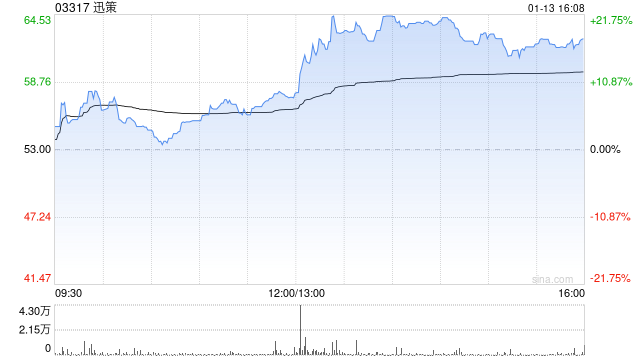
迅策与金涌投资订立不具法律约束力的战略合作框架协议
Xin Lang Cai Jing· 2026-01-14 00:36
Core Viewpoint - The company has entered into a non-binding strategic cooperation framework agreement with Jinyong Investment Limited to explore potential synergies and enhance its service offerings in the financial technology sector [1][3]. Group 1: Strategic Cooperation Objectives - The strategic cooperation aims to advance real-time data infrastructure to support digital transformation in investment research, trading, and risk management [1][3]. - It seeks to promote innovation and commercialization of wealth management-related technology products, including the application of real-time data technology in smart valuation, risk monitoring, and compliance [1][3]. - The partnership will explore investment opportunities in data infrastructure, artificial intelligence, and other fintech-related projects to foster a "data + capital" ecosystem [1][3]. - Jinyong Investment may provide business services such as business development consulting, investment and financial consulting, cash management, and/or asset allocation services upon further agreements [1][3]. Group 2: Business Background - Jinyong Investment and its subsidiaries primarily engage in providing investment management services and conducting strategic direct investment activities [1][3]. - The board believes that the strategic cooperation will offer the company further opportunities for diversified revenue sources and is in the best interest of the company and its shareholders [1][3].
中国人民银行副行长邹澜:加速金融科技创新赋能 扎实做好金融“五篇大文章”
Jin Rong Shi Bao· 2026-01-14 00:16
Core Viewpoint - The 20th Central Committee's Fourth Plenary Session has set the development blueprint for the "14th Five-Year Plan," emphasizing the acceleration of high-level technological self-reliance and innovation as a key driver for the new quality of productivity in the digital economy era [1] Group 1: Financial Technology Development - The recent announcement of the Financial Technology Development Award reflects the achievements in technological innovation and application within the financial sector during the "14th Five-Year Plan" period [2] - Financial institutions have made significant progress in enhancing self-reliance and strengthening financial infrastructure, with core technologies like distributed and cloud-native architectures being widely adopted [2][3] - The transformation of core banking systems has been notable, with large banks leading the way in adopting distributed platforms and achieving significant performance improvements [3] Group 2: Data Activation and Governance - Financial institutions have successfully activated data elements, establishing enterprise-level data platforms that enhance decision-making processes across various business functions [8] - The governance of data has improved, with unified standards and enhanced data quality, transitioning from reactive management to proactive value creation [8] - Security measures have been strengthened, with mechanisms in place to manage data throughout its lifecycle, effectively mitigating risks of misuse and leakage [8] Group 3: Risk Management and Security - The financial sector has upgraded its modern risk management systems, shifting from reactive to proactive risk control, leveraging new technologies for real-time monitoring and intervention [10] - Institutions like Industrial and Commercial Bank of China have developed comprehensive AI-driven security risk detection platforms, enhancing the industry's overall risk management capabilities [11] - The People's Bank of China continues to promote the strengthening of cybersecurity measures across key financial infrastructures to ensure stability and security in the financial system [11] Group 4: Future Directions - The financial industry is poised to deepen the integration of technology and finance, focusing on innovation and digital transformation to enhance service quality and operational efficiency [12] - The ongoing development of financial technology is expected to drive improvements in various sectors, including green finance, inclusive finance, and digital finance, contributing to a robust financial ecosystem [12]