普惠金融

Search documents
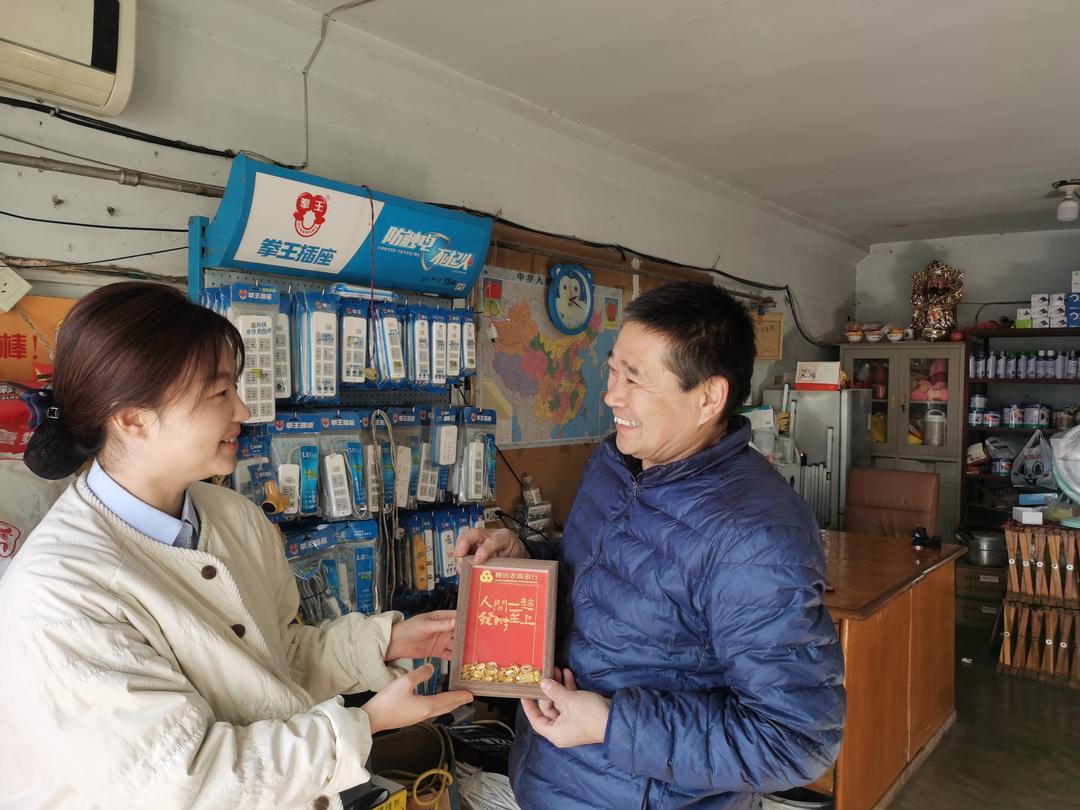
博兴农商银行:“一码在手”助力商户“收款无忧”
Qi Lu Wan Bao· 2025-11-27 03:54
通讯员刘小爱 工作人员组成服务小队,主动走出厅堂,对辖区商户进行精准走访,认真倾听并记录每一位商户在日常经营中遇到的金融问题与具体需求,现场答疑解 惑,提供了专业的收单业务办理与使用指导。 下一步,博兴农商银行将持续深化普惠金融服务,以科技赋能小微经济,通过更灵活的产品、更温暖的举措,助力商户智慧经营,为实体经济高质量发展 注入金融"活水"。 活动期间,各营业网点根据辖区不同行业特点,精选具有代表性的商户开展现场座谈,了解商户收款、融资等金融需求,并对大家日常的金融难点现场进 行答疑解惑。现场氛围热烈,商户们不仅感受到银行的贴心服务,更通过互动增进了对金融工具的了解。 为进一步优化金融服务,助力小微商户高效管理资金,博兴农商行推出"一码在手,收款无忧"专项活动,通过定制化收款服务与暖心互动,为辖区内小微 企业、个体工商户及小商贩提供便捷、安全的支付解决方案,赢得商户广泛好评。 ...

金针绣蜀锦 金融助力四川“十四五”高质量发展
Si Chuan Ri Bao· 2025-11-27 03:45
Banking Industry - As of September 2025, the balance of deposits in Sichuan Province reached 14.55 trillion yuan, with an average annual growth rate of approximately 9.6% since the "14th Five-Year Plan" [1] - The balance of loans reached 12.8 trillion yuan, with an average annual growth rate of about 12.5% during the same period [1] - The loan-to-deposit ratio of financial institutions in the province is 88%, an increase of 17 percentage points compared to the end of the "13th Five-Year Plan" [1][4] - The number of A-share listed companies in the province has increased to 179, ranking 8th nationally, with a total market value exceeding 3 trillion yuan [2][4] Insurance Industry - Since the "14th Five-Year Plan," the insurance sector has provided risk protection that has grown nearly fourfold, with total compensation reaching 473.5 billion yuan [1][9] - Agricultural insurance and disaster insurance have provided risk protection of 1.22 trillion yuan and 422.1 billion yuan, respectively [1][8] - The scale of insurance funds entering Sichuan has surpassed 880 billion yuan, with an average annual growth rate of 17.2% over the past five years [1][4] Capital Market - The province has 8 securities and futures fund companies and 540 branch institutions, with 44 securities service institutions [1] - Since the "14th Five-Year Plan," 46 new A-share listed companies have been added, raising over 36 billion yuan in initial public offerings [1][4] - Various market entities have achieved direct financing exceeding 2.1 trillion yuan through the capital market [2][4] Financial Support for Economic Development - The financial sector has maintained a healthy and rapid development momentum, with the total balance of deposits and loans growing by 59% and 80.3%, respectively, since the end of the "13th Five-Year Plan" [3][4] - Loans to infrastructure have seen an average annual growth rate of 17%, providing strong support for major long-term projects [6][7] - The balance of loans in the technology sector has reached 1.3 trillion yuan, with a growth rate of 27.3% for loans to technology-based SMEs [7][8] Future Outlook - The financial industry in Sichuan is set to continue its development by focusing on supporting the real economy, enhancing service quality, and strengthening regulatory measures [15][17] - The province aims to deepen financial reforms and promote high-quality financial development to contribute to the overall modernization of Sichuan [13][16]
网商银行信息科技部总经理马晓航:人工智能推动银行业迈向“AI银行”时代
Cai Jing Wang· 2025-11-27 03:38
Core Insights - The article discusses the strategic vision of Wangshang Bank, which aims to leverage AI technology to transform its services for small and micro enterprises, ultimately positioning itself as their "AI CFO" over the next decade [1][4]. Group 1: Strategic Goals - Wangshang Bank has introduced a new "New 310" goal, which emphasizes 360-degree user perception, one-on-one expert service, and zero-delay real-time interaction, aiming to provide personalized financial advisory services [1][3]. - The transition from the original "310" model, which focused on speed, to the "New 310" model, which prioritizes understanding customer needs, reflects the bank's commitment to enhancing customer experience [3][4]. Group 2: AI Integration - The bank's strategy involves deepening AI applications across various financial sectors, enabling AI to become a professional assistant in each business area [5]. - Wangshang Bank aims to empower employees with AI rather than replace them, fostering a workforce of "super individuals" who can provide high-quality services to small and micro enterprises [5]. Group 3: AI Applications - Current AI applications at Wangshang Bank focus on three main areas: AI lending, AI marketing, and AI wealth management [6]. - The bank plans to equip each small and micro enterprise with an AI lending expert, supported by intelligent assistants to assess credit risk and match financing needs accurately [7]. Group 4: Financial Solutions - Wangshang Bank has developed AI-driven wealth management solutions that enhance investment managers' capabilities, helping to stabilize product scales and improve returns [8]. - The bank's future plans include providing comprehensive financial services through AI, such as daily operational suggestions for business owners and end-to-end management of financial documents [8][9].
王晟:深入学习贯彻党的二十届四中全会精神 全力推动一流投资银行建设
Jin Rong Shi Bao· 2025-11-27 01:58
Core Viewpoint - The 20th Central Committee's Fourth Plenary Session has set clear requirements and strategic deployments for accelerating the construction of a financial power during the "14th Five-Year Plan" period, providing fundamental guidelines for financial work [1] Group 1: Financial Development Strategies - The "14th Five-Year" plan emphasizes the development of technology finance, green finance, inclusive finance, pension finance, and digital finance as essential strategies for enhancing the financial sector's service capabilities to the real economy [2] - China Galaxy Securities has established a closed-loop mechanism for serving national strategies, achieving significant growth in technology finance and green finance, with increases of 637% and 323% respectively in direct financing methods by the end of September this year [2] Group 2: Service Enhancements and Innovations - The company aims to enhance its service capabilities in technology finance by integrating research, funds, investment banking, and direct investment to support enterprises in IPOs and refinancing [3] - A comprehensive green finance service system will be developed, focusing on green bonds, asset securitization, and ESG investment services to support carbon market construction and achieve dual carbon goals [3] - Inclusive finance will be promoted by strengthening financial supply to small and micro enterprises and enhancing investor protection [3] Group 3: Capital Market Development - The "14th Five-Year" plan highlights the need to improve the inclusiveness and adaptability of capital market systems, guiding securities companies in their business operations [4] - China Galaxy Securities has maintained rapid growth in key financial metrics over its 25 years, ranking among the top five in the industry, with a wealth management client base exceeding 18.8 million [4] Group 4: High-Quality Development Focus - The company is committed to high-quality development, aligning its strategies with the "14th Five-Year" plan's major strategies and key tasks, ensuring the political and organizational advantages of the party are fully reflected in its development [7] - The focus will be on high-quality party building, reform and innovation, and foundational strengthening to ensure sustainable growth and risk management [8] Group 5: International Business Expansion - China Galaxy Securities plans to leverage its Southeast Asia business layout and the "Belt and Road" initiative to enhance its international business, aiming to build a cross-border financial service platform [6]
绘就普惠金融“菏泽新样板”
Qi Lu Wan Bao· 2025-11-27 01:40
Core Insights - The "Huihejin" platform has achieved significant growth since its launch on September 14, 2022, becoming a benchmark for inclusive finance in addressing the financing challenges faced by small and micro enterprises and the agricultural sector [1][2] - As of October 30, 2025, the platform has connected with 34 banking institutions in Heze, offering 471 credit products and serving 42,110 registered users, with a total service amount reaching 6.568 billion yuan [1][2] Group 1 - The platform has effectively broken down information barriers by categorizing credit products by industry and amount, and has reduced loan processing time by over 60% compared to traditional methods [2] - The introduction of features such as "no repayment renewal loans" and "direct agricultural guarantee loans" has facilitated 8.21 million yuan in renewals for 121 small enterprises, enhancing the platform's service effectiveness [2] - The platform's operation is supported by a collaborative framework involving the Heze Financial Regulatory Bureau and the Heze Banking Association, ensuring comprehensive service coverage through a three-tiered management structure [2] Group 2 - The "Huihejin" platform has received multiple accolades, including recognition in the 2022 Heze government work report and awards from the China Banking Association for its innovative services in inclusive finance [3] - The platform aims to further consolidate its achievements and enhance operational efficiency while continuing to innovate in digital finance to support high-quality development of inclusive finance [3]
山东重点领域贷款增速超各项贷款7.8个百分点
Sou Hu Cai Jing· 2025-11-27 00:57
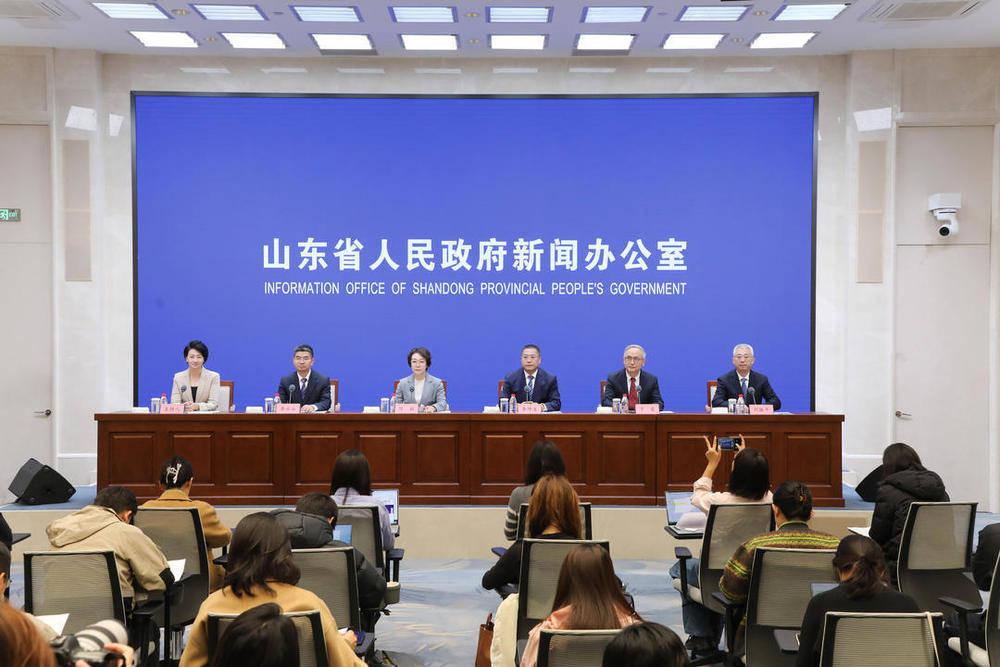
Core Insights - Shandong's financial system has effectively utilized financial tools to drive growth in key sectors, achieving a loan balance of 6.7 trillion yuan in technology, green, and inclusive finance, with a year-on-year growth of 16.3%, surpassing the average loan growth rate by 7.8 percentage points [1][3] Financial Policy and Tools - The People's Bank of China has implemented structural monetary policy tools, including nine reductions in the statutory reserve requirement ratio, releasing approximately 460 billion yuan in long-term funds, enhancing credit capacity for financial institutions [3] - The "central bank funds + financial institution matching" leverage model has led to an increase of 12.11 trillion yuan in agricultural loans and 23.165 trillion yuan in small micro-loans since the start of the 14th Five-Year Plan [3] Sector-Specific Financial Support - In the technology innovation sector, the Jinan Innovation Financial Reform Pilot Zone has seen a loan balance of 303.978 billion yuan, a 176.7% increase since its approval, with high-tech industries accounting for 68.68% of industrial output [4] - The green finance system has supported 170.167 billion yuan in financing through green bonds and other innovative products during the 14th Five-Year Plan [4] Rural and Inclusive Finance - Inclusive agricultural loans reached 962.093 billion yuan, doubling since the end of 2020, with a 7.96% increase in loans to major grain-producing counties [5] - The financial sector has introduced products like "Virtue Points Loan" to support specific agricultural products, and small loans have benefited 59,600 impoverished households, amounting to 2.625 billion yuan [5] Overall Financial Growth - As of September 2025, Shandong's total social financing reached 25.6 trillion yuan, and the balance of domestic and foreign currency loans was 16.2 trillion yuan, marking growth of 67.8% and 65.4% respectively since the end of 2020 [5] - The average interest rate for newly issued corporate loans was 3.61%, down 1.06 percentage points from the end of 2020, benefiting small and micro enterprises significantly [5]
百亿级“耐心资本”落户广州 通过股权投资、债转股赋能科创企业
Sou Hu Cai Jing· 2025-11-26 23:08
Core Viewpoint - The establishment of financial asset investment companies (AICs) by major banks in China marks a significant development in the financial landscape, particularly in supporting strategic emerging industries and enhancing the financial ecosystem in the Guangdong-Hong Kong-Macao Greater Bay Area [4][6][8]. Group 1: AIC Establishment and Impact - CITIC Bank's financial asset investment company, Xinyin Financial Investment Co., has been approved to commence operations, following similar approvals for other banks, indicating a completed establishment of AICs among major joint-stock banks [4][6]. - The three AICs are strategically located in key cities within the Greater Bay Area, which aligns with the region's development strategy and is expected to enhance capital and industry connections [4][5]. - The AICs aim to provide patient capital to support technology innovation and the development of small and medium-sized enterprises, thereby contributing to the transformation of the financial landscape in Guangzhou [7][8]. Group 2: Financial Strategies and Goals - Xinyin Financial Investment will focus on market-oriented debt-to-equity swaps and equity investments in strategic emerging industries, enhancing the bank's capabilities in technology finance [5][8]. - The AICs are expected to create a comprehensive financial service ecosystem, integrating equity, debt, and other financial products to better serve local enterprises [8][9]. - The establishment of AICs is seen as a response to the national call for supporting technology finance and is a key part of CITIC Bank's strategy to enhance its comprehensive financial services [5][8]. Group 3: Government Support and Future Measures - The Guangzhou government plans to support the AICs by improving work mechanisms and policies to create a favorable environment for quality capital to settle in the city [9][10]. - Initiatives include strengthening the connection between government investment funds and AICs, establishing a dual-listing mechanism for project matching, and enhancing project recommendations to improve funding success rates [9][10]. - The government aims to build a robust local private equity management ecosystem and attract more social capital and long-term foreign investment to support high-quality development in Guangzhou [10].




普惠贷款:滴灌实体经济,赋能民生发展
Qi Lu Wan Bao· 2025-11-26 15:32
Core Insights - Inclusive loans are becoming a vital tool for financial inclusion, effectively addressing financing challenges for small and micro enterprises, rural industries, and the livelihood sector, thereby contributing to high-quality economic development [1][2] Group 1: Policy and Mechanism Innovation - Financial management departments are optimizing structural monetary policy tools and establishing coordination mechanisms for small and micro enterprise financing, ensuring financial resources reach weaker segments [1] - By the end of September 2025, the balance of inclusive small and micro loans is expected to reach 36.1 trillion yuan, reflecting a year-on-year growth of 12.2%, significantly alleviating the "difficult and expensive financing" issues faced by small and micro enterprises [1] - Local governments are collaborating with banks and enterprises to identify demand and provide precise services, effectively bridging the "last mile" of financial inclusion [1] Group 2: Digital Empowerment and Product Innovation - Financial institutions are leveraging big data and artificial intelligence to optimize risk control systems, leading to an increase in the proportion of credit loans and enabling online loan applications and efficient approvals, with some loans disbursed on the same day [1] - Innovative products tailored to specific industry needs, such as "Liu Bian Loan" and "Greenhouse Loan," are being introduced to meet the financing requirements of different business entities, making financial services more aligned with industry realities [1] - The rural credit system is continuously improving, with assessments of "credit users" and "credit villages" providing support for financing in agricultural communities, thereby aiding rural revitalization [1] Group 3: Diverse Supply and Targeted Support - Large banks are playing a leading role, while small and medium financial institutions are focusing on regional economies, creating a differentiated service landscape [2] - Credit resources are primarily directed towards private small and micro enterprises and agricultural sectors, while also integrating insurance and other sectors to enhance the risk protection network [2] - Inclusive loans are nurturing thousands of enterprises and households, significantly enhancing the sense of gain among market participants and injecting lasting financial strength into the economy [2]
中国太保20251126
2025-11-26 14:15
Summary of China Pacific Insurance Conference Call Company Overview - The conference call discusses China Pacific Insurance (太保), focusing on its strategies and performance in the insurance industry, particularly in non-auto insurance and life insurance sectors. Key Points Industry and Regulatory Environment - China Pacific Insurance is responding to regulatory changes regarding non-auto insurance premium receivables by implementing a "pay-as-you-go" policy, which aims to optimize the comprehensive cost ratio and enhance profitability, although it may pressure premium growth in the short term [2][3] - The non-auto insurance policy is expected to be fully implemented by 2026, requiring a re-evaluation of insurance terms and rates, which will help curb irrational competition and improve profitability for leading companies [3] Financial Performance and Cost Management - The comprehensive cost ratio for 2025 is influenced by natural disasters, market competition, and business structure adjustments. Natural disasters have been a significant variable affecting claims [5] - In the auto insurance sector, stricter regulations and self-discipline in the industry have led to a decrease in expense ratios, although the rising claims ratio for new energy vehicles is a concern [5] - The company is gradually exiting high-cost, high-risk businesses like the "Personal New Insurance" (个性宝), which is expected to stabilize operations and improve profitability in the long term [6] Growth Strategies - Inclusive finance is identified as a growth area, with government subsidies supporting agricultural insurance, which is expected to provide a stable foundation for risk diversification and profitability [7] - The life insurance segment emphasizes integrated sales strategies without pre-collecting premiums, aiming for single-digit growth through enhanced agent productivity and 20%-30% growth in bank insurance channels [8] Product Development and Market Position - The attractiveness of dividend insurance has increased as the gap in guaranteed returns compared to traditional insurance has narrowed, making it more appealing to customers [10] - The company is adopting a "barbell" investment strategy, focusing on long-term bonds and high-quality equity investments to balance risk and return [13] Human Resources and Capacity Building - The company aims to maintain stable human resources, focusing on high-capacity personnel to enhance productivity, with expectations of continued growth in agent productivity [12] Health Insurance and Innovation - New policies in health insurance are expected to drive product innovation, including the integration of health services and the introduction of long-term medical accounts to meet unmet customer needs [14][15] Competitive Landscape and Industry Trends - The company is actively responding to the regulatory push for healthy competition and sustainable development in the industry, aligning with its operational philosophy [18][19] Additional Insights - The exit from the "Personal New Insurance" business is a proactive measure to mitigate market uncertainties, ensuring operational stability without significant losses [6] - The focus on inclusive finance and agricultural insurance reflects a strategic alignment with government policies, which may enhance long-term profitability despite short-term fluctuations [7]

以创新为楫,破服务之浪: 成都银行荣膺“最佳创新服务城商行”
Di Yi Cai Jing· 2025-11-26 12:29
Core Insights - Chengdu Bank won the "Best Innovative Service City Commercial Bank" award at the "2025 First Financial Value List (CFV)" ceremony, highlighting its achievements in financial services and innovation [1][2] - The award signifies Chengdu Bank's commitment to high-quality development through innovation, particularly in the context of digital finance and inclusive finance [1][2] Group 1: Financial Services and Innovation - Chengdu Bank, established in 1996 and listed in 2018, is the first listed bank in Sichuan Province and the eighth city commercial bank listed on A-shares in China [2] - The bank has integrated its development into national and regional strategies, providing over 1 trillion yuan in credit to the Chengdu-Chongqing economic circle over the past five years, with a projected 300 billion yuan for major projects in 2024 [2][3] - Chengdu Bank has supported over 28 billion yuan in rail transit and TOD projects in 2024, contributing to significant infrastructure developments [2] Group 2: Industry Focus and Support - The bank focuses on industrial collaboration in sectors such as electronic information, aerospace, green low-carbon, and health, providing over 15 billion yuan in credit to more than 200 core technology enterprises in Sichuan [3] - Chengdu Bank has pioneered cultural and creative finance, establishing the first specialized branch in the Midwest and launching innovative products like "Cultural Creative Pass" and the first asset-backed note (ABN) project backed entirely by copyrights [3] Group 3: Financial Innovation Practices - Chengdu Bank has actively engaged in the "Five Major Financial Articles" initiative, demonstrating how finance can drive local economic development through innovative measures [4] - The bank established a technology branch in 2009, creating a specialized team and products to support technology finance, becoming a hub for innovation in Sichuan [4] - In green finance, Chengdu Bank has launched various products such as "green bonds" and "carbon emission rights pledge loans," increasing credit support for clean energy and environmental protection [4] Group 4: Inclusive and Elderly Finance - The bank has developed diverse financial products for the elderly, enhancing services through partnerships with communities and institutions, and utilizing big data and AI for personalized services [5] - Chengdu Bank has introduced products tailored for small and medium-sized enterprises, such as "Growth Loan" and "Cultural Creative Pass," streamlining processes and reducing costs to promote inclusive finance [5] - The recognition as the "Best Innovative Service City Commercial Bank" reflects both an honor and a responsibility, positioning Chengdu Bank as a model for transformation in the city commercial banking sector [5]