
贸易保护主义

Search documents
黑天鹅突袭!刚刚日本大蓝筹东京电子罕见暴跌!
Zheng Quan Shi Bao Wang· 2025-08-01 03:22
Group 1 - Tokyo Electron's stock price plummeted 18% to 22,330 yen, marking the largest intraday drop in about a year, following a significant downward revision of its operating profit forecast for the fiscal year ending March 2026 [1][2] - The company revised its operating profit expectation down to 570 billion yen, an 18% decrease from the previous fiscal year, and below market expectations of 719 billion yen [2][3] - The anticipated annual dividend was also reduced from 618 yen to 485 yen, reflecting concerns over potential delays or declines in semiconductor investments this fiscal year [2][3] Group 2 - The semiconductor front-end manufacturing equipment market size has been adjusted downwards by 5% compared to the previous fiscal year, prompting Tokyo Electron to reassess its forecasts [3] - The overall market sentiment in the Asia-Pacific region was negatively impacted, with major indices like the Nikkei and Australian stock index dropping over 1% due to concerns over U.S. "reciprocal tariffs" [1][4] - The U.S. is set to impose a 15% tariff on Japanese products starting August 1, which could lead to a 0.5% decline in Japan's GDP, raising fears of trade protectionism and its potential impact on global economic growth [4]

韩国黑天鹅突袭,罕见暴跌
Zheng Quan Shi Bao· 2025-08-01 02:04
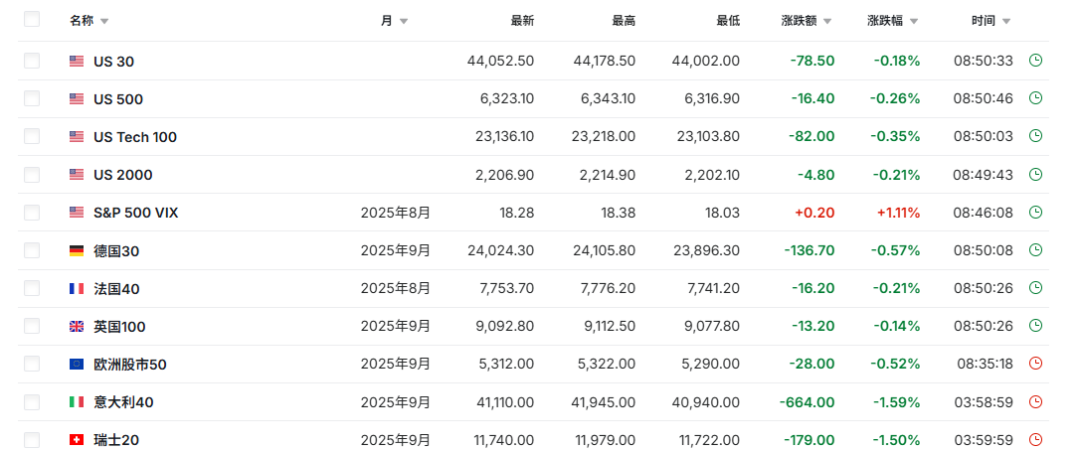
突然暴跌! 市值达12.5万亿日元的日本大蓝筹——东京电子今日早盘突然崩了。该股较前一交易日下跌18%,至22330日元,创下约一年来最大盘中跌幅。该公司大 幅下调了本财年(截至2026年3月)的营业利润计划,并预计削减年度股息。市场对本财年半导体投资可能出现延迟甚至下降的担忧加剧。 在美国"对等关税"的影响之下,全球市场今日早盘期指表现皆较差。亚太股市早盘更是全线走弱。澳大利亚股指和日经指数一度跌超1%,韩国KOSPI指 数一度大跌近3%。与此同时,韩国新政府7月31日敲定首个《税法》修正案,决定将法人税所有纳税区间的税率一律上调1个百分点,全面撤回前政府推 行的减税政策。 罕见暴跌 就在刚才,日本大蓝筹东京电子崩了,股价暴跌18%。原因是,该公司大幅下调了本财年(截至2026年3月)的营业利润计划,并预计削减年度股息。市 场对本财年半导体投资可能出现延迟甚至下降的担忧加剧。 根据该公司7月31日发布的公告,该公司将本财年的营业利润预期下调至5700亿日元,较上一财年下降18%。此前的计划为7270亿日元,远低于市场预期 (7190亿日元)。财年伊始,该公司曾预计2026年1—3月季度的投资将有所增加,但由 ...


黑天鹅突袭!刚刚,罕见暴跌!
Zheng Quan Shi Bao Wang· 2025-08-01 01:45
突然暴跌! 市值达12.5万亿日元的日本大蓝筹——东京电子今日早盘突然崩了。该股较前一交易日下跌18%,至22330日元,创下约一年来最大盘中跌幅。该公司大 幅下调了本财年(截至2026年3月)的营业利润计划,并预计削减年度股息。市场对本财年半导体投资可能出现延迟甚至下降的担忧加剧。 在美国"对等关税"的影响之下,全球市场今日早盘期指表现皆较差。亚太股市早盘更是全线走弱。澳大利亚股指和日经指数一度跌超1%,韩国KOSPI指 数一度大跌近3%。与此同时,韩国新政府7月31日敲定首个《税法》修正案,决定将法人税所有纳税区间的税率一律上调1个百分点,全面撤回前政府推 行的减税政策。 罕见暴跌 就在刚才,日本大蓝筹东京电子崩了,股价暴跌18%。原因是,该公司大幅下调了本财年(截至2026年3月)的营业利润计划,并预计削减年度股息。市场对 本财年半导体投资可能出现延迟甚至下降的担忧加剧。 根据该公司7月31日发布的公告,该公司将本财年的营业利润预期下调至5700亿日元,较上一财年下降18%。此前的计划为7270亿日元,远低于市场预期 (7190亿日元)。财年伊始,该公司曾预计2026年1—3月季度的投资将有所增加,但由 ...
黑天鹅突袭!刚刚,罕见暴跌!
券商中国· 2025-08-01 01:36
突然暴跌! 市值达12.5万亿日元的日本大蓝筹——东京电子今日早盘突然崩了。该股较前一交易日下跌18%,至22330日元,创下约一年来最大盘中跌幅。该公司大幅下调了本 财年(截至2026年3月)的营业利润计划,并预计削减年度股息。市场对本财年半导体投资可能出现延迟甚至下降的担忧加剧。 在美国"对等关税"的影响之下,全球市场今日早盘期指表现皆较差。亚太股市早盘更是全线走弱。澳大利亚股指和日经指数一度跌超1%,韩国KOSPI指数一度大 跌近3%。与此同时,韩国新政府7月31日敲定首个《税法》修正案,决定将法人税所有纳税区间的税率一律上调1个百分点,全面撤回前政府推行的减税政策。 罕见暴跌 就在刚才,日本大蓝筹东京电子崩了,股价暴跌18%。原因是,该公司大幅下调了本财年(截至2026年3月)的营业利润计划,并预计削减年度股息。市场对本财年 半导体投资可能出现延迟甚至下降的担忧加剧。 根据该公司7月31日发布的公告,该公司将本财年的营业利润预期下调至5700亿日元,较上一财年下降18%。此前的计划为7270亿日元,远低于市场预期(7190亿日 元)。财年伊始,该公司曾预计2026年1—3月季度的投资将有所增加,但由于 ...
针对铜产品、小额包裹和巴西 美国宣布多项关税措施
Xin Hua Wang· 2025-08-01 00:59
Group 1 - The U.S. will impose a 50% tariff on imported copper semi-finished products and high-copper derivatives starting August 1 [1] - The tariff is based on Section 232 of the Trade Expansion Act of 1962, affecting products such as copper pipes, wires, rods, and sheets, as well as related components like cables and connectors [1] - The majority of copper consumed in the U.S. is imported, and the tariffs are expected to increase costs for American manufacturers without incentivizing appropriate economic behavior [1] Group 2 - Starting August 6, the U.S. will impose a 40% tariff on products imported from Brazil, with exemptions for certain items like aircraft, nuts, orange juice, and some metal products [2] - Following the tariff implementation, most Brazilian products will face a total tariff rate of 50% [2] - The Brazilian government is considering retaliatory tariffs on U.S. products in response to the U.S. tariffs, emphasizing a stance against unilateral trade measures and protectionism [2]
欧元区经济增长乏力 欧美贸易协议干扰复苏前景
Xin Hua Wang· 2025-08-01 00:31
Economic Growth and Trade Impact - Eurozone GDP growth in Q2 was 0.1%, the lowest quarterly growth since early 2024, primarily due to the impact of US tariffs [1][2] - Major economies like Germany and Italy experienced a 0.1% contraction in Q2, while Ireland's GDP fell by 1%, contrasting sharply with a 7.4% growth in Q1 [2] - Spain showed resilience with a 0.7% growth, benefiting from domestic consumption and lower reliance on the US market [2] Monetary Policy and Inflation Concerns - The European Central Bank (ECB) decided to maintain key interest rates, marking the first pause since the rate cut cycle began in June last year [3] - ECB noted that while inflation has reached the 2% medium-term target, global trade uncertainties remain high, impacting future policy decisions [3] - ECB President Lagarde highlighted the potential for inflation to rise again if global supply chains fragment and protectionism increases [3][4] Trade Agreement Implications - The new EU-US trade agreement is expected to weaken the export competitiveness of European companies, potentially dragging down economic growth in the short term [4][5] - Economic experts estimate that the tariffs could result in a one-time impact on the EU economy of approximately 0.3% to 0.5% of GDP, with Germany facing the most significant effects [5] - The agreement may lead to a long-term risk of industrial migration from Europe to the US, adversely affecting local industries and employment [4][5]
最高41%!特朗普最新签令 上调一连串关税!美国对全世界至少收10%关税
Hua Xia Shi Bao· 2025-08-01 00:23
Core Points - President Trump signed an executive order on July 31 to modify the "reciprocal tariff" policy, adjusting additional tariff rates on goods from multiple countries to address what the U.S. claims is a "national security emergency" due to long-standing trade deficits [1][2] - The new tariff rates include an increase for Canada from 25% to 35%, effective August 1, and a uniform 10% tariff for countries not listed in the executive order [2][6] - The order also stipulates a 40% tariff on goods found to be rerouted through third countries to evade tariffs, with a public "evasion list" updated semi-annually [1][2] Tariff Adjustments - For Japan, South Korea, and New Zealand, the tariff rate is set at 15% [1] - For EU countries, if the current tariff is below 15%, it will be raised to 15%, while those above 15% will not see additional increases [1] - The executive order is part of a broader series of tariff adjustments by the Trump administration [2] Specific Measures - An additional 50% tariff will be imposed on imported copper semi-finished products and high-copper content derivatives starting August 1 [6][7] - From August 29, the U.S. will suspend the tax exemption for imported packages valued at $800 or less [6] - A 40% tariff will be applied to products imported from Brazil starting August 6, with certain exceptions for specific goods [7] Trade Negotiations - President Trump indicated that Canada's stance on Palestine will not affect the tariff agreement, emphasizing that Canada must "pay a fair tax rate" [4] - The U.S. and Mexico have agreed to extend their tariff agreement for 90 days, during which they will negotiate further [5]

针对铜产品、小额包裹和巴西 美国宣布多项关税措施
Xin Hua She· 2025-08-01 00:04
Group 1 - The U.S. will impose a 50% tariff on imported copper semi-finished products and high-copper-content derivatives starting August 1 [1] - The tariff is based on Section 232 of the Trade Expansion Act of 1962, affecting products such as copper pipes, wires, rods, and sheets, as well as derived products like fittings, cables, connectors, and electrical components [1] - The majority of copper consumed in the U.S. is imported, and the tariffs are expected to increase costs for U.S. manufacturers without incentivizing appropriate economic behavior [1] Group 2 - Starting August 29, the U.S. will suspend the tax exemption for imported packages valued at $800 or less, requiring all applicable taxes to be paid [1] - From August 6, a 40% tariff will be imposed on products imported from Brazil, raising the tariff rate on most Brazilian products to 50%, with exceptions for certain items like aircraft, nuts, orange juice, and some metal products [2] - Brazilian officials have indicated that they may consider retaliatory tariffs on U.S. products if the U.S. tariffs are implemented, criticizing U.S. unilateralism and trade protectionism [2]
【UNFX课堂】全球贸易逆风加剧,央行政策进退维谷:金融市场的深层考验
Sou Hu Cai Jing· 2025-07-31 15:03
当前全球金融市场正处于一个关键的转折点,由贸易保护主义抬头所引发的结构性变革,正以前所未有 的速度重塑着经济格局。美国与亚洲经济体之间一系列贸易协议的签署,非但未能为市场带来期盼已久 的稳定,反而将"15%关税"这一概念推升为新的贸易常态,对全球企业的盈利能力和供应链的韧性构成 深远挑战。 这不仅仅是数字上的变化,更是对全球化进程的一次严峻考验,其影响正逐步渗透至股票、外汇、债券 乃至大宗商品等各个金融市场。 从宏观层面来看,这15%的"新零点"关税,意味着企业的运营成本将永久性上升,而利润空间则不可避 免地受到侵蚀。对于高度依赖出口的亚洲经济体而言,这无疑是雪上加霜。 中国制造业采购经理人指数(PMI)的疲软,已清晰地预示着未来出口将面临显著下行压力。尽管部分 企业为规避关税而采取了"抢跑"策略,使得短期数据可能呈现出一定的韧性,但这仅仅是昙花一现,真 正的疲软将在未来数月内显现。 这种外部需求的减弱,预计将首先体现在美国经济数据的走弱上,进而通过贸易渠道传导至全球,对亚 洲出口商构成直接冲击,最终影响全球经济增长前景。 在这样的背景下,各国央行,特别是日本央行(BOJ)和美联储(Fed),正陷入两难的政策 ...
美国宣布将征收50%关税!巴西能否继续“硬刚”?
2 1 Shi Ji Jing Ji Bao Dao· 2025-07-31 14:46
美国关税大棒砸向巴西。据央视新闻报道,当地时间7月30日,美国白宫表示,美国总统特朗普签署行 政命令,对巴西加征40%关税,使总关税额达到50%。白宫表示,对巴西产品征收关税的范围不包括部 分木浆和石油产品、部分化肥、能源及能源产品、生铁和贵金属。 当地时间7月30日晚,巴西总统府官网发表题为《巴西是一个主权和民主国家》的声明。声明提到,巴 西政府认为,美国政府针对巴西出口产品所宣布的贸易措施,是以政治为理由的行为,毫无正当性可 言。近年来,巴西与美国在商品与服务贸易上始终维持显著逆差。美国针对巴西的措施是出于政治动机 的,是对巴西主权的侵犯,也损害了两国之间一贯的历史关系。 据央视新闻,此次关税争端的导火索之一,是特朗普日前在社交媒体上发布的"致卢拉公开信",不仅威 胁加征关税,还要求巴西"终止"对前总统博索纳罗的司法调查。此举引发巴西政界及不同派别媒体的强 烈谴责。 面对特朗普的关税威胁,巴西近日频频出招"硬刚"美国,包括多部门联合致函表达强烈愤慨、暂停对美 出口渔业产品和牛肉。这次美国将关税大幅上调至50%,巴西能否继续"硬刚"到底? 今年4月,美国总统特朗普签署关于所谓"对等关税"的行政令,宣布美国对 ...