AI Agent

Search documents
万兴科技(300624.SZ)旗下万兴超媒Agent全球首发!打造全链路音视频AI智能体
智通财经网· 2025-08-06 07:57
Group 1 - AIGC software company Wanxing Technology (300624.SZ) has accelerated its Agent layout by launching its first AI Agent product, Wanxing Chaomei Agent, which aims to create a full-link audio and video AI intelligent body [1][4] - The product leverages Wanxing Tianmu Multimedia Model 2.0, providing a comprehensive solution for audio and video creation tasks, addressing pain points such as complex operations and multiple software switching [1][2] - Wanxing Chaomei Agent supports various AI functions including intelligent script planning, storyboard breakdown, visual prompts, and voice-over generation, enabling users to create high-quality audio and video content easily [1][2] Group 2 - The Agent is designed for video scenarios, allowing natural language editing commands for dialogue-based editing, and can automatically generate professional scripts and storyboards [2] - It integrates with top models like Wanxing Tianmu 2.0 and DeepSeek, simplifying complex operations and enabling users to create personalized workflows for audio and video production [2][7] - Wanxing Technology has also launched two new applications, the web-based AI video creation platform Wanxing Tianmu Creation Square and the mobile AIGC app, enhancing user experience with low-cost video generation [3][6][8] Group 3 - The launch of Wanxing Chaomei Agent represents Wanxing Technology's commitment to empowering global creators and promoting an era where everyone can be a creator [7] - The company is recognized as one of the most globalized and comprehensive digital creative software firms in China, with a user base exceeding 1.5 billion across over 200 countries and regions [7]



计算机行业深度研究报告:Kimi:m2模型,跻身全球开源SOTA序列
Huachuang Securities· 2025-08-05 12:05
Investment Rating - The report maintains a "Buy" recommendation for the computer industry, particularly focusing on AI application directions [4]. Core Insights - The report highlights the advancements of the Kimi model by Moonshot AI, emphasizing its position in the global open-source SOTA (State of the Art) landscape [2][8]. - Kimi K2, the latest model, has achieved significant breakthroughs in various capabilities, including code generation, reasoning, and automation, establishing a new benchmark in the industry [36][39]. - The report outlines the strategic shift from a single dialogue tool to a comprehensive product matrix, catering to both consumer (C-end) and business (B-end) markets [12][21]. Summary by Sections Industry Overview - The computer industry consists of 337 listed companies with a total market capitalization of approximately 47,787.54 billion [4]. - The industry has shown strong performance, with absolute returns of 61.1% over the past 12 months [5]. Kimi Model Development - Moonshot AI, recognized as one of the leading players in the domestic AI landscape, launched the Kimi model, which supports input of up to 200,000 Chinese characters, marking a significant advancement in long-text processing [12][23]. - The Kimi K2 model, released in July 2025, features a mixture of experts (MoE) architecture with 320 billion active parameters and a total of 1 trillion parameters, achieving a balance between efficiency and performance [34][39]. Performance Metrics - Kimi K2 has outperformed several international models, ranking first in the global open-source model leaderboard and excelling in various benchmark tests, including code generation and mathematical reasoning [47][48]. - The model's performance in the Aider Leaderboard and EQ-Bench3 tests demonstrates its competitive edge in tool usage and emotional intelligence [50][51]. Investment Themes - The report identifies key investment themes, including the cost advantages of Kimi K2, which is expected to drive the commercialization of AI agents and enhance application layer innovations [9][10]. - The strategic focus on open-source models is anticipated to lower development costs and accelerate the adoption of AI applications across various sectors [9][10].
用户集体大逃亡,Cursor“自杀式政策”致口碑崩塌:“补贴”换来的王座,正被反噬撕碎
3 6 Ke· 2025-08-05 08:54
Core Insights - Many developers are expressing dissatisfaction and abandoning Cursor due to its declining performance and increasing costs [1][9] - The shift from a generous service model to restrictive usage limits has eroded user trust and led to a significant backlash [8][9] Pricing and Service Changes - Initially, Cursor offered a Pro version at $20 per month with unlimited code completion, but this changed to a model with hidden limits and reduced functionality [4][5] - Users reported a series of adjustments, including a sudden disappearance of the 500-request limit and the introduction of a more stringent, invisible throttling system [4][6] - The introduction of a Pro+ plan at $60 promised "unlimited use" but later revealed hidden limitations, further frustrating users [5][6] User Experience and Trust Issues - Users have noted a decline in the model's stability, with increased instances of losing context and incomplete responses, leading to a perception of being "dumbed down" [7][9] - The marketing strategies have been criticized for being misleading, with claims of "3x" or "20x" usage limits lacking transparency regarding the baseline limits [7][9] - Community feedback indicates a growing sentiment of betrayal among users who feel they were misled about the service's capabilities and pricing [9][10] Competitive Landscape - Developers dissatisfied with Cursor are increasingly turning to alternatives like Claude Code, which is perceived to offer better performance, especially for complex tasks [10][12] - Claude Code is reported to be 10% to 30% stronger than Cursor, particularly in handling large-scale tasks [11][12] - The market is witnessing a shift where developers are considering both Cursor and Claude Code for different aspects of their work, indicating a trend towards using multiple tools for specific needs [14][15] Industry Trends and Challenges - The AI programming tool market is evolving from a focus on tool functionality to a competition centered around model capabilities and ecosystem integration [24][27] - Companies like Cursor face challenges in balancing API costs with user experience, as the previous "burn money for growth" strategy is becoming unsustainable [18][19] - The future of AI programming tools may involve a shift towards intelligent agents that can autonomously understand and execute tasks, fundamentally changing software development processes [26][27]

宇信科技:公司成功开发了多款AI Agent产品
Zheng Quan Shi Bao· 2025-08-05 07:45
Group 1 - Company is a leading player in China's fintech services, actively leveraging generative AI technology and focusing on AI application areas [1] - The company has successfully developed multiple AI Agent products, including the data AI product "Star ChatBI," which helps enterprises build a dedicated "digital decision-making think tank" [1] - By the first half of 2025, the Star ChatBI product has been successfully implemented in several city commercial banks and a major bank's branch, along with the successful deployment of AI marketing products in a large commercial bank branch [1] Group 2 - The China Academy of Information and Communications Technology (CAICT) recently released the "AI Agent Industry Map 1.0" at the 2025 Data Intelligence Conference, categorizing the industry into four main areas [2] - Company, along with major tech firms like Huawei, Tencent Cloud, Alibaba Cloud, and Ant Group, has been recognized in the "Industry Intelligent Agents - Financial Industry Intelligent Agents" core section, indicating broad recognition from national research institutions and the market in the AI Agent field [2]

独家对话火山引擎,企业级Agent落地难在哪儿?
Tai Mei Ti A P P· 2025-08-05 04:48
Group 1 - The core viewpoint of the articles emphasizes that while 2025 is seen as the "Agent Year," many companies are still struggling with the practical implementation of large models due to high computing costs, data silos, and unclear value propositions [2][4][6] - The number of projects related to agent construction platforms has significantly increased, with 371 projects in the first half of 2025, which is 3.5 times that of the same period last year, indicating a strong demand for AI agents [3] - Fire Mountain Engine has emerged as a leader in both the number and amount of bids for agent construction projects, highlighting the importance of a comprehensive solution that integrates technology, business adaptation, security, and best practices [3][11] Group 2 - The development of AI agents is seen as a necessary evolution from foundational infrastructure to application layers, with a focus on creating software applications that leverage large models effectively [4][17] - Companies are increasingly recognizing that AI agents require continuous learning and adjustment, rather than being static solutions, which necessitates a shift in how businesses approach AI integration [8][19] - The HiAgent platform is positioned as a one-stop solution for enterprises, providing a comprehensive lifecycle management approach that includes development, operation, and optimization of AI agents [11][13] Group 3 - The articles suggest that the success of AI agents will depend on reaching critical points in technology, business ecosystems, and operational practices, with a focus on integrating AI into existing business processes [6][7][20] - There is a consensus that all previous applications will be restructured by AI, with generative AI expected to first enhance productivity in office settings and then expand into vertical industry applications [7][18] - The HiAgent platform aims to facilitate the creation of personalized AI agents tailored to specific business needs, emphasizing the importance of user-friendly interfaces and integration with existing systems [16][19]

易路董事长&CEO王天扬做客《虎嗅·AI无悖论》:AI于企业管理,是助力还是混乱
Sou Hu Cai Jing· 2025-08-04 11:45
Group 1 - The core viewpoint of the discussion revolves around the transformative impact of AI on enterprise management, emphasizing both opportunities and challenges [1] - AI is significantly enhancing individual productivity through applications like meeting minutes generation and standardized report creation, which are becoming standard tools in many departments [2][3] - The emergence of roles such as Chief AI Officer (CAIO) indicates a strategic shift in organizations, reflecting the importance of AI in future competitiveness and the need for systematic management of AI initiatives [3][6] Group 2 - The evolution of job structures due to technological advancements is a common trend, with AI expected to replace certain roles while creating new ones, similar to past industrial revolutions [4][11] - AI Agents are being integrated into various management processes, such as HR, where they streamline tasks from recruitment to employee management, enhancing decision-making efficiency [7][9] - The introduction of AI is leading to organizational flattening and the reduction of middle management roles, although this trend should not be solely attributed to AI [10][11] Group 3 - AI is expected to challenge traditional management practices by increasing information transparency and employee capabilities, necessitating a shift in management styles [15][16] - Companies must address employee concerns about job security due to AI by fostering a culture of collaboration and providing incentives for embracing AI [17][19] - The management of data ethics and security is crucial, particularly in mitigating risks associated with shadow AI, which arises when employees use external AI tools without oversight [21][23] Group 4 - Small and medium-sized enterprises (SMEs) can leverage AI to enhance management efficiency and accelerate digital transformation, but they must remain focused on their core business strategies [25][26] - The future of management will involve a collaborative approach between human and AI agents, requiring clear roles and performance metrics for AI within organizational structures [27][29] - The changing landscape will necessitate a redefinition of trust mechanisms among humans and machines, ensuring that human decision-making remains central to ethical and compliant AI operations [28][29]

OpenAI的“Agent时刻”:智能体大战来到分水岭?
虎嗅APP· 2025-08-04 11:04
Core Viewpoint - The article discusses the pivotal moment in the AI agent landscape with the release of OpenAI's ChatGPT Agent, which integrates deep research and execution tools, prompting a reevaluation of technology paths in general AI agents [4][5]. Group 1: Main Architectures of AI Agents - The primary architectures for AI agents include browser-based agents, sandbox environments, and workflow-integrated agents, each with distinct advantages and limitations [16][24]. - Browser-based agents, like OpenAI's, are versatile but slow and resource-intensive, while sandbox agents can execute scripts offline but lack internet access [18][22]. - Workflow-integrated agents, such as those from Zapier and UIPath, rely on third-party service integrations, ensuring reliable service delivery but limiting user customization [22][24]. Group 2: User Experience and Performance - User experience varies significantly among agents like Pokee, Genspark, Manus, and OpenAI's ChatGPT Agent, with Pokee being the fastest, achieving speeds 4-10 times faster than competitors [33][35]. - Manus and ChatGPT Agent share a common limitation of being slow due to their reliance on browser navigation, which can take over 30 minutes for task completion [29][31]. - Genspark has shifted towards creating templates for specific tasks, which enhances speed but reduces its versatility as a general agent [31]. Group 3: Business Models and Market Dynamics - The article highlights a shift in business models from consumer-focused (ToC) to professional-oriented (ToB) applications, with a focus on repetitive tasks that professionals are likely to automate [41][44]. - The integration of agents is expected to disrupt traditional web traffic, as users may rely more on agents for tasks rather than navigating through browsers [46][48]. - The future of advertising is anticipated to evolve, with agents potentially compensating content creators directly, altering the traditional revenue models based on traffic and views [53][55]. Group 4: Future Implications for the Internet - The rise of AI agents is predicted to transform the internet's structure, with agents serving as primary interfaces for users, potentially leading to a decline in traditional web traffic [48][49]. - The article suggests that the recommendation systems may face significant changes, moving from ranking-based algorithms to more interactive, experience-driven models [59][61].

WAIC2025大会召开,海内外AI大模型加速更新迭代,看好算力相关产业链投资机会
Great Wall Securities· 2025-08-04 07:47
Investment Rating - The report maintains a "Buy" rating for multiple stocks in the communication sector, including 沪电股份 (002463.SZ), 美格智能 (002881.SZ), 中际旭创 (300308.SZ), 天孚通信 (300394.SZ), and others [1]. Core Insights - The WAIC 2025 conference highlighted the acceleration of AI large model iterations and the growing investment opportunities in the computing power industry chain [2][7]. - The conference showcased significant trends such as the practical application of embodied intelligence, AI enhancing personal efficiency, and the emergence of AI agents [3][6][21]. - The report emphasizes the increasing demand for computing power driven by advancements in AI models and the potential for AI-driven digital interactions to become a new hot sector [9][25]. Summary by Sections Industry Overview - The communication sector index rose by 2.54%, outperforming the Shanghai and Shenzhen 300 index, which fell by 1.75% [14][16]. - The report identifies key stocks to watch, including major telecom operators and technology companies involved in AI and computing power [26][27]. WAIC 2025 Highlights - The WAIC 2025 conference, held from July 26 to 28, featured over 800 companies and 3,000 exhibits, marking a significant milestone in AI development [2][28]. - Key trends observed include the practical implementation of embodied intelligence, AI's role in enhancing personal productivity, and the introduction of AI emotional companion products [3][6][21][31]. AI Model Developments - Google's Gemini 2.5 Deep Think model was introduced, showcasing improved performance in various benchmarks [7][39]. - The domestic model GLM-4.5 was released, achieving top rankings in multiple performance tests and offering competitive API pricing [8][49][50]. - Alibaba's launch of the Wan2.2 video generation model represents a significant advancement in video generation technology [52][55]. Investment Opportunities - The report suggests a focus on the computing power industry chain, highlighting the increasing need for advanced computing capabilities as AI models evolve [9][25]. - Recommended stocks span various sectors, including telecommunications, cloud computing, and AI technology, indicating a broad investment strategy [26][27].





对话壹沓科技庄学坤:供应链智能化迈入全链路自主决策
Guan Cha Zhe Wang· 2025-08-04 06:24
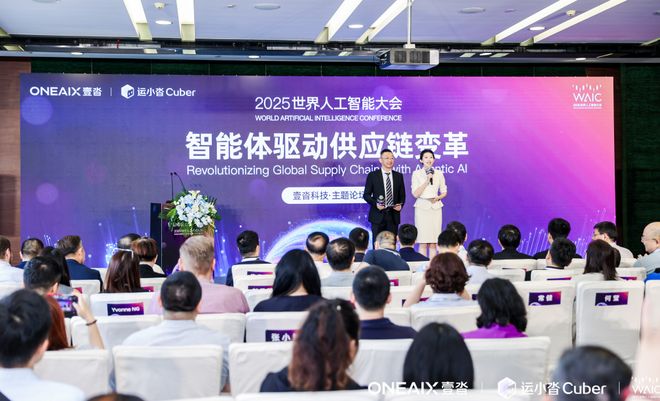
Group 1 - The forum "Intelligent Agent Driven Supply Chain Transformation" was held in Shanghai, where 壹沓科技 announced its brand upgrade to "ONEAIX壹沓" and launched the first AI Agent platform with autonomous planning capabilities in the supply chain sector, marking a new phase in supply chain intelligence [1][3] - 壹沓科技's strategy focuses on the integration of AI Agents in the supply chain, addressing the high volume of manual labor in maritime logistics and aiming to create an innovative office model combining "white-collar + AI Agent" [1][3] - The forum gathered nearly 200 international experts, scholars, entrepreneurs, investors, and government officials to discuss innovations in the supply chain logistics field and explore collaborative opportunities [1][8] Group 2 - 壹沓科技's CEO emphasized the shift from human-led to AI Agent autonomous decision-making in supply chain logistics, driven by advancements in large model intelligence [3][4] - The company has progressively developed its运小沓 platform, with versions 1.0 to 4.0 enhancing automation capabilities, culminating in the latest version that features autonomous planning [3][4] - The forum also saw the release of the "Global Port and Shipping Information Technology Development Report (2024)", which analyzed technological innovations in the port and shipping sector and provided market forecasts [6] Group 3 - The discussion highlighted the importance of industry-specific data for training AI models, distinguishing between industry knowledge and operational instructions [4][7] - The current landscape of AI applications in the supply chain is evolving, with companies increasingly adopting AI technologies, including state-owned enterprises and government departments [8] - The forum served as a high-end exchange platform, attracting key players from various sectors of the supply chain, facilitating valuable business interactions and discussions [8]
深度|Perplexity CEO:为什么决定做Comet浏览器?我们需要自己的客户端,并控制我们自己的命运
Z Potentials· 2025-08-04 05:51
Core Viewpoint - Perplexity AI has developed the Comet browser to compete with Google and enhance user experience by integrating AI capabilities directly into the browsing process, aiming to provide a more personalized and efficient online experience [3][10][20]. Group 1: Development Motivation - The decision to create the Comet browser stemmed from the observation that most user queries are conducted through browser search bars, with Google handling approximately 15 billion queries daily, a significant portion of which comes from Chrome and Safari [3][4]. - The historical context of Google's rise, particularly through the Google Toolbar, illustrates the importance of controlling the browsing experience to avoid dependency on other platforms like Microsoft [4][7]. - The need for a dedicated client was emphasized due to challenges faced with existing browser extensions and the desire to maintain control over user data and experience [7][15]. Group 2: AI Integration and User Experience - Comet aims to leverage AI agents to perform complex tasks that traditionally require significant time and effort, such as conducting research across multiple platforms and managing schedules [8][9]. - The browser is designed to enhance user productivity by allowing AI to assist in everyday tasks, thereby providing a competitive edge for small business owners and individuals [9][19]. - The integration of AI within the browser is seen as a necessary evolution to keep pace with advancements in AI technology and user expectations [10][19]. Group 3: Competitive Landscape - Perplexity AI positions itself against Google by challenging the sustainability of Google's advertising model, suggesting that AI agents could disrupt traditional ad spending by providing more efficient alternatives for users [20][21]. - The company believes that Google's reliance on advertising revenue could be undermined as users increasingly turn to AI for decision-making, potentially reducing the effectiveness of Google AdWords [21][36]. - Perplexity AI's strategy focuses on creating a subscription-based model for AI services, which could provide a more stable revenue stream compared to ad-based models [36][39]. Group 4: Privacy and Data Management - Comet emphasizes user privacy by ensuring that data remains on the client side, with no sensitive information like passwords or credit card details being stored on external servers [15][40]. - The company advocates for a zero-retention policy, allowing users to control their data and delete any information they do not wish to retain [40][41]. - This approach contrasts with other AI services that may store user data on their servers, highlighting a commitment to user security and privacy [15][40]. Group 5: Future Vision and AI's Societal Impact - The long-term vision for Comet includes the potential for AI to filter out low-quality content and enhance the browsing experience by providing valuable insights and summaries [22][23]. - The company acknowledges the societal implications of AI, particularly the potential for job displacement, while also emphasizing the need for individuals to adapt and leverage AI to remain competitive in the workforce [43][44]. - Perplexity AI aims to empower users by providing tools that enhance productivity and free up time for personal pursuits, thereby redefining the relationship between humans and technology [43][44].