
一线放开二线管住

Search documents
在“一线”与“二线”之间,生长出新海口
2 1 Shi Ji Jing Ji Bao Dao· 2026-01-26 06:44
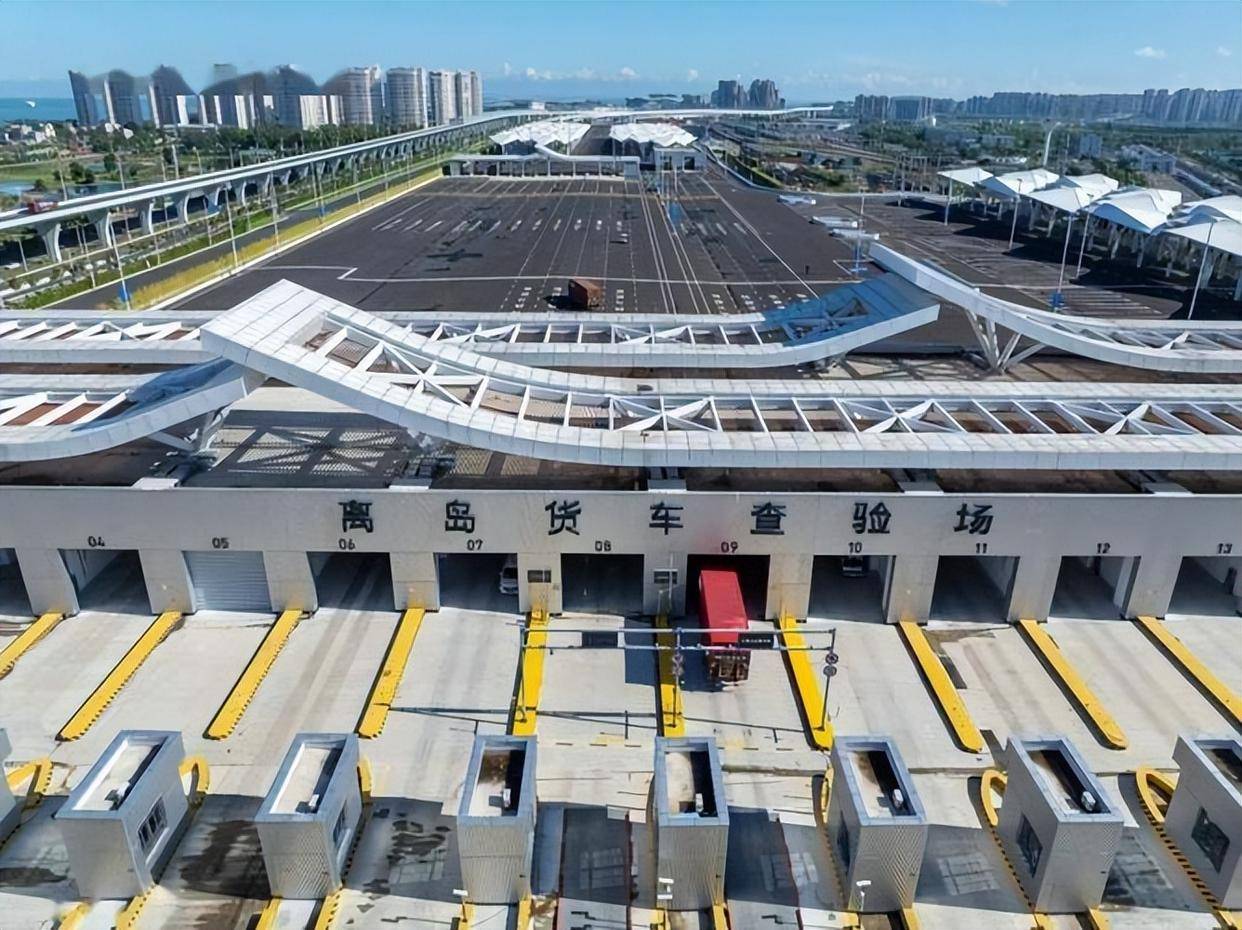
Core Viewpoint - The establishment of a unique institutional space in Haikou, as the Hainan Free Trade Port enters its operational phase, is fostering a more open and vibrant "New Haikou" [1] Group 1: Policy Mechanism - The core policy mechanism of Hainan's Free Trade Port is "one line open, one line controlled," allowing for high levels of liberalization with international trade while maintaining precise regulation with the mainland [2] - Haikou has begun to enjoy dual advantages as a core city in this high-level open area, facilitating the free flow of international goods and resources [2] Group 2: Trade and Economic Data - In the first month of operation, Haikou imported zero-tariff goods worth 29.94 million yuan, primarily medical devices and production equipment [2] - The international passenger traffic at Meilan Airport saw a 28.5% increase, with 1,226 flights and 189,000 international passengers, reflecting a 50% year-on-year growth [2] - Approximately 80,399 domestic trucks passed through inspection to leave the island, averaging about 2,590 vehicles per day, with inspection times reduced from 2 minutes to 70 seconds [3] - Haikou's four "second-line ports" processed 219 tickets for value-added goods exempt from tariffs, totaling 41.42 million yuan, accounting for 48.2% of the province's total [4] Group 3: Business and Talent Attraction - The first month of operation saw 15,785 new business entities established in Haikou, a 12.62% increase, representing 57.92% of the province's total [5] - Notable companies such as China-Singapore United Network Import and Export Co., China Resources Beverage, and Guoyin Financial Leasing have signed agreements to operate in Haikou [5] - Haikou processed 828 high-level talent recognitions, including 19 expedited visa applications for A-class talents [5] Group 4: Consumer Activity - Haikou's duty-free shops reported sales of 2.24 billion yuan, a 44.4% increase year-on-year, indicating strong consumer activity [6] - The implementation of new duty-free policies has led to a 5% increase in international visitors, primarily from Southeast Asia, Russia, North America, and Europe [6] Group 5: Future Outlook - "New Haikou" represents not just a geographical concept but a new development model underpinned by institutional innovation, balancing global attraction of high-end resources with domestic economic connections [6]
海南封关满月,首月新增外贸备案企业相当于2024一个季度
Di Yi Cai Jing· 2026-01-19 03:49
Core Insights - Hainan Free Trade Port has achieved a smooth start and initial results since the official closure operation began on December 18, 2025, with a focus on comprehensive policy implementation and effective risk management [1] Group 1: Policy Implementation and Economic Impact - In the first month of the closure, the "zero tariff" policy facilitated 53 transactions with a total value of 753 million yuan, marking a year-on-year increase of 38.9%, and tax reductions amounted to 109 million yuan, up 194.6% [1] - The processing and value-added duty-free policy recorded 214 transactions, a growth of 37.2%, with a total value of 85.87 million yuan and tax reductions of 3.32 million yuan [1] Group 2: Customs and Trade Efficiency - Customs has optimized the declaration process for eligible imported goods, reducing the number of declaration items from 105 to 33, significantly enhancing clearance efficiency [2] - The value of imported "zero tariff" goods reached 753 million yuan, benefiting over 10,000 market entities, indicating the initial effects of policy empowerment on industrial development [2] Group 3: Domestic Sales and Logistics - In the first month, domestic sales reached 85.87 million yuan, with tax reductions exceeding 3.32 million yuan, and the declaration process for outbound goods was streamlined by over 60% [2] - The intelligent system at the "second line" ports has been fully operational, allowing for non-stop vehicle inspections, with average clearance times controlled within 2 minutes, further reducing logistics costs [2] Group 4: Consumer Activity and Market Dynamics - The number of inbound and outbound passengers at Hainan's airports reached 311,000, a year-on-year increase of 48.8%, while duty-free shopping amounted to 4.86 billion yuan, up 46.8% [2] - The number of consumers engaging in duty-free shopping reached 745,000, with a 30.2% year-on-year increase, and the number of items purchased grew by 14.6% [2] Group 5: Industry Development and Challenges - New business scenarios in self-produced goods and processing value-added have emerged, with key industries like petrochemicals and medical devices accelerating their development [3] - The provincial government emphasizes the need for efficient and precise management of the "second line" to ensure safety without compromising clearance convenience, aiming to create a secure and predictable investment environment [3]
大事终于发生,国家要在海南再造一个香港?
Sou Hu Cai Jing· 2026-01-16 08:51
Core Viewpoint - Hainan Free Trade Port officially commenced operations on December 18, 2025, marking a significant milestone in China's high-level opening-up strategy, with the aim of leveraging the momentum of reform and opening-up initiated 47 years ago [1][3]. Group 1: Policy and Economic Impact - The core policy framework is characterized by "one line open, two lines controlled, and free flow within the island," allowing for 74% of zero-tariff goods and benefiting 6,600 tax items [3]. - The first day of operation saw the release of 18,000 tons of goods, with zero-tariff imports valued at 460 million yuan [1]. - The first month of trade after the closure recorded a total trade volume of 21.42 billion yuan, reflecting a 19.6% increase [7]. Group 2: Taxation and Investment Environment - Corporate income tax has been reduced to 15%, and personal income tax has three brackets as low as 3%, aimed at attracting high-income individuals to reside for over 183 days [5]. - The tax rate for enterprises has decreased from 25% to 15%, with a negative list for foreign investment being eliminated, facilitating a more favorable investment climate [11]. Group 3: Infrastructure and Connectivity - Hainan's geographical positioning as a "bridgehead" connecting the Pacific and Indian Oceans is emphasized, with a focus on becoming a global free trade port without the historical advantages that Hong Kong possesses [9][13]. - The island has eight open ports and ten secondary ports, covering an area of 35,400 square kilometers, enhancing its logistical capabilities [1][3]. Group 4: Talent and Industry Development - The policy allows for visa-free entry for citizens from 85 countries, with a 30-day stay, promoting business tourism without additional procedures [5]. - The influx of foreign talent is anticipated, with comparisons made to Singapore's foreign population, aiming to attract international professionals [9][13]. Group 5: Future Prospects and Challenges - While the opportunities are significant, challenges such as a weak industrial base and population outflow remain, necessitating strategic efforts to attract international talent and reduce per capita disparities [7][13]. - Hainan's unique development path is highlighted, with a focus on tourism, modern services, high-tech industries, and tropical agriculture, distinguishing it from Hong Kong's reliance on re-export trade and finance [5][13].

人民日报头版关注海南全岛封关第一天
Ren Min Ri Bao· 2025-12-25 01:56
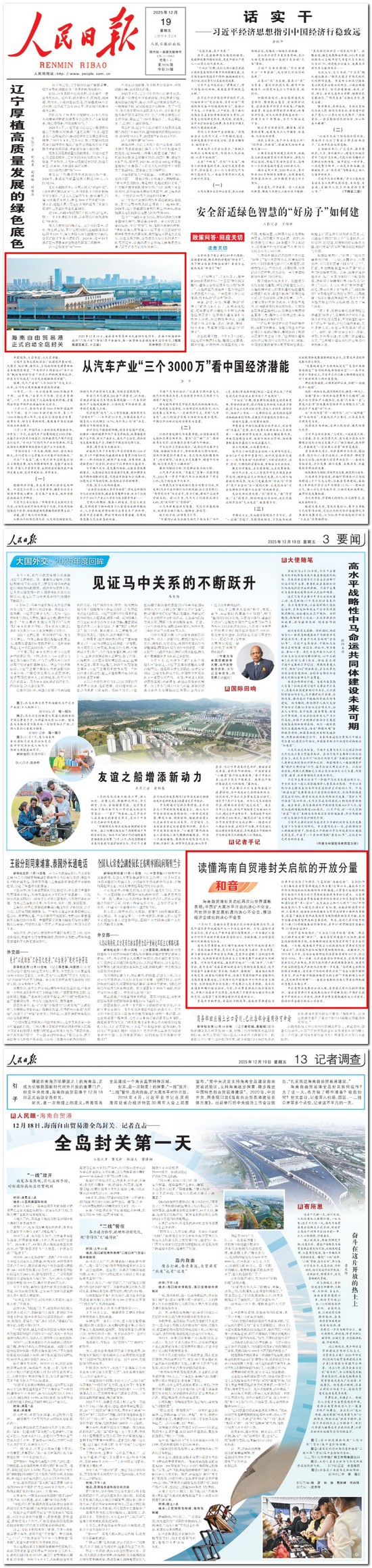
Core Viewpoint - The official launch of the Hainan Free Trade Port's full island customs closure on December 18, 2025, marks a significant milestone in China's commitment to high-level opening-up and economic globalization, showcasing the country's determination to share development opportunities with the world [2][3][4]. Group 1: Customs Closure Implementation - The Hainan Free Trade Port has officially started its full island customs closure, establishing a special customs supervision area across the entire island [5]. - The customs closure is characterized by a policy of "one line open, one line controlled, and free movement within the island," aimed at expanding high-level foreign trade [6][20]. - The first day of customs closure saw the arrival of a ship carrying 17.9 million tons of zero-tariff petrochemical raw materials, saving enterprises nearly 10 million yuan in costs compared to before the closure [10][12]. Group 2: Operational Efficiency - The customs process has been significantly streamlined, reducing the number of declaration items from 105 to 33 for zero-tariff and bonded goods, allowing for faster clearance [10][12]. - The first international passenger flight after the customs closure arrived at Sanya Phoenix International Airport, demonstrating improved entry procedures that take less than one minute for travelers [7][10]. - The new customs system allows for efficient monitoring and control, utilizing advanced technology such as drones for surveillance along the coastline [14][16]. Group 3: Economic Opportunities - The Hainan Free Trade Port is expected to transform its open potential into high-quality development momentum, contributing to a new level of foreign trade openness in China [3][20]. - Companies in Hainan are benefiting from tax incentives, with one company reporting a 15% reduction in costs due to favorable policies for bonded maintenance of vehicles and aircraft [18][19]. - The increase in duty-free shopping limits for consumers has significantly boosted local retail, with limits rising from 8,000 yuan to 100,000 yuan per person per year [20].
一群南下沂商盘算的红利账
Qi Lu Wan Bao· 2025-12-19 02:15
Group 1 - Hainan's full closure marks a milestone in the construction of the Hainan Free Trade Port, featuring an innovative regulatory model of "one line open, one line controlled," along with tax incentives and trade facilitation policies that are creating a magnetic effect [1] - The closure has sparked interest among entrepreneurs in Linyi, with local businesses recognizing new opportunities for growth and expansion in the wake of Hainan's policy changes [1][2] - The cost savings from tax reductions, particularly in import duties, are significant for companies in the food processing sector, with estimates suggesting a 9% reduction in costs for every 10,000 tons of imported raw meat [2][4] Group 2 - The "zero tariff" policy is expected to save approximately 20% in tax costs for companies importing self-used equipment, while a more groundbreaking policy allows for tax exemptions on products that meet certain value-added criteria [4] - Linyi's traditional industries, such as food processing and wood panel manufacturing, can leverage Hainan's platform to access high-quality global raw materials for deep processing, enhancing their competitiveness [4] - Local businesses are encouraged to actively engage with Hainan's new policies and logistics networks to explore innovative operational models and resource integration [5][6]
财经观察:政策利好,海南新型产业瞄向全球市场
Sou Hu Cai Jing· 2025-12-18 23:03
Core Viewpoint - The official launch of the Hainan Free Trade Port's full island closure on the 18th is expected to inject new vitality into enterprises through various favorable policies, such as "processing value-added over 30% exempt from tariffs" and "zero tariffs" for new industries like aircraft and yacht maintenance [1][3]. Group 1: Policy Implications - The full island closure marks the beginning of a new phase in Hainan's Free Trade Port construction, creating a "convenient gateway" to the global market and forming new economic growth points [3]. - The "first line" policy allows for "zero tariffs" on imported goods and relaxed trade management measures, enhancing the efficiency of foreign trade and supporting high-quality industrial development [3][4]. - The "second line" policy regulates the flow of goods to the mainland through designated ports, ensuring effective supervision and risk control [4][5]. Group 2: Economic Growth and Industry Development - The Yangpu Economic Development Zone is prioritized for policy implementation, serving as a testing ground for new measures before broader application [5]. - Companies like Auscar International Grain and Oil Co., which have benefited from the "processing value-added 30% exempt from tariffs" policy, illustrate the potential for significant economic growth and reinvestment in R&D [5][6]. - The aviation maintenance industry in Hainan is experiencing rapid growth, with a projected increase in aircraft maintenance volume due to geographical and policy advantages, including "zero tariffs" on maintenance materials [7][8]. Group 3: Sector-Specific Insights - The yacht industry is also poised for growth, with "zero tariffs" on certain components reducing maintenance costs and attracting vessels from Southeast Asia for repairs [9]. - The optimization of customs regulations for yachts, including a single-window declaration process, significantly enhances the customer experience and operational efficiency [9]. - The overall development of Hainan's Free Trade Port is expected to transform the yacht industry from a tourism experience to a comprehensive ecosystem encompassing manufacturing, maintenance, training, and events [9].
上海离岸经济功能区:打造全球金融枢纽与人民币国际化窗口
2 1 Shi Ji Jing Ji Bao Dao· 2025-07-23 07:58
Core Viewpoint - The establishment of the Shanghai Offshore Economic Function Zone is a strategic move in response to the profound adjustments in the global financial landscape, aiming to enhance Shanghai's international financial center capabilities and facilitate the internationalization of the Renminbi from "trade settlement" to "reserve currency" [1] Institutional Innovation - The core competitiveness of the Shanghai Offshore Economic Function Zone lies in a regulatory framework that aligns with international practices while incorporating Chinese characteristics, emphasizing "transparent rules + precise regulation" [2] - The zone will implement a "boundary management" approach, allowing foreign capital to flow freely while ensuring that offshore activities do not disrupt the onshore financial system [2] Business Environment Innovation - The average approval time for foreign financial institutions to set up offshore business departments in China is currently 187 days, significantly longer than the 4-week standard in Dubai. The zone aims to reduce this to 30 days through a "commitment system + full-process supervision" [3] - The zone will promote a "multi-currency fund pool + blockchain clearing" model to enhance cross-border settlement efficiency, targeting a significant increase in corporate fund turnover rates by 2025 [3] Tax Policy Design - The zone will adopt a "low tax + strong regulation" policy, proposing a 5% capital gains tax and zero VAT for offshore financial activities, while implementing strict anti-tax avoidance measures [4] - A "tax neutrality + anti-avoidance" mechanism will be established to prevent tax arbitrage and ensure compliance in offshore operations [4] Legal and Regulatory Coordination - A "special legal application zone" will be created to allow international commercial contracts to choose applicable laws, enhancing the legal framework for offshore operations [5][6] - A joint regulatory meeting involving the central bank, foreign exchange bureau, and financial regulatory authorities will oversee offshore financial activities, promoting innovation while managing risks [6] Business Ecosystem - The zone will focus on providing comprehensive services for cross-border trade and investment, particularly for countries involved in the Belt and Road Initiative [7] - The offshore bond market will be a key focus, with targets set for issuance and financing for infrastructure projects by 2026 [8] Internal and External Coordination - The zone will establish a network linking itself with Hong Kong and global nodes, facilitating risk isolation and collaborative value release [12] - A "Shanghai-Hong Kong offshore financial express" mechanism will be implemented to allow for the flow of funds based on real trade backgrounds [13] Risk Prevention - A "prevention-monitoring-disposal" risk control system will be established to mitigate concerns about risk spillover [16] - The zone will implement strict account management to ensure complete separation between offshore and onshore accounts, with rigorous transaction verification processes [17] Ecological Support - The zone will develop a talent system to attract and cultivate international financial professionals, aiming to increase the proportion of foreign talent by 2025 [21] - High-level infrastructure will be enhanced to improve global competitiveness, including the establishment of a global offshore financial data port [22]