
中长期资金入市机制

Search documents
投资策略周报:进一步健全中长期资金入市机制,夯实“慢牛”基础-20260315
HUAXI Securities· 2026-03-15 12:01
Market Review - Geopolitical risks remain a significant disturbance in global capital markets, with concerns over the prolonged US-Iran situation pushing oil prices above $100 per barrel, leading to a rise in domestic black commodities. Major global stock indices experienced a decline, while the A-share Shenzhen Component Index and Hong Kong's Hang Seng Tech Index saw slight increases. The total trading volume in the A-share market remained around 2.5 trillion yuan, showing a marginal decline from the previous week. Sectors with HALO trading attributes outperformed, driven by high oil prices boosting coal energy demand and the surge in wind and thermal power stocks due to synergies with computing power and energy exports [1][2][3]. Market Outlook - The evolution of the mechanism for long-term capital entering the market is crucial for solidifying the foundation of a "slow bull" market. The impact of the US-Iran conflict on global markets is shifting from short-term risk aversion to stagflation trading, with high oil prices delaying expectations for Federal Reserve rate cuts. In contrast, the A-share market is currently in a phase of consolidation within a "slow bull" trend, demonstrating strong independence due to domestic energy security fundamentals, a domestic investor structure, and effective market stabilization mechanisms. The policy shift from "guiding" to "establishing mechanisms" for long-term capital entry indicates its importance in stabilizing the capital market. The focus areas for the market include the evolving impact of geopolitical conflicts, energy price trends, and the anticipated adjustments in Federal Reserve policies [2][3][4]. A-Share Market Resilience - The A-share market has shown notable resilience, with the Shenzhen Component Index and Shanghai Composite Index declining less than 2% amid the escalating US-Iran conflict and global market pressures. This resilience is attributed to several factors: the diversification of China's crude oil imports, which mitigates the impact of supply disruptions; the predominance of domestic individual and institutional investors, limiting foreign influence; and proactive regulatory measures that have reinforced the "slow bull" foundation prior to the current geopolitical tensions [3][4]. Policy Support and Long-Term Capital - The top-level design emphasizes the establishment of a market mechanism and ecosystem that supports long-term investments, enhancing the inherent stability and vitality of the capital market. The policy trajectory has evolved from encouraging long-term capital entry to ensuring that such capital is willing to invest, stay, and grow. By the end of 2025, various long-term funds held approximately 23 trillion yuan of A-share circulating market value, reflecting a 36% increase from the beginning of the year. This progress indicates significant advancements in long-term capital market entry, with the potential for increased stabilization efforts from long-term funds in response to external disturbances [4][5]. Sector Focus and Investment Recommendations - The report suggests focusing on sectors that benefit from rising prices, such as non-ferrous metals and chemicals, as well as those related to domestic computing power synergies and high-end manufacturing, including new energy and electricity. Additionally, sectors supported by industrial policies and showing upward trends in economic conditions, such as semiconductors, AI applications, machinery, and new energy (batteries, photovoltaic equipment), are highlighted as areas of interest [5].
中国银河证券章俊:2026年政府工作报告背后的四大亮点
2 1 Shi Ji Jing Ji Bao Dao· 2026-03-06 13:31
Core Insights - The core viewpoint of the article highlights four major points from the 2026 government work report, including setting a range-based economic growth target, emphasizing the importance of service consumption, strengthening livelihood security, and promoting a comprehensive green transition [2] Policy Tools - Three aspects of policy tools are noteworthy: overall stability in fiscal strength, structural increases mainly reflected in raising the quota for policy financial instruments, and a shift in consumption policy from short-term stimulus to long-term mechanism construction [2] - The establishment of a 100 billion yuan special fund for fiscal and financial collaboration to promote domestic demand is also significant [2] Capital Market Signals - The report sends three positive signals in the capital market: a significant increase in the proportion of direct financing, especially equity financing; ongoing deepening of investment and financing reforms; and the establishment of mechanisms for long-term capital market entry, along with enhanced investor protection [2]

吴清:巩固加强稳市机制建设
证券时报· 2026-03-06 10:17
Core Viewpoint - The article discusses the recent press conference held by key financial regulators in China, focusing on market stability, investor protection, and regulatory reforms in the securities industry. Group 1: Market Stability - The China Securities Regulatory Commission (CSRC) emphasizes the need to strengthen market risk monitoring and improve mechanisms for long-term capital entry into the market to maintain stability [2] - The CSRC aims to enhance strategic reserves and market stabilization mechanisms while dynamically improving policy tools to address external risks [2] Group 2: Investor Protection - The CSRC is committed to protecting investor rights by improving channels for investor claims and establishing diverse dispute resolution paths [3] - There is a focus on regulating the behavior of listed companies, major shareholders, and intermediaries to prevent market manipulation and protect investor interests [3] Group 3: Regulatory Reforms - The CSRC plans to revise and implement new regulations for securities companies, supporting the growth of quality institutions while promoting differentiated development for small and medium-sized brokerages [4] - The commission is also pushing for reforms in public funds, encouraging adherence to long-term and professional investment principles [4]


居民增收计划、养老金上涨、支持AI开源社区……45个关键词读懂2026政府工作报告
经济观察报· 2026-03-05 09:11
Economic Growth - The GDP growth target for 2026 is set at 4.5% to 5%, reflecting a pragmatic policy approach and considering both internal and external pressures on the economy [4][5] - The adjustment in the growth target aims to balance quality and reasonable growth, laying a foundation for high-quality economic development [5] Fiscal Policy - The proposed deficit rate for 2026 is around 4%, with a deficit scale of 5.89 trillion yuan, an increase of 230 billion yuan from the previous year [7] - Public budget expenditure is expected to reach 30 trillion yuan for the first time, with a focus on optimizing expenditure structure to support consumption and improve living standards [9][10] Tax and Financial Reforms - The government plans to advance tax and financial system reforms, including increasing the proportion of state-owned capital returns and enhancing local tax systems [12] - The emphasis on zero-based budgeting aims to optimize fund allocation and improve the efficiency of fiscal spending [12] Employment and Income - The urban survey unemployment rate target is set at around 5.5%, reflecting the need for policies to stabilize employment amid structural pressures [18] - The government aims to synchronize resident income growth with economic growth, emphasizing measures to increase income for low-income groups and improve social security systems [20][22] Environmental Goals - The target for reducing carbon dioxide emissions per unit of GDP is set at around 3.8%, aligning with the goal of achieving carbon peak by 2030 [26][27] - The shift from energy consumption control to carbon emission control reflects the need for a more precise approach to managing carbon emissions [27][28] State-Owned Enterprise Reforms - The government plans to implement a systematic approach to deepen state-owned enterprise reforms, focusing on optimizing the layout of state-owned capital and structural adjustments [29][30] - The emphasis on improving the modern enterprise system aims to enhance corporate governance and promote market-oriented reforms [31] Open Economy - The government intends to further expand high-level opening-up, focusing on service sector liberalization and enhancing international cooperation [35][36] - The approach aims to balance reform depth with security, promoting a competitive and fair business environment [36] Agricultural and Rural Development - The government is set to promote agricultural insurance development and enhance comprehensive disaster prevention capabilities in agriculture [59] - Policies will focus on improving rural elderly care services and implementing long-term care insurance systems to address the challenges of an aging population [45][47] Capital Market Stability - Measures to stabilize the stock market include comprehensive policies to enhance market confidence and promote active trading [54] - The government aims to improve the mechanism for long-term capital entering the market, ensuring a stable and healthy capital market [63] Innovation and Technology - The government plans to cultivate emerging and future industries, encouraging state-owned enterprises to lead in opening application scenarios for new technologies [69][70] - Support for artificial intelligence and open-source community development is expected to drive innovation and commercialization in various sectors [75]

政府工作报告:进一步健全中长期资金入市机制 拓展私募股权和创投基金退出渠道
财联社· 2026-03-05 02:15
Group 1 - The core viewpoint of the article emphasizes the continuous deepening of key area reforms to enhance the vitality and momentum for high-quality development [1][2] - The government aims to strengthen reform efforts to eliminate institutional and mechanism barriers, thereby promoting a high-level socialist market economy [2][3] Group 2 - There will be an increase in the proportion of state-owned capital revenue collection, alongside enhanced fiscal management and the deepening of zero-based budgeting reforms [3] - The local tax system will be improved, with efforts to expand local tax sources and adjust the scope and rates of consumption tax [3] - The article highlights the need to regulate the competitive order of financial institutions and to promote the quality and reduction of local small and medium financial institutions [3] - Continuous deepening of comprehensive reforms in the capital market will be pursued, including improving mechanisms for long-term capital market entry and enhancing investor protection systems [3]

四大金融管理部门齐发声,信息量巨大
Sou Hu Cai Jing· 2025-09-22 10:14
Group 1 - The Chinese financial sector has achieved significant milestones during the "14th Five-Year Plan" period, with total banking assets reaching nearly 470 trillion yuan, ranking first in the world [3] - The banking and insurance sectors' total assets have surpassed 500 trillion yuan, with an average annual growth rate of 9% over the past five years, solidifying China's position as the largest credit market globally [4] - The number of Chinese banks in the global top 1,000 has reached 143, with six in the top 10, indicating a strong international presence [4] Group 2 - Over 90% of newly listed companies in recent years are technology firms or have high technological content, with the market capitalization of the technology sector now exceeding 25% of the A-share market [6] - Listed companies have significantly increased their return to investors, distributing a total of 10.6 trillion yuan through dividends and buybacks over the past five years, an increase of over 80% compared to the previous five-year period [6] - Cross-border investment and financing have become more active, with foreign institutions and individuals holding over 10 trillion yuan in domestic stocks, bonds, and deposits by the end of July [6][7] Group 3 - The financial regulatory authority has actively supported the resolution of real estate and local debt risks, providing over 1.6 trillion yuan in funding for affordable housing projects [8] - The establishment of a "white list" project has facilitated loans exceeding 7 trillion yuan, supporting the construction and delivery of nearly 20 million housing units [8] - The financial sector has maintained a stable operation, with key regulatory indicators such as non-performing loans and capital adequacy remaining in a healthy range [4]

证监会主席吴清:坚持监管“长牙带刺” 坚决打击违法违规行为
Sou Hu Cai Jing· 2025-09-22 09:56
Group 1 - The core viewpoint of the news is the achievements in the financial sector during the "14th Five-Year Plan" period, emphasizing regulatory improvements and market development [1][3] - The China Securities Regulatory Commission (CSRC) has imposed 2,214 administrative penalties for financial misconduct, with fines totaling 41.4 billion yuan, marking increases of 58% and 30% compared to the "13th Five-Year Plan" [1][4] - The A-share market's total market capitalization surpassed 100 trillion yuan for the first time in August, indicating significant growth in the equity market [3][4] Group 2 - Over the past five years, the total financing through stock and bond markets reached 57.5 trillion yuan, with the proportion of direct financing increasing by 2.8 percentage points to 31.6% [4] - More than 90% of newly listed companies are technology-related, with the market capitalization of the technology sector now exceeding 25% of the total A-share market, surpassing the combined market capitalization of banking, non-banking financial, and real estate sectors [4] - Companies have significantly increased their return to investors, with total dividends and buybacks reaching 10.6 trillion yuan, an increase of over 80% compared to the "13th Five-Year Plan" [4] Group 3 - The CSRC is actively enhancing the capital formation mechanism and the mechanism for long-term funds entering the market [4] - The resilience and risk resistance of the A-share market have improved, with the annualized volatility of the Shanghai Composite Index at 15.9%, a decrease of 2.8 percentage points compared to the "13th Five-Year Plan" [4]
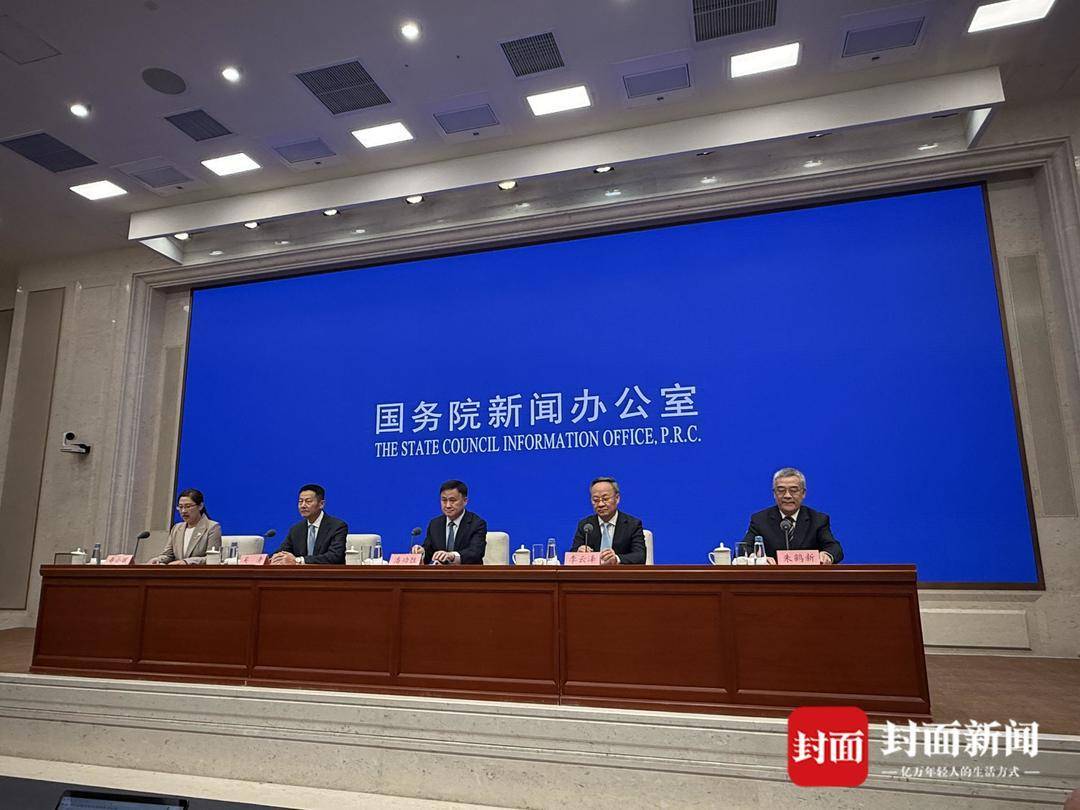
证监会主席吴清:5年来上市公司派发“红包”10.6万亿元|快讯
Hua Xia Shi Bao· 2025-09-22 09:00
Core Insights - The past five years have been unusual for the capital market, with a continuous improvement in the coordination of investment and financing functions [2] - Total financing through stock and bond markets reached 57.5 trillion yuan, with the proportion of direct financing increasing by 2.8 percentage points to 31.6% compared to the end of the 13th Five-Year Plan [2] - Over 90% of newly listed companies in recent years are technology enterprises or have high technological content, with the market capitalization of the A-share technology sector exceeding 25% [2] - Listed companies have significantly increased their awareness of returning value to investors, distributing a total of 10.6 trillion yuan through dividends and buybacks, which is over 80% higher than during the 13th Five-Year Plan [2] Financing and Market Trends - The capital market has accelerated its service to technological innovation, with a notable increase in the proportion of technology-related companies [2] - The market capitalization of technology companies is now significantly higher than that of banking, non-banking financial, and real estate sectors combined [2] - The China Securities Regulatory Commission is actively working to improve the capital formation mechanism and encourage long-term capital inflows into the market [2]

证监会:上市公司主动回报投资者意识明显增强
Zhong Guo Xin Wen Wang· 2025-09-22 08:45
Group 1 - The core viewpoint is that the awareness of listed companies to actively return to investors has significantly increased, reflecting a positive trend in the capital market [1][2][3] - The regulatory framework for the capital market has been systematically restructured, with the implementation of new securities laws and over 60 supporting rules, enhancing the legal system [1][2] - The multi-layered market system has been further improved, with the A-share market's total market value surpassing 100 trillion yuan for the first time [1][2] Group 2 - The coordination between investment and financing functions has been strengthened, with direct financing proportion rising to 31.6%, an increase of 2.8 percentage points compared to the end of the 13th Five-Year Plan [2][3] - The technology sector's market capitalization now exceeds 25% of the A-share market, indicating a shift towards more technology-driven companies [2][3] - Listed companies have distributed a total of 10.6 trillion yuan in dividends and buybacks over the past five years, representing an increase of over 80% compared to the previous period [2][3] Group 3 - A stable market mechanism has been gradually established, enhancing the resilience and risk resistance of the A-share market, with the annualized volatility of the Shanghai Composite Index decreasing by 2.8 percentage points [3] - A fair and just market environment has been further developed, with significant increases in administrative penalties for financial fraud and market manipulation, enhancing market transparency [3]