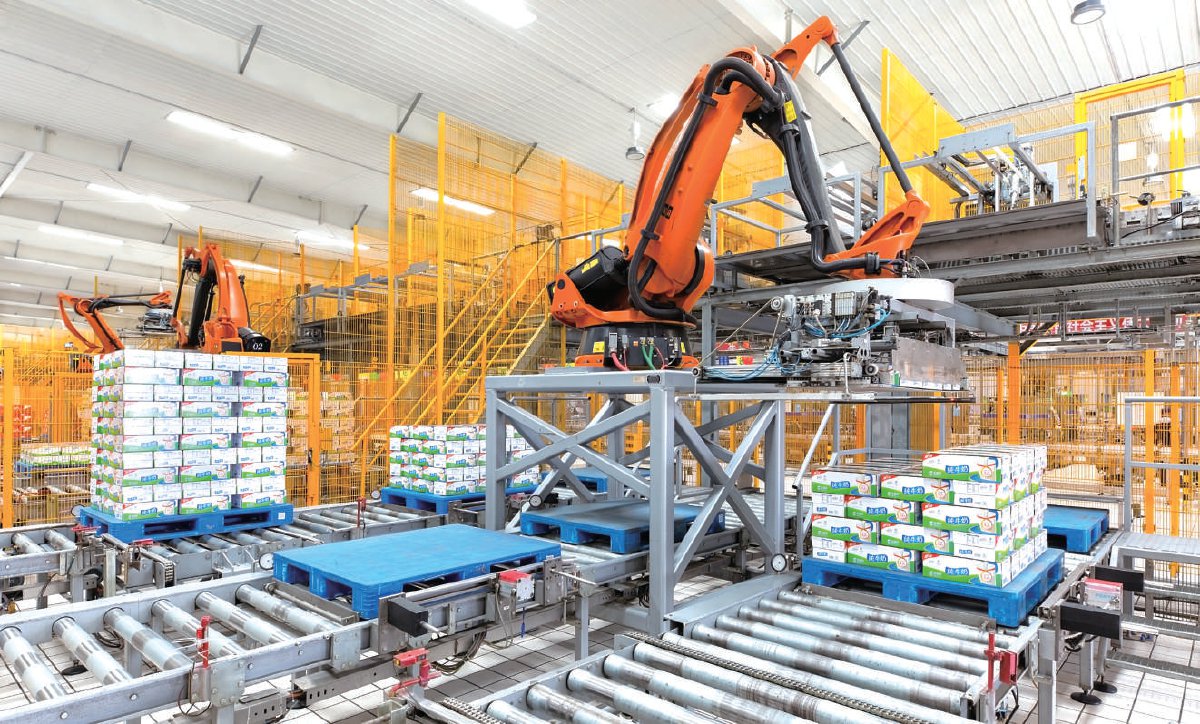
乳业深加工

Search documents
全国人大代表冷友斌:从“更适合宝宝”到守护全家健康
经济观察报· 2026-03-06 10:26
Core Viewpoint - The article emphasizes the need for improving the quality and quantity of protein intake among the Chinese population, highlighting the structural issues in the dairy industry, including insufficient deep processing capabilities and reliance on imported raw materials [2][3]. Group 1: Protein Intake Issues - The current protein intake level in China is inadequate, particularly in terms of high-quality protein, with an average daily intake of 60.4g compared to 93.9g in the U.S. and 71.4g in Japan [4][6]. - Over 55% of parents report that their children consume a limited variety of protein sources, and nearly 90% of elderly individuals reduce their protein intake due to health misconceptions, leading to serious health issues like sarcopenia [6][8]. - There is a significant gap in consumer awareness regarding protein nutrition, with 70% of respondents unaware of how to scientifically supplement protein [8]. Group 2: Supply-Side Challenges - The domestic supply of quality protein has not kept pace with demand, with a protein self-sufficiency rate dropping from 96% to 69% between 2000 and 2021 [8]. - The dairy industry faces structural imbalances, with liquid milk accounting for 92.7% of production, while high-value products like cheese and butter make up less than 7.3% [9][10]. - The reliance on imports for key dairy ingredients, such as whey protein, poses a risk to supply stability, especially given the geopolitical uncertainties [9][10]. Group 3: Recommendations for Improvement - The article suggests that the government should create a differentiated protein intake guideline for various demographics, including infants, adults, and the elderly, to enhance consumer education [8]. - It advocates for policies that support domestic innovation in the protein industry, including tax incentives and funding for research and development [10]. - The focus should be on technological breakthroughs in dairy processing to enhance the supply chain's resilience and ensure food security [10][11]. Group 4: Technological Advancements - The company has made significant strides in dairy protein deep processing, establishing China's first automated production line for lactoferrin and developing innovative extraction technologies [11][12]. - The company has achieved 100% self-research and production capability for key dairy ingredients, creating a comprehensive technical system from research to commercialization [13]. - The advancements in technology not only improve product quality but also address the industry's long-standing issues of dependency on imports and structural imbalances [15][21]. Group 5: Holistic Approach to Nutrition and Industry - The company's strategy aims to create a closed-loop system that integrates nutrition education, industry upgrades, and self-sufficiency, ultimately benefiting both public health and the dairy sector [16][21]. - By focusing on technical innovation, the company seeks to extend its nutritional solutions beyond infant formula to cater to all age groups, addressing the broader issue of protein intake across the population [17][20].


妙可蓝多:利空落地,专注经营进入新征程-20260128
HUAXI Securities· 2026-01-28 00:25
Investment Rating - The investment rating for the company is "Buy" [1] Core Views - The report indicates that the company is entering a new phase of focus on operations following the resolution of negative factors [2] - The company has experienced changes in management, with the resignation of key executives and a commitment from the controlling shareholder to increase their stake in the company [5] - The financial forecasts have been adjusted, with revenue and net profit projections revised upwards for the years 2025 to 2027 [6] Summary by Sections Company Overview - The company has a total market capitalization of 116.19 billion yuan and a free float market capitalization of the same amount [1] - The latest closing price is 22.78 yuan, with a 52-week high of 32.46 yuan and a low of 17.62 yuan [1] Recent Developments - The company has released several announcements regarding its operations, including updates on a merger and acquisition fund and changes in executive leadership [2] - A significant risk was identified related to overdue debts of a subsidiary of the merger fund, which could impact the company's net profit [3] Financial Performance - The company has adjusted its revenue forecasts for 2025 to 2027 from 53/62/71 billion yuan to 56/66/77 billion yuan, respectively [6] - The net profit estimates have been revised downwards for 2025 but increased for 2026 and 2027, with expected earnings per share (EPS) adjustments reflecting these changes [6] Management Changes - Key executives, including the vice chairman and general manager, have resigned, with a new general manager appointed [5] - The controlling shareholder, Mengniu Dairy, plans to increase its stake in the company, indicating confidence in the company's future [5]

妙可蓝多(600882):利空落地,专注经营进入新征程
HUAXI Securities· 2026-01-27 15:34
Investment Rating - The investment rating for the company is "Buy" [1] Core Views - The report indicates that the company is entering a new phase of focus on operations following the resolution of negative factors [2][5] - The company has faced risks related to its investment in a merger and acquisition fund, which has resulted in potential losses impacting net profit [3][4] - Changes in management and shareholder support are seen as positive developments for the company's operational focus and future growth [5] Summary by Sections Event Overview - The company has released several announcements since the end of December 2025, including updates on a merger fund, shareholder buyback plans, and management changes [2] Analysis and Judgment - The company confirmed risks associated with its investment in a merger fund, particularly regarding overdue debts that could lead to significant losses [3] - The company plans to recognize a fair value loss of approximately 128.72 million yuan related to this investment, which is expected to reduce net profit for 2025 by 119.11 million to 126.61 million yuan [4] Investment Recommendations - The revenue forecasts for 2025-2027 have been adjusted upwards, with expected revenues of 56 billion, 66 billion, and 77 billion yuan respectively, while net profits are projected at 1.3 billion, 3.7 billion, and 5.4 billion yuan [6] - The earnings per share (EPS) estimates have been revised to 0.25, 0.73, and 1.06 yuan for the same period, with corresponding price-to-earnings (P/E) ratios of 89, 31, and 21 times [6]
食品饮料行业周度市场观察-20251205
Ai Rui Zi Xun· 2025-12-05 05:39
Investment Rating - The report does not explicitly provide an investment rating for the food and beverage industry Core Insights - The sports nutrition sector is experiencing rapid growth, with the global market expected to increase from 188.13 billion yuan in 2025 to 306.47 billion yuan by 2032, reflecting a compound annual growth rate (CAGR) of 7.22%. In China, the market is projected to reach 20.93 billion yuan by 2030, with a CAGR of 11.56% [2] - The beverage market in China is witnessing a trend of "market position certification," where non-first-tier brands obtain certifications like "sales leader" and "category pioneer" to differentiate themselves in a saturated market [2] - The Japanese ready-to-drink coffee market is shifting from canned to PET bottle packaging, with PET bottles increasing from 30% in 2017 to over 40% in 2023, reflecting changing consumer preferences towards convenience and emotional connection [5] Industry Trends - The sports nutrition industry is a rapidly growing segment of the health supplement market, with a focus on serving active individuals. The market is highly concentrated in China, with the top three companies holding a 70% market share [2] - The beverage market is seeing a rise in "market position certification," which is a strategy for non-first-tier brands to establish credibility and differentiate themselves amid intense competition [2] - The dairy industry is focusing on deep processing technologies to enhance the nutritional value of milk, aiming for a transformation from quantity accumulation to quality improvement [5] - The ready-to-drink coffee market in Japan is experiencing a shift towards PET packaging, driven by consumer demand for convenience and a more leisurely drinking experience [5] - The health beverage sector is rapidly evolving, with products like birch sap showing a compound annual growth rate of over 300% in the past three years, indicating a strong consumer preference for natural and functional drinks [8] - The no-sugar tea market is transitioning from growth to maturity, with established brands gaining market share while new entrants face significant competition [8] - The sports drink market is rapidly expanding, with brands like Dongpeng's "Bushi La" gaining significant market share through competitive pricing and promotional activities [12] Top Brand News - Starbucks has launched a themed marketing campaign featuring classic millennium songs to enhance customer experience and promote seasonal products [14] - The ready-to-drink yogurt market is seeing significant growth, with brands like "Mo Yoghurt" leveraging celebrity endorsements to enhance brand visibility and consumer engagement [14] - Sanyuan Foods reported a 124.84% increase in net profit, driven by its low-temperature milk segment, showcasing the potential for growth in the dairy market [17] - JD.com has established a dedicated department for prepared food, indicating a strategic focus on the growing market for convenience foods [19] - Farmers Spring has introduced new ready-to-drink coffee products, aiming to capture market share in a competitive landscape dominated by established brands [20]

财报解读|液奶下滑仍在拖累乳业公司,伊利看好奶酪、成人营养深加工赛道新钱景
Di Yi Cai Jing· 2025-10-31 08:00
Core Viewpoint - The dairy industry is facing challenges due to declining liquid milk sales, necessitating diversification and deep processing to drive growth [1][2]. Financial Performance - In the first three quarters, Yili achieved total revenue of 90.56 billion yuan, a year-on-year increase of 1.7%, while net profit attributable to shareholders was 10.43 billion yuan, a decrease of 4.1% [2]. - In Q3 alone, Yili's revenue was 28.63 billion yuan, down 1.7% year-on-year, with net profit of 3.23 billion yuan, a decline of 3.4% [2]. - Liquid milk revenue for Yili in Q3 was 18.81 billion yuan, down approximately 8.7% year-on-year, and for the first three quarters, it totaled 54.94 billion yuan, a decrease of 4.5% [2][4]. Market Dynamics - The liquid milk segment continues to struggle, influenced by weak market demand and increased competition, alongside the impact of non-packaged milk alternatives like ready-to-drink tea and coffee [2][4]. - Despite the challenges in liquid milk, some segments like dairy beverages and low-temperature fresh milk are still experiencing growth [4]. Growth Opportunities - The growth for dairy companies is increasingly coming from deep processing sectors, with Yili's milk powder and dairy products generating 7.68 billion yuan in Q3, a year-on-year increase of 12.6% [5]. - High-value dairy products such as cream, cheese, and butter have seen over 20% growth in B2B raw material products [5]. - The adult nutrition segment is also showing double-digit growth, with plans for product upgrades to meet diverse consumer needs [5]. Industry Trends - Companies like Mengniu and China Feihe are accelerating their focus on all-age nutrition, indicating a shift in consumer demand from basic supplementation to more tailored nutritional solutions [6]. - The competition in the dairy market is evolving from quality to functionality, requiring companies to enhance their innovation capabilities and technical reserves [6]. - The impact of the baby boom in 2024 on the milk powder market is expected to diminish, with a cooling trend observed in the infant formula sector [6].
伊利推动乳业深加工变革 开启“精准营养”新时代
Jing Ji Ri Bao· 2025-09-28 21:49
Core Insights - The article highlights the transformation of China's dairy industry from traditional manufacturing to precision nutrition, emphasizing the importance of deep processing in meeting consumer demands for healthier and more functional dairy products [1][2][3]. Group 1: Industry Trends - The dairy market is shifting from basic nutrition to functional precision, with consumers seeking products that offer natural and targeted nutritional benefits [2][3]. - Despite improvements in raw milk quality and standardized farming practices, the industry faces challenges in deep processing capabilities, with a low proportion of high-value products and a reliance on imports for key functional ingredients [2][3]. Group 2: Technological Advancements - The dairy industry is progressing through three stages: 1.0 focuses on nutrition preservation, 2.0 on nutrition optimization, and 3.0 on precision nutrition, which emphasizes deep processing to extract and retain natural nutrients effectively [3][4]. - Yili has made significant breakthroughs in deep processing technologies, such as the directional protection technology for lactoferrin, increasing its retention rate from 10% to over 90% [4][5]. Group 3: Yili's Innovations - Yili has developed a "拆、切、递" (disassemble, cut, deliver) technology chain to meet personalized nutrition needs, achieving a high retention rate of 91.2% for core natural nutrients [5][6]. - The Yili Health Valley serves as a comprehensive ecosystem for deep processing, integrating smart manufacturing and advanced technologies to enhance production efficiency and product quality [6][7]. Group 4: Future Outlook - Yili aims to lead the transformation of the dairy industry by leveraging technological innovations and a collaborative ecosystem, positioning itself as a key player in providing personalized nutrition solutions [7][8]. - The company emphasizes that deep processing is not only a technical challenge but also a strategic necessity for ensuring control over key dairy ingredients and meeting national health needs [7][8].
“天然精准营养”时代到来,伊利打造一杯更“懂你”的牛奶
2 1 Shi Ji Jing Ji Bao Dao· 2025-09-28 01:54
Core Insights - The article highlights the transformation of China's dairy industry from traditional manufacturing to intelligent manufacturing, emphasizing the shift towards "precise nutrition" and the development of deep processing technologies [1][5][12] Group 1: Industry Trends - The dairy market is evolving from "basic nutrition" to "functional precision," with consumers seeking products that offer natural and functional characteristics [4][5] - Despite improvements in raw milk quality and farming standards, the industry faces challenges in deep processing capabilities, with a low proportion of high-value products and reliance on imports for key functional ingredients [4][5] Group 2: Technological Innovations - The development of deep processing technologies is crucial for bridging the gap between supply and demand in the dairy industry, with a focus on extracting and preserving natural nutrients effectively [5][7] - Yili has made significant advancements in deep processing, particularly in the extraction of lactoferrin, achieving a retention rate of 90% through innovative techniques [7][8] Group 3: Yili's Strategic Initiatives - Yili's Health Valley serves as a comprehensive ecosystem for dairy production, integrating smart manufacturing and deep processing to enhance product innovation and operational efficiency [10][11] - The company has established itself as a leader in the dairy industry by focusing on collaborative innovation and has ranked second globally in patent applications among the top ten dairy companies [11][12] Group 4: Future Outlook - The future of dairy products is envisioned as personalized health solutions rather than mere beverages, with Yili leading this transformation through technological innovation and a collaborative ecosystem [12]
伊利开启“天然精准营养”时代
Bei Jing Ri Bao Ke Hu Duan· 2025-09-27 22:52
Core Insights - The article highlights the transformation of China's dairy industry from traditional manufacturing to precision intelligent manufacturing, showcasing the advancements in technology and production processes at Yili's Modern Smart Health Valley [1][7][9]. Supply and Demand Transformation - The dairy market is shifting from basic nutrition to functional precision, with consumers seeking products that offer natural and functional characteristics [7][8]. - Despite improvements in raw milk quality and standardized farming practices, the industry faces challenges in deep processing capabilities, with a low proportion of high-value products and a reliance on imports for key functional ingredients [7][8]. Technological Breakthroughs - Yili has made significant advancements in deep processing technologies, particularly in extracting lactoferrin, a valuable component known for its antibacterial and immune-regulating properties [9][10]. - The company has developed a directional protection technology for lactoferrin, increasing its retention rate from 10% to 90% in ambient pure milk, breaking previous technological monopolies [9][10]. Personalized Nutrition - Yili has established a "拆、切、递" (disassemble, cut, deliver) technology chain to meet personalized nutrition demands, allowing for the efficient extraction and delivery of core nutrients tailored to different consumer needs [10][12]. - This innovation positions milk as a "precise nutrition carrier," catering to specific health requirements for various demographics, including children, the elderly, and athletes [10][12]. Ecosystem Development - Yili's Modern Smart Health Valley serves as a comprehensive ecosystem for dairy production, emphasizing full-chain collaboration and intelligent processes to support deep processing [11][12]. - The facility is recognized as a benchmark for intelligent cheese manufacturing in China, utilizing 5G and industrial internet technologies to enhance production efficiency and product innovation [11][12]. Innovation and Collaboration - Yili has established a collaborative innovation ecosystem that integrates production, education, research, and application, leading to a significant number of patents in the dairy industry [12][13]. - The company ranks second globally in total patent applications among the top ten dairy companies, demonstrating its strong innovation capabilities [12][13]. Future Outlook - Yili aims to continue leading the dairy industry in deep processing, unlocking the natural nutritional potential of milk and promoting "precise nutrition" to meet national health needs [13].