
产业体系

Search documents
雷少华:美国对华制裁为何无效?创新体制差异是根本原因
Guan Cha Zhe Wang· 2026-01-18 01:34
Core Viewpoint - The article discusses the rapid technological advancements in China, particularly in AI and semiconductor industries, despite U.S. sanctions, highlighting the resilience and growth of China's technology sector and its implications for global competition [1][16]. Group 1: Technology and Industry Interaction - Technology and industry are deeply intertwined, with technological innovation driving industrial transformation and vice versa, creating a symbiotic relationship that accelerates global capitalism [2][3]. - The "spillover effect" of technology redefines industrial production functions, leading to comprehensive upgrades across industries and enabling latecomer countries to catch up and even surpass established players [3][6]. Group 2: China's Industrial System Development - By 2023, China's manufacturing output accounted for 35% of the global total, with projections indicating it could reach 45% by 2030, surpassing the combined outputs of the U.S., Japan, and Germany [17][18]. - China has established a complete industrial system, being the only country with all industrial categories recognized by the United Nations, which positions it as a manufacturing powerhouse [17][19]. Group 3: U.S.-China Technology Competition - U.S. technology sanctions have inadvertently accelerated China's self-reliance in semiconductor development, as evidenced by significant investments in domestic chip manufacturing and related technologies [8][9]. - The U.S. strategy of technology control is based on the belief that restricting technology transfer can hinder China's innovation, yet this approach has proven ineffective as China continues to innovate and develop independently [15][16]. Group 4: Future Directions - The article predicts that by 2025, China will enter a new phase of "strong industry leading new technology," focusing on AI as a core driver of economic transformation and industrial innovation [29][30]. - China's government initiatives, such as the "Artificial Intelligence+" plan, aim to integrate AI with various sectors, enhancing productivity and creating new economic paradigms [29][30].

聚焦北京各区两会|“十四五”期间中关村丰台园重点企业实现总收入5861亿元 年均增速达9.1%
Bei Jing Shang Bao· 2026-01-16 12:09
Core Insights - The Fengtai Park in Beijing has shown strong economic contributions during the 14th Five-Year Plan period, with key enterprises achieving a total revenue of 586.1 billion yuan, ranking third in the Zhongguancun Demonstration Zone, and an average annual growth rate of 9.1% [1] - The region's economic contribution accounts for over one-quarter of the total district, solidifying its position as a "main engine" of growth [1] - The number of national high-tech enterprises has increased by 70% compared to the end of the 13th Five-Year Plan, reaching nearly 2,000, with "specialized, refined, distinctive, and innovative" small giant enterprises making up 93% of the total in the area [1] Economic Structure - A "2+4" industrial system has been established, led by two trillion-yuan clusters in rail transit and aerospace, which together account for 54% of the revenue in Fengtai Park [1] - The rail transit signal control technology is internationally advanced, with a domestic market share exceeding 40% [1] - In the aerospace sector, there is a first-mover advantage in satellite internet, alongside active investments in low-altitude technology and smart medical engineering [1] Innovation Ecosystem - There has been a significant increase in corporate innovation investment and output, with R&D expenditure reaching 14.8 billion yuan and technology revenue rising by 60% compared to the end of the 13th Five-Year Plan [1] - The number of effective invention patents has reached nearly 10,000, which is 1.5 times that of the end of the 13th Five-Year Plan [1] - Approximately 120 various innovation platforms have been established, with an additional 900,000 square meters of industrial space created, including three characteristic industrial parks in Zhongguancun [1] Business Environment - The business environment has been iteratively upgraded, with the "Xianfeng No. 9" service brand achieving full coverage of building enterprise services, and both the resolution rate and satisfaction rate for enterprise requests reaching 100% [2] - Significant financial empowerment has been achieved through strategic partnerships with 40 venture capital funds and the launch of multiple technology credit products in collaboration with financial institutions [2] - The first enterprise overseas training platform in the city has been established, and the international service network continues to improve [2] - The招商机制 has been continuously optimized, with a comprehensive investment attraction plan implemented to enhance information sharing, process standardization, and efficiency [2]

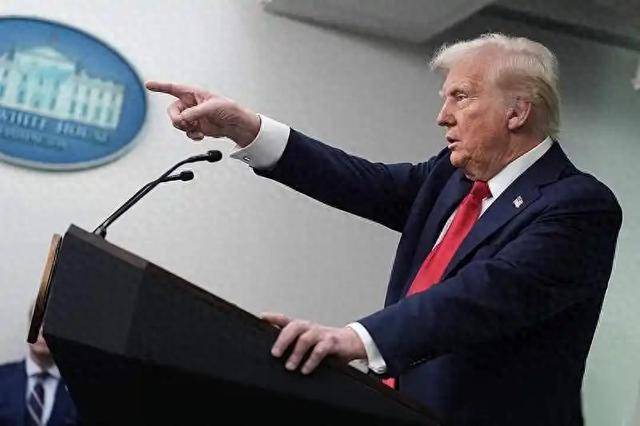
特朗普向全球发出通牒:180天内必须对中国动手,不帮忙就加税
Sou Hu Cai Jing· 2026-01-16 12:06
Group 1 - The core issue is the U.S. reliance on China for rare earth processing, with over 90% of global separation and purification capacity controlled by China, making it difficult for the U.S. to establish an alternative supply chain within the proposed 180 days [10][12][53] - The U.S. has significant mineral resources but lacks the capability to refine them into usable materials, while allies like Australia face challenges in building complete processing lines [12][19] - The announcement by Trump is seen as a political maneuver rather than a feasible industrial strategy, aimed at creating a strong anti-China narrative ahead of the 2026 midterm elections [22][25] Group 2 - The recent G7 and allied meetings did not produce concrete plans to reduce dependence on Chinese rare earths, indicating a lack of coordination among allies [7][8] - Countries like Japan and India express support for supply chain diversification but continue to rely heavily on Chinese intermediate products due to high costs of establishing their own production lines [20][31] - The European Union is moving forward with the certification of China's C919 aircraft, indicating a willingness to engage with China despite U.S. pressures, reflecting a deeper economic interdependence [29][36] Group 3 - The U.S. strategy of imposing tariffs and sanctions is viewed as a desperate attempt to reverse its own industrial decline, as it continues to import a significant portion of rare earth compounds from China [49][53] - China's technological advancements and established industrial ecosystem in rare earth processing create a significant competitive advantage that cannot be easily replicated by the U.S. or its allies [41][45] - The ongoing geopolitical tensions highlight the need for a balanced approach to supply chain security, emphasizing "controllable dependence" rather than complete decoupling from China [55][57]
苏州外贸创新高,淮安增速又领跑
Xin Hua Ri Bao· 2025-08-11 05:27
Economic Overview - The province achieved a GDP of 66,967.8 billion yuan in the first half of the year, reflecting a year-on-year growth of 5.7% at constant prices [1] - Five cities surpassed a GDP of 500 billion yuan, indicating stable economic development [1] - Seven cities exceeded the provincial growth rate of 5.7%, while three cities maintained this growth rate [1] City Performance - Suzhou led the province with a GDP of 13,002.35 billion yuan, the only city to exceed 10,000 billion yuan in the first half [1] - Nanjing's GDP reached 9,179.18 billion yuan, ranking second, while Wuxi's GDP was 7,735.15 billion yuan, placing third [1] - Nantong and Changzhou also surpassed 500 billion yuan in GDP, with figures of 6,581.19 billion yuan and 5,079.13 billion yuan, respectively [2] Growth Drivers - Suzhou's industrial development showed both quantity and quality improvements, with a focus on stabilizing internal and external demand [1] - The city implemented the "1030" industrial system and "1840" service system, alongside the "Suzhou Intelligent Manufacturing Ten Actions," leading to an 8.0% year-on-year growth in industrial added value [1] - Suzhou's foreign trade reached a record high of 12,958.8 billion yuan, growing by 5.7% [2] Emerging Cities - Xuzhou's GDP reached 4,509.30 billion yuan, positioning it as a potential "trillion city" [2] - The city aims to complete its "14th Five-Year Plan" goals and is on track to become the sixth "trillion city" in Jiangsu [2] Leading Growth Cities - Huai'an maintained the highest growth rate in the province at 6.8%, driven by rapid industrial production and strong performance in key industries [2][3] - The city's industrial added value, sales, and electricity consumption grew by 8.9%, 8.8%, and 7.5%, respectively [3] - Huai'an's fixed asset investment increased by 5.3%, with industrial investment growing by 17.2% [3]