
产能瓶颈

Search documents
油气板块为何持续走强?机构认为存长期逻辑支撑
Huan Qiu Wang· 2026-02-28 02:37
Group 1 - The oil and gas sector has been a focal point in the market due to global macroeconomic shifts and geopolitical risk premiums, with significant stock price increases observed since the beginning of the year [1] - Notable stock performances include Tongyuan Petroleum rising over 170% and several other companies like Intercontinental Oil and China Merchants Energy increasing by more than 50%, while the CSI Oil and Gas Resource Index has risen over 33% [1] - As of February 27, the oil and gas sector saw further gains, with companies like Heshun Petroleum hitting the daily limit and others like Jereh and Shengtong Energy increasing by over 5% [1] Group 2 - Long-term growth logic for the oil service industry is driven by the market's recognition of sustained global energy demand and existing capacity bottlenecks, beyond short-term geopolitical catalysts [2] - Analysis indicates that the crude oil market may experience a phase of oversupply leading to inventory accumulation in 2025, followed by a shift to a tighter balance in 2026 as OPEC+ enforces production cuts and demand continues to recover [2] - The dual support from the sustained recovery in oil demand and the certainty of inventory reduction strengthens the foundation for a mid-term bullish outlook on international oil prices, which is crucial for capital expenditures and equipment demand in the oil and gas sector [2]


哈尔滨电气涨超5% 公司高价值订单将逐步释放 机构看好国内燃气轮机企业出海份额提升
Zhi Tong Cai Jing· 2026-02-12 02:56
Core Viewpoint - Harbin Electric (01133) has seen a stock price increase of over 5%, currently at 22.28 HKD, following the announcement of a positive earnings forecast for 2025, projecting a net profit of 2.65 billion CNY, a year-on-year increase of approximately 57.2% [1][1][1] Company Summary - Harbin Electric expects to achieve a net profit of 2.65 billion CNY in 2025, exceeding previous profit expectations of 2.5 billion CNY [1][1] - The significant growth in net profit is attributed to increased operating revenue and improved product profitability [1][1] - The company benefits from high-value orders being gradually released and an anticipated increase in gross margin [1][1] - Enhanced production scale and intelligent manufacturing capabilities have led to significant improvements in operational efficiency and economies of scale [1][1] Industry Summary - As of mid-October 2025, the planned capacity for data center reserve projects in the U.S. has reached 245 GW since January 2023, indicating a growing demand for stable power sources [1][1] - The increasing peak load from operational data centers highlights the reliability needs of the power system, suggesting that gas turbines, power equipment, and energy storage sectors are likely to benefit [1][1] - There are capacity bottlenecks among leading overseas gas turbine manufacturers, presenting an opportunity for Chinese companies to increase their market share in a high-demand environment [1][1]
阿斯麦财报前夕,大摩坚定看多:Q4订单大幅增长,2027年将迎来业绩爆发之年
Hua Er Jie Jian Wen· 2026-01-26 13:53
Core Viewpoint - ASML is expected to report strong order numbers, with a shift in market focus from 2026 to 2027, which may be a key year for the company's performance [1] Group 1: Order Expectations - Morgan Stanley predicts ASML's Q4 orders will reach €7.27 billion, including 19 EUV low numerical aperture devices, significantly higher than the previous market expectation of over €5 billion [2] - Recent communications with buyer institutions indicate market expectations have risen to approximately 20 EUV devices and over €7 billion [2] - This will be ASML's last quarterly order data release, making this report particularly important [2] Group 2: 2026 Guidance - For 2026, Morgan Stanley anticipates ASML will provide a revenue growth guidance of around 10%, which is sufficient to meet market expectations [3] - The expected gross margin for 2026 is 52.5%, with a slight year-on-year decline of 20 basis points [3] - EUV shipment volume is expected to increase from around 40 units in 2025 to nearly 50 units in 2026, with a projected sales growth of 12-15% [3] Group 3: 2027 Performance Outlook - Morgan Stanley emphasizes that the focus is shifting to 2027, where EUV demand is expected to reach 80 units, driven by TSMC, Samsung, and Intel [4] - The anticipated demand is supported by significant capacity expansions in DRAM and logic chip manufacturing [4] Group 4: Capacity Constraints - A key risk identified is that ASML's EUV capacity may reach its limits in 2027, with a target of 90 low NA EUV devices and about 20 high NA devices by the end of that year [5] - Technical limitations prevent the conversion of DUV production lines to EUV, necessitating new cleanroom space for increased capacity [5] - To exceed an annual capacity of 100 units, ASML will require time and capital investment to build new facilities [5] Group 5: Revenue Projections - Total revenue for 2027 could reach €48.6 billion, with a gross margin of approximately 56%, driven by DUV sales and contributions from high NA systems [7]

英特尔盘后惨跌!Q4业绩超预期但指引逊色,制造良率短板拖累复苏步伐
Jin Rong Jie· 2026-01-23 00:18
Core Viewpoint - Intel's stock price dropped over 12% after the release of its latest earnings report, primarily due to a lackluster performance outlook provided by CEO Pat Gelsinger, who warned of ongoing manufacturing issues [1][2]. Financial Performance - Intel's Q4 2025 revenue decreased by 4.1% year-over-year to $13.7 billion, which was better than analysts' expectations of $13.4 billion; adjusted earnings per share were $0.15, exceeding the forecast of $0.09 [1]. - The Client Computing Group's Q4 revenue was $8.2 billion, down 6.6% year-over-year, slightly below the average analyst estimate of $8.3 billion; Data Center Group revenue was $4.7 billion, up 8.9% year-over-year, surpassing the expected $4.4 billion [1]. - Intel's foundry business generated $4.5 billion in revenue, a 3.8% increase year-over-year, also exceeding the forecast of $4.4 billion [1]. Future Guidance - For Q1 2026, Intel expects revenue to be between $11.7 billion and $12.7 billion, with the midpoint lower than the analyst estimate of $12.6 billion; adjusted earnings per share are projected to be zero, compared to the expected $0.08 [1][2]. - The adjusted gross margin for Q4 was 37.9%, expected to shrink to 34.5% in Q1 2026, lower than the analyst forecast of 36.5% [2]. Manufacturing Challenges - Intel is currently facing low manufacturing yields, which hinder its ability to meet order demands; Gelsinger noted that the company has consumed a significant amount of inventory in Q4 and needs to improve its manufacturing standards [2][6]. - CFO David Zinsner indicated that supply will hit a "low point" in Q1, with improvements expected in Q2 and beyond, highlighting a mismatch between rising demand and constrained supply [6]. Market Sentiment - Despite recent optimism from investors regarding new products potentially improving financial conditions, the ongoing yield issues have dampened expectations [3][6]. - Analysts had high hopes for a turning point for Intel, but the persistent manufacturing challenges have raised concerns about the company's execution capabilities [6].


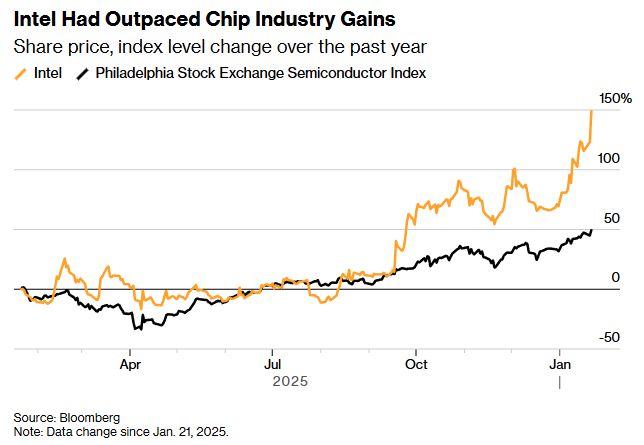
英特尔(INTC.US)盘后惨跌!Q4业绩超预期但指引逊色 制造良率短板拖累复苏步伐
Zhi Tong Cai Jing· 2026-01-23 00:01
Core Viewpoint - Intel's stock price dropped over 12% after the release of its latest earnings report, primarily due to a lackluster performance outlook provided by CEO Pat Gelsinger, who warned of ongoing manufacturing issues [1] Financial Performance - Intel's Q4 2025 revenue decreased by 4.1% year-over-year to $13.7 billion, which was better than analysts' expectations of $13.4 billion; adjusted earnings per share were $0.15, exceeding the forecast of $0.09 [1] - Client Computing revenue for Q4 was $8.2 billion, down 6.6% year-over-year, slightly below the average analyst estimate of $8.3 billion; Data Center revenue was $4.7 billion, up 8.9% year-over-year, surpassing the expected $4.4 billion [1] - Intel's foundry business generated $4.5 billion in revenue, a 3.8% increase year-over-year, also exceeding the forecast of $4.4 billion [1] - For Q1 2026, Intel expects revenue between $11.7 billion and $12.7 billion, with the midpoint below the analyst estimate of $12.6 billion; adjusted earnings per share are projected to be zero, while analysts had anticipated $0.08 [1][2] Profitability Metrics - The adjusted gross margin for Q4 was 37.9%, expected to shrink further to 34.5% in Q1 2026, below the analyst expectation of 36.5% [2] - Intel's annual revenue for the previous year was $53 billion, approximately $25 billion lower than its peak in 2021 [2] Market Sentiment and Challenges - Despite previous optimism from investors regarding new products improving financial conditions, the ongoing manufacturing yield issues have dampened expectations [3][5] - CEO Gelsinger indicated that turning around the company's situation will require "time and determination," highlighting the challenges in restoring technical leadership and market share [2][5] - CFO David Zinsner noted that supply will hit a "low point" in Q1, with improvements expected in Q2 and beyond, indicating a mismatch between rising demand and constrained supply [5]
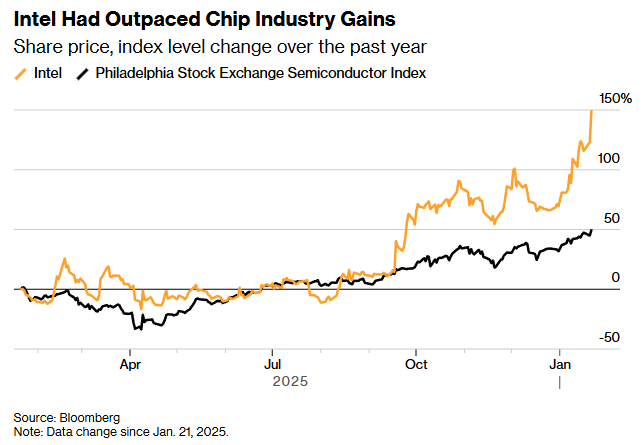
谁在逼着摩尔线程买75亿理财?
3 6 Ke· 2025-12-15 04:09
Core Viewpoint - The recent actions of Moer Technology, the first domestic GPU company, have raised eyebrows in the capital market, particularly regarding its decision to invest up to 7.5 billion yuan of idle funds into wealth management products shortly after its IPO, which netted 7.576 billion yuan after fees [2][3]. Group 1: Financial Actions - Moer Technology plans to invest no more than 7.5 billion yuan in safe, liquid wealth management products, which are essentially low-risk, interest-earning deposits [4]. - The company’s decision to allocate 99% of its IPO funds to wealth management rather than immediate investment in projects sends a concerning signal about its current investment opportunities [4][5]. - The original plan for the 8 billion yuan raised included significant investments in three major projects: AI training chips, graphics chips, and AI SoC chips, totaling approximately 69.9% of the funds [5][6]. Group 2: Industry Challenges - The chip industry faces unique challenges where the speed of spending is limited by physical constraints, making it difficult to quickly utilize large sums of money for development [10][15]. - The design costs for advanced chips are substantial, with 7nm chips costing around 2.17 billion USD (approximately 15 billion yuan) and 3nm chips reaching up to 5.9 billion USD (around 41.3 billion yuan) [10][11]. - The need for software ecosystem development is critical, as building a robust software environment is a slow process that cannot be rushed, further complicating the utilization of funds [12][13]. Group 3: Market Perception - Moer Technology's stock price surged dramatically, with a price-to-sales ratio reaching 1008.84 times, indicating extreme market optimism and speculative investment behavior [16][18]. - The company has reported significant losses, with a net loss of 1.492 billion yuan last year and 271 million yuan in the first half of this year, highlighting a disconnect between market valuation and financial performance [19][20]. - The stark contrast between the company's high market valuation and its cautious financial management reflects the broader challenges faced by the Chinese hard tech sector, where survival is prioritized over aggressive growth [21][22].
俄乌协议重创油市?巴克莱:实质性影响存疑,布油明年仍看66美元
Hua Er Jie Jian Wen· 2025-11-28 11:23
Core Viewpoint - The geopolitical risk premium in the oil market is rapidly declining as expectations for peace talks between Russia and Ukraine rise, with Brent crude oil prices falling to around $63 per barrel. Barclays maintains its forecast for the average Brent crude price at $66 per barrel for 2026, emphasizing that structural factors like capacity constraints will be more significant than geopolitical events in the coming years [1][4]. Group 1: Geopolitical and Market Dynamics - Despite the emergence of ceasefire negotiations, Barclays believes such events will not significantly alter the fundamental landscape of the oil market by 2026 [1]. - The report highlights that concerns over oversupply in the market are overstated, while structural positive factors are underestimated [1][7]. - The actual production of OPEC+ countries, including Russia, continues to lag behind targets, indicating persistent capacity constraints [7][10]. Group 2: Russian Oil Production Constraints - Barclays questions the market consensus that a ceasefire would lead to a surge in Russian oil supply, asserting that significant growth in Russian production is unlikely before 2026 [4]. - Despite an increase in OPEC+ production quotas, Russia's actual output has declined by 100,000 barrels per day year-on-year, reflecting a disconnect between capacity and policy goals [4]. - The ongoing sanctions have stabilized, yet production has not increased, indicating that capacity constraints have become the primary bottleneck for supply [4]. Group 3: Supply and Demand Balance - The market's fears of oversupply in the coming year may be overestimated, as investors are underappreciating the structural constraints on supply from OPEC+ and the shrinking global excess capacity [7][10]. - Since March, OPEC+ has raised production targets by 2.6 million barrels per day, but actual output has only increased by 1.2 million barrels per day, with an execution rate of less than 50% [7]. - The effective idle capacity is increasingly concentrated among a few core OPEC producers, such as Saudi Arabia and the UAE, enhancing their pricing power in the global market [7][10].

澳洲联储副主席警示降息空间受限,通胀压力与产能瓶颈制约货币政策宽松
Sou Hu Cai Jing· 2025-11-10 11:23
Core Viewpoint - The Reserve Bank of Australia's Deputy Governor Andrew Hauser indicated that the current economy faces significant capacity constraints, limiting further interest rate cuts [1] Economic Conditions - Economic capacity utilization is at its highest level in the past 40 years during the recovery period [1] - Inflation pressures remain persistently above the central bank's target range, increasing the risk of continuing loose monetary policy [1] Monetary Policy - Hauser emphasized that if demand growth exceeds existing capacity limits, it will exacerbate inflationary risks [1] - Despite the RBA having implemented three interest rate cuts totaling 75 basis points, the latest data shows a rebound in inflation in the third quarter, forcing the central bank to pause further easing measures [1]
YU7爆单,雷军难安
36氪· 2025-07-07 14:03
Core Viewpoint - Xiaomi is facing significant production capacity challenges as it launches its new electric vehicle, the YU7, which has generated high demand but long delivery times, potentially impacting its market position and sales targets [3][14][27]. Production Capacity Challenges - The delivery time for the YU7 has extended to over 9 months, with the standard version taking 58-61 weeks and the Pro version 51-54 weeks [4][5]. - Xiaomi's first factory in Beijing was designed for an annual capacity of 150,000 vehicles but has been pushed to produce approximately 365,000 vehicles annually, reflecting a 140% increase [6][16][42]. - The second factory, expected to be operational by July-August, will also have a capacity of 150,000 vehicles per year, which is crucial for meeting demand [6][23]. Competitive Landscape - Competitors are actively trying to attract Xiaomi's potential customers by offering incentives, such as cash bonuses for switching orders [10][29]. - The electric SUV market is highly competitive, with established players like Tesla and emerging brands like NIO and Li Auto vying for market share [11][37]. - Xiaomi's delivery delays provide an opportunity for competitors to capitalize on the situation, potentially leading to order losses for Xiaomi [28][48]. Market Dynamics and Policy Implications - The upcoming reduction in tax incentives for electric vehicles in 2024 could further complicate Xiaomi's sales strategy, as customers may face higher costs [13][48]. - Xiaomi's ambitious target of delivering 350,000 vehicles this year hinges on overcoming production bottlenecks and maintaining customer loyalty amid fierce competition [14][27]. Brand Loyalty and Consumer Behavior - Despite long wait times, Xiaomi's loyal customer base shows a willingness to wait, which may help mitigate immediate sales impacts [5][45]. - The brand's strong marketing and founder Lei Jun's personal influence are seen as key factors in retaining customers during this challenging period [48].


云铝股份(000807):Q1利润环比大增预计Q2利润继续提升
Xin Lang Cai Jing· 2025-05-06 00:36
Core Viewpoint - The company reported strong revenue growth in 2024, with a significant increase in aluminum production, but faced challenges in Q4 2024 due to a sharp decline in net profit [1][2]. Financial Performance - In 2024, the company achieved operating revenue of 54.45 billion yuan, an increase of 27.61% year-on-year, and a net profit attributable to shareholders of 4.41 billion yuan, up 11.52% [1]. - The net profit for Q4 2024 was 592 million yuan, showing a year-on-year decline of 59.21% and a quarter-on-quarter decline of 54.52% [1]. - For Q1 2025, the net profit was 974 million yuan, down 16.26% year-on-year but up 64.66% quarter-on-quarter [2]. Production and Pricing - The increase in 2024 profits was primarily driven by higher production volumes, with aluminum production rising by 22.45% year-on-year to 2.9383 million tons [2]. - The average price of alumina in 2024 was 4,100 yuan per ton, up 42% from 2023, while the average price of electrolytic aluminum was 19,922 yuan per ton, an increase of 7% [2]. - In Q1 2025, the average price of alumina fell to 3,938 yuan per ton, a decrease of 26% from the previous quarter, which is expected to positively impact profits in Q2 2025 [2]. Future Outlook - The company plans to increase electrolytic aluminum production in 2025, targeting an output of approximately 3.01 million tons [3]. - The financial condition is robust, with a significant reduction in the debt-to-asset ratio from 75.44% in 2018 to 23.97% in Q1 2025 [3]. - The company has increased its dividend payout ratio from 11.76% in 2021 to 32.23% in 2024, with total cash dividends of 1.422 billion yuan, a growth of 78.26% from 2023 [3]. Investment Rating - The company maintains a "strong buy" investment rating, with projected net profits of 6.19 billion yuan, 8.31 billion yuan, and 8.38 billion yuan for 2025-2027, corresponding to price-to-earnings ratios of 9, 6, and 6 times [4]. - The company benefits from abundant green electricity in Yunnan province, with over 80% of its production electricity sourced from clean energy [4].
