
人民币对美元汇率

Search documents
央行重磅发声!事关降准降息
Wind万得· 2026-03-06 07:51
Core Viewpoint - The People's Bank of China (PBOC) plans to flexibly and efficiently utilize various monetary policy tools such as reserve requirement ratio (RRR) cuts and interest rate reductions to support economic growth and manage financing costs [2] Group 1: Monetary Policy Tools - The PBOC will guide and regulate interest rates based on changes in the economic and financial landscape, aiming to keep the overall financing costs low [2] - There will be a focus on enhancing the execution and supervision of interest rate policies, particularly addressing unreasonable market behaviors that may hinder the transmission of monetary policy [2] - Banks are required to clearly present the annual comprehensive financing costs of loans to enterprises, standardizing financing intermediary fees [2] Group 2: Monetary Policy Approach - Currently, China's monetary policy employs both quantity-based and price-based controls, with a gradual shift towards diminishing the emphasis on quantity-based targets [2] - Financial aggregates will be used more as observational, reference, and expectation indicators to better facilitate interest rate regulation [2] Group 3: Currency Exchange Rate - The RMB has appreciated against the USD this year, attributed to the continuous improvement of China's economy, a weakening USD index, and seasonal corporate foreign exchange settlements [2] - The current RMB/USD exchange rate is within the median range observed in recent years, and China does not intend to devalue its currency to gain trade competitiveness [2]


一页纸精读行业比较数据:2月:策略月报
Guoxin Securities· 2026-02-27 03:15
Investment Chain - Non-ferrous metal prices have risen since February 2026, with fixed asset investment growth in December 2025 declining to -3.80%[1] - Real estate development investment in December 2025 saw a year-on-year decline of 17.20%[1] - Manufacturing fixed asset investment growth in December 2025 decreased to 0.60%[1] - Infrastructure investment growth in December 2025 fell to -1.48%[1] Consumption Chain - In December 2025, the nominal year-on-year growth rate of social consumption fell to 0.90%, with a cumulative decline of 3.70%[2] - The consumer confidence index in December 2025 dropped to 89.50[2] - In January 2026, automobile sales saw a year-on-year growth rate increase to -3.18%[2] - Home appliance retail sales in December 2025 experienced a year-on-year decline of 14.25%[2] Export Chain - In December 2025, exports to Japan and ASEAN saw a year-on-year growth increase, while exports to the US and EU declined[3] - The export growth rate for electronic products in December 2025 rose to 37.25%[3] - Textile export value in December 2025 decreased by 4.23% year-on-year[3] - Mechanical export value in December 2025 increased by 6.60% year-on-year[3] Price Chain - As of February 2026, the price of pork decreased to 12.75 yuan/kg[4] - WTI crude oil price increased to $65.63 per barrel on February 24, 2026[4] - PVC spot price rose to 4770 yuan/ton on February 24, 2026[4] - The average price of coal in Qinhuangdao increased in February 2026[4]
人民币对美元汇率创34个月来新高 后市怎么走?
Sou Hu Cai Jing· 2026-02-26 11:51
Core Viewpoint - The Chinese yuan (RMB) has continued its strong performance against the US dollar, reaching new highs not seen since April 2023, driven by multiple supportive factors and market sentiment [1][2][3]. Group 1: Factors Supporting RMB Strength - The RMB's appreciation against the US dollar is supported by a decline in the US dollar index since mid-January 2025, indicating a weak adjustment phase for the dollar [2]. - A recent ruling by the US Supreme Court deemed the Trump administration's large-scale tariff policies illegal, leading to a reduction in tariffs on Chinese imports, which is expected to enhance market confidence in China's export resilience [2]. - Domestic enterprises previously holding significant dollar positions are now converting to RMB due to the currency's appreciation, increasing market settlement and further driving up the RMB's value [2]. - The upcoming National People's Congress is generating market expectations for favorable policies, contributing to the RMB's strength [2]. Group 2: External Environment and Market Sentiment - The stabilization of Sino-US trade relations has improved the overall external environment for China, which is a significant backdrop for the RMB's recent strength [3]. - Investigations into the Federal Reserve Chairman by the US Department of Justice have raised concerns about the Fed's independence, putting additional pressure on the dollar and allowing non-US currencies, including the RMB, to appreciate [3]. - The recent bullish sentiment in the offshore RMB market has been a key factor in the currency's ability to break through important thresholds [3]. Group 3: Future RMB Exchange Rate Outlook - The RMB is expected to exhibit a dual-directional fluctuation against major international currencies throughout 2025, with specific projections indicating a 2.3% appreciation against the US dollar by year-end [4]. - The future trajectory of the RMB against the dollar will largely depend on the dollar's performance, changes in China's external economic environment, and the effectiveness of domestic growth policies [4]. - Despite the current strength of the RMB, potential depreciation pressures exist, particularly if the dollar index stabilizes in 2026 and external uncertainties impact market sentiment [4][5]. Group 4: Policy Recommendations - It is recommended that policies focus on increasing exchange rate flexibility and allowing market forces to play a decisive role in the formation of the RMB's value, while avoiding excessive accumulation of appreciation pressure [6][7]. - Adjustments to cross-border capital flow management policies may be necessary to address both appreciation and depreciation pressures, ensuring a balanced approach to currency management [7]. - Strengthening the awareness of exchange rate risk among businesses and financial institutions is crucial, along with enhancing the availability of hedging products to mitigate risks associated with currency fluctuations [7].
人民币对美元中间价报6.9228,升值93个基点
Bei Jing Shang Bao· 2026-02-26 01:57
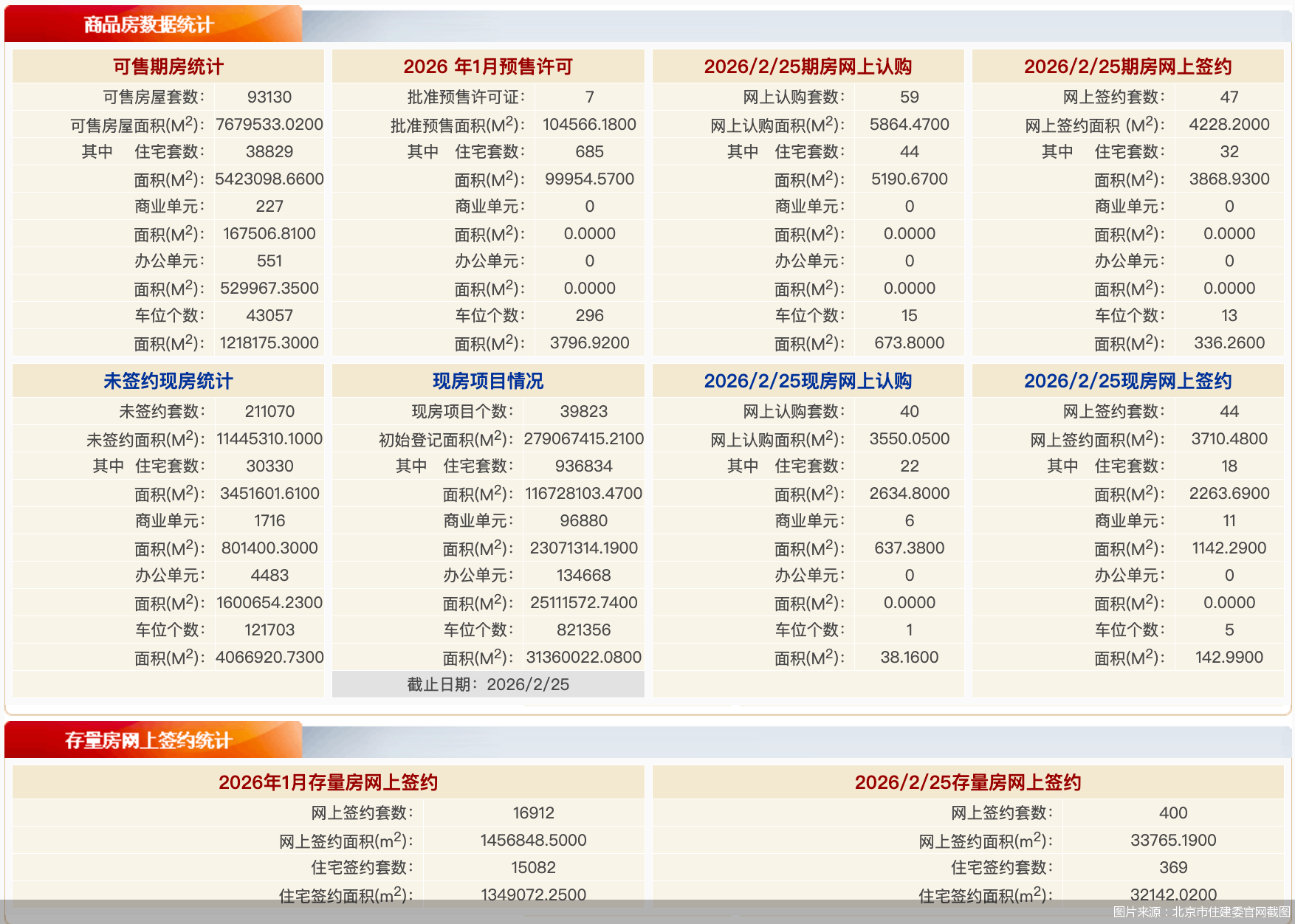
Group 1 - The central point of the news is the appreciation of the Chinese Yuan against the US Dollar, with the central parity rate rising by 93 basis points to 6.9228 on February 26 [1] - As of 9:36 AM on the same day, the onshore Yuan exchange rate was reported at 6.8505, reflecting an appreciation of 0.23%, while the offshore Yuan rate was at 6.8482, appreciating by 0.09% [1] Group 2 - The statistics for available pre-sale housing indicate a total of 93,130 units, with a total area of 7,679,533.02 square meters, and 685 residential units approved for pre-sale [2] - The total area approved for pre-sale is 104,566.18 square meters, with residential units accounting for 5,423,098.66 square meters [2] - The unsold inventory includes 211,070 units, with a total area of 11,445,310.10 square meters, of which 30,330 are residential units covering 3,451,601.61 square meters [2]
在岸、离岸人民币对美元汇率分别升破6.89、6.88关口
Sou Hu Cai Jing· 2026-02-24 09:04
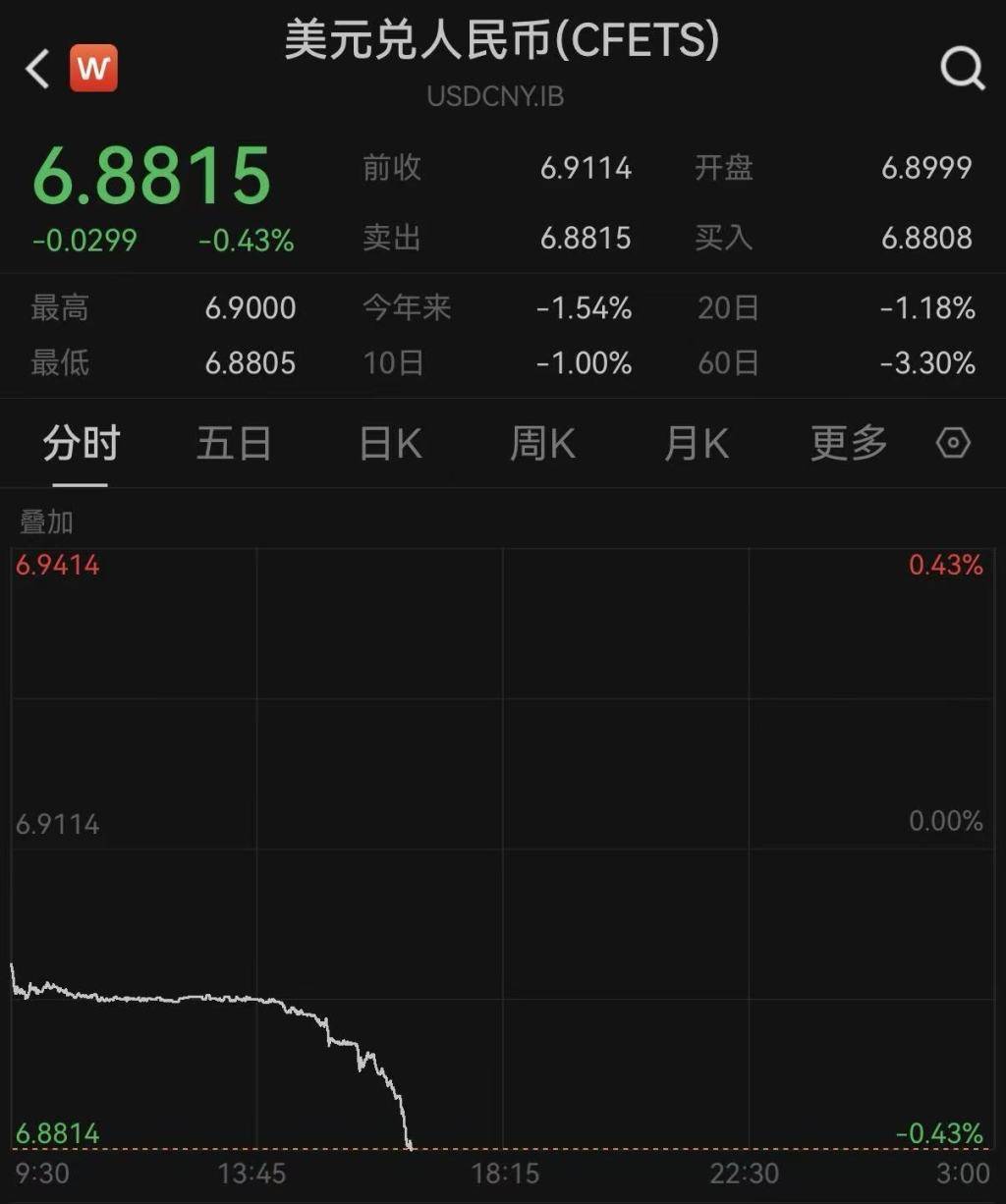
Group 1 - The core viewpoint of the news is that the Chinese yuan (RMB) has strengthened against the US dollar, reaching a 34-month high in both onshore and offshore markets after the Spring Festival holiday [1][3] - On February 24, the onshore RMB to USD exchange rate broke the 6.89 mark, closing at 6.8849, which is an increase of 265 points from the previous trading day [1] - During the night trading session, the onshore RMB further appreciated, reaching a peak of 6.8805 [1] Group 2 - In the offshore market, the offshore RMB to USD exchange rate also surpassed the 6.88 mark, marking a new high since late April 2023 [1] - On February 24, the RMB to USD central parity rate was reported at 6.9414, which is a depreciation of 16 basis points compared to the previous trading day [3]
人民币对美元中间价调贬16个基点报6.9414
Bei Jing Shang Bao· 2026-02-24 01:58
Core Viewpoint - The Renminbi (RMB) has depreciated against the US dollar, with the central parity rate reported at 6.9414, a decrease of 16 basis points from the previous trading day [1] Exchange Rate Summary - As of 9:40 AM on the same day, the onshore RMB to USD exchange rate was 6.8970, reflecting a slight appreciation of 0.04% [1] - The offshore RMB to USD exchange rate was reported at 6.8938, indicating a depreciation of 0.06% [1]
人民币对美元近期走强与未来前景|宏观经济
清华金融评论· 2026-02-17 13:19
Core Viewpoint - The article discusses the projected trends of the RMB against the USD, indicating a weak start in 2025 followed by a strengthening phase, with expectations of surpassing the 7.0 mark by year-end and continuing strong into early 2026. Key drivers include a weakening USD, strong economic fundamentals in China, policy guidance, and corporate behaviors [1][3]. Summary by Sections RMB to USD Exchange Rate Trends for 2025 and Early 2026 - The RMB is expected to experience three phases in 2025: a pressure period from January to April, a rebound from April to July, and a strengthening phase from July to December. The onshore RMB fell to 7.35 and the offshore RMB dropped below 7.4 during the pressure period. The rebound saw the RMB rise to 7.16 due to easing trade tensions and a 9% drop in the USD index. By year-end, the RMB surpassed the 7.0 mark, with early 2026 seeing both onshore and offshore RMB break 6.9, marking a new high since April 2023. The RMB appreciated approximately 4% against the USD over the year, while it depreciated 3.5% against a basket of currencies [2][3][5]. Key Factors Driving RMB Strength Against USD - The weakening of the USD is a primary factor, with the Federal Reserve cutting rates three times in late 2025, totaling 75 basis points, leading to a 9.7% decline in the USD index. China's economic fundamentals remain robust, with a record trade surplus of $1.19 trillion in 2025, driving corporate demand for currency exchange. Additionally, foreign capital inflow into A-shares exceeded 150 billion yuan. Policy measures from the central bank, including adjustments to the midpoint rate, have also supported the RMB's appreciation. Corporate behaviors, such as increased willingness to exchange currency due to RMB appreciation, have created a positive feedback loop [4][5]. Future Outlook for RMB to USD Exchange Rate - In the short term, a moderate appreciation of the RMB is anticipated, with many institutions predicting it could reach 6.8 in 2026. Supporting factors include the continuation of the Fed's rate cuts and strong performance in China's economy, particularly in technology and exports. However, potential risks include a rebound in US inflation, escalating geopolitical conflicts, and pressures on Chinese exports. Despite these challenges, the actual effective exchange rate remains low, which may mitigate some impacts. In the long term, a dual-directional fluctuation is expected, with the central bank aiming to maintain a stable exchange rate at a reasonable level. Companies are advised to focus on their core businesses and utilize hedging tools to manage risks [6][7][8].

在岸、离岸人民币对美元汇率升破6.9,影响几何?
Guo Ji Jin Rong Bao· 2026-02-12 17:17
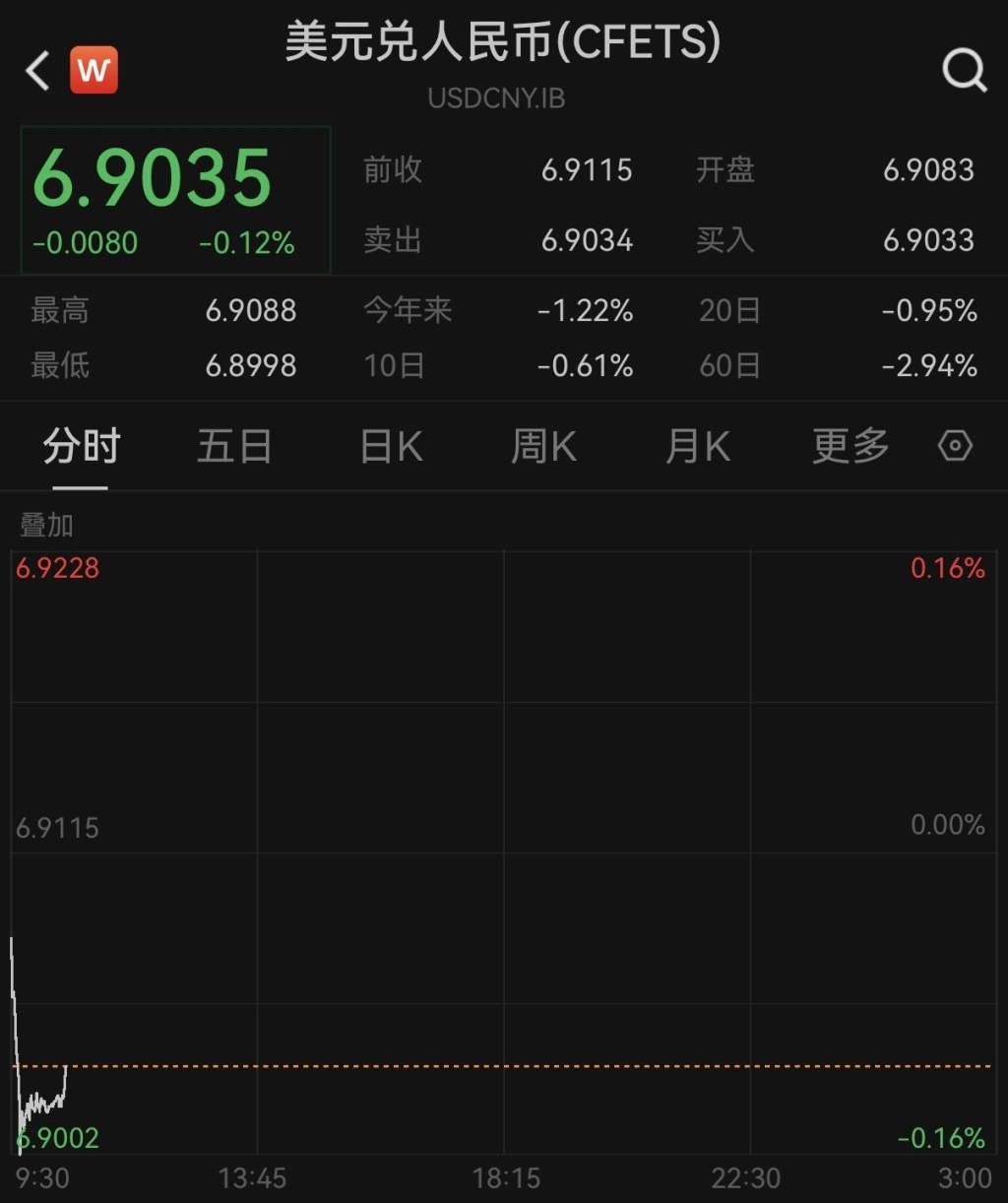
Core Viewpoint - The Chinese Yuan (RMB) has been appreciating against the US Dollar, breaking significant thresholds and reaching its highest level since May 4, 2023, driven by improved Sino-US trade relations and external economic conditions [1][2]. Exchange Rate Dynamics - On February 12, 2023, the onshore RMB opened at 6.9083 against the USD, peaking at 6.8998, while the offshore RMB reached 6.8964, both marking new highs since May 4, 2023 [1]. - The People's Bank of China set the mid-point exchange rate at 6.9457 RMB per USD, a slight depreciation of 19 basis points from the previous day [1]. Influencing Factors - The RMB's strength is attributed to the stabilization of Sino-US economic relations since November 2025 and a recent criminal investigation into the Federal Reserve Chairman, which has pressured the USD [1][2]. - Increased corporate demand for currency exchange towards the year-end is also contributing to the seasonal strengthening of the RMB, particularly following high export growth [2]. Short-term Outlook - The RMB is expected to remain strong in the short term, supported by continued export growth and high market sentiment, with limited potential for a significant rebound in the USD index [2]. Long-term Considerations - Over the year, the RMB's exchange rate will be influenced by the USD's performance, changes in external trade environments, and domestic growth policies [2][3]. - Potential depreciation pressures on the RMB may arise due to the anticipated stabilization of the USD index in 2026 and the impact of the Federal Reserve's new policies [2][3]. Impact on Trade and Residents - The current appreciation of the RMB is not expected to significantly impact export businesses, although it may affect their exchange rate gains [3]. - For residents, a stronger RMB reduces the cost of currency exchange, benefiting expenses related to travel and education abroad [3]. Policy Implications - The RMB's appreciation provides more flexibility for domestic monetary policy adjustments, potentially easing constraints on interest rate cuts [4]. - The attractiveness of RMB assets may increase due to the currency's appreciation, although the impact on cross-border capital flows remains limited [5].
在岸、离岸人民币对美元汇率升破6.9,再创33个月新高
Sou Hu Cai Jing· 2026-02-12 03:05
Core Viewpoint - The Chinese yuan has strengthened against the US dollar, breaking the 6.90 threshold for the first time since May 4, 2023, indicating a positive trend in the currency's performance [1][3]. Exchange Rate Summary - On February 12, the onshore yuan opened at 6.9083 and reached a high of 6.8998 during trading, marking a significant increase [1]. - The offshore yuan also saw a rise, with the highest rate reaching 6.8964, the best performance since May 4, 2023 [3]. - The mid-point exchange rate for the yuan against the dollar was reported at 6.9457, down by 19 points [4]. - Year-to-date, the onshore yuan has appreciated by over 1.2%, while the offshore yuan has seen a 1% increase [4].
人民币对美元中间价调升20个基点,报6.9438
Bei Jing Shang Bao· 2026-02-11 02:10
Core Viewpoint - The People's Bank of China adjusted the RMB to USD central parity rate, increasing it by 20 basis points to 6.9438 on February 11 [1] Group 1: Exchange Rate Changes - The previous trading day's central parity rate was reported at 6.9458 [1] - As of 9:40 AM on the same day, the onshore RMB to USD exchange rate was 6.9147, reflecting a depreciation of 0.02% [1] - The offshore RMB to USD exchange rate was reported at 6.9143, showing a depreciation of 0.01% [1]