
汇率风险中性

Search documents
人民币汇率刷新近三年高点后回调 央行推动“风险中性”理念落地
Xin Lang Cai Jing· 2026-02-27 03:59
Group 1 - The onshore and offshore RMB against the USD experienced fluctuations, with the onshore RMB recovering after dipping below the 6.87 mark, closing at 6.8571 [1] - The People's Bank of China announced a reduction in the foreign exchange risk reserve ratio for forward foreign exchange sales from 20% to 0%, effective March 2, 2026, marking the first adjustment since September 2022 [1] - This reduction aims to promote the development of the foreign exchange market and support enterprises in managing exchange rate risks more effectively [1] Group 2 - As of 2025, the foreign exchange hedging ratio for Chinese enterprises has risen to 30%, with RMB settlement in goods trade also nearing 30%, indicating an increase in enterprises' risk management capabilities [2] - Since the beginning of 2026, the RMB has strengthened against the USD, with both onshore and offshore RMB reaching new highs since April 2023 [2] - The recent appreciation of the RMB is supported by several factors, including a decline in the USD index, a U.S. Supreme Court ruling affecting tariffs, concentrated demand for currency exchange, and positive expectations regarding growth and foreign trade policies [2]
人民币对美元汇率创34个月来新高 后市怎么走?
Sou Hu Cai Jing· 2026-02-26 11:51
Core Viewpoint - The Chinese yuan (RMB) has continued its strong performance against the US dollar, reaching new highs not seen since April 2023, driven by multiple supportive factors and market sentiment [1][2][3]. Group 1: Factors Supporting RMB Strength - The RMB's appreciation against the US dollar is supported by a decline in the US dollar index since mid-January 2025, indicating a weak adjustment phase for the dollar [2]. - A recent ruling by the US Supreme Court deemed the Trump administration's large-scale tariff policies illegal, leading to a reduction in tariffs on Chinese imports, which is expected to enhance market confidence in China's export resilience [2]. - Domestic enterprises previously holding significant dollar positions are now converting to RMB due to the currency's appreciation, increasing market settlement and further driving up the RMB's value [2]. - The upcoming National People's Congress is generating market expectations for favorable policies, contributing to the RMB's strength [2]. Group 2: External Environment and Market Sentiment - The stabilization of Sino-US trade relations has improved the overall external environment for China, which is a significant backdrop for the RMB's recent strength [3]. - Investigations into the Federal Reserve Chairman by the US Department of Justice have raised concerns about the Fed's independence, putting additional pressure on the dollar and allowing non-US currencies, including the RMB, to appreciate [3]. - The recent bullish sentiment in the offshore RMB market has been a key factor in the currency's ability to break through important thresholds [3]. Group 3: Future RMB Exchange Rate Outlook - The RMB is expected to exhibit a dual-directional fluctuation against major international currencies throughout 2025, with specific projections indicating a 2.3% appreciation against the US dollar by year-end [4]. - The future trajectory of the RMB against the dollar will largely depend on the dollar's performance, changes in China's external economic environment, and the effectiveness of domestic growth policies [4]. - Despite the current strength of the RMB, potential depreciation pressures exist, particularly if the dollar index stabilizes in 2026 and external uncertainties impact market sentiment [4][5]. Group 4: Policy Recommendations - It is recommended that policies focus on increasing exchange rate flexibility and allowing market forces to play a decisive role in the formation of the RMB's value, while avoiding excessive accumulation of appreciation pressure [6][7]. - Adjustments to cross-border capital flow management policies may be necessary to address both appreciation and depreciation pressures, ensuring a balanced approach to currency management [7]. - Strengthening the awareness of exchange rate risk among businesses and financial institutions is crucial, along with enhancing the availability of hedging products to mitigate risks associated with currency fluctuations [7].
穿越汇率波动周期 上市公司外汇套期保值热渐起
Shang Hai Zheng Quan Bao· 2026-02-08 17:31
Core Viewpoint - The recent strengthening of the RMB has led to a surge in foreign exchange hedging activities among listed companies, with over 40 companies announcing plans to engage in foreign exchange hedging or related derivative businesses to mitigate risks from currency fluctuations [1][2]. Group 1: Importance of Foreign Exchange Hedging - Foreign exchange hedging is increasingly recognized as a crucial tool for companies to navigate currency volatility, with many firms using it to enhance financial stability and resilience against external shocks [1][2]. - The fluctuation of exchange rates has become a significant variable affecting profit margins, cash flow, and competitive positioning, prompting companies to adopt hedging strategies [2][3]. - The scale of companies utilizing foreign exchange derivatives to manage currency risk exceeded $1.9 trillion in 2025, nearly doubling since 2020, with the hedging ratio increasing by 8 percentage points to 30% [2]. Group 2: Globalization and Foreign Exchange Exposure - The rise in foreign exchange hedging reflects the ongoing globalization of companies, with increasing proportions of revenue coming from overseas, thereby expanding their foreign exchange exposure [3][4]. - Companies like Sanqi Interactive Entertainment have noted significant impacts on their financial performance due to exchange rate fluctuations, leading them to implement hedging strategies [3]. Group 3: Evolving Nature of Foreign Exchange Risks - The nature of foreign exchange risks is evolving, particularly as companies expand into emerging markets with less mature financial systems, increasing the urgency for effective risk management [4]. - Companies face heightened uncertainty in these markets due to limited hedging tools and liquidity, necessitating proactive risk management strategies [4]. Group 4: Strategies for Effective Hedging - Different industries exhibit varying levels of hedging practices influenced by factors such as profit margins, duration of international trade, and ability to transfer exchange rate risks [5]. - The National Foreign Exchange Administration recommends starting with simple hedging strategies and gradually moving to dynamic hedging as companies gain experience [5]. Group 5: Policy Support for Hedging - The National Foreign Exchange Administration is promoting a risk-neutral mindset among companies, encouraging them to engage in hedging [6]. - Efforts include providing case studies for risk identification and strategy formulation, enhancing the availability of hedging products, and simplifying processes for compliant companies to engage in foreign exchange derivative transactions [6].
依依股份:公司近期原材料采购价格整体保持稳定
Bei Jing Shang Bao· 2026-02-02 12:29
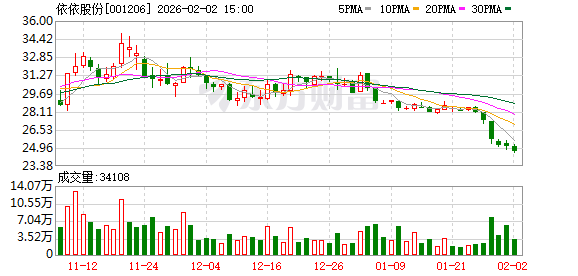
Core Viewpoint - The company reports stable raw material procurement prices and maintains high production capacity utilization despite fluctuations in the USD to RMB exchange rate [1] Group 1: Raw Material Prices - The overall procurement prices for raw materials have remained stable with no significant fluctuations [1] Group 2: Currency Risk Management - The company adheres to a "currency risk neutral" principle and engages in foreign exchange derivative hedging to mitigate the impact of exchange rate fluctuations on its operations [1] Group 3: Operational Status - The company's production and operations are currently normal, with a high level of capacity utilization [1]
依依股份:公司近期原材料采购价格整体保持稳定,无明显波动
Zheng Quan Ri Bao· 2026-02-02 10:16
Group 1 - The company stated that the overall procurement prices of raw materials have remained stable without significant fluctuations [2] - In response to recent volatility in the USD to RMB exchange rate, the company has implemented foreign exchange derivative hedging to mitigate the impact of exchange rate fluctuations on its operations [2] - The company's production and operations are currently normal, with a high capacity utilization rate [2]

央行发布会:结构性降息来了!
Sou Hu Cai Jing· 2026-01-19 09:16
Core Viewpoint - The central bank has introduced a series of monetary policy measures aimed at reducing the cost of obtaining policy funds for banks, encouraging them to lend more to key sectors such as small and micro enterprises, technological innovation, and green industries. However, it will take time for these measures to benefit the real economy [2]. Group 1: Monetary Policy Measures - The central bank announced a targeted interest rate cut of 0.25% for various structural monetary policy tools, with the one-year interest rate reduced from 1.50% to 1.25% [2][3]. - The measures include expanding the support scope and funding scale of structural policy tools and lowering the down payment ratio for commercial properties [3]. Group 2: Structural Monetary Policy Tools - Five structural monetary policy tools have been expanded to focus on supporting private enterprises, technology, green development, and consumption [7][12]. - Specific measures include increasing the quotas for agricultural and small enterprise loans, establishing a dedicated "re-loan for private enterprises," and enhancing support for technology innovation and transformation [8]. Group 3: Impact on Enterprises and Individuals - The cost of borrowing for banks has decreased, incentivizing them to offer cheaper loans to small and micro enterprises, technology companies, and farmers. While this does not directly lower mortgage or deposit rates, it signals a downward trend in loan rates [6][11]. - The central bank aims to create a favorable financial environment for consumption and domestic demand through structural tools that direct credit to consumption-related sectors [10]. Group 4: Future Monetary Policy Outlook - The central bank has indicated that there is still room for further interest rate cuts and reserve requirement ratio reductions, as the average reserve requirement ratio is currently at 6.3%, which is above historical levels [13][14]. - The stability of the RMB exchange rate and the bank's profitability provide a conducive environment for potential future rate cuts [14].
工行东莞分行施策稳外贸,累计减免企业保证金约5.72亿元
Nan Fang Du Shi Bao· 2025-12-25 23:18
Core Insights - External demand fluctuations, international trade friction, and increased exchange rate risks are severely impacting Dongguan's export enterprises, leading to price pressure, profit decline, and order loss [2] - The Industrial and Commercial Bank of China (ICBC) Dongguan Branch is proactively addressing these challenges by implementing three core measures to stabilize the local foreign trade sector [2] Group 1: Exchange Rate Risk Management - ICBC Dongguan Branch is prioritizing exchange rate risk management services, promoting the "neutrality of exchange rate risk" concept, and optimizing derivative credit approval mechanisms to alleviate financing difficulties and high costs for enterprises [3] - The bank has approved derivative special quotas for over 300 foreign trade enterprises, reducing guarantee deposits by approximately 572 million yuan, thus lowering capital occupation and hedging thresholds [3] - Innovative options strategies, such as "spot settlement + selling call options" and "zero-cost combination options," have been tailored for enterprises, with a total foreign exchange hedging business scale reaching 9 billion USD this year [3] Group 2: Cross-Border Financing Solutions - To meet the diverse and low-cost financing needs of foreign trade enterprises, ICBC Dongguan Branch leverages its global operations and comprehensive service advantages [4] - The bank has implemented the "Spring融行动" strategy, integrating domestic and international resources, and has provided financing of 3.283 billion yuan to 270 enterprises through its online "Trade Finance Easy" platform [4] - A total of 603 billion yuan in on-balance sheet loans have been approved for 510 foreign trade enterprises, effectively ensuring liquidity needs [4] Group 3: Emergency Support Measures - For foreign trade enterprises facing temporary operational difficulties due to external shocks, ICBC Dongguan Branch has established an emergency support channel [6] - The bank promotes non-repayment renewal loans to alleviate short-term repayment pressure, having processed such loans for over 100 enterprises, totaling 553 million yuan [6] - The bank encourages the use of cross-border RMB settlement to reduce reliance on USD, helping enterprises mitigate potential exchange rate risks [6] Group 4: Commitment to Supporting Foreign Trade - ICBC Dongguan Branch emphasizes that supporting foreign trade enterprises is a core responsibility, aiming to provide precise, efficient, and warm financial services to help stabilize orders, expand markets, and prevent risks [6] - The bank is committed to continuous product innovation, service optimization, and resource investment to inject sustainable financial momentum into Dongguan's open economy [6]


人民币汇率创15个月新高,双向波动或是常态
第一财经· 2025-12-25 14:02
Core Viewpoint - The offshore RMB against the USD has broken the "7" mark for the first time since October 2024, reaching a high of 6.9985, indicating a significant appreciation trend driven by a weakening USD and stable Chinese economic fundamentals [3][4]. Group 1: RMB Exchange Rate Dynamics - The recent appreciation of the RMB is primarily attributed to the weakening of the USD, which has seen a decline of about 3% since late November [4]. - China's trade surplus for the first 11 months of 2025 reached $1.0758 trillion, providing a solid foundation for the RMB's strength [4]. - The increase in corporate demand for currency settlement at year-end has contributed to the seasonal strengthening of the RMB, although this "settlement tide" is not the main driver of the current appreciation [4][5]. Group 2: Future Outlook on RMB Exchange Rate - Experts caution against expecting a new cycle of sustained RMB appreciation, suggesting that the exchange rate will likely exhibit two-way fluctuations rather than a unilateral trend [7][11]. - The future trajectory of the USD is uncertain, with predictions of a potential rebound after a period of decline, which could diminish the RMB's appreciation momentum [7][8]. - The complexity of China's external economic environment, including trade relations and potential retaliatory measures from other countries, adds uncertainty to the RMB's future [9][10]. Group 3: Impact on Enterprises - The appreciation of the RMB presents both opportunities and challenges for businesses, benefiting capital markets and importers while posing risks for exporters [15][16]. - Exporters are experiencing exchange rate losses due to the RMB's rapid appreciation, affecting their international price competitiveness and order flow [16]. - Companies are advised to adopt systematic risk management strategies to mitigate the impacts of exchange rate fluctuations, focusing on maintaining a neutral stance on currency risk [17].
人民币汇率创15个月新高,双向波动或是常态
Di Yi Cai Jing· 2025-12-25 13:31
Core Viewpoint - The offshore RMB has broken the "7" level against the USD for the first time since October 2024, reaching a high of 6.9985, while the onshore RMB also strengthened, nearing the "7" mark at 7.0066, marking a new high since September 2024. The recent appreciation is attributed to a weaker USD and stable economic fundamentals in China, but experts caution against expecting a new cycle of unilateral appreciation [1][2][4]. Group 1: Factors Driving RMB Strength - The recent appreciation of the RMB is primarily driven by the weakening of the USD, which has seen a decline of about 3% since late November, providing external support for the RMB [2][4]. - China's economic fundamentals remain robust, with a trade surplus of $1.0758 trillion for the first 11 months of 2025, bolstering confidence in the RMB [2][4]. - Increased demand for currency settlement by enterprises at year-end has contributed to the seasonal strengthening of the RMB, although this "settlement tide" is not the main driver of the current appreciation [2][3]. Group 2: Outlook on RMB Exchange Rate - Experts generally believe that a sustained unilateral appreciation of the RMB is unlikely, with expectations for continued two-way fluctuations around the "7" level [4][8]. - The future trajectory of the USD is uncertain, with predictions of a potential rebound after a period of decline, which could diminish the RMB's appreciation momentum [4][5]. - The complex external economic environment, including trade relations and potential retaliatory measures from other countries due to China's trade surplus, adds uncertainty to the RMB's future [5][6]. Group 3: Implications for Enterprises - The appreciation of the RMB presents both opportunities and challenges for enterprises, benefiting capital markets and importers while posing risks for exporters [9][10]. - Exporters are experiencing exchange rate losses due to the rapid appreciation, which affects their international price competitiveness and order flow [10][11]. - Companies are advised to adopt systematic risk management strategies to mitigate the impacts of exchange rate fluctuations, focusing on maintaining a neutral stance towards currency risk [11].
人民币汇率“破7”影响几何 后市怎么走?
Zhong Guo Xin Wen Wang· 2025-12-25 07:38
Group 1 - The offshore RMB against the USD has surpassed the 7.0 mark, with the central parity rate reported at 7.0392, an increase of 79 basis points [1] - The RMB exchange rate has shown a trend of "initial suppression followed by a rise and fluctuating increase" this year, indicating market sentiment and currency strength [1] - The recent appreciation of the RMB is attributed to stronger-than-expected Chinese economic performance and a weakening USD, with robust export performance driving demand for currency settlement [1] Group 2 - The appreciation of the RMB may weaken price competitiveness for manufacturing enterprises with high export weight, while industries reliant on imported raw materials could benefit from lower costs and improved profits [1] - The recent strengthening of the RMB is seen as favorable for Chinese assets, enhancing the attractiveness of RMB-denominated assets and potentially opening up monetary easing space [2] - Different market institutions have varying predictions for the future of the RMB exchange rate, with some expecting it to hover around the 7.0 mark by 2026, while others anticipate a rise to the 6.7 to 6.8 range if the USD remains weak [2]