
代理式商务

Search documents
全文|谷歌Q4业绩会实录:Gemini增长强劲 暂未发现分流
Xin Lang Ke Ji· 2026-02-05 00:56
Core Insights - Alphabet's revenue surpassed $400 billion for the first time in 2025, with Q4 revenue growing by 18% year-over-year, driven by AI technology and strong performance in Google Cloud [1] - The company is focusing on enhancing its core business through AI advancements and has established a solid foundation for agentic commerce [2][3] - YouTube's ad revenue reached over $60 billion in 2025, with a 9% year-over-year growth, although brand advertising faced challenges due to high spending during the previous year's U.S. elections [6][7] Financial Performance - Alphabet's total revenue for 2025 exceeded $400 billion, marking a significant milestone for the company [1] - Q4 revenue growth of 18% indicates robust performance across various business segments, particularly in cloud services [1] - YouTube's total revenue from ads and subscriptions surpassed $60 billion in 2025, reflecting strong growth in subscription services [6][7] AI and Technology Developments - The company is making significant strides in agentic commerce, establishing foundational protocols and partnerships to enhance user and advertiser value [2] - AI advancements are being integrated into various products, including YouTube and Gemini, to improve user experience and operational efficiency [3][8] - The company is addressing supply chain challenges while planning for increased capital expenditures in 2026 to support growth in AI and cloud services [4][10] YouTube and Advertising Strategy - YouTube's advertising revenue growth is attributed to strong performance in direct response ads, despite challenges in brand advertising [6][7] - The company is exploring innovative advertising formats and expanding creator partnerships to enhance brand engagement and advertising effectiveness [7] - The transition of users from ad-supported models to subscription services is seen as a positive long-term strategy for overall business growth [7] Capital Expenditure and Investment Strategy - Alphabet's capital expenditures for 2025 exceeded $90 billion, with a focus on both short-term and long-term investments to ensure sustainable growth [9][10] - The company employs a rigorous framework to evaluate investment opportunities, balancing immediate and future returns [9] - Approximately 60% of capital expenditures are allocated to equipment, while 40% is directed towards long-term assets like data centers [12] User Engagement and Growth Metrics - Gemini's monthly active users reached 750 million, with a significant increase in user engagement and interaction [13][14] - The company is optimistic about the growth potential of Gemini and its integration with AI capabilities, which is expected to drive further business expansion [14][17] - The search business is experiencing growth across various verticals, with a focus on enhancing user experience and optimizing ad placements [15][16]
机构:泡沫证据不足,三大理由支撑2026年科技股将再次引领市场
Ge Long Hui· 2025-12-23 06:55
Core Insights - Despite fluctuations in 2025, technology stocks are performing strongly, driven by AI investments, with profit growth rates in technology and communication services approximately four times that of other sectors in the S&P 500 [1] Group 1: Market Dynamics - The demand for data center chips, including both the latest and previous generations of GPUs, is fully utilized, contrasting with the overbuilding seen during the internet bubble [1] - Chip manufacturers are facing severe shortages, limiting growth despite record production levels [1] Group 2: Valuation and Financial Risk - The estimated peak price-to-earnings (P/E) ratio for the MSCI World Technology Index in 2025 is 31 times, which is only half of the P/E ratio before the internet bubble burst in March 2000 [1] - Most capital expenditures until 2026 will be funded by the operating cash flow of technology giants, with projected operating cash flow for the top five capital expenditure companies reaching $700 billion by 2026 [1] Group 3: Future Outlook - Technology stocks are expected to outperform the market in 2026 due to three supporting factors: the evolution of AI focusing on value creation, advancements in various innovative fields, and strong profit growth reducing reliance on P/E expansion [2]
Visa高管:2026年将是“AI导购”元年
美股研究社· 2025-12-16 10:11
Core Viewpoint - The article discusses the anticipated mainstream adoption of AI-assisted shopping by 2026, driven by collaborations between payment giants and AI companies [6][8]. Group 1: AI-Assisted Shopping - Oliver Jenkyn, President of Visa's Global Market Group, predicts that AI-assisted shopping will become a part of everyday life by 2026, with interactive shopping through platforms like ChatGPT transitioning from niche to mainstream [6][8]. - The shift from "AI-assisted decision-making" to "Agentic Commerce," where AI fully manages payments and purchases, will take time due to consumer psychological barriers [8]. Group 2: Consumer Behavior - Current obstacles to adopting AI for shopping are not technological but rather stem from consumer habits, as many users prefer to maintain control over final payment decisions [8]. - Standardized and frequently purchased items, such as laundry detergent and coffee creamer, are expected to be the first categories where AI can successfully manage orders autonomously [8]. Group 3: Payment Giants' Strategies - In response to the upcoming paradigm shift, global payment giants are accelerating their positioning to capture consumer attention as they transition to chatbots as new entry points [10]. - Visa is engaging with all major industry players, while Mastercard has partnered with Microsoft, and PayPal has signed an agreement with OpenAI to integrate its digital wallet into OpenAI's chatbot [10].


Visa高管:2026年将是“AI导购”元年
Hua Er Jie Jian Wen· 2025-12-13 06:19
Core Insights - The president of Visa's global market group, Oliver Jenkyn, anticipates that "AI-assisted shopping" will become mainstream by 2026 as collaborations between payment giants and AI companies accelerate [1][2] - Jenkyn highlights that while chatbot-based shopping features will be launched in 2025, the real turning point will occur next year, making interactive shopping through platforms like ChatGPT a common practice for consumers [2] - The transition from "AI-assisted decision-making" to a more advanced "Agentic Commerce," where AI robots fully handle payments and purchases, will take time due to consumer psychological inertia [2] Industry Trends - Global payment giants are rapidly positioning themselves to capitalize on the upcoming paradigm shift as consumers turn to chatbots for shopping [3] - Visa is currently in discussions with all major industry players, while Mastercard has partnered with Microsoft, and PayPal has signed an agreement with OpenAI to integrate its digital wallet into OpenAI's chatbot [3]


PayPal Holdings (NasdaqGS:PYPL) FY Conference Transcript
2025-11-19 15:02
PayPal Holdings FY Conference Summary Company Overview - **Company**: PayPal Holdings (NasdaqGS:PYPL) - **Date of Conference**: November 19, 2025 Key Points Company Progress and Transformation - Over the past two years, PayPal has undergone significant transformation, becoming a fundamentally stronger company with a projected transaction margin growth of 6% to 7% for the year [3][4] - The processing business has turned from negative to positive margins, and the Venmo business, previously stagnant, is now experiencing exciting growth [3][4] Ecosystem and Commerce Platform Vision - PayPal aims to leverage its dual-sided ecosystem (consumers and merchants) to create a network effect, enhancing the commerce experience [5][6] - Partnerships, such as with the Big 12 and Big 10 for NIL athlete payments via Venmo, exemplify the company's strategy to connect consumers and merchants [5][6] Consumer Spending Trends - There has been a noted slowdown in discretionary spending among middle to low-income consumers in the U.S. and Europe, which is expected to impact branded checkout growth [8][9] - The shift towards buy now, pay later (BNPL) options is seen as an opportunity for PayPal to capture market share [9][10] Buy Now, Pay Later (BNPL) Growth - BNPL volume and monthly active accounts (MAA) have grown by 20%, with expectations of reaching a $40 billion volume business this year [10][11] - PayPal plans to enhance visibility of BNPL options on product pages to increase conversion rates, which currently see a 10% lift when BNPL is presented earlier in the shopping process [12][13][14] Venmo's Performance - Venmo has seen a 40% growth in volume for payments and a 65% growth in debit card usage, attributed to focused execution and partnerships with key merchants [18][19] - The company is on track to generate $2 billion in revenue from Venmo, with significant potential for further growth [22] Processing Business Improvement - The processing business has been turned around from negative margins to healthier margins through renegotiated contracts and investment in value-added services [25][26][27] - PayPal is now positioned to grow transaction margins through multiple business lines, including processing, Venmo, and BNPL [27][28] Branded Checkout Challenges - Branded checkout growth has been slower than expected, with online growth at 5% in Q3, and anticipated to be lower in Q4 due to economic pressures [32][33] - The company is focused on improving the checkout experience, particularly on mobile, to reduce friction and enhance conversion rates [35][36] Future Investments and Strategy - PayPal plans to invest in growth areas such as agentic commerce and BNPL, which may temporarily impact transaction margin growth in 2026 [60][61] - The company is committed to building a robust ecosystem for the long term, with a focus on consumer trust and seamless experiences [55][58] Agentic Commerce Potential - PayPal is positioned to lead in agentic commerce due to its trusted two-sided network, allowing for secure transactions and buyer protection [53][55] - The revenue model for agentic commerce will remain similar to branded checkout transactions, providing opportunities for market share growth [57] Long-Term Growth Projections - PayPal maintains long-term growth targets of 10% for transaction margin dollars and 20% for EPS growth, while being flexible in investment strategies to adapt to market shifts [59][60] Additional Insights - The company is aware of the need for consistent integration patterns with merchants, which has been a challenge due to historical practices [39][41] - PayPal's strategy includes leveraging cashback offers and marketing investments to drive consumer engagement and conversion [44][46] This summary encapsulates the key insights and strategic directions discussed during the PayPal Holdings FY Conference, highlighting the company's current performance, challenges, and future growth opportunities.
Opera (NasdaqGS:OPRA) FY Conference Transcript
2025-11-18 19:17
Summary of Opera's Conference Call Company Overview - **Company**: Opera - **Industry**: Internet Browsers - **Headquarters**: Norway - **User Base**: Approximately 300 million monthly users - **Public Since**: 2018 - **CAGR Growth**: Over 20% since going public - **Profitability**: The company is profitable and pays a dividend with a recurring yield exceeding 5% [3][30][29] Core Business and Monetization - **Primary Product**: Opera browser, with a focus on driving traffic to partners such as search engines and advertisers [3][4] - **New Product**: Neon browser, which offers advanced agentic capabilities for a monthly subscription, targeting enthusiasts who want more control and automation in their browsing experience [11][12] Competitive Landscape - **Emerging Competitors**: AI-native companies like Perplexity and OpenAI are entering the browser space, which Opera views as an opportunity rather than a threat [4][5] - **Differentiation Strategy**: Opera aims to remain agnostic and independent, allowing users to utilize multiple AI platforms without being locked into one [6][30] Technological Advancements - **AI Integration**: Opera uses a combination of models, including Gemini and ChatGPT, to enhance user experience and browser capabilities [7][10] - **Agentic Capabilities**: The browser is designed to assist users in tasks such as research and e-commerce, with the goal of improving efficiency and user satisfaction [13][24] Revenue Streams - **Query Revenue**: Approximately one-third of revenue comes from query revenue, which has seen a tripling in growth over the past year [16][18] - **Advertising Revenue**: Roughly two-thirds of revenue, with e-commerce advertising growing rapidly, expected to represent half of advertising revenue by Q4 [19][21] - **Performance-Based Advertising**: Opera focuses on performance-based advertising, which is seen as more beneficial for partners compared to traditional display advertising [20][21] E-commerce Strategy - **Key Partners**: Major e-commerce partners include Amazon, Booking, Temu, and Shein, with a focus on driving traffic to these platforms [22][21] - **User Engagement**: The browser aims to present users with options while allowing agents to facilitate transactions, ensuring that advertising opportunities remain intact [23][25] Financial Discipline and Future Outlook - **Profitability**: Opera maintains a strong EBITDA margin of 24% and has returned approximately $500 million to shareholders since 2020 through buybacks and dividends [33][47] - **Opay Stake**: Opera holds a 9.4% stake in Opay, a successful mobile wallet in Nigeria, which is expected to go public, potentially generating significant gains for Opera [40][42] New Initiatives - **MiniPay**: A non-custodial wallet focused on stablecoins, aimed at emerging markets, which has quickly grown to 10 million wallets [34][35] - **Market Positioning**: Opera positions MiniPay as a trusted solution in regions where it has established a long-standing presence [36][38] Misunderstandings in the Market - **Market Perception**: Opera is not a direct competitor to large language models (LLMs) but rather aims to integrate and enhance user experiences through its browser [28][30] - **Partnerships**: The company emphasizes the importance of long-term partnerships, particularly with Google, which have been beneficial for its business model [31][32] This summary encapsulates the key points discussed during the conference call, highlighting Opera's strategic positioning, technological advancements, revenue generation, and future outlook in the competitive landscape of internet browsers.

正式进军电商领域,PayPal成为ChatGPT首个支付钱包
Hua Er Jie Jian Wen· 2025-10-28 13:34
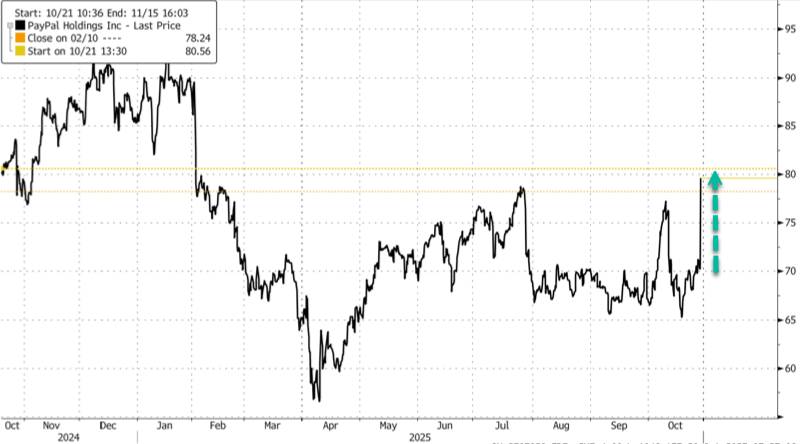
Core Insights - PayPal has entered a significant partnership with OpenAI to integrate its digital wallet into ChatGPT, marking its entry into AI-driven e-commerce [1][4] - The collaboration is expected to enhance user experience by allowing seamless transactions while searching for products through ChatGPT [1][6] Partnership Details - Starting next year, ChatGPT will incorporate a complete payment wallet, enabling users to convert search intent into actual purchases with PayPal's underlying payment technology [1][4] - PayPal will utilize the Agentic Commerce Protocol (ACP) to provide comprehensive backend infrastructure for transactions within ChatGPT, handling merchant routing, payment verification, and global transaction coordination [5] User Experience and Security - Users will have the option to pay using linked bank accounts, credit cards, or balances in their PayPal wallets, benefiting from buyer and seller protections, package tracking, and dispute resolution services [5] - The partnership aims to build a two-way trust network, leveraging PayPal's extensive verified user and merchant network [5] AI-Driven Shopping Model - The collaboration is seen as a step towards a new shopping paradigm driven by agentic AI, where AI acts as a personal shopping assistant [6] - By 2026, PayPal plans to introduce millions of products from small and medium-sized enterprises and global brands into ChatGPT, covering various categories [6] Financial Performance - PayPal reported strong Q3 earnings, raising its adjusted EPS guidance to $5.35-$5.39, exceeding previous expectations [7] - Q3 net revenue reached $8.42 billion, with adjusted EPS of $1.34 and adjusted free cash flow of $2.3 billion, all surpassing market forecasts [7] - Despite a 4.5% year-over-year decline in payment transaction volume to 6.33 billion, the partnership with OpenAI is viewed as a strategic move to overcome growth challenges [7]
Byte-Sized AI: Google Adds Shoes to User-Centric Virtual Try-On; NoFraud Acquires Yofi
Yahoo Finance· 2025-10-17 21:29
Frasers Group and NoFraud Partnership - Frasers Group is partnering with Commercetools to enhance its brands' participation in agentic commerce, focusing on real-time risk management for merchants [1][6] - The partnership will involve three of Frasers' brands—Sports Direct, Flannels, and Frasers—utilizing Commercetools' agentic commerce suite to improve customer experiences through large language models [6][7] - The integration aims to meet evolving consumer expectations and deliver a more personalized shopping experience [7][9] NoFraud and Yofi AI Acquisition - NoFraud has acquired Yofi AI to bolster its capabilities in combating fraud and abusive shopping patterns, particularly ahead of the holiday season [2][4] - Yofi AI's technology is designed to help retailers identify and mitigate policy abuse, which has become a significant threat to retail margins, costing merchants billions [2][3] - The financial terms of the acquisition were not disclosed, but Yofi AI has received backing from notable venture capital firms [3] Industry Trends and Innovations - The retail industry is experiencing a shift towards agentic commerce, where customers delegate shopping tasks to AI agents, necessitating seamless and trusted retail experiences [9] - Companies like Google are expanding their AI capabilities, such as virtual try-on tools, to enhance consumer engagement and customization in shopping [10][12] - First Insight is testing a new conversational AI co-pilot named Ellis, aimed at helping retailers make data-driven decisions in real-time, especially critical during the holiday season [13][18]
