企业智能化转型

Search documents
软通动力推出AI Factory全栈解决方案 重构企业增长新范式
Quan Jing Wang· 2026-02-26 05:55
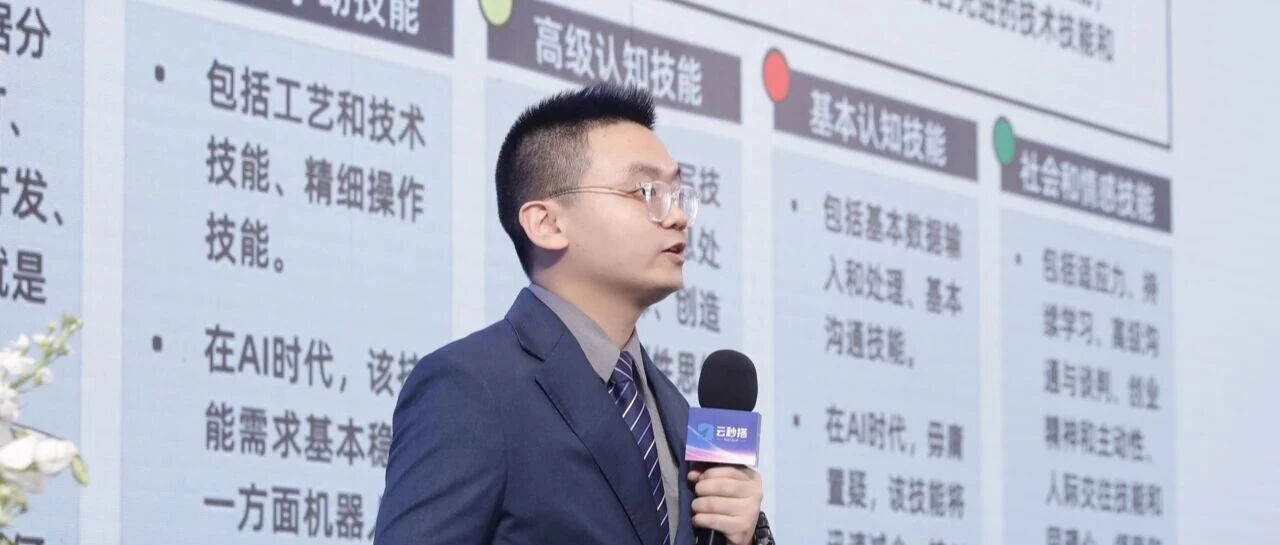
Core Insights - The company has launched the AI Factory full-stack solution to transform from an AI technology service provider to a growth engine reconstructor in the enterprise AI market, aiming to capture core influence in the trillion-dollar enterprise intelligence market [1] - The AI flywheel model, centered on "data-model-intelligent agent-scenario," addresses the industry's pain points of "single-point application and difficulty in scaling" during enterprise intelligence transformation [1] Strategic Breakthrough - The AI flywheel growth model integrates ERP, IoT, and OA data to create an enterprise knowledge brain, providing high-quality "fuel" for model training [2] - The model service system based on the Tianxuan MaaS platform supports intelligent agent development, leading to standardized technical output [2] - The intelligent agent matrix is embedded in business processes, reconstructing core scenarios in manufacturing, energy, and finance, while new data generated from these scenarios enriches the knowledge base, accelerating the flywheel's rotation [2] - The company has established a hybrid architecture for computing power, integrating private intelligent computing centers, cloud computing, and edge computing, with significant support for the Huailai Intelligent Computing Center [2] Ecosystem Collaboration - The rapid implementation of AI Factory is supported by strong ecosystem collaboration, including partnerships with Huawei and the Chinese Academy of Sciences [3] - The subscription-based service model and customized solutions meet the standardized needs of SMEs and the personalized needs of large enterprises [3] - The company's intelligent computing resources will connect to a broader market as the national computing internet progresses, amplifying the ecological empowerment effect of the AI flywheel [3] Commercial Validation - The company has achieved scalable validation of its commercial value across multiple industries, including smart manufacturing, energy, and steel [4] - In smart manufacturing, collaboration with Jinpan Technology has led to a threefold increase in quality inspection efficiency and a 30% reduction in manual re-inspection costs [4] - In the energy sector, intelligent devices have improved maintenance efficiency by over 40%, setting a benchmark for intelligent upgrades in the power and petrochemical industries [4] - The company is positioned to benefit from the $37 billion enterprise AI market, creating long-term value for shareholders and setting a precedent for the commercialization of AI in China [4]
软通动力AI Factory:以“AI飞轮”重构企业增长引擎
Quan Jing Wang· 2026-02-26 00:59
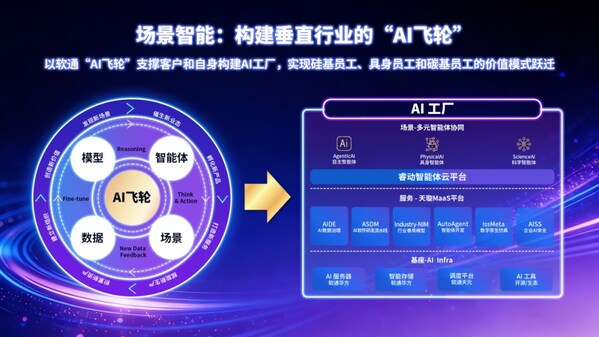
Core Insights - The transition from Agentic AI to Physical AI presents challenges for enterprise intelligence transformation, focusing on sustainable growth, reuse, and business value creation while managing costs and risks [1] - The AI Flywheel model developed by Softline Power aims to create a closed-loop capability system that allows AI capabilities to continuously evolve and amplify within enterprises, transforming AI from a tool to a core production factor [1][3] Group 1: AI Flywheel Model - The AI Flywheel model addresses the need for systematic AI capabilities that drive business growth rather than just efficiency, enabling AI to be continuously produced and reused [3] - The model consists of four core components: data, models, intelligent agents, and scenarios, creating a feedback loop that enhances overall AI capabilities and business value [3][4] - As the Flywheel spins, marginal costs decrease, innovation speeds up, and business value multiplies, positioning AI as a growth engine for enterprises [3] Group 2: Data Foundation - Data serves as the essential fuel for the AI Flywheel, with Softline Power's AI Factory breaking down data silos and integrating various business data sources into a standardized knowledge base [4][5] - High-quality, governed data supports AI model training and intelligent agent development, creating a cycle of continuous data asset appreciation [5] Group 3: Computational Power - Computational power is the foundational energy for the AI Flywheel, with a hybrid architecture combining on-premises and cloud resources to ensure stable output for AI applications [6] - The efficient scheduling and scaling of computational resources reduce unit costs, enhancing the overall efficiency of data processing, model training, and intelligent agent operation [6] Group 4: Platform Empowerment - The platform acts as the core transmission mechanism of the AI Flywheel, integrating data, computational power, and scenarios into a cohesive system [7] - Softline Power's AI Factory combines various platforms and tools to create a comprehensive technology stack that facilitates the transformation of data and computational capabilities into actionable intelligent tools [7][12] Group 5: Scenario Implementation - Scenario implementation is the ultimate goal of the AI Flywheel, translating capabilities into industry-specific intelligent solutions across sectors like manufacturing, finance, and healthcare [13] - The deployment of intelligent agents and physical AI solutions in real-world applications drives down costs and enhances innovation, leading to a positive feedback loop of value creation [14] Group 6: Organizational Transformation - The transition to AI-native organizations involves evolving from a one-time investment in technology to a sustainable capability-building approach, enhancing the enterprise's growth model [15] - Softline Power's AI Factory solution has been widely implemented across various industries, supported by partnerships to provide scalable and replicable paths for intelligent transformation [15][16]

联想发布《中国企业智能化成熟度报告》 企业智能体呈现规模化落地趋势
Zheng Quan Ri Bao Wang· 2026-02-12 07:14
Group 1 - The core viewpoint of the report is that Chinese enterprises are transitioning towards an AI-native era, with AI concepts increasingly integrated into corporate strategies, leading to a trend of large-scale implementation of intelligent systems [1][2] - By 2025, the proportion of enterprises at advanced stages of intelligent transformation (levels four and five) is expected to rise significantly to 39%, with AI-native enterprises making up 9% of this figure, compared to 16%, 22%, and 22% in 2022, 2023, and 2024 respectively [1] - The overall average maturity score across industries is projected to reach 3.19, a notable increase from 2.77 in 2024, with the financial sector maintaining the highest maturity score [1][2] Group 2 - The financial industry continues to lead with a maturity score of 3.43, with 49% of enterprises in levels four and five by 2025, up from 30% in 2024 and 20% in 2022 [2] - The healthcare sector has the highest proportion of leading enterprises at 50%, transitioning from pilot phases to advanced stages of "intelligent operations + AI-native" [2] - The manufacturing sector remains at a low maturity level, slightly below the industry average, indicating significant room for improvement due to disparities in complexity and digital foundations among its sub-sectors [2] Group 3 - The report emphasizes a transformation framework focused on "value-driven, systematic advancement," highlighting three main values: operational value, strategic value, and industry and social value [3] - Enterprises have made significant progress in their intelligent transformation, establishing clear digital visions and unified transformation blueprints, supported by dedicated investments and change management mechanisms [3] - AI-native enterprises are shifting from "innovation experiments" to mainstream models, aiming to reconstruct the entire value chain from strategic planning to execution with an AI-first approach [3]

联想发布2025年度报告 中国企业智能化转型进入AI原生驱动新阶段
Xin Lang Cai Jing· 2026-02-11 10:32
Core Insights - The report indicates that Chinese enterprises are transitioning towards an AI-native era, with AI principles increasingly integrated into corporate strategies and a trend towards large-scale implementation of intelligent systems [1][4]. Group 1: Industry Maturity and Trends - By 2025, the proportion of leading enterprises in intelligent transformation (levels 4-5) is expected to rise significantly to 39%, with AI-native enterprises making up 9% of this group, compared to 16%, 22%, and 22% in 2022, 2023, and 2024 respectively [1][7]. - The overall average maturity score across industries reached 3.19, a notable increase from 2.77 in 2024. The financial sector continues to lead with an average score of 3.43, while the healthcare sector has the highest proportion of leading enterprises at 50% [2][8]. - The construction and public utility sectors showed the fastest growth in maturity scores, increasing by 23% and 21% respectively [2][8]. Group 2: Value and Strategic Framework - The report emphasizes a transformation framework focused on "value-driven, systematic advancement," highlighting three main values: operational value, strategic value, and industry and social value [3][9]. - Operational value is projected to maintain a significant presence, with its share being 44%, 40%, and 41% from 2023 to 2025, indicating a preference for immediate operational optimization during economic fluctuations [10]. Group 3: Challenges and Future Directions - As AI technologies advance, the focus is shifting from technical exploration to business integration, with enterprises increasingly concerned about the seamless integration of intelligent systems into business processes [11]. - AI-native enterprises are expected to evolve from "innovation experiments" to mainstream models, aiming for comprehensive value chain reconstruction under an AI-first approach [11].
让AI落地不再难!华为云Flexus AI智能体,中小企业也能轻松驾驭
Huan Qiu Wang Zi Xun· 2026-01-30 03:50
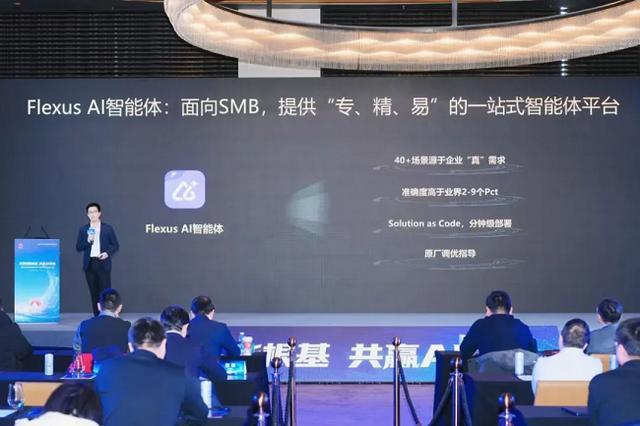
Core Insights - The focus of enterprises has shifted from "whether AI exists" to "whether it is truly effective" as AI commercialization accelerates [1] - Huawei Cloud's Flexus AI is designed specifically for small and medium-sized enterprises, emphasizing specialized scenarios, precise effects, and ease of use [1] Group 1: Product Features - Flexus AI is not merely a repackaging of general models but a deep practice of Huawei Cloud's philosophy of integrating real enterprise scenarios [3] - It combines Huawei's self-developed search model capabilities, achieving accuracy rates that exceed industry averages by 2-9 percentage points in high-frequency business scenarios [3] - The platform includes over 40 ready-to-use AI workflow templates, significantly lowering the entry barrier for SMEs and enabling efficient sharing of successful AI application experiences [4][6] Group 2: Deployment and Efficiency - Flexus AI enables rapid deployment, reducing the traditional AI project timeline by 80%, allowing for business launch in seconds [7] - The platform supports independent deployment, ensuring data remains within the enterprise's internal network while being compatible with the Dify open-source ecosystem [7] Group 3: Performance and Cost - Utilizing Huawei Cloud's CloudMatrix384 architecture, Flexus AI achieves performance levels four times that of conventional solutions, with overall costs reduced by approximately 30% [7] - This performance advantage translates directly into commercial benefits, especially in high-load scenarios such as bulk document processing and multi-modal content generation [7] Group 4: Real-World Applications - The value of Flexus AI has been validated in real business operations, with a certain MCN organization reporting a threefold increase in content production efficiency and a reduction in response time from 8 hours to 30 minutes [8] - Manufacturing clients have utilized AI quality inspection workflows for automatic customs document recognition and product defect detection [8] - Legal teams have benefited from contract review assistants that quickly summarize clauses and highlight risks [8] Group 5: Strategic Importance - Flexus AI positions itself as a low-barrier, high-efficiency pathway for enterprises to integrate AI into daily operations, making it a crucial step in digital transformation [8]
联想王立平:企业智能化转型已经从“+AI”升级为“AI+”
Zheng Quan Ri Bao Zhi Sheng· 2026-01-08 04:14
Core Insights - Lenovo's Vice President Wang Liping emphasized the transition from traditional "+AI" to "AI+" in enterprise intelligent transformation, indicating a significant shift in business models driven by AI [1][3] - Lenovo aims to assist clients in reducing operational costs and enhancing efficiency while also fostering innovative business models and growth opportunities [1] Group 1 - The concept of "AI+" relies on AI-native organizations, representing a major iteration in the mindset and methods of enterprise transformation, leading to business model innovation [3] - An example provided is Lenovo's collaboration with Yili, where AI was utilized to restructure the entire value chain from farm to consumer, resulting in a significant reduction in transportation costs and a 98% on-time delivery rate [3] Group 2 - Wang highlighted that without data intelligence transformation, effective utilization of data is unattainable, noting that 90% of enterprise data may remain unused [3] - Lenovo supports clients in effective data collection through numerous edge devices and offers knowledge base solutions and knowledge graphs to aid in data governance [3] Group 3 - Intelligent manufacturing is identified as a key focus area for Lenovo, which differentiates itself from consulting firms by providing full lifecycle services based on its own smart manufacturing experience [3] - As the "14th Five-Year Plan" begins, Lenovo expresses its eagerness to collaborate with more clients to convert AI potential into competitive and growth advantages for enterprises [3]

CES 2026|联想王立平:企业智能化转型已经从传统“+AI”升级为“AI+”
Huan Qiu Wang· 2026-01-08 03:54
Core Insights - The Lenovo Innovation Technology Conference, the largest in history, was held during CES 2026, highlighting the shift from traditional "+AI" to "AI+" in enterprise digital transformation [1][3] - Lenovo aims to leverage its comprehensive advantages from business consulting to implementation, helping clients reduce costs and enhance efficiency while innovating business models and uncovering growth opportunities [1][3] Group 1 - The transition from "+AI" to "AI+" represents a significant iteration in enterprise transformation, relying on AI-native organizations to drive business model innovation [3] - An example provided is the collaboration with Yili, where Lenovo helped reconstruct the entire value chain from farm to consumer, resulting in a significant reduction in transportation costs and a 98% on-time delivery rate [3] Group 2 - Lenovo emphasizes the importance of data intelligence transformation, noting that 90% of enterprise data may remain unused, and offers solutions for effective data collection and governance through edge devices and knowledge graph solutions [3] - The company is focusing on smart manufacturing as a key industry, providing full lifecycle services based on its own smart manufacturing experience, differentiating itself from traditional consulting firms [3]

平安知鸟联合《培训》杂志发布白皮书,助力中国企业迈向智能化发展新征程
Huan Qiu Wang· 2025-11-24 09:55
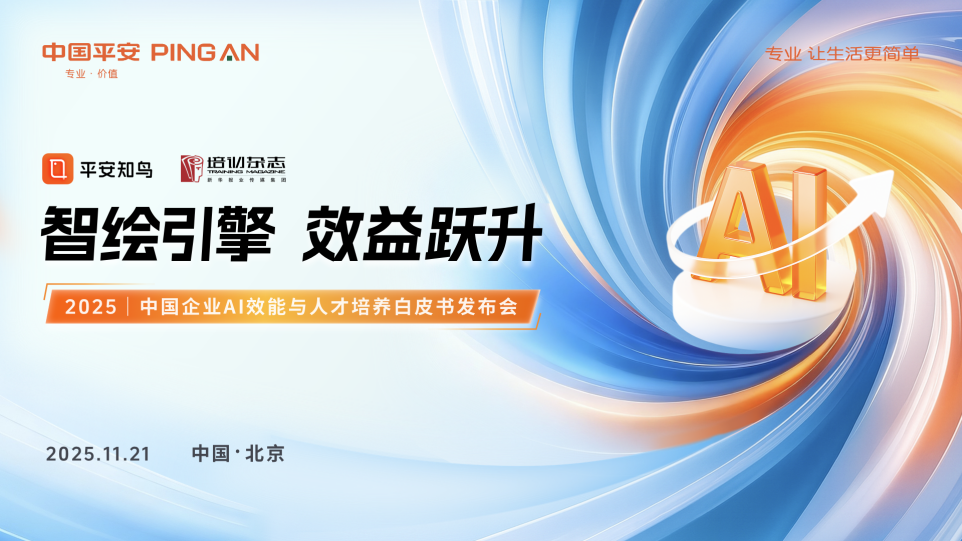
Core Insights - The release of the white paper titled "Intelligent Transformation: Solving Eight Critical Issues in AI Efficiency and Talent Development" aims to guide companies through the challenges of AI-driven transformation and talent development [1][5][12] Group 1: Event Overview - The event was co-hosted by Ping An Zhinuo and Training Magazine, focusing on AI's role in enhancing organizational efficiency and talent cultivation [1][3] - Key speakers included industry leaders and experts who discussed the integration of AI technology with talent development [3][5] Group 2: AI and Talent Development - The white paper identifies core obstacles to AI implementation and offers a comprehensive action guide for organizations [5][9] - Talent is emphasized as the core element of new productivity, with a focus on evolving human capabilities to leverage technology effectively [7][8] Group 3: Challenges and Opportunities - AI is reshaping industry development, presenting both opportunities and challenges, such as data silos and a lack of skilled personnel [8] - The need for collaboration among government, enterprises, and educational institutions is highlighted to cultivate high-quality talent for the digital economy [8][9] Group 4: Strategic Framework - The white paper outlines a framework consisting of four engines to facilitate organizational transformation: strategic, talent, process, and value engines [9][11] - A three-step method for intelligent transformation is proposed, including diagnosis, pilot validation, and scale integration [11] Group 5: Future Directions - Ping An Zhinuo plans to deepen its strategic layout by enhancing AI applications in training and expanding partnerships across various fields [12] - The goal is to help more companies internalize AI capabilities as a core driving force for overcoming talent development challenges [12]
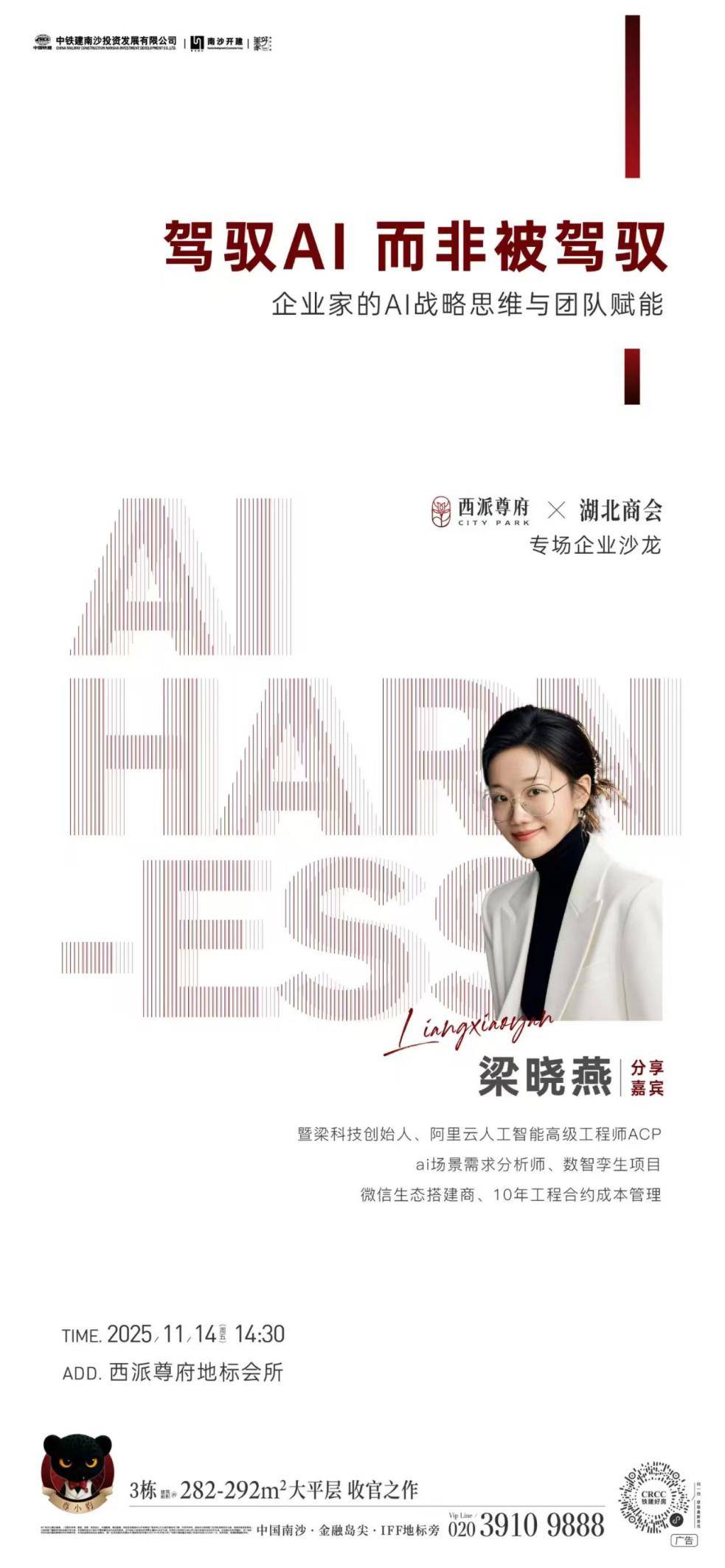
驾驭AI,赋能团队|西派尊府联袂乐居、湖北商会企业家沙龙即将启幕
Sou Hu Cai Jing· 2025-11-13 06:26
Group 1 - The core theme of the event is to help businesses transition from "passive adaptation" to "active management" of AI strategies, addressing a critical strategic issue for entrepreneurs [1] - The event will feature Liang Xiaoyan, founder of Jiliang Technology and a senior engineer at Alibaba Cloud, who has over ten years of practical experience in AI technology implementation, ecosystem building, and cost management [5] - The salon aims to serve as a platform for AI thinking exchange and a networking opportunity with elite circles, emphasizing the importance of strategic vision and team empowerment in the AI era [5][7] Group 2 - The event is scheduled for November 14, 2025, at 14:30, and will take place at the West Pai Zunfu Landmark Clubhouse [8] - The West Pai Zunfu project is positioned as a high-end living standard, featuring spacious layouts and modern amenities, catering to the needs of ambitious entrepreneurs [5][7]
论坛| 张孜铭副院长在杭州2025人工智能产业发展大会发表主题演讲《AI重构商业:企业智能化转型路径与案例》
未可知人工智能研究院· 2025-10-07 03:02
Core Viewpoint - The article emphasizes the transformative impact of AI on business operations and models, highlighting the necessity for companies to embrace AI for survival and growth in the competitive landscape [1][3]. Group 1: AI's Role in Business Transformation - AI is no longer just a technical tool but a core component of corporate strategy, with 85% of Chinese companies accelerating their investment in AI and over 63% actively using generative AI [3]. - The potential of AI in cost reduction is significant, as illustrated by a leading energy company's five-year growth case and Midjourney's team of 11 achieving $100 million in annual revenue, showcasing AI's overwhelming efficiency advantages [4]. Group 2: Revenue Growth Opportunities - Generative AI search ranking optimization (GEO) presents new business opportunities, with platforms like DeepSeek emerging as new traffic entry points and influencers of consumer decisions [6]. - A health brand achieved a revenue increase of 148.4% and a 295.2% growth in AI-driven traffic within three months, demonstrating GEO's effectiveness in brand building and market conversion [6]. Group 3: AI's Impact on Workforce and Organizational Structure - AI is reshaping job skill requirements, necessitating a shift from traditional technical and manual skills to advanced cognitive and social-emotional skills, prompting companies to redefine their talent structures [4]. - AI is being applied across various business functions, including procurement, collaborative office work, R&D, team building, legal affairs, and human resources, enhancing operational efficiency and reducing overall costs [9]. Group 4: AI's Commercial Landscape in China - Hangzhou is highlighted as a key hub for AI industry development, expected to account for over 70% of Zhejiang province's AI industry output value in 2024, supported by a vibrant ecosystem of private enterprises and diverse application scenarios [11]. - The article concludes with a call for business leaders to embrace AI, rethink strategic layouts, talent structures, and technology investments to seize opportunities in intelligent transformation [12].