
信息透明化

Search documents
董责险渗透率达32%,费率不升反降背后,信息透明度仍是关键挑战
Bei Jing Shang Bao· 2026-01-05 14:04
Core Insights - The demand for Directors and Officers Liability Insurance (D&O Insurance) in the A-share market is rapidly increasing, with 1,753 listed companies disclosing their purchase plans by the end of 2025, a 16% increase from the previous year, resulting in an overall penetration rate of 32% [1][3][4] Group 1: Market Trends - The number of A-share listed companies announcing D&O Insurance purchases reached 643 in 2025, a 19% year-on-year increase [3] - The penetration rate of D&O Insurance has significantly increased from less than 10% in 2019 to 32% by the end of 2025, marking a historic milestone [3][4] - Despite the rising demand, the average insurance premium rate for D&O Insurance has entered a downward trend, falling below 0.5% by the fourth quarter of 2025 [3][4] Group 2: Pricing Dynamics - The decline in insurance premium rates contradicts the common expectation that high demand would lead to increased prices, attributed to the growing number of insurers and irrational competition due to a lack of transparent claims information [4][6] - The current D&O Insurance premium levels are considered low compared to the risks faced by listed companies and their directors, suggesting a need for rates to align more closely with actual risk levels [4][5] Group 3: Operational Mechanism - The operation of D&O Insurance relies on the claims trigger mechanism, typically initiated by the first claim made during the insurance period, which can include regulatory investigations or investor lawsuits [5] - The claims process can be lengthy, often taking two to three years or more from the initiation of an investigation to the final payout [5] Group 4: Challenges and Recommendations - The D&O Insurance market faces challenges such as inadequate information disclosure, which hampers rational pricing and investor risk assessment [6][8] - Industry experts advocate for mandatory disclosure of D&O Insurance details in regular reports, including coverage amounts, premium standards, and claims history, to enhance transparency and investor understanding [7][8] - Strengthening risk education and establishing a mandatory information disclosure system are essential for improving the D&O Insurance market's maturity and effectiveness [8]


京东推出「检修分离」服务,教消费者“拒绝”维修工?
3 6 Ke· 2025-12-31 09:38
Core Viewpoint - The article discusses JD's innovative "repair separation" model in the home appliance repair industry, aiming to enhance transparency and consumer trust while challenging traditional repair practices [3][10][31]. Group 1: JD's New Model - JD has introduced a "repair separation" model that separates the diagnosis and repair processes, allowing consumers to confirm repairs before they are made [4][5]. - The model includes three main components: online consultations for simple troubleshooting, transparent diagnostics with clear pricing, and a "pay after verification" system [6][7][8]. - This approach aims to eliminate unnecessary repair costs and empower consumers with information, shifting the power dynamics in the repair industry [8][10]. Group 2: Market Context and Competition - The home appliance market is transitioning to a phase of "stock competition," where after-sales service becomes crucial for customer retention and loyalty [9][10]. - JD's strategy leverages its established trust in the market to extend its service capabilities, positioning itself as a leader in after-sales service [10][11]. - Competitors like Tmall, Pinduoduo, and Douyin face challenges in adapting to JD's model due to their different operational structures and market strategies [14][18][24]. Group 3: Implications for the Industry - JD's initiative is expected to set a new standard for home appliance repair services, influencing consumer expectations and industry practices [28][30]. - The shift towards transparency in service pricing and quality may lead to a significant reshaping of the competitive landscape, pressuring traditional players to adapt or risk obsolescence [30][31]. - The article suggests that JD's actions could catalyze a broader transformation in the home appliance repair market, pushing for modernization and improved service standards [31][32].


万得征信携手区域性股权市场,打造股东名册信息公示新标杆
Wind万得· 2025-09-29 22:41
Core Insights - The collaboration between Wind Information and regional equity trading centers in Beijing and Shanghai marks a significant advancement in shareholder registry services, enhancing transparency and information accessibility in the equity market [1][4]. Group 1: Strategic Collaboration - Wind Information has established strategic partnerships with Beijing Equity Exchange and Shanghai Equity Custody Trading Center, indicating a breakthrough in shareholder registry and transparency initiatives [1]. - This partnership allows companies to authorize the public disclosure of their shareholder registries, which will be updated in real-time through Wind's enterprise database, enhancing the recognition of shareholder rights [2][4]. Group 2: Information Transparency - The public disclosure mechanism of shareholder registries addresses information asymmetry issues faced by small and medium-sized enterprises during equity transfers and financing [2]. - The collaboration aims to create a more favorable market environment for corporate financing and capital matching by improving the efficiency of information retrieval [4][6]. Group 3: Wind Information's Role - Wind Information, established in 2016, offers a range of compliance-based credit products, including global enterprise databases, risk monitoring, and various credit reports, supporting financial institutions and large enterprises in due diligence and risk assessment [5][7]. - The company aims to further empower the capital market and support the real economy by enhancing the application of shareholder registries and information disclosure [6]. Group 4: Data and Technology Advantages - Wind Information boasts a vast database covering over 350 million enterprises globally, providing comprehensive corporate profiles that include ownership structures, executive teams, and financial data [7][8]. - The company emphasizes its commitment to data quality and timely updates, leveraging over 20 years of technological expertise in data management and analysis [8].

压缩“政策套利”空间!地方招商引资规范发展再提速
Zheng Quan Shi Bao· 2025-07-02 13:08
Core Viewpoint - The recent emphasis on "strengthening investment attraction information disclosure" by the Central Financial Committee aims to promote a more transparent and fair competitive environment in local investment attraction practices, reducing the space for "policy arbitrage" in fund attraction [1][2]. Group 1: Policy Changes - Over the past year, multiple policies have been introduced to regulate local investment attraction practices, including the prohibition of illegal tax reductions and subsidies [2][3]. - The implementation of the "Fair Competition Review Regulations" in August 2024 and other measures aims to guide local governments away from simplistic investment attraction methods, encouraging a focus on long-term development and improved investment quality [3]. Group 2: Impact on Venture Capital Institutions - The new directive on information disclosure is expected to bring three main benefits to venture capital institutions: easier due diligence, reduced post-investment risks, and the ability to identify "value gaps" in less publicized but promising cities [4]. - Venture capital institutions will need to shift their investment logic to focus more on fundamental aspects such as core technology, business models, team capabilities, and market prospects, rather than relying on short-term government subsidies [4]. Group 3: Adaptation Strategies for Venture Capital - Venture capital institutions should reassess their partnerships with government limited partners (LPs) by understanding local industrial plans and policy execution credibility [6]. - Developing a "national industrial map" investment strategy will help guide resource allocation for invested companies based on regional strengths [6]. - Strengthening the ability to provide strategic, market, and supply chain support will be crucial for helping invested companies succeed in a more equitable market environment [6].
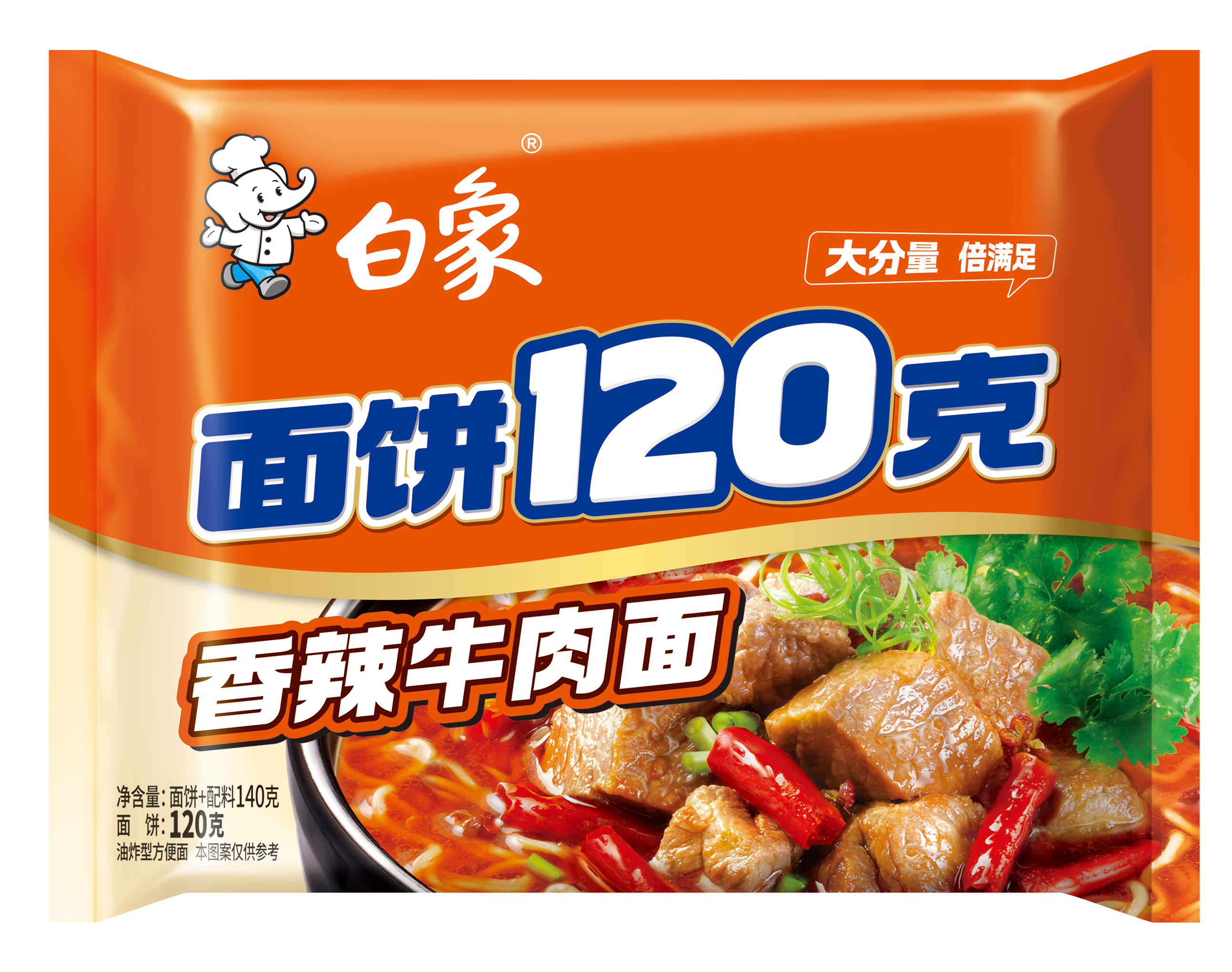
“面饼120克”,白象将消费者“声音”印在包装上
Qi Lu Wan Bao· 2025-06-29 09:30
Core Viewpoint - White Elephant Food Co., Ltd. has launched its first product named after the weight of the noodle cake, "Noodle Cake 120g," which aims to provide clear and transparent information to consumers, enhancing their decision-making process [1][4]. Group 1: Product Innovation - The renaming of the product to "Noodle Cake 120g" eliminates ambiguity, allowing consumers to easily understand the quantity they are purchasing [4]. - White Elephant has established a complete product innovation loop by recording consumer feedback, validating feasibility, and responding quickly to market demands [4]. - The company has introduced sub-brands and products tailored to specific consumer preferences, such as "Dala Jiao" for spicy food lovers and health-oriented options like "Old Hen Soup Noodles" [4]. Group 2: Consumer Engagement - In 2023, White Elephant leveraged a collaboration with Douyin e-commerce to launch "Coriander Noodles," responding to high consumer interest in unique flavors [5]. - The company has actively engaged with consumers on social media platforms, introducing products like "Ear-Root Noodles" and "Stinky Tofu Noodles" that resonate with younger audiences [5]. Group 3: Transparency and Safety - White Elephant has addressed consumer concerns about food safety by launching "Food Factory Live" on Bilibili, showcasing the production process and factory operations [7]. - The company has also organized offline events like "White Elephant Instant Noodle Factory" pop-ups to educate consumers about its production methods in an open and transparent manner [7]. - The evolving consumer mindset reflects a demand for transparency and quality, which White Elephant aims to meet through its initiatives [7].
理财产品业绩基准将迎变革新规或加速资管行业格局分化
Zheng Quan Ri Bao Wang· 2025-05-26 12:06
Core Viewpoint - The newly proposed regulatory framework aims to enhance transparency and standardization in the disclosure of asset management products, addressing the common misconceptions among investors regarding performance benchmarks and actual returns [1][2][3]. Group 1: Regulatory Framework - The framework mandates that if performance benchmarks are disclosed, they must be consistent across different channels and maintained throughout the product's lifecycle, with specific requirements for disclosure during the fundraising, ongoing, and termination phases [2][3]. - It emphasizes the need for clear communication regarding the relationship between performance benchmarks, investment strategies, underlying assets, and market performance, including explicit warnings that benchmarks do not guarantee future returns [1][2]. Group 2: Industry Impact - The new regulations are expected to disrupt the existing market dynamics by breaking the "implicit guarantee" expectations and reshaping the evaluation system for wealth management products, leading to increased differentiation within the industry [3][4]. - Smaller institutions may face higher development costs, while larger firms could strengthen their market position due to technological advantages [3][4]. Group 3: Implementation Timeline - The proposed regulations are set to be implemented approximately six months after their official release, allowing financial institutions time to adjust their product documentation and systems accordingly [3]. Group 4: Market Transformation - The framework is described as an "information revolution" for the asset management industry, promoting a market-oriented risk pricing mechanism and leading to a comprehensive transformation across all operational levels of asset management firms [4]. - It is anticipated that the implementation of full lifecycle disclosure requirements will result in a significant expansion of post-investment service teams, potentially increasing their size by over 40% [4].