
光子技术

Search documents
英伟达持续发力新技术路线,推动CPO从试点走向规模化部署
Jin Rong Jie· 2026-03-04 01:38
Group 1 - Nvidia has agreed to invest a total of $4 billion in two companies developing optical technology for data centers, which is crucial for AI systems [1] - The investment targets the Co-Packaged Optics (CPO) technology that Nvidia is actively promoting, with plans to launch two data center switch series using CPO technology by March 2025 [1] - Major tech companies like Microsoft and Meta have announced nearly $700 billion in investments for AI data centers, significantly increasing market demand for CPO technology [1] Group 2 - The explosive growth of the AI industry has led to a trend of convergence from electrical to optical technologies, resulting in a surge in demand for photonic chips and CPO technology in the optical communication sector [1] - Global spending on AI infrastructure is expected to exceed $1 trillion by 2026, with the demand for high-density, low-power interconnects driving the transition of CPO from pilot projects to large-scale deployment [1] - The CPO market is projected to exceed $40 billion by 2030, with the technology expected to reshape the optical interconnect market over the next decade [2]

3月3日外盘头条:原油价格飙升 美国联邦上诉法院驳回关税退款延期请求 英伟达将向两家光子公司投...
Xin Lang Cai Jing· 2026-03-02 21:37
Group 1 - The UK Prime Minister Starmer has drawn a clear line, stating that the UK will not engage in offensive actions against Iran alongside the US, emphasizing the need for legal justification and a well-thought-out plan for any military action [4][6] - US crude oil prices surged over 6% amid concerns that the conflict between the US and Iran could escalate and lead to significant supply disruptions, with Brent crude futures rising by $4.87 to $77.74 per barrel and WTI futures increasing by $4.21 to $71.23 per barrel [8] - Nvidia announced a $4 billion investment in two photonics technology companies to strengthen its research pipeline and supply chain, supporting large-scale AI infrastructure development [18] Group 2 - The US Federal Circuit Court has rejected the government's request to delay the tariff refund litigation process, allowing small businesses to expedite their claims for tariff refunds [9][11] - Anthropic's AI chatbot Claude experienced service interruptions due to unprecedented demand, with nearly 2,000 users reporting issues, although enterprise clients using the Claude model remained unaffected [13] - President Trump stated that the military campaign against Iran could last as long as necessary, initially estimating a duration of four to five weeks but indicating readiness to extend beyond that if required [15][16]


英伟达将分别向Lumentum、Coherent投资20亿美元,以强化AI处理器业务
Xin Lang Cai Jing· 2026-03-02 14:11
Core Insights - Nvidia is investing $2 billion each in photonics manufacturers Lumentum and Coherent to enhance its data center chips and meet the growing demand for faster AI processors [1][2] - Following the announcement, shares of Lumentum and Coherent rose over 7% in pre-market trading [2] - Nvidia executives stated in a recent earnings call that the company will leverage its substantial cash reserves to invest in the AI ecosystem, aiming to improve model computational output [2] - Photonic technology has become a mainstream solution for chip manufacturers to increase chip speed and meet higher AI inference demands [2] - The collaboration includes Nvidia providing multi-billion dollar procurement commitments and securing future access to advanced laser and optical communication products from both companies [1][2] - These investments will support the related companies in research and development, expansion, and operations, while also promoting domestic manufacturing capabilities in the U.S. [1][2]


福晶科技(002222):至期收入增长超预期,钒酸钇晶体匹配OCS应用万事俱备
Western Securities· 2025-12-11 08:30
Investment Rating - The investment rating for the company is "Buy" [5]. Core Insights - The company maintains a solid position in its traditional business, with significant R&D investments yielding fruitful results. It is the largest global producer of LBO and BBO crystals and components, holding the number one market share globally. The precision optical products segment has achieved mass production of new prism gratings for high-speed optical network dynamic control modules, with performance metrics reaching international advanced levels, making it a key supplier for leading domestic and international companies [1][5]. - The company has targeted high-end laser device markets to address the bottleneck of imported core components, successfully breaking the monopoly of foreign suppliers with its self-developed acousto-optic and magneto-optic devices. In the first three quarters of 2025, the company achieved revenue of 842 million yuan, a year-on-year increase of 26.62%, and a net profit attributable to the parent company of 218 million yuan, up 29.75% year-on-year, with Q3 2025 marking record highs for both revenue and profit [1]. - The company’s subsidiary, Zhiqi Photonics, has made significant progress in the ultra-precision optical field, achieving a revenue of 49.05 million yuan in the first half of 2025, a year-on-year increase of 73.66%, and successfully turning a profit. The company is well-positioned to capitalize on future opportunities in ultra-precision optics [2][3]. Financial Projections - Revenue projections for the company are estimated at 1.115 billion yuan for 2025, 1.339 billion yuan for 2026, and 1.503 billion yuan for 2027, with corresponding net profits of 302 million yuan, 406 million yuan, and 494 million yuan respectively. The company is expected to see steady growth across its various business segments [3][4]. - The projected growth rates for revenue are 27.3% in 2025, 20.1% in 2026, and 12.2% in 2027, while net profit growth rates are expected to be 38.0% in 2025, 34.6% in 2026, and 21.6% in 2027 [4]. Key Data - The company’s earnings per share (EPS) is projected to be 0.64 yuan in 2025, 0.86 yuan in 2026, and 1.05 yuan in 2027. The price-to-earnings (P/E) ratio is expected to decrease from 99.9 in 2025 to 61.0 in 2027, indicating improving valuation metrics [4][10]. - The company’s return on equity (ROE) is projected to improve from 17.8% in 2025 to 20.8% in 2027, while the gross profit margin is expected to stabilize around 56.5% in 2025 and 56.7% in 2027 [10].

颠覆铜互连,革命SerDes
半导体行业观察· 2025-12-08 03:04
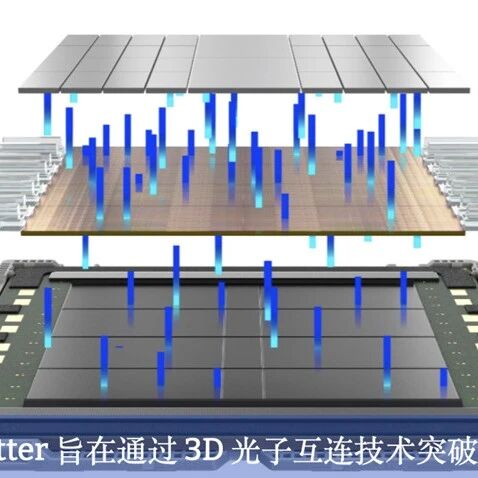
Core Viewpoint - The article discusses the advancements in interconnect technology, particularly focusing on Lightmatter's new 3D co-packaged optical interconnect (CPO) technology, which aims to significantly enhance I/O performance for AI workloads, especially in training large language models [1][4]. Group 1: Interconnect Technology Innovations - Faster data transfer speeds between processors enable more work to be completed, driving innovation in interconnect technology [1]. - Nvidia's NVLink technology provides up to 1PB/s of network bandwidth in high-end systems, showcasing the industry's focus on improving data transfer rates [3]. - Lightmatter's Passage M1000 photon superchip features 1024 serial data channels, each capable of 56 Gbps throughput, with a total bandwidth of 114 Tbps [4]. Group 2: Lightmatter's CPO Technology - Lightmatter's CPO technology allows for the integration of SerDes within the chip, improving data transmission efficiency by using laser beams instead of traditional electrical connections [6][7]. - The 3D stacking method of CPO technology enables chip manufacturers to achieve photon bandwidths of 32 to 64 Tbps, enhancing scalability for AI workloads [7]. - Lightmatter is collaborating with undisclosed GPU or XPU manufacturers to integrate CPO technology into their chips, with potential product releases expected by the end of 2027 [7]. Group 3: Market Context and Competition - The demand for computing accelerators is surging due to the growth of AI workloads, prompting various companies, including AMD, Intel, Google, AWS, and Microsoft, to innovate in this space [1]. - Lightmatter has raised $850 million and holds a valuation of $4.4 billion, indicating its significance in the optical interconnect market [8].
单光子层面实现光束精准控制
Ke Ji Ri Bao· 2025-11-26 22:53
Core Insights - The research team from Purdue University has achieved precise control of light beams at the single-photon level, leading to the development of a "photon transistor" that operates at single-photon intensity, marking a significant step towards realizing the full potential of photonic technology [1][2]. Group 1: Technological Breakthrough - The photon transistor can operate stably at room temperature, unlike other quantum system-dependent solutions that require extremely low temperatures [2]. - It is compatible with existing complementary metal-oxide-semiconductor (CMOS) processes, allowing for seamless integration into current chip manufacturing workflows, laying the groundwork for future photonic chips [2]. - The operational speed of the photon transistor can reach gigahertz levels, with potential enhancements to several hundred gigahertz, significantly surpassing existing methods [2]. Group 2: Implications for Computing - This technology is expected to drive advancements in quantum computing and could revolutionize classical computing by enabling the construction of ultra-fast, low-power photonic computers [2]. - It has the potential to replace slower, more power-consuming electronic devices in data centers and optical communication systems [2][3]. - The ability to control single photons could lead to breakthroughs in quantum computing, overcoming existing bottlenecks and reshaping data center architectures for a new era of light-speed computing [3].
国内首个光子专用大模型升级版本月在宁“出道”
Nan Jing Ri Bao· 2025-11-21 02:24
Core Insights - Nanjing NanZhi Advanced Optoelectronic Integration Technology Research Institute has developed China's first photon-specific AI model, OptoChat AI 2.0, which will be showcased at the 2025 World Intelligent Manufacturing Conference [1][4] - The AI aims to enhance the design and manufacturing processes of photonic chips, significantly improving efficiency and reducing time spent on simulations and design iterations [2][3] Group 1: Product Development - The initial version, OptoChat AI 1.0, was designed to understand technical jargon used by engineers, creating a knowledge base from various technical documents and experimental experiences [1] - The upgraded version, OptoChat AI 2.0, allows for practical applications, enabling engineers to generate design plans and analyze experimental data efficiently, thus enhancing productivity by at least 30% [2] Group 2: Team Dynamics - The development team, primarily composed of "post-00s," dedicated significant time to refining the AI, working continuously to optimize its functionalities and gather feedback [3] - Each team member has specific responsibilities, focusing on different aspects of the design, simulation, and algorithm development to ensure the AI can effectively assist engineers [3] Group 3: Industry Impact - The introduction of OptoChat AI 2.0 is seen as a significant step in integrating AI into practical engineering applications, challenging the perception that large models are merely theoretical [4] - The upcoming conference will mark the official announcement of the AI, highlighting its potential to become an essential tool for researchers and engineers in the photonics field [4]
美国没想到,印度也没想到,中国光子芯片材料,已经世界遥遥领先
Sou Hu Cai Jing· 2025-11-19 22:43
Core Insights - The article discusses China's advancements in photonic chips, highlighting their potential to overcome the limitations of traditional silicon-based chips and establish a leading position in the global semiconductor industry [1][41]. Group 1: Photonic Chip Technology - Photonic chips utilize photons for information transmission, offering significant advantages over silicon chips, including a transmission speed that can exceed silicon by over 10 times and computational power that can be up to 1000 times greater, with only one-thousandth of the power consumption [11][9]. - The emergence of photonic chips addresses the growing demand for computational power in fields such as artificial intelligence and autonomous driving, which are hindered by the limitations of traditional silicon chips [7][12]. Group 2: National and Global Implications - The development of photonic chips is crucial for national defense, enhancing capabilities in high-precision radar and missile defense systems, thereby providing robust security [17][16]. - China's advancements in photonic technology signify a break from U.S. technological restrictions, allowing the country to establish an independent semiconductor development path and potentially reshape the global chip landscape [41][44]. Group 3: Research and Development - Chinese research teams have made significant breakthroughs in key materials for photonic chips, such as lithium niobate, enabling mass production and reducing reliance on foreign suppliers [25][28]. - Major Chinese companies, including Huawei and ZTE, are actively pushing the application of photonic chips in communication and AI, demonstrating the country's strong R&D capabilities [32][34]. Group 4: Market Position and Future Outlook - China's market share in photonic chips has reached 28%, with expectations for further growth as the industry accelerates towards large-scale production [48]. - The successful development of photonic chips could disrupt the dominance of silicon-based chips, ushering in a new era for communication technologies and artificial intelligence [48][50].

西北首条8英寸硅光中试线通线 助力陕西撬动千亿光子产业
Zhong Guo Zheng Quan Bao· 2025-11-04 20:36
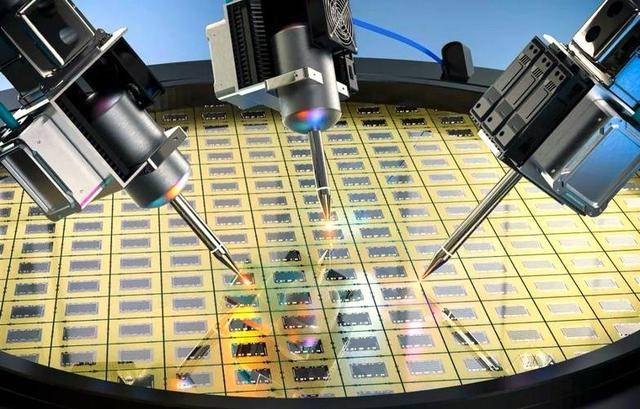
Core Insights - The establishment of the "8-inch Advanced Silicon Photonic Integration Technology Innovation Platform" marks a significant milestone for the photonics industry in Shaanxi, filling a gap in the region's silicon photonic chip pilot testing capabilities [1][2] - Shaanxi has announced a plan to invest over 1 billion yuan in the construction of a photonics technology laboratory, aiming to attract top international scientists and achieve a provincial photonics industry output value exceeding 50 billion yuan by 2027 [1][3] Investment and Infrastructure - The 8-inch silicon photonic platform has a total investment of 750 million yuan, with construction starting at the end of 2023 and completion expected by September 2025 [2] - The platform incorporates advanced technology from Belgium's IMEC and over 60 key core equipment sets, enabling the development of a self-controlled advanced process system [2] Industry Growth and Development - Since the launch of the "Chasing Light Plan" in 2021, the number of photonics companies in Shaanxi has increased from fewer than 100 to 379 by 2024, with the industry scale growing from 15 billion yuan to 36.5 billion yuan [3][4] - The photonics industry in Shaanxi is projected to grow at an annual rate exceeding 50%, with total output expected to surpass 30 billion yuan in 2024 [4] Ecosystem and Innovation - The photonics technology laboratory aims to create a comprehensive innovation ecosystem, integrating government, industry, and international resources to overcome systemic barriers [5][6] - The laboratory's dual-driven strategy focuses on "source innovation and industry integration," with plans to attract over 100 researchers and achieve breakthroughs in over 30 key photonics technologies by 2027 [6]
西北首条8英寸硅光中试线通线助力陕西撬动千亿光子产业
Zhong Guo Zheng Quan Bao· 2025-11-04 20:17
Core Insights - The establishment of the "8-inch Advanced Silicon Photonic Integration Technology Innovation Platform" marks a significant milestone for the photonics industry in Shaanxi, filling a gap in the region's silicon photonic chip pilot production capabilities [1][2] - Shaanxi has announced a plan to invest over 1 billion yuan in the construction of a photonics technology laboratory, aiming to attract top international scientists and achieve a photonics industry output value exceeding 50 billion yuan by 2027 [1][6] Investment and Infrastructure - The 8-inch silicon photonic platform has a total investment of 750 million yuan, completed by September 2025, and includes over 60 key core devices [2] - The platform will support the development of high-performance components for applications in AI, optical communication, and smart driving, with an expected completion of active product lines by 2026 [2][3] Industry Growth and Development - Since the launch of the "Chasing Light Plan" in 2021, the number of photonics companies in Shaanxi has increased from fewer than 100 to 379 by 2024, with industry scale growing from 15 billion yuan to 36.5 billion yuan [3] - The photonics industry in Shaanxi is projected to exceed 30 billion yuan in total output by 2024, growing at an annual rate of over 50% [4] Ecosystem and Innovation - The photonics technology laboratory aims to create a comprehensive innovation ecosystem, integrating research, industry, finance, and international resources [5] - The laboratory will focus on both source innovation and industry integration, leveraging advanced scientific facilities and collaborative platforms [5][6] Future Goals - By 2027, the laboratory aims to attract 30 high-end talents and achieve breakthroughs in over 30 key technologies, establishing three pilot production lines and two specialized incubation platforms [6] - Long-term goals include creating a nationally influential photonics technology laboratory and establishing Shaanxi as an international center for photonics technology and industry [6]