
本地化布局

Search documents
本地共生,价值共赢丨志邦家居以创新模式解锁中国品牌澳洲出海新路径
Sou Hu Cai Jing· 2026-02-10 10:26
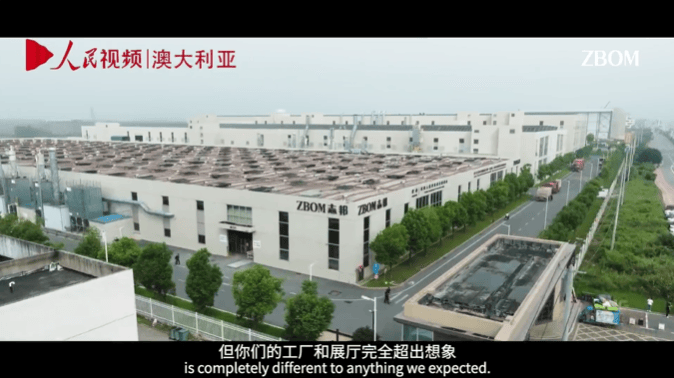
Core Viewpoint - The interview with Zhibang Home by the Australian program "Big Vision" highlights the company's localized practices in the Australian market, showcasing how it leverages "advantageous production capacity + local partners" to address the challenges faced by Chinese brands going abroad, achieving deep integration and value co-creation with the Australian market [1] Group 1: Localization Strategy - Zhibang has recognized that "localization is the long-term path for going abroad" since entering the Australian market in 2014, focusing on "local co-existence and value co-creation" as its core philosophy [1] - The company has transformed from being an "outsider" to a "local participant" in the Australian market by breaking down cognitive barriers through comprehensive local strategies in cooperation models, product adaptation, and service implementation [1] Group 2: Cooperation Model - Zhibang employs an innovative cooperation model of "equity binding + deep collaboration," partnering with IJF, a local company with over 60 years of experience in the Australian home furnishing industry, to quickly integrate into the local business ecosystem [2] - This partnership creates a "shared risk and shared profit" community, allowing both companies to collaborate deeply in product development, market promotion, project implementation, and customer service [2] Group 3: Product Adaptation - Zhibang has optimized its products for the Australian market by considering local climate characteristics, living habits, and consumer demands, ensuring that products meet stringent local standards while retaining the efficiency and quality of Chinese manufacturing [4] - The company has developed customized home products that are waterproof, moisture-resistant, and anti-deformation, catering to the Australian market's specific needs, and has received widespread recognition from local developers and families [4] Group 4: Service Implementation - Zhibang has established a localized service system comprising "local design + global manufacturing + Australian installation," addressing industry pain points related to after-sales service and response times [5] - The company has formed a professional design and installation team in Australia, providing tailored design services and ensuring timely and standardized product installation, thereby enhancing customer trust and reputation [5] Group 5: Future Outlook - The "Big Vision" program emphasized that Zhibang's localization practices serve as an excellent model for Chinese brands going abroad, highlighting the importance of not just entering markets but also establishing a local presence [7] - Zhibang plans to continue deepening its localization efforts in Australia, optimizing cooperation models, enhancing product adaptation, and improving service quality, while replicating its successful localization experiences in other mature global markets [7]


中联重科:公司在委内瑞拉无业务
Zheng Quan Ri Bao· 2026-01-20 12:36
Core Viewpoint - The company, Zoomlion, has no business operations in Venezuela but is actively expanding its presence in South America through localized operations and product adaptation [1] Group 1: Business Expansion - The company is a leading engineering machinery enterprise in China and is enhancing its market influence in South America and Latin America [1] - It has established sales and service networks in major economies such as Brazil, Chile, Argentina, Peru, and Colombia, with Brazil being the strategic core market [1] Group 2: Local Operations and Product Adaptation - The company has set up a factory in Brazil to produce cranes, concrete machinery, and other equipment, serving the South American market [1] - It offers machinery tailored to local conditions, including cranes, earthmoving machinery, concrete machinery, mining machinery, and aerial work platforms [1] Group 3: Future Outlook - The company aims to further expand its business in the region by increasing localization efforts, driving technological innovation, and integrating the supply chain [1]
蜂巢能源杨红新:2026,动力电池没有“容易的钱”
Tai Mei Ti A P P· 2026-01-20 01:20
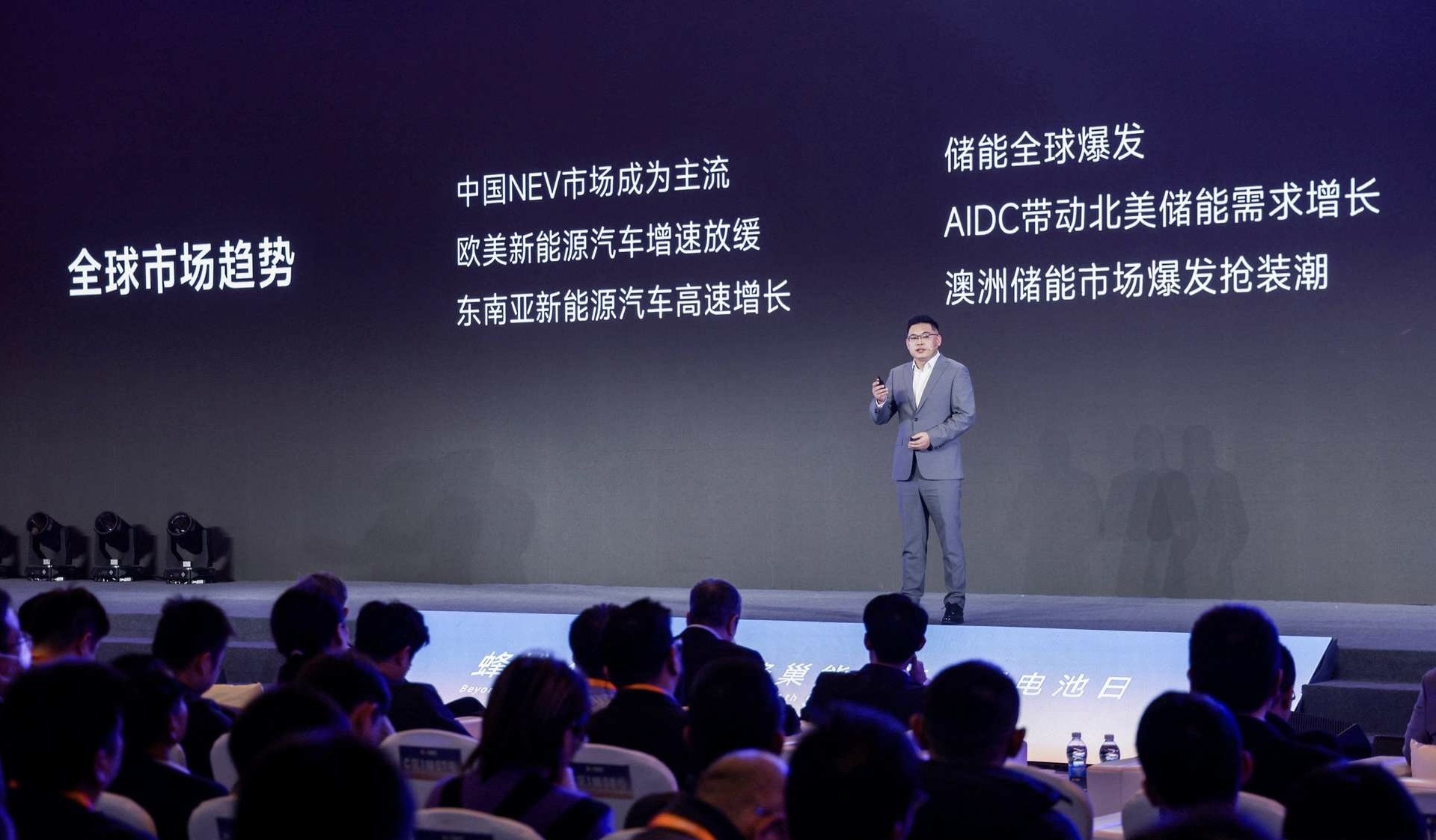
Core Viewpoint - The main uncertainty for achieving profitability in 2026 for battery manufacturers stems from rising upstream raw material costs, which cannot be fully passed on to downstream customers, leading to significant challenges in profit margins [3]. Group 1: Raw Material Price Trends - The price of lithium carbonate has sharply increased from less than 60,000 yuan per ton in mid-2025 to over 130,000 yuan by the end of 2025, continuing to rise into 2026, with a cumulative increase of over 33,000 yuan per ton (over 25%) from early January 2026 [4]. - Phosphate iron lithium prices have experienced a dramatic decline of over 80% from 173,000 yuan per ton at the end of 2022 to 34,000 yuan in August 2025, leading to widespread losses in the industry [4]. Group 2: Cost Transmission Challenges - Battery manufacturers face difficulties in passing on rising costs to customers due to a potential slowdown in demand, with car manufacturers becoming less tolerant of cost increases [5]. - Key raw materials like lithium carbonate, copper, and hexafluorophosphate can be smoothly transmitted to downstream customers due to established price linkage agreements, while costs for non-bulk materials like separators and graphite must be absorbed by battery manufacturers [6]. Group 3: Export Tax Policy Changes - The export tax rebate for battery products will be reduced from 9% to 6% starting April 2026, with a complete cancellation planned for January 2027, significantly impacting profit margins for battery manufacturers relying on cost advantages for exports [7][8]. - Companies must navigate two strategies: negotiating price increases with overseas customers and pursuing localized production to mitigate the impact of reduced export rebates [8]. Group 4: Solid-State Battery Development - Despite being seen as a critical year for solid-state battery commercialization, industry experts express skepticism about the feasibility of large-scale production within the next 5 to 8 years due to significant technical challenges [10][11]. - Current industry focus should prioritize improving existing battery performance and safety rather than chasing the uncertain future of solid-state technology [11]. Group 5: Emerging Market Opportunities - The demand for unmanned delivery logistics vehicles is expected to surge, driven by the need to reduce logistics costs and comply with urban regulations [12]. - Southeast Asia's electric two- and three-wheeler market presents a significant growth opportunity, requiring high-performance batteries tailored to local conditions [12]. - The global electric tool market is projected to grow steadily at around 20% annually, providing a stable supplementary business for battery manufacturers [12]. Group 6: Strategic Industry Outlook - The battery industry in 2026 faces complex challenges, requiring companies to balance cost absorption with finding new revenue streams in international markets [13]. - Future winners in the industry will likely be those who can strategically navigate cost pressures and identify profitable opportunities rather than simply focusing on scale [13].

2025家居年度盘点|产品加码全球布局 企业深耕品牌化出海新路径
Bei Jing Shang Bao· 2025-12-24 13:01
Core Insights - The home furnishing industry is entering a new phase of strategic deepening in overseas markets by 2025, moving beyond reliance on traditional markets in Europe and the U.S. to explore emerging markets in Southeast Asia, Latin America, and Africa [1][4] - Companies are accelerating their transition from "OEM export" to "brand export," with leading firms speeding up their global expansion [1][6] Group 1: Market Expansion and Investment - In November, Dongfang Yuhong's subsidiary plans to invest approximately 144 million RMB to acquire 60% of Brazil's Novakem [1] - In the same month, Zhongyuan Home plans to invest 16 million USD in a production base in Vietnam [1] - In September, Kuka Home intends to invest 1.124 billion RMB to establish an overseas production base in Indonesia [1] - Aili Home's factory in Mexico officially commenced production in May [1] Group 2: Strategic Focus and Localized Operations - 2025 is seen as a critical year for the home furnishing industry to shift from scale expansion to quality enhancement, emphasizing technological innovation and localized operations as key to building long-term competitive advantages [4][5] - Southeast Asia is identified as a core hub for home furnishing companies due to its geographical advantages and potential for consumer upgrades [5] - Kuka Home's dual-line strategy in Southeast Asia aims to enhance market penetration, with a focus on the North American electric sofa market [5] Group 3: Performance Metrics and Growth - Companies like Dream Lily reported overseas sales of 1.515 billion RMB in the first three quarters of 2025, a year-on-year increase of 2.09%, while online overseas sales surged by 76.36% to 1.664 billion RMB [6] - Zhigang Home achieved overseas revenue of 217 million RMB, reflecting a 65% year-on-year growth [6] - Other companies, including Mousse and Jianlang Hardware, also reported significant increases in overseas revenue, with growth rates ranging from 25.99% to 73.97% [6] Group 4: Challenges and Compliance - Despite the growth opportunities, Chinese home furnishing companies face challenges in establishing brand recognition in global markets, particularly due to compliance barriers in the U.S. and Europe [9][10] - The industry is transitioning from being "behind-the-scenes manufacturers" to "frontline brand owners," necessitating a shift in strategy and operations [9] - Compliance with various regulations, such as the U.S. STURDY Act and EU REACH regulations, poses significant challenges for companies aiming to penetrate these markets [9][10] Group 5: Localization and Digital Innovation - Companies are adopting localized strategies, such as "one country, one policy," to tailor products and channel models to different markets [8] - The emphasis is on building local teams and utilizing digital channels to navigate cultural differences and enhance market integration [10] - A focus on localized design and digital supply chains is seen as essential for creating competitive advantages in international markets [10]


伊之密:公司将继续深化本地化布局,强化对东南亚客户的快速响应能力
Zheng Quan Ri Bao Wang· 2025-11-26 11:40
Core Viewpoint - The company, Yizhiming (300415), emphasizes the importance of Southeast Asia as a burgeoning hub for ICT and home appliance manufacturing, highlighting its strong market vitality and the intention to enhance local operations and responsiveness to customers in the region [1] Group 1 - Southeast Asia is recognized as a new emerging center for global ICT and home appliance manufacturing [1] - The company plans to deepen its localization strategy in Southeast Asia [1] - There is a focus on strengthening the company's ability to respond quickly to Southeast Asian customers [1]

中国手机品牌加强中东市场本地化布局
Zheng Quan Ri Bao· 2025-11-21 16:10
Core Insights - The Middle East and Africa's share of the global smartphone market has increased from 10.7% in 2017 to 13.5% in 2024, indicating a dual-track structure of feature phone dominance and smartphone growth in emerging markets [1] - Omdia forecasts a significant rebound in the Middle East smartphone market (excluding Turkey) in Q3 2025, with a 23% year-on-year increase in shipments, reaching 15.1 million units, driven by rising demand for mid-range 4G and budget 5G smartphones [1] - Major brands are leveraging high-cost performance products to accelerate their presence in the Middle East market, with Samsung, Transsion, Xiaomi, Honor, and Apple leading in market share [1] Market Dynamics - Transsion's TECNO brand has seen a 47% year-on-year increase in shipments, while Xiaomi's shipments grew by 35% due to improved channel relationships and regional investments [2] - Honor has experienced a remarkable 128% year-on-year growth, attributed to product portfolio expansion and stronger partnerships with operators and retailers [2] - Chinese brands like Transsion, Xiaomi, and Honor are rapidly localizing their strategies and leveraging high-cost performance products to capture market share [2] Future Outlook - Omdia predicts that growth in the Middle East smartphone market may slow down in 2026 due to rising storage costs impacting the low-end market, which could lead brands to reduce production of low-end phones or increase retail prices, potentially suppressing sales momentum [2] - Industry analysts suggest that domestic manufacturers should enhance supply chain resilience and diversify procurement strategies to mitigate reliance on single suppliers or regions, while also optimizing product structures and enhancing value [3]


伊之密:公司电动注塑机产能充足
Mei Ri Jing Ji Xin Wen· 2025-11-11 06:51
Core Viewpoint - The company is addressing investor inquiries regarding the production capacity planning for the FF series electric injection molding machines, particularly in the context of growing market demand in the transparent PET packaging and cosmetics packaging sectors [1] Group 1: Production Capacity and Expansion Plans - The company has indicated that it has sufficient production capacity for its electric injection molding machines [1] - There are inquiries about specific expansion plans for the FF series electric injection molding machines to meet market growth from Q4 2025 to H1 2026 [1] Group 2: Competitive Landscape and Strategies - In the Southeast Asian market, the company faces competition from both local manufacturers and international brands [1] - The company's core strategy to address competition includes deepening local presence, enhancing regional service networks for faster response times, and leveraging the advantages of efficient, precise, and green energy-saving products to provide customized solutions [1]
超15亿元加码在华产能,科莱恩CEO:未来全球化工市场近半增长来自中国
Di Yi Cai Jing Zi Xun· 2025-11-07 12:09
Core Viewpoint - Clariant is expanding its production capacity in China despite global chemical market pressures, focusing on innovative halogen-free flame retardants and healthcare chemicals [1][3]. Group 1: Expansion and Investment - Clariant announced a partnership with Fuhua Tongda Chemical Co. to establish a production base for halogen-free flame retardants [1]. - The company is investing 80 million Swiss francs (approximately 700 million RMB) in a healthcare chemicals expansion project and 100 million Swiss francs (approximately 880 million RMB) in a high-performance halogen-free flame retardant production line [1]. - The first production line of the high-performance halogen-free flame retardant was launched in 2023 [1]. Group 2: Market Significance - Since entering the Chinese market in 1995, Clariant has built nine factories and integrated parks, investing over 300 million Swiss francs (approximately 2.637 billion RMB) since 2020, with more than half of this investment in the Huizhou Daya Bay base [3]. - Clariant's CEO stated that despite a global downturn in the chemical market, the company's revenue in local currency has grown by 4% annually since 2021, with an expected EBITDA margin increase to 17%-18% in 2024 [3]. Group 3: Future Growth Potential - The company identifies significant growth potential in sectors such as electric vehicles, home appliances, consumer electronics, and emerging industries like low-altitude economy and humanoid robots [4]. - Clariant emphasizes the importance of local production and proximity to customers to enhance supply chain resilience and responsiveness, with about 50% of products supplied to the Chinese market produced locally and 80% of raw materials sourced domestically [5].

迈瑞医疗:国际收入占比提升至约50%
Sou Hu Cai Jing· 2025-10-14 07:25
Core Viewpoint - Company aims to increase international revenue to approximately 50% of total revenue by mid-2025, with a focus on expanding its presence in overseas markets and enhancing local production capabilities [1] Revenue Breakdown - As of now, international revenue accounts for about 50% of the company's overall revenue, with international in vitro diagnostics contributing 29% and international animal healthcare and minimally invasive surgery accounting for 12% of international revenue [1] Future Development Direction - The company plans to maintain a strong focus on international markets, particularly in developing countries, which are expected to grow rapidly [1] - The long-term goal is for international revenue to reach 70% of total revenue, supported by deeper localization efforts and a robust response to changing international conditions [1] Market Position and Strategy - Despite having a market share of only 2-3% in overseas markets, the company believes that the international market potential is significantly larger than the domestic market [1] - The company has established localized production bases in 14 countries, with 11 already in operation, to meet high-end customer demands and comply with local government requirements [1] Stock Performance Insights - Stock price fluctuations are influenced by various factors including company performance, macroeconomic conditions, industry policies, and market sentiment, rather than a single factor [1] - The company expresses confidence in its ability to deliver stable operating performance and healthy profit levels, which are essential for long-term investor returns and market recognition [1]

【财经分析】中国汽车产业加速墨西哥布局:销量激增与本地化挑战并存
Xin Hua Cai Jing· 2025-08-11 06:55
Group 1 - Chinese automotive brands have seen a significant increase in sales in Mexico, with a 63% year-on-year growth expected in 2024, reaching 129,300 units [2] - China has become the main supplier of imported vehicles to Mexico, with investments in automotive parts and components rapidly increasing, accounting for 3.1% of Mexico's total automotive parts output [2] - The Mexican automotive market has the potential for a 25% increase in sales, with the market size expected to grow from 1.5 million to 2 million vehicles [3] Group 2 - Chinese brands currently hold about 8% market share in Mexico, indicating room for growth, especially in after-sales service and brand presence [3] - The competitive landscape in Mexico is intense, with Japanese brands dominating due to established dealer networks, while Korean brands attract younger consumers with value and design [4] - Future developments in the US-Mexico-Canada Agreement and US trade policies may introduce uncertainties for Chinese brands in Mexico, as evidenced by BYD's cancellation of its factory plans [4]