共享化

Search documents
江铃汽车业绩AB面:销量营收齐创新高,净利润下滑两成
Bei Ke Cai Jing· 2026-03-30 03:17
Core Viewpoint - Jiangling Motors reported record sales and revenue for 2025, but experienced a significant decline in profit, highlighting challenges in profitability despite growth in scale [1][2]. Financial Performance - The company achieved vehicle sales of 377,300 units, a year-on-year increase of 10.56%, and revenue of 39.17 billion yuan, up 2.07% [1]. - Net profit attributable to shareholders was 1.187 billion yuan, down 22.75% year-on-year, while the net profit after excluding non-recurring gains fell sharply by 45.38% to 741 million yuan [1][3]. Cost and Profitability Challenges - Operating costs increased by 2.73% to 33.852 billion yuan, outpacing revenue growth, with the cost of vehicle sales rising by 3.38% compared to a revenue increase of 1.89%, leading to a decline in gross margin by 1.27 percentage points [2]. - Management expenses rose by 11.29% to 1.05 billion yuan, indicating increased investment in internal management and organizational optimization [2]. - Asset impairment losses surged to 350 million yuan from 66.6 million yuan in the previous year, primarily due to losses in leasing operations and impairment provisions for idle assets [2]. Non-Recurring Gains Impact - The reported net profit included 447 million yuan in non-recurring gains, and excluding this, the adjusted net profit showed a significant decline [3]. Business Segmentation and Losses - Jiangling Ford Automotive Technology (Shanghai) Co., a subsidiary, reported a net loss of 751 million yuan in 2025, negatively impacting consolidated financial results [4]. Future Outlook and Strategies - The company acknowledged challenges for 2026, including intense industry competition, reduction in new energy subsidies, and fluctuations in raw material prices [5]. - Jiangling Motors set ambitious targets for 2026, aiming for vehicle sales of 430,000 units and revenue of 42 billion yuan [6]. - The company maintained a strong focus on R&D, investing 1.49 billion yuan, which accounted for 3.81% of revenue [7]. Key Development Focus - The critical challenge for Jiangling Motors is to effectively convert investments in new energy and passenger vehicle segments into profitable outcomes while maintaining its traditional strengths in commercial vehicles [8].

净利润连续三年两位数增长,汽车内饰件小巨人通领科技登陆A股
梧桐树下V· 2026-03-06 11:45
Core Viewpoint - The article emphasizes that automotive interiors have evolved beyond mere transportation tools to become personalized mobile spaces, with interior quality and immersive technology being key factors in consumer purchasing decisions. Companies are focusing on interior design as a critical differentiator in the market [1]. Group 1: Company Overview - Tongling Technology, established in 2007, specializes in automotive interior components, including door trims and dashboard panels, and has developed a strong technical foundation over nearly two decades [2][4]. - The company has mastered multiple core processes such as IMD, INS, IML, and others, allowing it to cater to various market segments from economy to luxury vehicles [4]. Group 2: Technological Advancements - Continuous R&D investment has been a hallmark of Tongling Technology, with R&D expense ratios maintained between 3.6% and 4.28%, reaching 4.28% in the first half of 2025 [5]. - The company employs a dual R&D model combining pioneering and synchronous development, ensuring efficient technology transfer and market adaptation [5][6]. Group 3: Client Relationships and Global Expansion - Tongling Technology has established deep partnerships with over 30 major automotive manufacturers, including FAW-Volkswagen and BYD, ensuring a stable order flow and collaborative development [7][10]. - The company has strategically expanded its global footprint, with local production in North America and ongoing projects in Mexico and Thailand to enhance delivery efficiency and market responsiveness [10]. Group 4: Financial Performance - The company has shown robust financial performance, with revenue growth from 892 million yuan in 2022 to 1.066 billion yuan in 2024, and a compound annual growth rate of 9.29% [11]. - Despite a slight decline in domestic revenue in 2025, the company achieved a net profit of 147 million yuan, reflecting strong profitability resilience [13]. Group 5: Market Trends and Opportunities - The automotive interior market is projected to grow significantly, with China's market size expected to increase from 231.1 billion yuan in 2024 to 276.5 billion yuan by 2029, at a compound annual growth rate of 3.7% [20]. - The shift towards electric, connected, and intelligent vehicles is creating new demands for interior components, positioning Tongling Technology to benefit from these trends [18][22]. Group 6: Future Prospects - The company plans to raise 411.44 million yuan through its listing to expand production capacity and enhance R&D capabilities, addressing current capacity constraints and focusing on innovative materials and technologies [22][23]. - With the successful execution of its fundraising projects, Tongling Technology aims to solidify its leading position in the domestic automotive interior market and expand its role as a core supplier globally [24][25].


杭侃:建议建造区域性文物库房 探索新型文物保管利用模式
Xin Lang Cai Jing· 2026-02-27 14:18
Core Viewpoint - The construction of regional cultural relic storage facilities is urgent, aiming to explore a new model of "intensive, professional, and shared" management and utilization of cultural relics [1] Group 1: Importance of Cultural Relic Storage - Cultural relic storage facilities play a crucial role in the protection and preservation of cultural relics [1] - In 2021, the National Cultural Heritage Administration of China proposed to support the construction of 20 national key archaeological specimen storage facilities in regions such as Zhejiang, Henan, and Shandong [1] - A notice was issued in December 2023 to strengthen the construction and management of these key archaeological specimen storage facilities [1] Group 2: Current Developments - Existing archaeological specimen storage facilities have been established in regions such as Xinjiang (Urumqi), Shandong (Zaozhuang), and Zhejiang (Hangzhou) [1] Group 3: Recommendations for Improvement - The establishment of a few high-standard central storage facilities is recommended to avoid redundant low-level construction across districts [1] - The separation of ownership and custody through signed custody agreements is suggested to ensure professional management [1] - A unified management approach for collection registration and inventory is proposed to enhance grassroots cultural relic protection and management, achieving resource and service sharing [1]
冰雪产业成链聚势火热升级
Xin Lang Cai Jing· 2026-01-29 00:02
Core Insights - The ice and snow economy is transforming from a seasonal niche into a significant driver for domestic demand and economic growth, supported by various policies and innovative development initiatives [1][2][3] - The market is witnessing a shift from single experiences to an integrated ecosystem that combines sports, commerce, culture, and tourism, enhancing consumer engagement and participation [2][3][4] Policy Support and Market Dynamics - Local governments are actively implementing supportive policies to boost the ice and snow economy, with initiatives aimed at enhancing core scenic areas and promoting technological advancements in equipment manufacturing [3][4][14] - The number of companies in the ice and snow sports industry has reached 18,492, indicating significant growth and vitality within the sector [4][15] Consumer Trends and Experience - There is a notable shift in consumer preferences towards personalized and high-end experiences, with increased demand for private coaching and premium equipment rentals [3][13] - The integration of "ice and snow" with education, tourism, and wellness is emerging as a trend, with various venues offering unique packages and experiences to attract diverse consumer groups [5][16] Industry Structure and Challenges - The ice and snow industry is experiencing a structural upgrade, characterized by high-end, integrated, and digital trends, driven by technological innovation [4][15] - Despite positive growth, the industry faces challenges such as supply-demand imbalances and seasonal dependency, necessitating innovative solutions to lower participation barriers [6][18] Investment and Export Opportunities - Investment in the ice and snow sector is focusing on equipment manufacturing, consumer experiences, and smart technologies, with an average investment amount of 30 million yuan in the personal ice and snow equipment sector [9][19] - The export of personal ice and snow equipment reached 214 million USD in the first eight months of 2025, showcasing the industry's resilience and competitive advantage in global markets [10][20]
银色世界敞开金色赛道 冰雪产业成链聚势火热升级
Zheng Quan Ri Bao· 2026-01-28 16:11
Core Insights - The ice and snow economy is transforming from a seasonal niche to a significant driver of consumption and industrial upgrades, supported by various local policies and initiatives [1][4] - The integration of ice and snow activities with commercial, cultural, and tourism sectors is creating a new consumption landscape, enhancing domestic demand and economic growth [2][3] Policy Support - Continuous policy incentives are accelerating the development of the ice and snow economy, with local governments implementing various action plans to enhance winter tourism and ice sports facilities [4] - Reports indicate that the ice and snow industry is becoming a strong segment within the tourism sector, with ample growth potential driven by events and policy guidance [4] Consumption Trends - The ice and snow economy is evolving from a seasonal focus to a year-round activity, with increasing demand for personalized and high-end experiences [3][6] - New consumption scenarios are emerging, such as indoor ski resorts and year-round ice parks, which are breaking the seasonal consumption bottleneck [3][6] Industry Expansion - The number of companies in the ice and snow industry has reached 18,492, showing significant growth and vitality in the sector [6] - The industry is characterized by trends of high-end, integrated, and digital development, with technological innovation driving these changes [6] Cross-Industry Integration - The "ice and snow +" model is gaining traction, with various sectors like education, tourism, and wellness integrating with ice sports to create diverse business opportunities [7] - Collaborative initiatives, such as partnerships with schools for ice sports training, are fostering talent development and expanding market reach [7] Investment Landscape - Capital is increasingly focused on equipment manufacturing, consumer experiences, and smart technologies within the ice and snow sector, with significant investments in early-stage companies [11] - The export of Chinese ice sports equipment is growing, with a notable increase in demand from international markets following the 2022 Winter Olympics [11] Development Pathways - Companies are exploring international markets as a growth strategy, with evidence of strong export performance in the ice sports equipment sector [11] - The industry is encouraged to enhance core technology development, extend the "ice and snow +" business model, and lower consumer entry barriers through policy support [9]
量是压舱石 质是定盘星
Xin Lang Cai Jing· 2026-01-21 20:32
Core Insights - In 2025, China's automotive industry achieved remarkable results, with production and sales both exceeding 34 million units, and nearly half of new car sales being electric vehicles, indicating a significant transformation from quantity to quality [1][4] Group 1: Industry Performance - The automotive industry has maintained its position as the world's largest market for 17 consecutive years, supported by a robust market capacity that facilitates technological advancements and supply chain improvements [1][2] - The growth to 34 million units reflects the collaborative development of related industries and provides substantial employment, reinforcing China's status as a manufacturing powerhouse [1][2] Group 2: Quality and Innovation - The shift from quantity to quality is evident as the industry moves away from the perception of "domestic cars" being low-end, with advancements in core technologies such as materials science and software algorithms [1][2] - The automotive sector is experiencing a comprehensive quality enhancement, transitioning from a focus on mere product availability to prioritizing safety and performance in consumer decision-making [2][4] Group 3: Industry Ecosystem and Standards - China's automotive industry benefits from a complete and responsive supply chain system, with efficient collaborative networks established across various economic regions [2][3] - Recent industry regulations have aimed at curbing harmful practices like price wars and enhancing safety standards, contributing to a more mature industry environment [2][3] Group 4: Future Directions - The "14th Five-Year Plan" emphasizes smart and connected vehicles as a trillion-yuan consumption focus, reflecting higher expectations for industry quality [3][4] - The transition from a manufacturing powerhouse to a strong automotive nation is marked by a commitment to quality and innovation, which is essential for sustainable development and global competitiveness [4][5]
中国新能源汽车加速智能化 竞逐低空智慧交通新赛道
Zhong Guo Xin Wen Wang· 2025-12-12 04:51
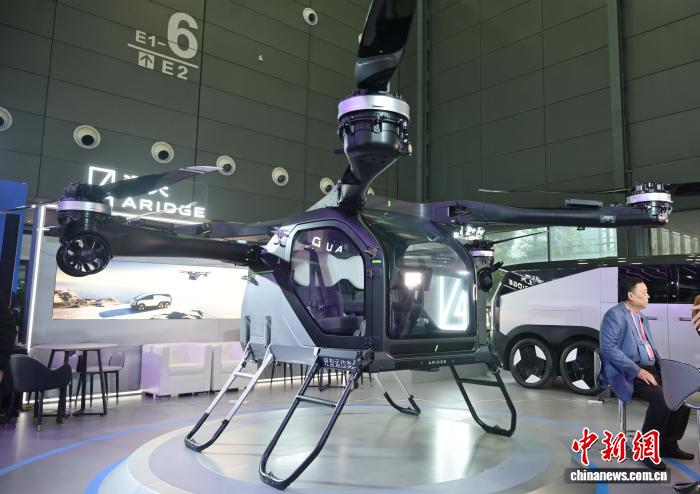
Core Insights - The 21st China (Changsha) International Auto Expo showcases the rapid advancement of intelligent technology in China's new energy vehicle (NEV) sector, with major automakers competing in the low-altitude smart transportation market [1][3] - By October 2025, the penetration rate of NEVs in China is expected to exceed 40%, with L2-level and above intelligent driving functions becoming increasingly common, driven by AI as a core engine for industry transformation [3] - The Chinese NEV industry is undergoing a significant transformation, focusing on electrification, intelligence, connectivity, and sharing, reshaping the global automotive landscape [3][4] Industry Developments - The exhibition highlights the integration of advanced intelligent technologies in NEVs, with features like millimeter-wave radar, laser radar, and intelligent driving assistance systems becoming standard in mid-range models [1] - The demand for smarter and safer NEVs is rising, with 90% of consumers willing to pay extra for advanced intelligent driving services, indicating a shift in consumer preferences [3] - The introduction of solid-state batteries is expected to significantly enhance the range of NEVs, while companies are also exploring low-altitude smart transportation solutions [3] Innovations in Flying Cars - The global debut of the first split-type flying car, "Land Carrier," has garnered attention, with plans for mass production in Guangzhou [4] - Chinese companies are focusing on developing flying cars that can operate in both ground and aerial environments, featuring capabilities such as electric flight, distributed drive, and vertical takeoff and landing [4] - The evolution of NEVs is transforming them from mere transportation tools into "evolving mobile intelligent spaces," leading the industry towards greener, smarter, and more premium offerings [4]

河南造车新势力加速入场(奋战四季度 确保全年红)
He Nan Ri Bao· 2025-12-10 22:50
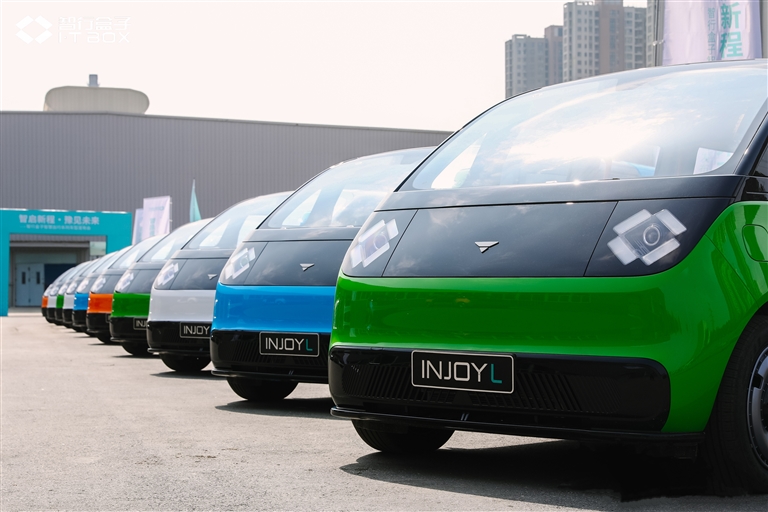
Group 1 - The core viewpoint of the article highlights the rapid development of the new energy vehicle (NEV) industry in Zhengzhou, with a significant increase in production and the emergence of local brands like Haima and Zhiji [2][3][4] - In the first ten months of this year, Zhengzhou produced a total of 956,000 vehicles, of which 508,000 were new energy vehicles, indicating a strong growth trajectory in the automotive sector [2][4] - The launch of the Zhixing Box smart travel series marks a key step in the intelligent transformation of the NEV industry in Henan, showcasing a successful transition from design and development to mass production within three years [3] Group 2 - The Zhiji automobile project in Zhengzhou has officially commenced production, focusing on the development of extended-range hybrid models, which is expected to drive high-value supporting projects in the region [4] - Zhengzhou's NEV production is projected to reach 626,000 units in 2024, representing a year-on-year growth of 112.9%, contributing to an overall automotive production target of over 1.1 million units, positioning Zhengzhou among the top ten cities in China for vehicle production [4] - The automotive industry in Zhengzhou is experiencing a transformation, with a focus on electric, intelligent, connected, and shared vehicles, reflecting a shift from traditional transportation to a more integrated service model [3][4]
奇瑞商用车高层首次集体亮相!100万辆销量目标如何实现?| 头条
第一商用车网· 2025-10-26 13:01
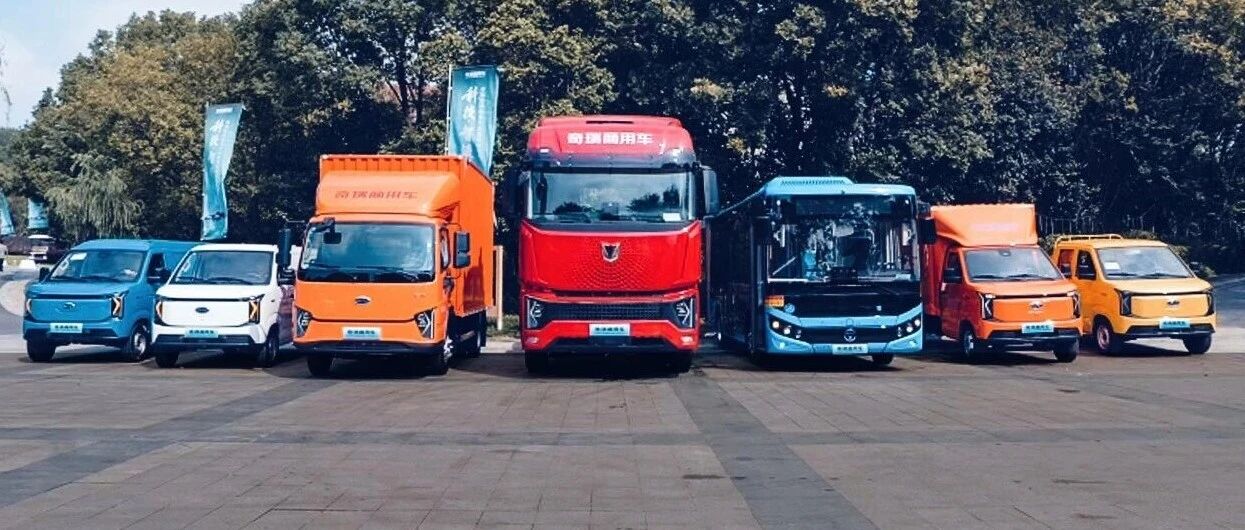
Core Viewpoint - Chery Commercial Vehicles is making significant strides in the commercial vehicle sector, showcasing innovative technologies and products at the 2025 Global Innovation Conference, positioning itself as a leader in electrification, connectivity, intelligence, and sharing [1][3]. Group 1: Product Innovations - Chery Commercial Vehicles unveiled ten innovative technologies and products, including autonomous logistics vehicles and a vehicle networking service platform, highlighting advancements in electric and intelligent vehicle solutions [1]. - The company plans to launch the "Zero Meter" light truck in 2024, which has quickly become a strong contender in the new energy light truck market [4]. - The heavy truck segment is undergoing a strategic transformation, with the launch of a new super heavy truck platform, indicating a robust market presence [4][8]. Group 2: Strategic Positioning - Chery Commercial Vehicles has been designated as a new growth point for Chery Group, with a strategic goal of reaching close to one million sales by 2030 [5]. - The company is transitioning from a "platform sales" model to a "scenario-based operational value" model, particularly in the light commercial vehicle sector [5][6]. - The sales of commercial vehicles have seen a year-on-year growth of approximately 62%, with light trucks rapidly climbing the sales rankings [6]. Group 3: Future Development Plans - Chery Commercial Vehicles aims to launch a new generation of platforms from 2026 to 2029, covering a wide range of vehicle types, which will enhance its global competitiveness [10][12]. - The company is focusing on developing products that meet global market demands, adhering to international standards from the outset [12]. - The strategic paths to achieve the one million sales target include full series development, globalization, technology leadership, and prioritizing quality [17]. Group 4: Market Trends and Customer Insights - The market for new energy light trucks is evolving, with a shift towards lower prices and a growing presence of small and medium-sized customers [18]. - The penetration rate of new energy heavy trucks is expected to increase significantly in the coming years, particularly in the short-haul market [21]. - Chery Commercial Vehicles is investing heavily in the large VAN market, anticipating significant growth opportunities driven by the electric vehicle trend and its supply chain advantages [15].
加速跃升!零米轻卡扛起奇瑞商用车品牌向上大旗 | 头条
第一商用车网· 2025-10-22 08:25
Core Insights - The 2025 Chery Global Innovation Conference showcased Chery's latest breakthroughs in electrification, connectivity, intelligence, and sharing, covering various technical dimensions including architecture, power, intelligent cockpit, intelligent driving, and ecosystem construction [1][2][3] Group 1: Product Development and Market Strategy - Chery's "Zero Meter Light Truck" has rapidly ascended to the forefront of the industry within a year, reflecting the company's customer-centric development path and strategic mission to elevate the brand [2][4] - The "Zero Meter Light Truck" emphasizes a "buy over rent" business model, addressing common leasing pain points in the new energy commercial vehicle sector, aiming to provide users with long-term value and flexible asset allocation solutions [7][9] - The product matrix of the "Zero Meter Light Truck" has expanded to seven models, including the newly launched "Red Hoof Version," which targets efficient urban distribution logistics [11][14] Group 2: Technological Innovations - The "Red Hoof Version" features advanced technologies such as a single-package battery with energy-saving capabilities, a new generation of super electric control systems, and a significant reduction in failure rates by 75%, enhancing operational efficiency [11][12][14] - The vehicle is equipped with a CATL 120-degree battery that supports ultra-fast charging, allowing for a quick recharge from 20% to 80% in just 20 minutes, addressing energy concerns in cold chain and heavy-load scenarios [12][14] Group 3: Customer Service and Brand Positioning - The "Zero Meter Light Truck" has implemented six after-sales service guidelines to enhance user operational efficiency, including rapid rescue services and intelligent support, embodying the brand's commitment to "service 0 distance" [9][10] - Within a year of its launch, the "Zero Meter Light Truck" has achieved the eighth position in the competitive pure electric light truck market, indicating strong market acceptance and user trust [9][10]