危机管理投资

Search documents
日本经济政策正给日本消费者造成更多困难
2 1 Shi Ji Jing Ji Bao Dao· 2026-02-10 10:29
Group 1 - The ruling coalition of the Liberal Democratic Party and Japan Innovation Party secured a majority in the recent Japanese House of Representatives election, allowing Prime Minister Fumio Kishida to continue his administration and facilitating the passage of legislation in the House [2] - Following the election, the Japanese government expressed approval of the yen's depreciation, leading to a rapid decline in the yen's exchange rate to 157 yen per dollar, while the Nikkei average surged by 3,000 yen [2] - The market's confusion stems from the unclear policies of the Japanese government under Kishida, particularly regarding the timeline for implementing fiscal policies and the new budget for the upcoming fiscal year [3] Group 2 - The proposed budget for the upcoming fiscal year is expected to be the largest in history at 122.3 trillion yen, focusing on "crisis management investment" to address risks related to natural disasters, energy, and food supply [3] - The government plans to issue 29.6 trillion yen in new national debt, aiming to leverage increased tax revenue from high inflation and reduced interest burdens due to low rates, which may create a temporary fiscal benefit [4] - Economists predict that Japan can enjoy this fiscal benefit for no more than 10 years, after which the debt-to-GDP ratio could become unsustainable if no substantial measures are taken to reduce the national debt [4] Group 3 - The Bank of Japan missed an opportunity to raise interest rates last year, and the pressure on the central bank is expected to increase under Kishida's administration, especially if the government continues to favor yen depreciation [5] - The depreciation of the yen has led to rising import costs for essential goods, exacerbating domestic inflation and creating social issues [5] - Despite nominal wage growth, real wages in Japan have declined due to inflation, indicating that increased fiscal spending and acceptance of yen depreciation are negatively impacting consumers' purchasing power [5]
高市增强政策推动力,提参拜靖国神社
日经中文网· 2026-02-09 01:52
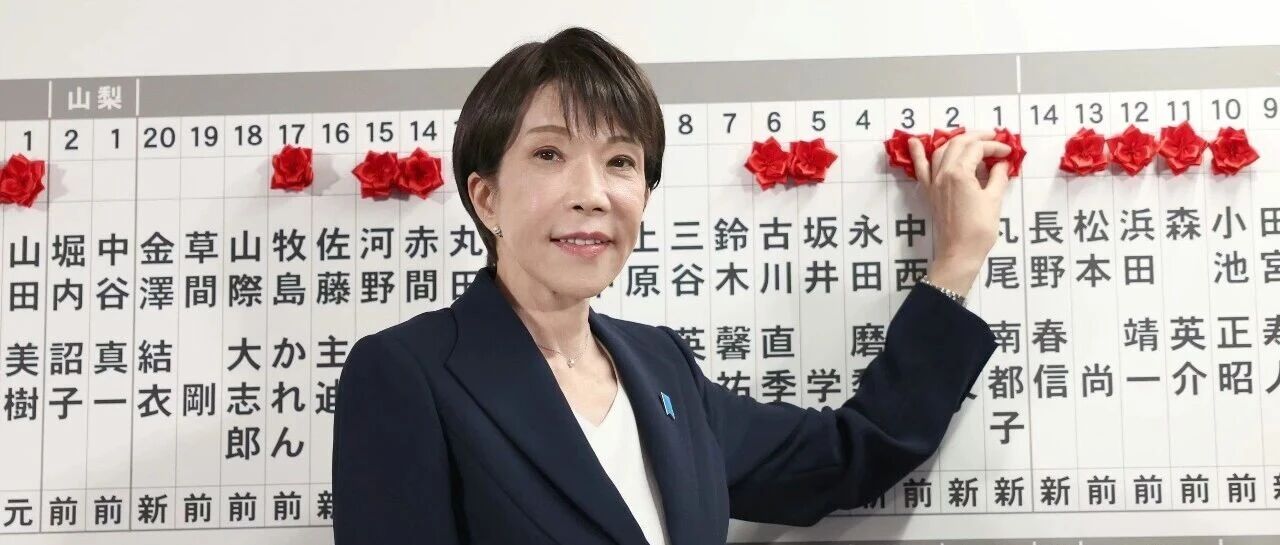
Core Viewpoint - The Japanese government, led by Prime Minister Sanna Takashi, is expected to enhance its policy implementation capabilities following significant gains in the House of Representatives elections by the ruling Liberal Democratic Party (LDP) [1][2]. Group 1: Tax Policy and Economic Measures - The LDP has committed to accelerating discussions on reducing the food consumption tax to zero within two years, utilizing non-deficit sources such as tax revenue [2][3]. - There are internal divisions within the LDP regarding the consumption tax, with about 20% of candidates preferring to maintain the current rate, indicating cautious sentiment amidst financial market sensitivities [3][4]. - The government plans to implement a "subsidy tax credit" system to alleviate the burden on low- and middle-income households while also pursuing social security reforms [4]. Group 2: Constitutional and Security Reforms - Prime Minister Takashi expressed intentions to amend the constitution, particularly regarding the Self-Defense Forces, following the LDP's acquisition of over two-thirds of the seats in the House of Representatives, which allows for constitutional amendment proposals [5][6]. - The government aims to enhance defense cooperation with the U.S. and other countries, addressing threats from China, Russia, and North Korea, and is considering increasing defense spending to over 2% of GDP [9]. Group 3: Legislative Process and Budget Priorities - The 2026 budget and tax reform bills are prioritized, with discussions expected in a special session in mid-February, although challenges remain due to the dissolution of the House of Representatives [6][7]. - The LDP's majority allows it to control all permanent committee chair positions, facilitating a more stable legislative process, although cooperation with opposition parties may be necessary for passing certain bills [7][8].

日本为何重振造船业
Di Yi Cai Jing· 2026-02-01 12:19
Group 1 - The Japanese government has approved a comprehensive economic strategy worth 21.3 trillion yen, designating shipbuilding as a key investment area to revitalize the industry by 2035 with a goal to double shipbuilding capacity [1][2] - Japan's shipbuilding industry has significantly declined, with its market share dropping from over 50% in the 1990s to approximately 13% in 2024, largely due to intense international competition and domestic labor shortages [2][3] - The "Shipbuilding Industry Revitalization Roadmap" aims for a joint investment of 1 trillion yen to increase domestic shipbuilding from 9.07 million gross tons in 2024 to 18 million gross tons by 2035, structured in three phases focusing on automation, facility upgrades, and production ramp-up [3][4] Group 2 - The roadmap emphasizes the restructuring of the shipbuilding industry, requiring the formation of 1 to 3 shipbuilding groups by 2028 to enhance competitiveness and supply chain resilience [4][5] - A significant investment of 350 billion yen has been pledged by a consortium of 17 Japanese companies to enhance shipbuilding capabilities, alongside increased government funding for maritime sectors [5] - The focus on technological innovation includes developing new energy vessels to meet international greenhouse gas reduction targets, positioning Japan to leverage its strengths in ammonia and hydrogen fuel technologies [5][6] Group 3 - The labor shortage due to Japan's aging population poses a significant challenge for the shipbuilding industry, with a projected shortfall of 790,000 IT professionals by 2030, necessitating both domestic talent development and foreign labor recruitment [7] - The "doubling strategy" is seen as a national policy aimed at revitalizing the shipbuilding sector, enhancing supply chain security, and addressing industrial hollowing-out issues [8][9] - The Japan-U.S. alliance is being deepened in the shipbuilding sector, with a memorandum signed to enhance cooperation and address global shipbuilding dynamics, including joint talent development and technological innovation [9][10]
日本大选拉开帷幕,高市政权面临拷问
日经中文网· 2026-01-28 02:53
Core Viewpoint - The upcoming Japanese House of Representatives election is a critical test for the current administration led by Prime Minister Fumio Kishida, focusing on economic policies and national security amidst rising prices [2][4]. Group 1: Election Overview - A total of 1,285 candidates are competing for 465 seats in the election, with 289 from single-member districts and 176 from proportional representation [5]. - The ruling coalition of the Liberal Democratic Party (LDP) and the Japan Innovation Party aims to secure at least 233 seats to maintain a majority [5]. - This election marks the first national election under the current ruling coalition formed in October 2025, following the dissolution of the previous coalition with the Komeito party [2][5]. Group 2: Political Landscape - The LDP currently holds 198 seats, while the Japan Innovation Party has 34, totaling 232 seats before the election [5]. - The Constitutional Democratic Party and Komeito's "Center-Right Reform Coalition" holds 167 seats and aims to become the largest opposition party [6]. - The election features a competitive landscape with less than 20% of districts having one-on-one contests between ruling and major opposition candidates [6]. Group 3: Campaign Focus - All parties are prioritizing measures to address rising prices, with the LDP proposing to expedite research on exempting food from consumption tax within two years [7]. - The Japan Innovation Party emphasizes social security reform, including lowering social insurance premiums, and has plans for a secondary capital concept [7]. - The Constitutional Democratic Party promotes a "people-first" approach, proposing permanent exemption of food from consumption tax starting in autumn 2026 [7]. - Other parties, including the National Democratic Party and the Japanese Communist Party, advocate for various tax reductions, including lowering the consumption tax rate [7].

日本首相高市早苗:首推刺激方案,聚焦17领域投资
Sou Hu Cai Jing· 2025-11-10 13:17
Group 1 - The core viewpoint of the article is that Japanese Prime Minister Sanna Takashi aims to initiate a new growth strategy through a stimulus plan, focusing on "crisis management investment and growth investment" to drive strong growth [1] - An expert group has been tasked with formulating a new growth strategy for Japan by next summer, emphasizing the importance of investing in 17 key sectors identified by Takashi, including semiconductors, artificial intelligence, shipbuilding, defense industry, and critical minerals [1] - Takashi signals a shift towards a more expansionary fiscal policy, stating that Japan has only made half the journey towards stable inflation supported by wage growth, and expresses a cautious approach as the Bank of Japan gradually raises interest rates [1]