
双重顶形态

Search documents
技术看债系列之一:长端利率变盘时点渐近
GF SECURITIES· 2026-02-13 13:32
Report Industry Investment Rating No information provided regarding the report industry investment rating. Core Viewpoints - Since 2025, the amplitude of the 10-year Treasury bond has narrowed, showing a typical wedge-shaped consolidation pattern. The 30-year Treasury bond started a downward trend in July 2025 and has experienced short-term shock repairs since early 2026. Both are approaching a turning point [3]. - The trading logic of the 30-year Treasury bond futures (TL) may have changed, and it may have entered a medium - to long - term downward channel. The rebound since January 2026 is likely a technical repair rather than a trend reversal. It is recommended to short at high levels in the resistance range of 113 - 113.5 [3][21]. - The 10-year Treasury bond futures (T) are in a wedge-shaped consolidation pattern, which is likely a trend continuation adjustment. After the consolidation, the price is more likely to continue the previous upward trend. The end time of the wedge-shaped consolidation is expected to be around April [3][42]. Summary by Directory I. Technical Analysis: The Key to Analyzing Long - Term Interest Rates - Technical analysis is effective in analyzing the 30-year Treasury bond because it is a speculative product, and its price is driven by risk preference and policy expectations. Technical analysis can capture market trends, quantify risk preferences, and verify policy expectations [9]. - For speculative products, price and trend in technical analysis are important signals. Technical indicators can show overbought/oversold conditions and divergence signals. In policy expectation games, technical analysis can confirm market expectations and reflect narrative changes [9][10]. II. Treasury Bond Futures: A More Ideal Carrier for Technical Analysis - Treasury bond futures, especially the 10-year and 30-year main contracts, are more effective for technical analysis than spot bonds due to their standardization, high liquidity, and transparent and centralized trading characteristics, which can more purely and sensitively reflect market sentiment [11]. - Compared with spot bonds, Treasury bond futures have advantages in liquidity, price continuity, leverage and speculative attributes, and information reaction efficiency. Their price trends are more continuous and can lead spot bonds [13]. III. 30 - Year Treasury Bond Futures (TL): The Long - Term Trading Logic May Have Changed (1) Trend Positioning: The "Double Top" Pattern is Established, and It May Enter a Medium - to Long - Term Downward Channel - Technically, the TL contract broke through the key support level in December 2025, forming a "double top" pattern and entering a long - term downward channel. The improvement of macro - expectations and the strengthening of confidence in the equity bull market may be the underlying factors driving the decline [22]. - In the short - to medium - term, the rebound since January 2026 is difficult to reverse the long - term downward trend. The rebound momentum is weakening, and the suppression of risk preference continues, so the current rebound is likely a technical repair [24][26]. (2) Short - Term Trend: Approaching the Time to Short at High Levels - The 30 - year Treasury bond has a high odds ratio. The 30 - 10 - year Treasury bond spread is at a high level, and there is still room for compression in the old - new bond spread [29]. - The resistance range of 113 - 113.5 is expected. If the upward trend continues, the increase may be 0.1% - 0.6%. The 30 - year Treasury bond futures may reach the top around the Two Sessions in early March [34][38]. IV. 10 - Year Treasury Bond Futures (T): Pay Attention to the End Time of the Wedge - Shaped Consolidation Pattern (1) Long - Term in a Triangular Convergence Channel - Since 2025, the T contract has been in a wedge - shaped consolidation pattern, showing a symmetrical triangular convergence. The price fluctuation range has narrowed, and the trading volume has decreased. The balance of long - and short - term forces is waiting for a directional breakthrough [43]. - The "strong expectation + weak reality" situation and the guidance of the reasonable range have led to the long - and short - term tug - of war in the 10 - year Treasury bond, forming a long - term oscillatory pattern. An incremental signal is needed for a breakthrough [43]. (2) Directional Choice is Approaching - The end time of the wedge - shaped consolidation may be around April. Without an incremental signal, it is unlikely to break through the shock pattern in the current wave band. If the current market situation is extrapolated, the end time may be from late March to early April or the end of April [44]. - After the end of the wedge - shaped consolidation, the price is more likely to continue the previous upward trend because the current wedge - shaped pattern is similar to a symmetrical triangle, which is a typical trend continuation pattern [47].
白银会重演1980与2011年的暴跌行情吗?这次真的不一样
Jin Shi Shu Ju· 2025-12-05 02:09
Core Viewpoint - The silver market has experienced significant price volatility this year, nearly doubling in value, but analysts express concerns about potential disappointments based on historical patterns of rapid price increases followed by sharp declines [1][4]. Historical Context - In 1980 and 2011, silver prices surged above $48 per ounce before quickly plummeting [3]. - In 1980, silver rose from $10 to $48 in four months, only to fall back to $10 two months later. Similarly, in 2011, silver reached $48 again but dropped to $26 within months [4]. Current Market Analysis - Current silver price behavior is different from past instances, with prices stabilizing around $48 and showing resilience [5]. - Analyst Craig Hemke believes that the current situation resembles gold's price movements in recent years rather than the historical patterns of silver in 1980 and 2011 [2][5]. Technical Indicators - Hemke suggests that the formation of a double top pattern is not confirmed unless silver drops below $46, indicating that current price levels represent a trading range rather than a definitive bearish signal [5]. - The price structure of silver is expected to mirror gold's breakout patterns observed in late 2023 and early 2024, with potential for further consolidation before a significant upward movement [6][7]. Supply and Demand Dynamics - The silver market is facing a structural supply shortage, with demand expected to exceed supply by 9.5 million ounces this year, leading to a cumulative shortfall of 820 million ounces over five years [8]. - The ongoing demand-supply imbalance has persisted for years, necessitating the use of existing above-ground inventories, which may drive prices higher [8]. Future Outlook - Hemke anticipates that a breakthrough in silver prices could occur in early 2026, potentially pushing prices to new historical highs, with projections suggesting a rise to $100 per ounce by mid-2027 if trends continue [7][8]. - The shift in monetary policy by the Federal Reserve towards easing and lower interest rates may also support silver prices in the coming year [9].
8.29:小幅度冲高,下周A股能否继续走强?
Sou Hu Cai Jing· 2025-08-30 07:23
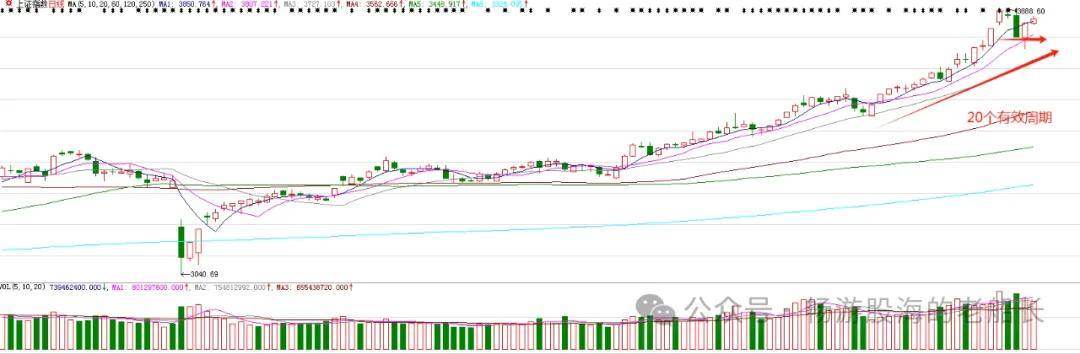
Market Index Analysis - The major A-share indices showed mixed performance, with the Shanghai Composite Index and ChiNext Index performing relatively strong, while the Sci-Tech Innovation 50 Index was weaker [1] - The Shanghai Composite Index experienced significant fluctuations, with a large drop followed by a rebound, indicating potential distribution by major funds and signaling a possible double top formation [4] - The current upward trend in the Shanghai Composite Index has reached a critical turning point after 20 effective cycles, suggesting a high probability of a mid-term adjustment [4] Sci-Tech Innovation 50 Index Analysis - The Sci-Tech Innovation 50 Index rebounded after hitting a low, heavily influenced by the performance of Cambrian [5] - The index's K-line showed a long lower shadow and a small body, indicating weakness rather than strong support [5] - The recent upward trend has completed 10+4 effective cycles, with upcoming turning points in both daily and weekly charts, suggesting a probable adjustment next week [5] General Market Outlook - The current A-share market allows for structural opportunities as long as there is no significant decline in the major indices, but correct trends are essential to avoid prolonged losses [6] - Successful trend trading is emphasized as a means to achieve stable wave profits, with a focus on analyzing K-lines, patterns, and central structures for accurate trend predictions [6]

5.29:A股,如期反弹,目标位分析
Sou Hu Cai Jing· 2025-05-29 06:00
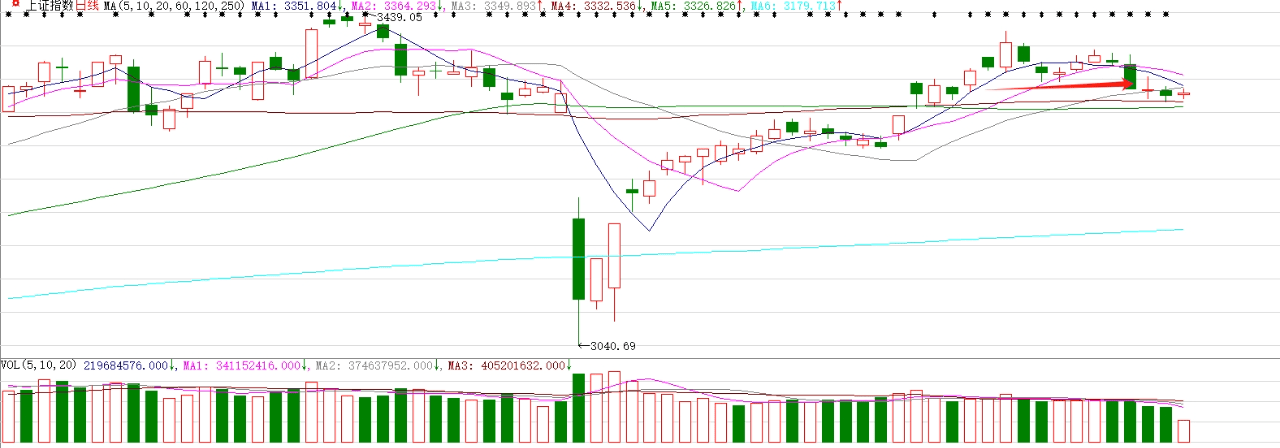
Group 1 - The core viewpoint indicates that the A-share market is stabilizing and rebounding, aligning with previous expectations [1] - The analysis focuses on the Shanghai Composite Index and the ChiNext Index, with further examination of the Shanghai Index and the Sci-Tech Innovation 50 Index after the afternoon close [2] Group 2 - The Shanghai Composite Index has experienced four consecutive days of decline prior to today, marking an effective adjustment period, with today being the fifth cycle and a turning point [5] - The rebound target for the Shanghai Composite Index is near the five-day moving average, which has already been surpassed, reaching close to the ten-day moving average [5] - A double top pattern has formed on the daily level for the index, indicating a potential for a pullback after reaching the neckline [5] Group 3 - The ChiNext Index has also established a double top pattern, suggesting a mid-term adjustment for the market [8] - After five days of adjustment, the ChiNext Index has reached a turning point, making the current rebound a normal movement [8] - The rebound target for the ChiNext Index is primarily the five-day moving average, which has been achieved in the morning session [8] Group 4 - The current A-share market is expected to see structural trends in individual stocks as long as the main index does not experience a significant drop [8] - Successful trading in this environment requires correct trend identification to avoid prolonged losses, emphasizing the importance of trend trading for stable profits [8] - The analysis suggests that structural breakouts followed by pullbacks can serve as entry points for investments [8]
5.28:周三午后,A股有望继续回升
Sou Hu Cai Jing· 2025-05-28 05:25
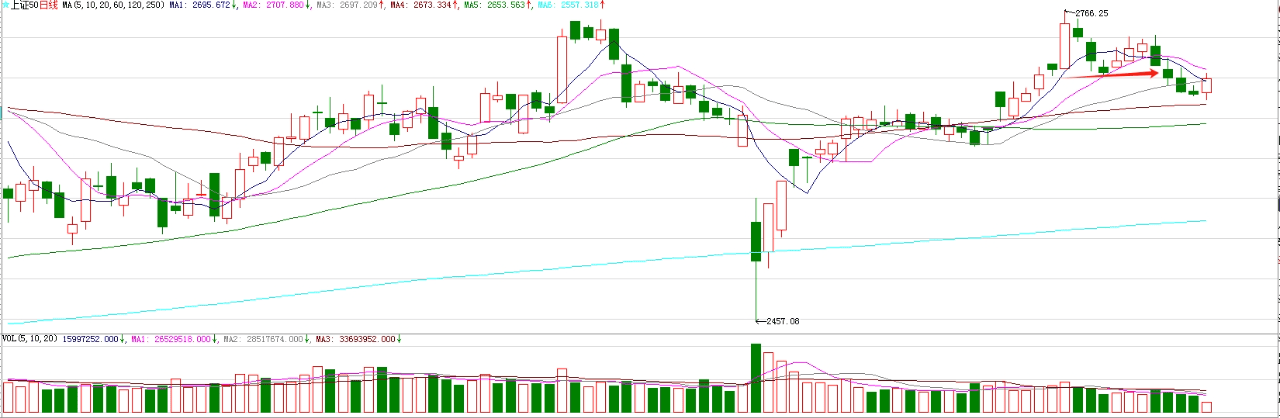
Group 1 - The A-share market indices stabilized and rebounded as expected, although individual stocks experienced declines and market sentiment remained low [1] - The analysis focuses on the Shanghai 50 Index and the ChiNext Index, with further analysis planned for the Shanghai Composite Index and the Sci-Tech Innovation 50 Index after the afternoon close [2] Group 2 - The Shanghai 50 Index has shown significant declines over the past three trading days, indicating a strong need for a rebound after three consecutive downward days. Today marks the fourth effective adjustment cycle, suggesting a potential stabilization point [4] - A double top pattern has been confirmed for the Shanghai 50 Index, indicating a mid-term adjustment phase. The upcoming rebound will address the neckline resistance [4] - The index has adjusted to a strong support level near the half-year line, suggesting a likely recovery in the afternoon session [4] Group 3 - The ChiNext Index has experienced four consecutive downward days, with today marking the fifth effective cycle and a potential stabilization point. The formation of a double top pattern has also been confirmed, indicating a mid-term adjustment phase [7] - After eight effective adjustment cycles, the ChiNext Index is expected to see a change in trend, with a potential rebound after touching the ten-unit moving average [7] Group 4 - Overall, the short-term outlook for the major indices suggests a potential rebound, provided that there are no significant declines in the market [8] - The current A-share market environment allows for structural opportunities in individual stocks, contingent on maintaining a correct trend to avoid prolonged losses. A focus on trend trading is essential for achieving stable profits [8]
5.23:A股跳水,释放什么信号?
Sou Hu Cai Jing· 2025-05-23 11:22
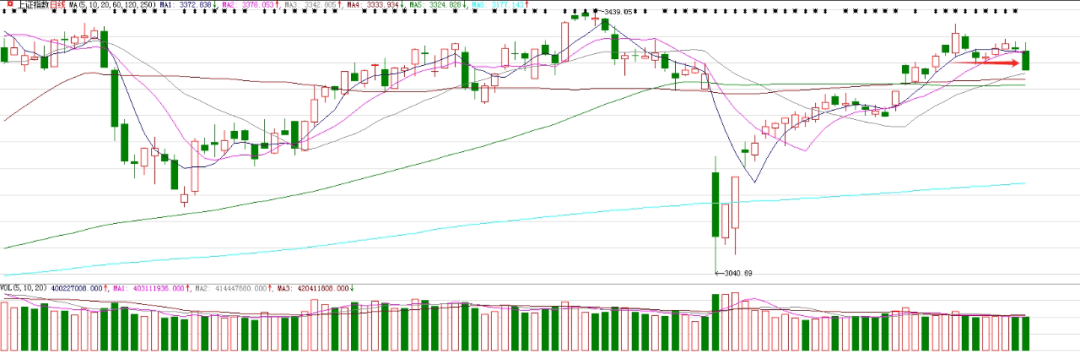
Market Overview - The major A-share indices in Shanghai and Shenzhen experienced a decline, which was largely anticipated. Most stocks fell, with 20 hitting the daily limit down, indicating low market sentiment [1] - The Shanghai Composite Index showed a significant drop, forming a bearish candlestick pattern with a large body, suggesting a high probability of further adjustments in the coming week [3] Index Analysis - The Shanghai Composite Index's recent performance indicates a potential double top formation, with today's bearish candlestick breaking the neckline, confirming a phase of adjustment ahead [3] - The hourly chart reveals that the last two hours of trading saw a drop, breaking a significant double top formation, indicating a confirmed phase top [3] Sci-Tech 50 Index - The Sci-Tech 50 Index experienced a rebound during the day, reaching its target at the ten-day moving average before retreating, which is considered a normal market behavior [6] - The K-line for the Sci-Tech 50 Index showed a large body and long upper shadow, signaling an adjustment ahead [6] Trading Strategy - The current A-share market suggests that as long as there is no significant decline in the indices, structural opportunities for individual stocks will continue to emerge. However, a correct trend is essential to avoid prolonged losses [6] - The analysis of K-lines, patterns, and central structures can help accurately grasp price fluctuations. Breakouts followed by pullbacks serve as entry points for phased investments [6]
双重顶形态触发止损潮!技术面崩塌叠加政策转向:金价还要跌到什么时候?
Jin Shi Shu Ju· 2025-05-15 12:40
Group 1 - Gold prices fell to a one-month low as trade tensions between major economies eased, leading to suppressed demand and investors awaiting U.S. economic data for interest rate direction [1][2] - Spot gold decreased by 0.33% to $3167.04 per ounce, reaching its lowest level since April 10, while U.S. gold futures dropped by 0.52% to $3171.3 per ounce [1] - Analysts indicate that the market is in an overbought state, with short positions increasing significantly [1] Group 2 - President Trump’s comments on Iran nearing a nuclear deal further reduced demand for gold [2] - Market focus shifted to the U.S. Producer Price Index (PPI) data, with attention on Federal Reserve Chairman Powell's upcoming speech for clues on interest rate paths [2] - Expectations for a 50 basis point rate cut this year, starting in October, could lead to stronger performance for non-yielding gold [3] Group 3 - Gold has broken below the double top neckline support, indicating potential short-term downside risk, with price expectations moving towards the $3000 - $3050 range [3] - Key chart support at $3190 has been breached, suggesting a continued corrective move in gold prices [3] - Other precious metals also saw declines, with spot silver down 1% to $31.89 per ounce, palladium down 0.2% to $949.07 per ounce, and platinum steady at $976 per ounce [3]
【期货热点追踪】 双重顶形态触发止损潮!技术面崩塌叠加政策转向:金价还要跌到什么时候?
news flash· 2025-05-15 10:10
Core Viewpoint - The article discusses the recent decline in gold prices triggered by a double top pattern, leading to a wave of stop-loss orders and a shift in policy that may further impact prices [1] Group 1: Technical Analysis - A double top pattern has been identified, indicating a potential reversal in the upward trend of gold prices [1] - The technical breakdown has resulted in significant stop-loss orders being triggered, exacerbating the decline in prices [1] Group 2: Policy Shift - There is a noted shift in policy that could influence market dynamics and contribute to the ongoing decrease in gold prices [1] - The combination of technical factors and policy changes raises questions about the future trajectory of gold prices [1]