反向投资

Search documents
伯恩斯坦:看空原油的理由有一个 但看多的理由有十个
智通财经网· 2026-02-04 13:08
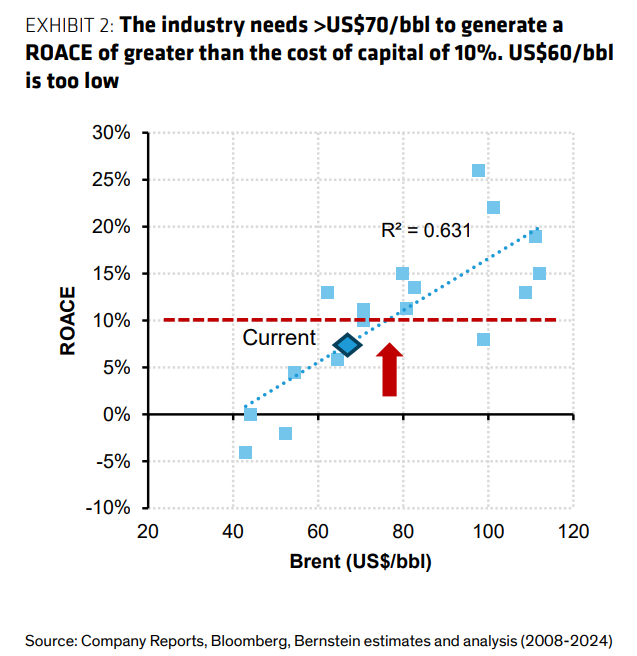
Core Viewpoint - The current oil market is experiencing a significant divide, with a consensus of extreme pessimism despite underlying positive fundamentals that could present investment opportunities [1]. Group 1: Market Dynamics - There is a substantial bearish sentiment in the market due to oversupply, driven by weak demand from China, the lifting of OPEC production cuts, and strong supply growth from non-OPEC countries, resulting in an increase of over 400 million barrels in oil inventories last year [1]. - Market consensus has significantly lowered oil price forecasts for 2025, with some analysts predicting Brent crude could drop to $61 per barrel by 2026 [1]. - Bernstein suggests that the current oil price range of $60-65 per barrel is unsustainable for the industry, indicating a potential cyclical bottom as capital begins to flee [1]. Group 2: Capital Returns and Investment - The oil industry currently requires an average price of $50-55 per barrel to break even, with capital returns (ROACE) expected to be in the low to mid-single digits if prices remain around $60 per barrel [1][2]. - Historical data shows that when oil prices were at $64 per barrel in 2019, capital returns were only 6%, and at an average of $81 per barrel in 2024, returns reached 11% [2]. - The long-term marginal production cost is estimated at $71 per barrel, indicating that current long-term price expectations are below this threshold, which increases the likelihood of positive returns on oil investments [4]. Group 3: Demand Trends - While Chinese oil demand is slowing, Bernstein believes that the story of global oil demand is not over, as countries in the "Global South" (such as Southeast Asia, India, the Middle East, and Africa) are expected to drive future demand growth [7][8][9]. - These regions, with a combined population of 5 billion, have much lower per capita oil consumption compared to the West, suggesting significant potential for increased energy consumption driven by improving living standards [8][9]. Group 4: Supply and Geopolitical Risks - The current idle capacity in the oil market is insufficient, with OPEC's effective idle capacity at 3.4%, which is only slightly above historical averages, indicating limited buffer against unforeseen supply disruptions [11][12]. - Geopolitical risks are at a multi-decade high, with the potential for supply disruptions due to conflicts in the Middle East, which historically correlate with oil price shocks [13]. - A weaker U.S. dollar is beneficial for emerging markets and makes oil cheaper when priced in non-dollar currencies, potentially stimulating demand [14]. Group 5: Industry Challenges - The lifespan of proven reserves among the largest 50 oil companies has decreased from 15 years to 11 years over the past 25 years, primarily due to low industry returns leading to reduced capital expenditures [17]. - The reinvestment rate in the industry has plummeted from nearly 100% to about 50%, which could lead to future production declines due to insufficient investment in new reserves [17]. - The energy sector has underperformed relative to the S&P 500 over the past 11 years, with only 3 years of outperformance, indicating a potential contrarian investment opportunity as interest in the sector wanes [17].

分析师称单只股票ETF可放大收益,但存在“押注失误的重大风险”
Xin Lang Cai Jing· 2025-12-12 14:51
Core Insights - The article discusses the emergence and growth of single-stock ETFs in the U.S. market, highlighting their potential for amplifying bets on individual stock movements while also warning of significant risks associated with these products [3][5][15]. Group 1: Market Overview - As of December 9, there are approximately 377 single-stock ETFs in the U.S. market, with 276 launched in 2025 [3][5]. - These ETFs provide exposure to major tech companies like Nvidia, Tesla, Apple, and Amazon, but they also carry the risk of significant betting errors [3][15]. - The total historical inflow into single-stock ETFs reached about $44 billion, with $22.3 billion in inflows for the year [6][18]. Group 2: Performance and Assets - Despite the inflows, the total assets under management for these ETFs stand at only $41.2 billion, indicating that inflows have outpaced asset growth [19]. - The market is characterized by a concentration of assets, with only 7 ETFs having over $1 billion in assets, while 303 ETFs have less than $100 million [19]. - The average expense ratio for single-stock ETFs is 1.07%, which is three times higher than the average for regular U.S. funds [19]. Group 3: Investment Strategy and Risks - Single-stock ETFs are designed to achieve specific return objectives on a daily basis and frequently recalibrate their exposure [17]. - Experts caution that these products are not suitable for long-term holding due to their speculative nature and the potential for performance divergence from the underlying stocks over time [12][25]. - The volatility decay effect means that if a stock drops by 10%, it must rise by more than 10% to recover, which can erode investment value over time [25]. Group 4: Investor Sentiment and Usage - There is a growing interest among investors in single-stock ETFs, particularly those linked to high-performing stocks like Tesla and Nvidia, driven by past performance and the desire for future gains [21][22]. - Financial advisors suggest that these ETFs may be appropriate for short-term investors as a small part of their portfolio, but not for those seeking long-term investments or lower volatility [22][10].

今夜,又见证历史!
Zhong Guo Ji Jin Bao· 2025-11-21 23:10
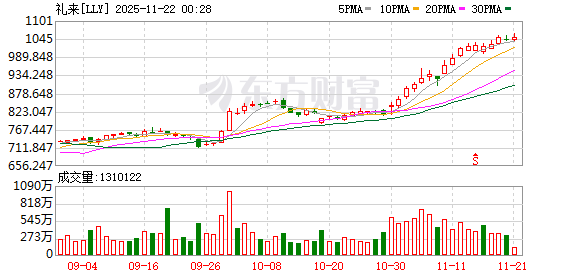
Core Viewpoint - The U.S. stock market is experiencing volatility, with Eli Lilly becoming the first healthcare company to reach a market capitalization of $1 trillion, driven by investor enthusiasm for its weight loss drugs [1][4]. Market Performance - On November 21, U.S. stock indices showed mixed results, with the Dow Jones rising over 220 points, while the Nasdaq index experienced fluctuations and the S&P 500 saw a slight increase [2]. - The market's recovery was aided by dovish signals from a Federal Reserve official, increasing the likelihood of a rate cut in December to over 70% [2]. - Despite a significant rally earlier in the week, the S&P 500 is down over 2% for the week, with the Dow and Nasdaq also experiencing declines of nearly 3% [3]. Eli Lilly's Milestone - Eli Lilly's market capitalization surpassed $1 trillion, making it the largest pharmaceutical company globally and the second U.S. company outside the tech sector to achieve this milestone [4]. - The surge in Eli Lilly's stock price, which rose 1.7% at one point, is largely attributed to the growing interest in its GLP-1 class of drugs for obesity and diabetes treatment [4]. - The market for Eli Lilly's next-generation oral weight loss drug is projected to reach $95 billion by 2030 [4]. Competitive Landscape - Eli Lilly has captured nearly 58% of the market share in the GLP-1 drug segment, which includes Ozempic and Wegovy [5]. - Analysts note that Eli Lilly has rapidly gained market share, outperforming its competitor Novo Nordisk, which initially led in the obesity treatment space [5]. - The company's stock has increased by 37% this year and is expected to rise by 32% in 2024, positioning it as a potential leader in the global weight loss drug market [5].

今夜 又见证历史!礼来市值盘中突破1万亿美元 成为首家市值达到1万亿美元的医疗保健公司
Zhong Guo Ji Jin Bao· 2025-11-21 16:28
Market Performance - US stock market showed mixed performance on November 21, with Dow Jones rising over 220 points, while Nasdaq experienced volatility and S&P 500 saw a slight increase [3] - A dovish signal from a high-ranking Federal Reserve official helped the market recover slightly from the slump in AI stocks, increasing bets on a potential interest rate cut in December [3] - The probability of a 25 basis point rate cut in December has risen to over 70%, up from 39.1% the previous day [3] Federal Reserve Insights - Federal Reserve official Williams indicated that current monetary policy is still moderately tight but less so than before recent actions, suggesting room for further adjustments to bring the policy stance closer to neutral [5] - Investors are hopeful that a more accommodative monetary policy could stimulate the weak economy and provide support for historically high valuations in tech stocks [5] Stock Movements - Despite a significant rally earlier in the week, major indices are expected to record substantial weekly declines, with S&P 500 down over 2%, Dow Jones nearly 3%, and Nasdaq about 3% [5] - Some investors view the recent pullback as a normal correction rather than a signal of a larger downturn, with sentiment indicators shifting from optimism to extreme fear [6] Eli Lilly's Milestone - Eli Lilly became the first healthcare company to surpass a market capitalization of $1 trillion, driven by increasing investor interest in its weight loss drugs [7] - The company's stock rose 1.7%, reaching a market cap of approximately $1 trillion, making it the second company outside the tech sector to achieve this milestone [7] - Eli Lilly's GLP-1 class drugs, used for treating obesity and diabetes, are expected to dominate a market projected to reach $95 billion by 2030 [7] Stock Performance and Market Share - Eli Lilly's stock has increased by 37% this year and is projected to rise by 32% in 2024, positioning it as a potential leader in the global weight loss drug market [8] - The company reported that its GLP-1 drugs hold nearly 58% market share in the obesity treatment segment, showcasing impressive market capture in a short time [9]
今夜,又见证历史!
中国基金报· 2025-11-21 16:16
Core Viewpoint - Eli Lilly has become the first healthcare company to reach a market capitalization of $1 trillion, driven by investor enthusiasm for its weight loss drugs [11][12]. Market Performance - On November 21, U.S. stock markets showed mixed results, with the Dow Jones rising over 220 points, while the Nasdaq index experienced volatility [1]. - The S&P 500 index has seen a decline of over 2% for the week, with the Dow down nearly 3% and the Nasdaq retreating about 3% [7]. Federal Reserve Signals - Federal Reserve officials, including Williams, have indicated a more dovish stance, raising expectations for a potential interest rate cut in December, with the probability now exceeding 70% [4][6]. - Investors are hopeful that a more accommodative monetary policy could stimulate the economy and support high valuations in the tech sector [6]. Eli Lilly's Market Position - Eli Lilly's stock price rose by 1.7%, pushing its market capitalization to approximately $1 trillion, making it the largest pharmaceutical company by market value [12]. - The company's GLP-1 class drugs, used for obesity and diabetes treatment, have garnered significant market interest, with projections estimating the market size could reach $95 billion by 2030 [12][14]. - Eli Lilly's market share in the GLP-1 segment has approached 58%, showcasing its rapid growth in the obesity treatment market [14]. Challenges Faced by Eli Lilly - Despite its successes, Eli Lilly has faced challenges, including high tariff threats and political risks surrounding prescription drug pricing [14]. - The company experienced a setback when CVS Health removed its weight loss drug Zepbound from its preferred list, favoring a competitor's product [14].

Hims & Hers Short Interest Nears All-Time High, Buy The Dip?
MarketBeat· 2025-10-24 22:36
Core Viewpoint - Hims & Hers Health Inc. is experiencing significant interest in the medical sector due to its attractive growth fundamentals, despite recent stock price declines creating potential buying opportunities for investors [1][3]. Company Overview - Hims & Hers has a market capitalization of $10 billion, indicating it is still a relatively small company in the market [2]. - The stock has seen a decline of approximately 11.4% over the last month, which has led to increased short interest, now nearing record levels [3][6]. Stock Performance - The stock currently trades at 65% of its 52-week high, suggesting a potential rebound opportunity for contrarian investors [3]. - A scheduled stock sale by CEO Andrew Dudum for about $11 million has raised concerns among some investors, although it was pre-planned and not unexpected [4][5]. Analyst Insights - Wall Street analysts have set a 12-month price target for Hims & Hers at $38.92, indicating a potential downside of 20.34% from the current price of $48.86 [8]. - The highest forecast from analysts is $68.00, suggesting a possible upside of approximately 43% [12]. Financial Performance - Hims & Hers reported a remarkable revenue growth of 73% year-over-year, with a gross profit margin of 76.2% over the past 12 months [9]. - The net earnings per share (EPS) increased to 17 cents, up from 6 cents a year prior, reflecting strong financial performance [11]. Market Sentiment - Institutional buying amounted to $19 million in the past quarter, indicating that some investors are taking advantage of the current pricing situation [13]. - Despite the recent sell-off, the company maintains a premium valuation compared to its peers, with a P/E ratio of 61.07 compared to the medical sector's average of 29.6 [8][9].


小摩看好欧洲两大“差生”逆袭:“十一罗汉”与法国股市迎来布局良机
智通财经网· 2025-09-30 09:13
Group 1: Granolas Sector Analysis - The Granolas sector, which includes major European companies, has underperformed the European market index by approximately 25% since early 2024, with its market capitalization dropping from 27% to 20% of the overall European market [2] - Despite weak stock performance, Granolas' earnings have not deteriorated, with an expected earnings growth rate of 8% for 2025, while overall European market earnings are projected to remain flat [2] - The valuation issues of Granolas have been corrected, with the current price-to-earnings ratio at a 6% discount compared to the median of the past 10 years, indicating a return to reasonable levels [2] - Granolas' free cash flow yield has improved, and cash reserves on the balance sheet increased from €91 billion in 2023 to €106 billion in 2024, with stock buybacks projected to rise from €23 billion in 2023 to an annualized €36 billion in 2025 [2] Group 2: French Stock Market Outlook - The French stock market has underperformed the market by about 15% over the past two years, with bank stocks lagging behind Eurozone peers by as much as 30% [4] - Currently, the French stock market is trading at a significant discount compared to the STOXX 50 index, a situation historically seen only during major crises [4] - Morgan Stanley believes that the long-term bond yields in France are unlikely to continue rising, and the negative impact from the government's failure to pass a confidence vote may temporarily dissipate, presenting attractive investment opportunities [4] - Despite high uncertainty, including potential future confidence votes, there is a possibility of reaching a budget plan acceptable to the market, and any negative impact from re-elections on risk assets may be short-lived [4]


投资大佬泰珀减持阿里巴巴、京东、百度,砍掉拼多多一半仓位
凤凰网财经· 2025-08-15 12:46
Core Viewpoint - David Tepper's Appaloosa Management significantly reduced its holdings in Chinese stocks like Alibaba and JD while increasing its investment in UnitedHealth Group, showcasing a contrarian investment strategy [1][2][3]. Group 1: Investment Actions - Appaloosa reduced its Alibaba holdings by over 20% to 7.1 million shares, valued at approximately $802 million, making Alibaba still the largest position in the fund [1]. - The fund also cut its JD position by 13%, Baidu by 19%, and more than 50% of its position in Pinduoduo [2]. - In contrast, Appaloosa increased its stake in UnitedHealth Group by 2.3 million shares, valued at $764 million, making it the second-largest holding in the fund's $6.45 billion stock portfolio, accounting for about 11.9% [2]. Group 2: Market Reactions and Context - UnitedHealth's stock price fell approximately 40% in the second quarter, making it one of the worst performers in the S&P 500, amid the company's suspension of annual forecasts, CEO change, and a criminal investigation for alleged insurance fraud [2]. - Following the news of Appaloosa's investment, UnitedHealth's stock price rose nearly 10% in after-hours trading [3]. Group 3: Other Notable Investments - Warren Buffett's Berkshire Hathaway also purchased 5 million shares of UnitedHealth in the second quarter, while reducing its stakes in Bank of America and Apple [4].



“华尔街抄底王”David Tepper再出手!Q2大举加仓联合健康(UNH.US),阿里巴巴(BABA.US)为头号重仓股
Zhi Tong Cai Jing· 2025-08-15 01:29
Core Insights - David Tepper's Appaloosa LP significantly increased its stake in UnitedHealth (UNH.US) during Q2, showcasing a contrarian investment strategy [1][2] - The total market value of Appaloosa LP's holdings decreased to $6.45 billion from $8.38 billion, a 23% decline quarter-over-quarter [1] - Alibaba (BABA.US) remains the largest holding, with approximately 7.07 million shares valued at about $800 million, representing 12.43% of the portfolio, down 23.43% from the previous quarter [1][2] Holdings Overview - UnitedHealth (UNH.US) is the second-largest holding, with around 2.45 million shares valued at approximately $764 million, a 1300% increase in holdings compared to the previous quarter [2] - Amazon (AMZN.US) ranks third, holding about 2.7 million shares valued at approximately $592 million, a 7.57% increase from the last quarter [2] - Vistra Energy (VST.US) is the fourth-largest holding, with around 1.8 million shares valued at approximately $349 million, a 21.74% decrease from the previous quarter [2] - NRG Energy (NRG.US) is the fifth-largest holding, with about 1.98 million shares valued at approximately $318 million, a 3.41% decrease from the last quarter [3] New Positions and Exits - Appaloosa LP established new positions in Intel (INTC.US), Raytheon Technologies (RTX.US), United Airlines (UAL.US), and Delta Air Lines (DAL.US) during Q2 [3] - The firm exited positions in Apple put options (AAPL.US, PUT), Broadcom (AVGO.US), and Las Vegas Sands (LVS.US) [3] Top Buy and Sell Changes - The top five new buys included UnitedHealth, Nvidia (NVDA.US), Amazon, TSMC (TSM.US), and Intel [3] - The top five sells included SPDR S&P 500 Fossil put options (SPYX.US, PUT), Apple put options, Alibaba, and the China large-cap ETF (FXI.US) [3]
Tesla Stock: Why These 2 Downgrades Are Actually a Buy Signal
MarketBeat· 2025-06-11 13:03
Core Viewpoint - Tesla's stock has risen 14% in two trading sessions despite receiving two analyst downgrades, indicating market resilience and investor confidence in the company's long-term potential [1][5][10] Analyst Downgrades - Baird downgraded Tesla from Buy to Hold, citing concerns over the recent public dispute between Elon Musk and President Trump, which they believe introduces uncertainty to Tesla's prospects [2][4] - Argus Research also downgraded Tesla, focusing on how the Musk-Trump dispute could weaken demand, particularly with potential expiration of EV tax credits [4] Market Reaction - The stock's ability to rise despite negative analyst coverage suggests that investors view the downgrades as temporary noise rather than significant threats [5][6] - The broader analyst community remains bullish, with firms like Piper Sandler maintaining an Overweight rating and Wedbush setting a price target of $500 [7][8] Contrarian Investment Opportunity - The current situation presents a contrarian investment opportunity, as the stock has absorbed a 25% decline from political noise yet still surged 14% [9][10] - The downgrades primarily focus on political uncertainty rather than fundamental business deterioration, reinforcing the view that these negative factors are temporary [8] Long-term Outlook - Tesla's upcoming affordable vehicle launch and robotaxi development are on track, indicating that the company's core market position continues to strengthen globally [10][11] - The market's quick dismissal of the downgrades suggests that the current buying opportunity may be short-lived, as political tensions are likely to resolve [12][13]