含模量

Search documents
大船掉头:吉利全面押注AI科技
虎嗅APP· 2026-03-20 09:32
Core Viewpoint - The article contrasts the contrasting fates of Stellantis and Geely, highlighting Stellantis's significant losses due to misjudging the speed of energy transition and Geely's successful transformation into a technology-driven company focused on AI and autonomous driving [2][29]. Group 1: Stellantis's Challenges - Stellantis reported a staggering loss of over €19 billion (approximately ¥155 billion) in the first half of the year, leading to a 26% drop in stock price and the suspension of all dividends until 2026 [2]. - The CEO of Stellantis admitted that the losses stemmed from overestimating the speed of energy transition and investing heavily in high-cost electric vehicles that the market did not accept [2]. - Stellantis's struggle reflects broader issues in the automotive industry, such as path dependence and organizational inertia, which hinder the ability to adapt to new market realities [2]. Group 2: Geely's Successful Transformation - Geely completed a significant transformation in just over 200 days, unifying its autonomous driving efforts under the new brand "Qianli Haohan" and achieving EU certification for its advanced driver assistance system [3][4]. - The company has shifted from being a traditional automaker to a technology company with AI as its core capability, focusing on user experience and self-developed solutions [4][6]. - Geely's strategy involved consolidating its autonomous driving teams, which improved efficiency by 20-30% and accelerated product development, leading to the rapid release of the Qianli Haohan G-ASD [9][12]. Group 3: Investment in R&D and Data - Over the past five years, Geely has invested over ¥100 billion in R&D, totaling more than ¥250 billion over 11 years, demonstrating a serious commitment to developing its technology [12]. - Geely has built a substantial data pool with 8.5 million vehicles equipped with autonomous driving systems, accumulating over 10 billion kilometers of driving data, which enhances its model training capabilities [12][13]. - The company possesses a significant computational power of 23.5 EFLOPS, allowing for efficient training of AI models compared to competitors [13][25]. Group 4: Leadership and Culture - The integration of Geely's autonomous driving teams under the leadership of Chen Qi, a former Huawei executive, has been pivotal in driving the company's strategic direction and execution [15][16]. - Chen Qi emphasizes safety in autonomous driving, which has led to increased user trust and higher usage rates of Geely's autonomous driving features [16][30]. - Geely's corporate culture promotes long-term thinking and a focus on user experience, which has guided its strategic decisions and investments [12][29]. Group 5: Future Prospects and Market Position - Geely's autonomous driving system, Qianli Haohan G-ASD, has achieved a high user experience rating of 9.8, leading the industry and showcasing its technological advancements [22]. - The company plans to expand its autonomous driving technology to more mainstream models, indicating a strategy to democratize advanced driving features [24]. - Geely is positioning itself as a leader in the next generation of smart mobility, focusing on an open ecosystem rather than a closed system, which could redefine user interaction with smart vehicles [26][30].



印奇的智驾困局
3 6 Ke· 2026-01-30 09:40
Core Insights - The article discusses the challenges faced by Qianli Technology and its chairman, Yin Qi, as the company aims to establish itself in the competitive autonomous driving market in China, with a target of having over 1 million vehicles equipped with its Qianli Intelligent Driving system by 2026 [1][2][3]. Group 1: Company Strategy and Goals - Qianli Technology aims to become a leading player in the intelligent driving sector, with a specific goal of having over 1 million vehicles equipped with its system by 2026, a target that is ambitious given the current market dynamics [1][2]. - The company has undergone a transformation since Yin Qi's leadership began in 2024, focusing on an "AI + Car" strategy and establishing partnerships with major automotive players like Geely [5][6]. - Qianli's intelligent driving solution, Qianli Intelligent Driving 1.0, is designed to cater to various automotive manufacturers, indicating a shift towards becoming an independent supplier rather than solely relying on Geely [6][7]. Group 2: Market Challenges and Competition - The autonomous driving industry in China is maturing, with companies like Huawei and Momenta leading in vehicle deployment, which puts pressure on Qianli to establish a stable customer base quickly [2][8]. - Despite having competitive technology, Qianli has struggled to secure partnerships outside of Geely, which has created a perception of dependency on a single client [7][8]. - The financial performance of Qianli shows a significant increase in revenue but also highlights a net loss, indicating that while the company is growing, it is not yet profitable [12][13]. Group 3: Strategic Partnerships and Future Directions - Qianli Technology is deepening its collaboration with Step Star, a company that provides foundational models for intelligent driving, which is crucial for enhancing Qianli's capabilities [19][20]. - The partnership with Step Star allows Qianli to leverage advanced model upgrades at lower costs, focusing resources on critical areas that impact user experience [21][22]. - The strategy of using successful implementations within Geely's ecosystem to build credibility and attract new clients is seen as a pragmatic approach in the current market environment [22].
千里智驾“上桌”,“高含模量”角逐智驾牌局
汽车商业评论· 2026-01-08 23:05
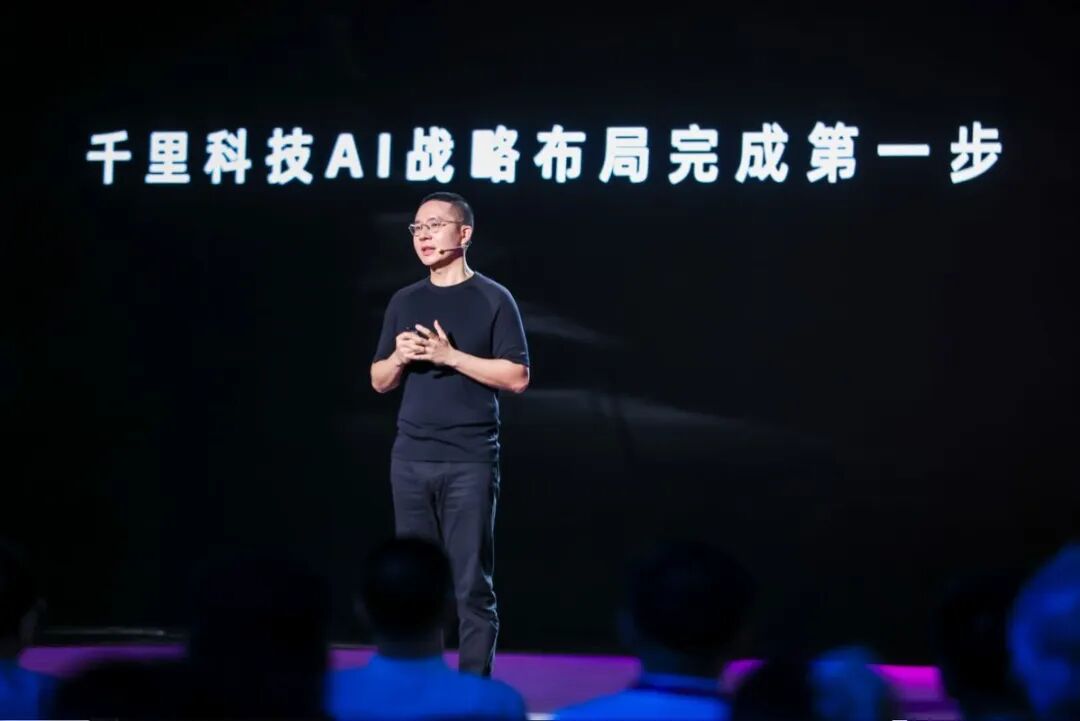
Core Viewpoint - The article discusses the rapid commercialization of L3-level intelligent driving and the increasing competition among domestic smart driving suppliers, highlighting the shift from chaotic growth to a concentration of power among leading companies [3] Group 1: G-ASD Launch and Features - Qianli Zhijia and Geely announced the launch of a new smart driving brand, G-ASD, at CES 2026, which will cover L2 to L4 levels of intelligent driving capabilities [6][14] - The first version of the G-ASD system has been installed in 16 models under the Zeekr and Lynk & Co brands, covering over 300,000 vehicles, with plans to exceed 1 million vehicles by the end of the year [6][10] - G-ASD is positioned as a software brand that integrates hardware configurations, serving as the "soul" of Geely's intelligent driving solutions [14] Group 2: Concept of "Content Modulus" - The term "content modulus" refers to the proportion of AI models in the entire intelligent driving system, indicating the system's reliance on artificial rules and high-precision maps [7][12] - A higher content modulus means greater AI autonomy in decision-making, which is essential for user safety and interaction [9][12] - Qianli Zhijia aims to enhance the content modulus to create a more user-friendly and efficient intelligent driving experience [12][19] Group 3: Strategic Partnerships and Market Positioning - Qianli Zhijia has formed a strategic partnership with Mercedes-Benz, which acquired a 3% stake for 1.34 billion yuan, marking a significant collaboration in AI technology and intelligent driving [16] - The company plans to serve 6-7 top-tier OEMs globally, focusing on deep service rather than rapid expansion to ensure quality and efficiency [17][19] - The strategy emphasizes building a platform-level intelligent driving capability that meets the needs of major OEMs, thus reducing development costs through standardization [17] Group 4: Future Outlook and Challenges - By the end of 2026, Qianli Zhijia aims to achieve core capabilities that may surpass Tesla's current level, driven by technological innovation and a strong engineering foundation [21] - The company recognizes that the biggest challenge will be multi-line delivery capabilities to various OEMs, which they are preparing for [21] - The ultimate goal is to integrate intelligent driving with smart cockpit technology to enhance user experience and trust, transforming vehicles into "mobile intelligent spaces" [25]

千里智驾、吉利发布全新辅助驾驶品牌 G-ASD
Jing Ji Guan Cha Wang· 2026-01-06 07:48
Core Insights - The collaboration between Qianli Zhijia and Geely has led to the launch of a new advanced driving assistance brand, G-ASD, aimed at the global market [1] - G-ASD represents a high-modularity intelligent driving solution, covering levels L2 to L4 of autonomous driving capabilities [1] - The increasing importance of large models in the evolution of intelligent driving technology is highlighted, with the concept of "modularity" being introduced as a key metric for assessing the intelligence level of driving systems [1] Technical Architecture - G-ASD employs an end-to-end model system that integrates cutting-edge AI technologies, including multimodal base models, visual language models (VLM), visual language action models (VLA), world models, and reinforcement learning [1] - The approach aims to promote global modeling from data systems, perception regulation, to evaluation systems, gradually reducing reliance on high-precision maps and rule engineering [1]
千里智驾和吉利联合发布全新辅助驾驶品牌G-ASD
Feng Huang Wang· 2026-01-06 05:08
Core Insights - The article discusses the launch of a new advanced driving assistance brand, G-ASD (Geely Afari Smart Driving), by Qianli Zhijia and Geely at CES 2026, which aims to cover intelligent driving capabilities from Level 2 to Level 4 Group 1: G-ASD Overview - G-ASD is a high-modularity intelligent driving solution developed collaboratively by Qianli Zhijia and Geely, emphasizing the importance of "modularity" as a key indicator of the intelligence level of driving systems [1] - The solution leverages advanced AI technologies, including end-to-end model architecture, multimodal base models, visual language models, and reinforcement learning, to reduce reliance on artificial maps and preset rules [2] Group 2: Features and Capabilities - G-ASD offers full-scene defensive driving capabilities, proactively predicting potential risks at blind spots and suggesting safe paths, akin to an experienced driver [2] - The system enhances route selection accuracy and traffic efficiency by recognizing complex traffic signs and dynamically adjusting speed based on real-time conditions and big data [2] - G-ASD supports complex environments such as urban ring roads and underground garages, with advanced parking capabilities and a comprehensive safety matrix that extends protection to three-dimensional spaces [3] Group 3: Market Deployment - The initial version of G-ASD has been integrated into 16 models under the Zeekr and Lynk & Co brands, covering over 300,000 vehicles, with plans for further integration into more Geely models in the future [3]
印奇:市场上主流厂商的“含模量”可能不到50%
虎嗅APP· 2025-10-01 03:50
Core Viewpoint - The article discusses the strategic vision of Qianli Technology, led by CEO Yin Qi, focusing on AI-driven intelligent driving solutions and the integration of various technologies to create a comprehensive ecosystem around autonomous vehicles [2][4]. Group 1: Company Strategy and Vision - Qianli Technology aims to develop a comprehensive AI ecosystem, not just as a supplier for intelligent driving but as a leader in AI technology, including AI brains, operating systems, and new AI terminals [2]. - The company has three main business areas: L2+ to L4 level intelligent driving solutions, smart cockpits, and Robotaxi services [2][7]. - Yin Qi emphasizes the importance of integrating strong AI capabilities with robust engineering skills to achieve their goals in intelligent driving [4][5]. Group 2: Team Integration and Development - The integration of various teams within Qianli Technology is seen as a critical step, with a focus on aligning goals and leveraging the collective experience of the team members [5][6]. - The company has nearly 2,000 employees and plans to deliver comprehensive solutions from L2 to L4 levels of intelligent driving [7][8]. Group 3: Technological Framework and Innovation - Qianli Technology's approach to intelligent driving involves a high "model content" ratio, focusing on visual perception and large models as the core of their technology framework [10][12]. - The company aims to increase its "model content" to 80%-90% within six months, positioning itself ahead of competitors [13][14]. - Yin Qi believes that the future of intelligent driving will be driven by large models and visual-centric solutions, moving beyond traditional sensor-based approaches [16][17]. Group 4: Market Position and Competitive Landscape - The intelligent driving industry is expected to consolidate, with only a few key players remaining, as many existing solutions are seen as redundant [28]. - Qianli Technology's model is considered replicable, but the unique conditions of the industry may limit its widespread adoption [27]. - The company is focused on international expansion, aiming to capture a significant share of the global intelligent driving market [29].
李书福叹“相见恨晚”!千里科技携吉利、奔驰入场 AI智驾战“决赛圈”打响
Guo Ji Jin Rong Bao· 2025-09-30 15:48
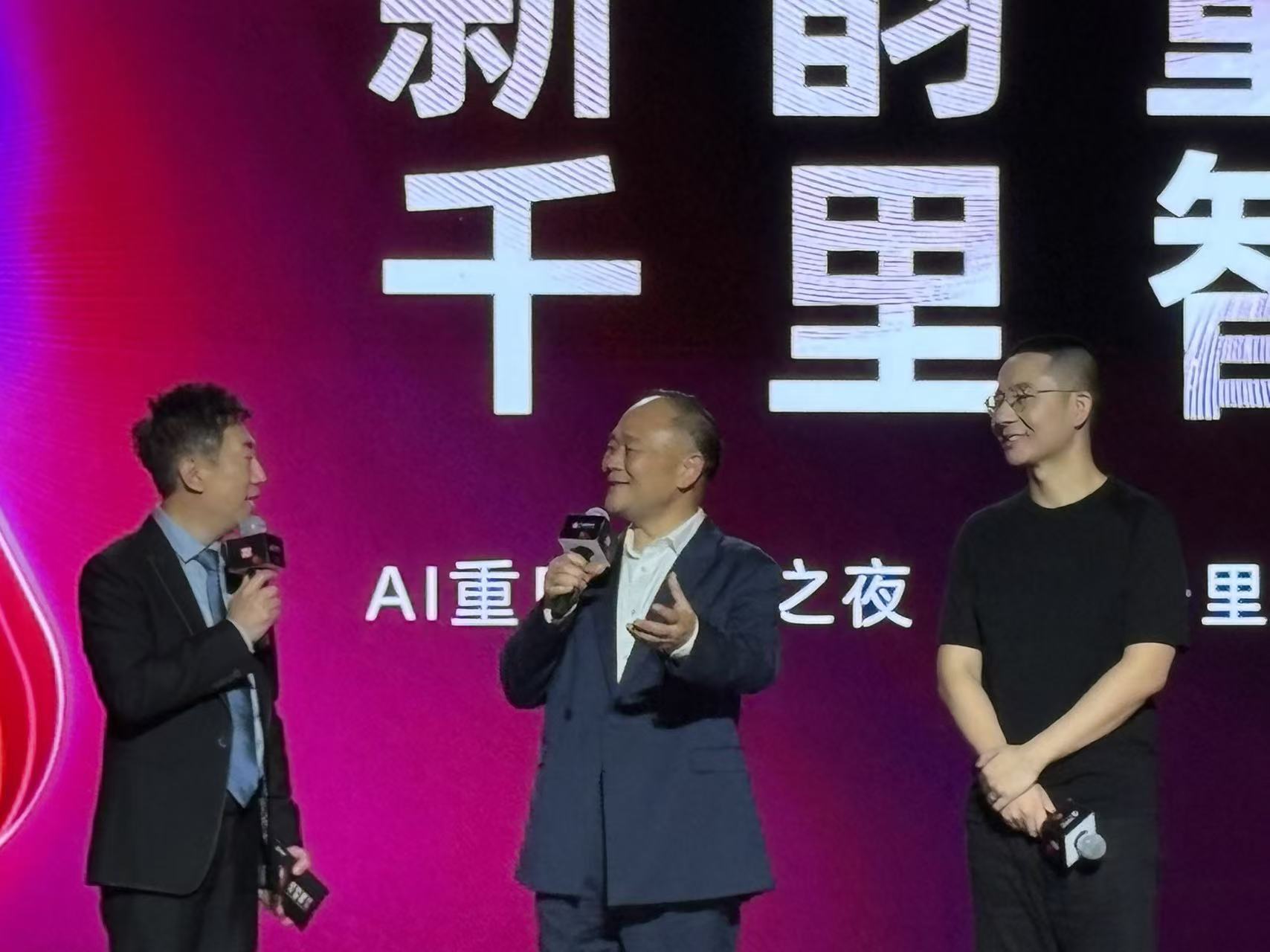
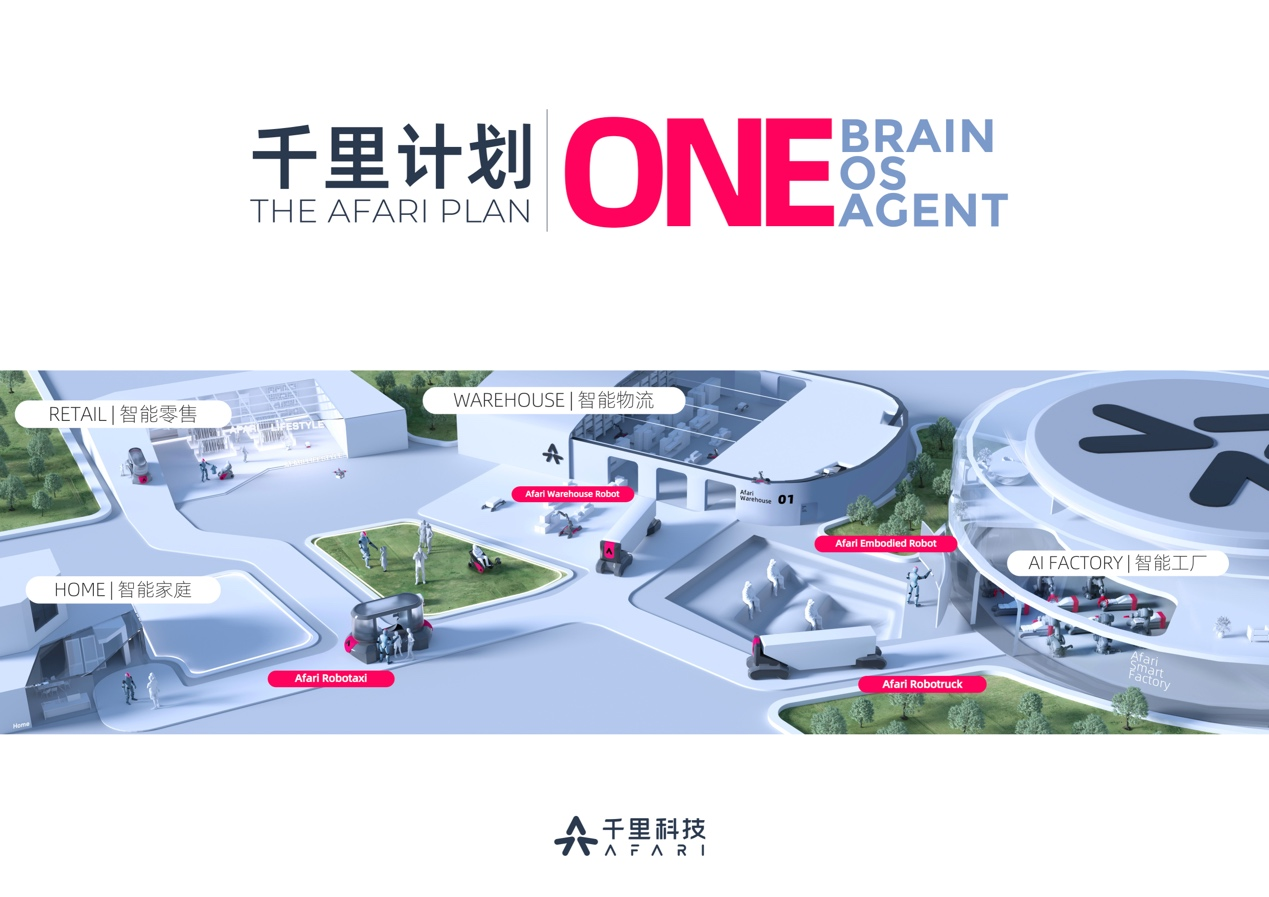
Core Viewpoint - Qianli Technology held its first press conference after rebranding, introducing the new brand name "AFARI" and discussing the integration of AI and automotive technology [1][14]. Business Segments - The core focus of the press conference was the unveiling of three major business segments: Qianli Smart Driving, Qianli Smart Cabin, and Qianli Smart Mobility, outlining the technical roadmap and implementation plans for "AI + Car" [5]. - In the smart driving sector, Qianli Technology aims to achieve a model inclusion rate of 70%-80% by the end of 2025, compared to the current industry average of 40%-50% [5][6]. - The company plans to reduce reliance on traditional rules and high-precision maps by adopting an "end-to-end model architecture" [6]. Technology and Product Development - Qianli Technology's smart driving system has been validated through real-world testing in Chongqing, utilizing a 6D multi-modal perception matrix [6]. - The product roadmap includes the release of version 1.0, which is already available, and plans for version 2.0 (L3 level) by the end of 2025 and version 3.0 (L4 level) targeting Robotaxi scenarios by 2026 [6][7]. - The smart cabin operating system "Agent OS" was introduced, featuring advanced interaction capabilities and aiming to enhance user experience in vehicles [7]. Strategic Partnerships and Investments - Qianli Technology's "Afari Plan" aims to create a unified AI brain and operating system, relying on collaboration with partners like Geely for support in manufacturing and funding [9][10]. - Geely's integration of its smart driving team into Qianli Technology has created a research and development cluster of approximately 3,000 personnel [10]. - Mercedes-Benz acquired a 3% stake in Qianli Technology for 1.339 billion yuan, signaling international collaboration and support for the company's technological capabilities [14]. Market Position and Financial Performance - The company is positioned to capitalize on the growing market for smart connected vehicles, with projections indicating a global market size of $1.5 trillion by 2025 [11]. - Qianli Technology reported a revenue of 4.184 billion yuan for the first half of 2025, reflecting a year-on-year growth of 40.04%, and a net profit of 31.17 million yuan, up 19% [15].


印奇:市场上主流厂商的“含模量”可能不到50%
Hu Xiu· 2025-09-29 14:42
Core Viewpoint - The article discusses the strategic vision of Qianli Technology, led by CEO Yin Qi, focusing on AI-driven intelligent driving solutions and the integration of various teams to enhance their capabilities in the automotive sector [1][3]. Group 1: Company Strategy and Vision - Qianli Technology aims to establish itself as a leader in AI and intelligent driving, with a comprehensive plan that includes not only autonomous driving but also AI systems and new AI terminals [1][3]. - The company has integrated teams from Geely and other subsidiaries to create a unified approach towards developing intelligent driving solutions, emphasizing the importance of both AI-native capabilities and strong engineering skills [4][5]. - The focus areas for Qianli Technology over the next three years include intelligent driving, smart cockpits, and Robotaxi services, which are seen as critical industry challenges to address [6][7]. Group 2: Technological Development and Market Position - Qianli Technology is working towards commercializing its AI solutions for intelligent driving, with expectations of generating significant revenue starting next year [9]. - The company is confident in enhancing its "含模量" (content ratio of models, rules, and maps) to 80%-90% within six months, positioning itself competitively against other market players [12][13]. - The article highlights the belief that future intelligent driving solutions will be driven by large models and visual perception, moving away from traditional sensor-based approaches [16][21]. Group 3: Industry Trends and Competitive Landscape - The intelligent driving industry is expected to consolidate, with fewer suppliers emerging as leaders, as many existing solutions are seen as redundant [27][28]. - Qianli Technology's approach to collaboration with OEMs and its open platform strategy is viewed as a model that could be replicated across the industry, although the timing and context may vary [25][26]. - The company aims to capture a significant share of the global intelligent driving market, emphasizing the importance of international expansion as a core strategy [29].
智驾“新人”印奇,和他的“AI+车”百亿产值目标
3 6 Ke· 2025-09-29 11:26
Core Viewpoint - Qianli Technology officially launched its brand "AFARI" after a year of low profile, with a focus on commercialization and internationalization [1][2]. Business Progress and Financials - In the first half of 2025, Qianli Technology reported a revenue of 4.184 billion yuan, marking a year-on-year growth of 40.04%, primarily driven by its predecessor Lifan Technology's automotive and motorcycle businesses [2]. - The company aims to achieve over 10 billion yuan in output value this year and scale revenue next year [4]. Product and Technology Development - Qianli Technology operates three main business segments: Qianli Intelligent Driving (L2+ to L4 level solutions), Qianli Intelligent Cabin (natural interaction cockpit experience), and Qianli Robotaxi [4]. - The company plans to commercialize its intelligent driving solutions next year, with significant advancements expected in its cabin products and Robotaxi services [4]. Internationalization Strategy - Qianli Technology emphasizes internationalization as a key strategy, aiming to capture market share globally, particularly in collaboration with overseas automotive companies [4][5]. - The company has partnered with Mercedes-Benz, which acquired a 3% stake for approximately 1.339 billion yuan, enhancing its global expansion efforts [5]. Competitive Landscape and Technology Standards - Qianli Technology aims to elevate its "含模量" (model inclusion ratio) to match international standards, currently at 80%-90% for leading overseas solutions, compared to about 50% for most domestic offerings [5][6]. - The company believes that the future of intelligent driving will rely on a combination of visual perception and large models, with a focus on reducing costs and achieving scalability [6][7]. Team and Organizational Structure - Qianli Technology's leadership emphasizes the importance of integrating strong AI model teams with robust engineering teams to drive innovation in intelligent driving solutions [16]. - The company has a workforce of nearly 2,000, which is structured to support comprehensive solutions from L2+ to L4 [17].