品牌价值建设

Search documents
持续低价“重压”之下,品牌竞争力何去何从?
Sou Hu Cai Jing· 2025-11-24 13:35
Core Viewpoint - The article discusses the detrimental effects of continuous low pricing strategies on brands and the market, highlighting the potential for chaotic competition, the proliferation of counterfeit goods, and the disruption of market supply and demand balance [1][3]. Group 1: Impact of Continuous Low Pricing on Brands - Induces disorderly competition, leading brands into a relentless price war that undermines product innovation and service quality, ultimately weakening core competitiveness and hindering industry development [3]. - Breeds counterfeit and inferior products as some businesses resort to producing substandard goods to maintain minimal profit margins, damaging consumer trust and brand reputation [3]. - Disrupts market supply and demand balance; while low prices may temporarily boost consumer demand, they distort market signals and lead to resource misallocation, with quality production underperforming and inferior production overexpanding [3]. Group 2: Strategies to Avoid Low Pricing Phenomenon - Strengthen brand value construction by enhancing product quality, innovative design, and service experience to create a unique brand image that reduces consumer price sensitivity [4]. - Implement differentiated competition strategies by developing diverse product lines tailored to different consumer groups, avoiding homogenized competition and breaking free from low-price constraints [4]. Group 3: Actions for Brands Facing Low Pricing - Enhance market monitoring and early warning systems to detect unfair competition practices like low-price dumping, and take legal action to protect brand interests while collaborating with industry associations and regulatory bodies [5]. - Optimize channel management by carefully selecting partners to ensure compliance and stability, preventing low-price diversion and maintaining a stable pricing system [5].


2025年下半场,如何重新理解中国广告营销市场?
3 6 Ke· 2025-09-15 10:34
Group 1 - The core viewpoint of the article highlights that the Chinese advertising market is experiencing structural growth driven by multiple factors, with significant increases in advertising spending across various sectors such as entertainment, telecommunications, and personal care products [1][3] - Categories like personal health care, educational supplies, and leisure services have shown over 100% growth in advertising expenditure from January to July 2025, indicating strong market opportunities [3] - Advertisers are increasingly allocating budget towards new product promotions, with expectations that these expenses will account for 35% of overall marketing budgets in 2025, up 3 percentage points from 2024 [5] Group 2 - The rise of AI is significantly impacting consumer behavior and advertising strategies, with AI-related advertising spending increasing by 442.8% year-on-year in the first half of 2025, and 77% of consumers expressing a preference for brands that incorporate AI elements [6][10] - The shift towards an experience economy is prompting brands to evolve from merely functional advertising to creating immersive experiences that foster emotional connections with consumers [7][8] - Brands are increasingly utilizing authoritative perspectives in their marketing strategies, such as live-streaming factory processes to enhance credibility and trust among consumers [8] Group 3 - Brand value construction is becoming central to marketing strategies, with consumers prioritizing brand factors in their purchasing decisions, leading to a rise in advertisers focusing on brand value over immediate effectiveness [14][16] - Recent government policies are encouraging a focus on brand value enhancement, with initiatives from the State-owned Assets Supervision and Administration Commission aimed at guiding central enterprises in brand building [16] - The article suggests three key directions for the market: creating multi-dimensional experiential expressions, embracing AI while maintaining a human-centric approach, and returning to brand value construction as a core strategy for sustainable growth [17][18][20]
2025年中国广告市场趋势洞察-CTR
Sou Hu Cai Jing· 2025-09-14 08:27
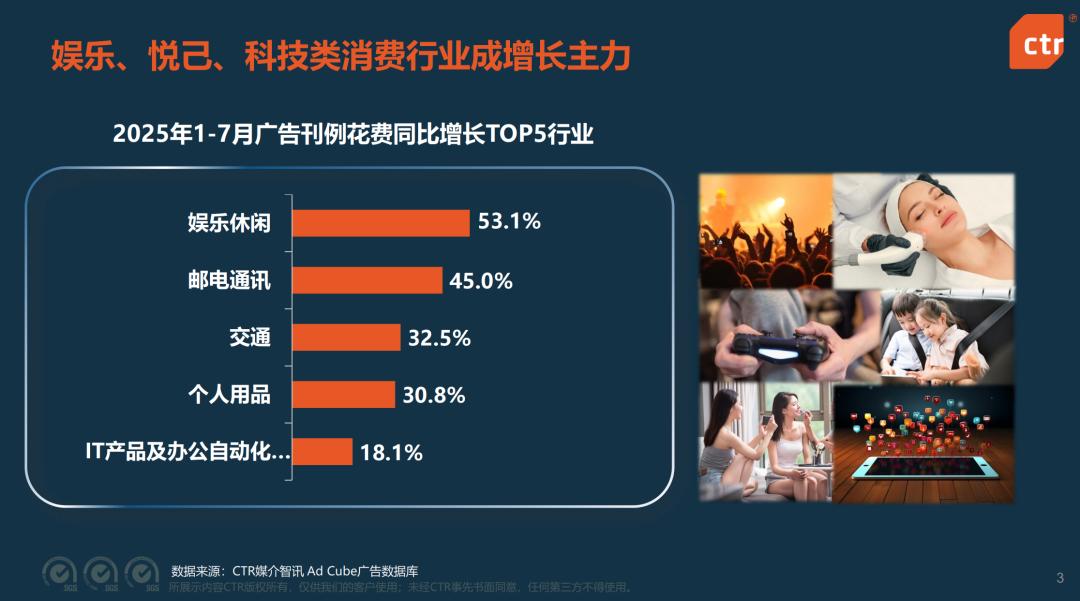
Market Growth Insights - The Chinese advertising market is entering a new phase characterized by "structural growth + experience-driven + value reconstruction" [1] - From January to July 2025, the advertising market showed structural growth, with significant contributions from entertainment, self-care, and technology sectors [1] - Notable increases in advertising spending were observed in personal health care (+283.4%), educational supplies (+158.0%), and footwear (+121.8%) [1][8] - The top five categories for brand growth included condiments (+28.6%) and laundry products (+24.6%), indicating resilience in these sectors [1][8] - New product promotion expenses accounted for over 40% in telecommunications and home appliance industries, with expectations of maintaining over 30% investment across most sectors in 2025 [1][10] Marketing Expression Upgrades - The shift from "single expression" to "multi-dimensional expression" is driven by the "experience economy," creating a feedback loop of "experience-resonance-viral" [2] - AI is enhancing emotional experiences in marketing, with over 50% of consumers using AI for purchasing decisions in categories like home appliances and electronics [2][12] - The report emphasizes the importance of brand value construction, noting that 57.8% of consumers prioritize brand over immediate effectiveness in decision-making [2] Cultural Experience and Engagement - Cultural experience activities are gaining popularity, with concert ticket sales reaching 1.393 billion yuan (+8.8%) in the first half of 2025, and advertising spending for concerts increasing by 58.8% [1][15] - Brands are leveraging immersive activities to enhance interaction with consumers, reflecting a new norm in cultural tourism consumption [1][15] AI and Brand Perception - The number of AI-related products and advertising expenditures surged by 442.8%, with 77% of consumers believing that AI elements enhance brand favorability [1][12] - The report suggests that brands should utilize AI effectively while increasing advertising investments to build long-term competitiveness and achieve sustainable growth [2]

主流媒体“再中心化”传播+AI营销爆发:2025广告品牌增长方法论
Jing Ji Guan Cha Wang· 2025-09-14 05:42
Group 1: Consumer Behavior Trends - Consumers are increasingly fragmented in their choices, with an average of 110 fast-moving consumer goods (FMCG) brands selected annually, up from 97 a decade ago [1] - The average time spent on a single app has decreased to 2.6 minutes, significantly down from five years ago [1] - By 2025, consumers are expected to use an average of eight different channels for purchasing FMCG, compared to five channels ten years ago [1] Group 2: Market Growth and Segmentation - The paper products market has seen a 2.4 times increase in market size compared to ten years ago, driven by high penetration rates and frequency of purchase [1] - 93% of brand growth is attributed to increased penetration, indicating that brands must attract more buyers to grow [1] - The FMCG market in China is projected to grow by 1.8% in the first half of 2025, with a shift towards segmented competition and a focus on specific consumer needs [2] Group 3: Advertising Market Insights - In 2025, advertisers are expected to allocate 35% of their overall marketing budget to promoting new products, a 3% increase from 2024 [3] - The use of AI in advertising is on the rise, with 77% of consumers believing that AI elements enhance brand perception [3] - AI-related product launches and advertising expenditures have seen significant growth, with an 83% increase in product launches and a fourfold increase in advertising spending in the first seven months of the year [3] Group 4: Media Market Developments - The media landscape is evolving with technological advancements and audience changes, leading to an upgrade in media value [4] - Mainstream media is focusing on positive social messaging and user engagement, utilizing structured content and global narratives to enhance brand visibility [4] - The mobile internet user base is stabilizing, with significant growth in entertainment and smart applications, indicating a shift towards premium content [4] Group 5: Strategic Recommendations for Brands - Brands should create multi-dimensional experiences for consumers, moving away from single expressions to a more integrated communication approach [5] - Embracing AI as a tool to enhance human interaction is crucial, allowing brands to connect emotionally with consumers [5] - A focus on brand value construction is essential, avoiding a purely results-driven approach and investing in long-term brand equity [5]
2025自然堂喜马拉雅极限越野跑:一场品牌价值构建实验
FBeauty未来迹· 2025-06-19 09:23
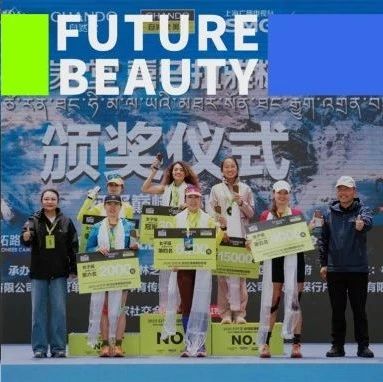
Core Viewpoint - The article discusses how the 2025 Natural Hall Himalayan Extreme Trail Run serves as a significant exploration of sports marketing for beauty brands, particularly in the context of the expanding men's skincare market in China [2][4][11]. Group 1: Event Overview - The Natural Hall Himalayan Extreme Trail Run is the first long-distance trail running event in the Himalayan region and the only international points trail running event in the area, attracting over 300 elite participants since its inception [5][6]. - The 2025 event took place from June 13 to June 15, featuring three categories: "Natural Secret 7KM," "Breakthrough Limit 35KM," and "Conquer the Peak 55KM," with the longest route reaching an altitude of 4,528 meters and a total elevation gain of 2,367 meters [6][8]. Group 2: Marketing Strategy - Natural Hall utilized the event to create a marketing loop from brand spirit to sales conversion, targeting high-income, high-education male consumers who are increasingly interested in personalized skincare [4][11]. - The event featured a "circle identity" marketing strategy, integrating "event x community x live streaming" to enhance communication with the running community and promote brand awareness [8][9]. Group 3: Target Audience Insights - The average age of participants is over 38, with 76% earning over 20,000 yuan monthly and 76% holding a bachelor's degree or higher, indicating a high-income, high-education demographic [11][12]. - The running community in China has surpassed 500 million users, with trail runners making up about 7%, primarily from first- and second-tier cities, reflecting a trend towards health-conscious lifestyles and outdoor sports culture [11][12]. Group 4: Product Focus - The "Natural Hall Men's Glacier Lotion" was highlighted as the core product for the event, designed to meet the skincare needs of male participants in extreme conditions, featuring Himalayan glacier water for effective hydration and moisture retention [22][24]. - Since its launch, the product has sold over 2.9 million bottles and has consistently ranked as the top men's cream on platforms like Tmall, indicating strong market performance [25][26]. Group 5: Industry Trends - The men's skincare market in China is projected to grow significantly, with the market size expected to reach 15.6 billion yuan in 2024 and surpass 20 billion yuan by 2026, driven by a shift towards personalized and functional skincare products [14][18]. - The article emphasizes the importance of brand strength in the current competitive landscape, where established brands are gaining more market share, and the focus is shifting towards building brand value and identity [30][32].
中国美妆行业开始进入“价值红利”时代
FBeauty未来迹· 2025-05-16 11:13
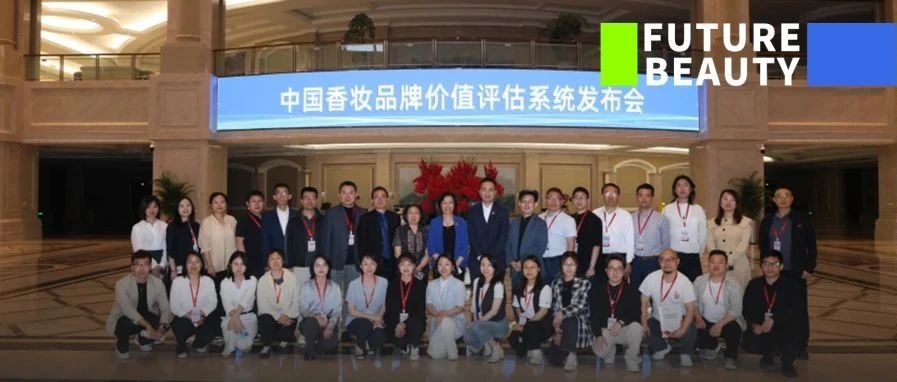
Core Viewpoint - The article discusses the launch of the "Initiative for Promoting Brand Value Construction" by the China Fragrance, Flavor and Cosmetic Industry Association, emphasizing a strategic shift in the Chinese fragrance and cosmetics industry from "traffic competition" to "value-driven" approaches, aiming to enhance brand value and quality [2][4][11]. Group 1: Initiative Overview - The initiative is centered around five key action paths: innovation-driven, quality-focused, scientific management, integrity in operations, and collaborative progress, addressing industry pain points [4][7]. - The initiative aims to transform "Chinese manufacturing" into "Chinese brands," providing a clear direction for companies in brand value construction [4][11]. Group 2: Action Paths - **Innovation-Driven**: Companies are encouraged to increase R&D investment to overcome technological bottlenecks and integrate cultural elements into brand identity [4][5]. - **Quality-Focused**: Emphasizes the importance of a robust quality management system throughout the supply chain to ensure product safety and sustainability [4][6]. - **Scientific Management**: Proposes the use of a "brand value assessment model" to diagnose brand development and optimize strategies based on data-driven insights [5][8]. - **Integrity in Operations**: Calls for transparency and honesty in brand communication to combat false advertising and promote a fair market environment [6][7]. - **Collaborative Progress**: Encourages learning from global brand management practices and enhancing international competitiveness through cross-industry collaboration [7][11]. Group 3: Brand Value Assessment System - The "China Fragrance and Cosmetic Brand Value Assessment System" was introduced as a tool to quantify brand value through measurable indicators, aiding in strategic implementation [8][11]. - The assessment system combines quantitative and qualitative evaluations, focusing on factors like profit, marketing investment, and R&D investment, with over 18 sub-dimensions for comprehensive brand strength measurement [8][11]. Group 4: Industry Implications - The simultaneous release of the initiative and the assessment system signifies the beginning of a "brand value awakening" era in the Chinese fragrance and cosmetics industry, providing a dual approach of theory and practice for high-quality development [11]. - As the brand value concept deepens, Chinese fragrance and cosmetics companies are expected to transition from "follower" to "leader" in the global market [11].