差异化竞争策略

Search documents
多地中小银行上调存款利率
Xin Lang Cai Jing· 2026-02-11 03:27
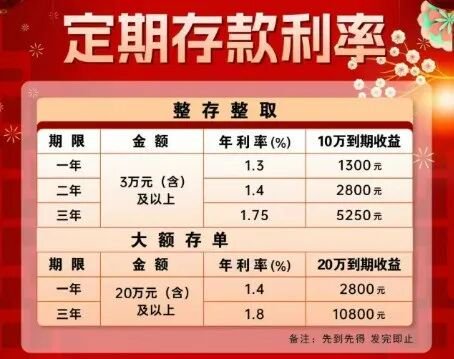
Core Viewpoint - Several regional small and medium-sized banks are increasing deposit rates despite the trend of national banks lowering rates, aiming to attract funds during a critical period when many fixed-term deposits are maturing [1][4]. Group 1: Deposit Rate Adjustments - Since January, small and medium-sized banks in regions like Zhejiang, Hunan, and Shaanxi have raised rates on certain fixed-term deposits and large-denomination certificates of deposit (CDs) by 5 to 20 basis points [1][5]. - For instance, Wenzhou Bank's three-year deposit rate can reach up to 1.85%, while its three-year large-denomination CD offers a maximum rate of 1.9% [1][5]. - Hunan's Xinhuang Rural Commercial Bank has adjusted its rates for one-year, two-year, and three-year fixed deposits to 1.3%, 1.4%, and 1.75% respectively, with large-denomination CDs at 1.4% and 1.8% for one-year and three-year terms [1][5]. Group 2: Specific Rate Details - The Shannan Rural Commercial Bank in Shaanxi announced a temporary increase in rates for three-month, six-month, one-year, and two-year deposits by approximately 15 basis points [7]. - Beipiao Shengdu Village Bank has adjusted its rates for various terms, with one-year, two-year, three-year, and five-year rates set at 1.65%, 1.70%, 1.70%, and 1.65% respectively, each up by 5 basis points [3][7]. - Many of these higher rates come with minimum deposit requirements, often making it difficult for smaller deposits to benefit from the best rates [3][7]. Group 3: Market Dynamics and Strategies - Industry experts note that the beginning of the year is a crucial time for fund inflows, as many fixed-term deposits mature, prompting small banks to raise rates to capture this "window period" [4][8]. - To attract new funds and retain existing customers, smaller banks may temporarily increase deposit rates, especially given their weaker brand influence compared to larger national banks [4][8]. - Experts suggest that while these rate increases may achieve short-term deposit goals, small banks need to develop core competencies and differentiate themselves to ensure long-term sustainability [4][8].

唐人神转型实践有四大启示
Zheng Quan Ri Bao Zhi Sheng· 2026-01-15 16:38
Core Insights - The swine market is facing a downturn in 2025, prompting a reshaping of the industry landscape, with policies and market forces accelerating capacity reduction. It is widely predicted that pig prices may see a turning point by mid-2026, leading the industry into a new cycle of prosperity [1] Group 1: Industry Strategies - A full industry chain layout is fundamental for navigating cycles, where the "feed—breeding—meat" model smooths out fluctuations across segments, with stable cash flow from feed supporting breeding during downturns and meat products enhancing profitability [2] - Technological innovation and refined management are crucial for cost control, as leading companies leverage technology and management optimization to build cost advantages, ensuring resilience during industry downturns [2] - Differentiated competitive strategies are key to overcoming homogenization challenges, with leading firms creating dual product lines of "quality improvement for mass products + breakthroughs in high-end products" to meet diverse consumer demands [3] Group 2: Future Outlook - The practices of leading companies reveal that while industry cycles are inevitable, the control over development remains with the enterprises themselves. Future competition in the swine industry will focus on comprehensive capabilities in chain collaboration, cost control, and differentiated innovation rather than mere scale [4] - Companies must maintain strategic focus on core areas, leverage technological innovation for foundational growth, and expand through differentiated layouts to secure a dominant position in the reshaped industry landscape [4] - Smaller producers can adopt similar core strategies by collaborating and targeting niche markets to enhance their resilience against risks, promoting a consensus for "staying true to essence and innovating breakthroughs" across the industry [4]

雅运股份:公司长期贯彻差异化竞争策略
Zheng Quan Ri Bao· 2025-11-24 13:41
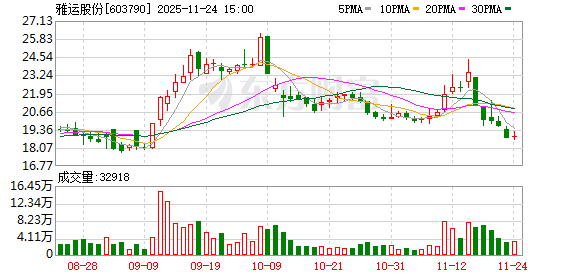
Group 1 - The company emphasizes a differentiated competitive strategy and focuses on integrated dyeing and finishing solutions [2] - The company positions itself as a provider of overall solutions in the dyeing and finishing market, targeting mid-to-high-end and niche products [2] - The company highlights its advantages in application technology services to enhance product competitiveness [2]
持续低价“重压”之下,品牌竞争力何去何从?
Sou Hu Cai Jing· 2025-11-24 13:35
Core Viewpoint - The article discusses the detrimental effects of continuous low pricing strategies on brands and the market, highlighting the potential for chaotic competition, the proliferation of counterfeit goods, and the disruption of market supply and demand balance [1][3]. Group 1: Impact of Continuous Low Pricing on Brands - Induces disorderly competition, leading brands into a relentless price war that undermines product innovation and service quality, ultimately weakening core competitiveness and hindering industry development [3]. - Breeds counterfeit and inferior products as some businesses resort to producing substandard goods to maintain minimal profit margins, damaging consumer trust and brand reputation [3]. - Disrupts market supply and demand balance; while low prices may temporarily boost consumer demand, they distort market signals and lead to resource misallocation, with quality production underperforming and inferior production overexpanding [3]. Group 2: Strategies to Avoid Low Pricing Phenomenon - Strengthen brand value construction by enhancing product quality, innovative design, and service experience to create a unique brand image that reduces consumer price sensitivity [4]. - Implement differentiated competition strategies by developing diverse product lines tailored to different consumer groups, avoiding homogenized competition and breaking free from low-price constraints [4]. Group 3: Actions for Brands Facing Low Pricing - Enhance market monitoring and early warning systems to detect unfair competition practices like low-price dumping, and take legal action to protect brand interests while collaborating with industry associations and regulatory bodies [5]. - Optimize channel management by carefully selecting partners to ensure compliance and stability, preventing low-price diversion and maintaining a stable pricing system [5].

实探假期上海楼市:“好房子”成最大卖点
Shang Hai Zheng Quan Bao· 2025-10-08 04:45
Core Insights - The new regulations in Shanghai are reshaping the residential market by emphasizing quality and innovative design features, such as larger balconies and improved building materials [8][9]. Group 1: Market Trends - The introduction of new regulations has led to a noticeable shift in the new housing market, with sales personnel categorizing their projects as "good houses" [8]. - Sales strategies are adapting to focus on differentiation, with developers creating larger, more luxurious units to attract buyers [4][9]. Group 2: Consumer Behavior - During the National Day holiday, foot traffic in sales offices decreased compared to previous weekends, likely due to many potential buyers traveling [2][6]. - Buyers are increasingly looking for properties that offer modern amenities and improved living conditions, reflecting a shift in consumer preferences towards quality over quantity [6][9]. Group 3: Regulatory Impact - The new regulations specify that balcony areas cannot exceed 10% of the total unit area, promoting better utilization of space and enhancing privacy for residents [8][9]. - Developers are encouraged to use high-quality materials for building facades, which may enhance the overall market value of their properties [9].

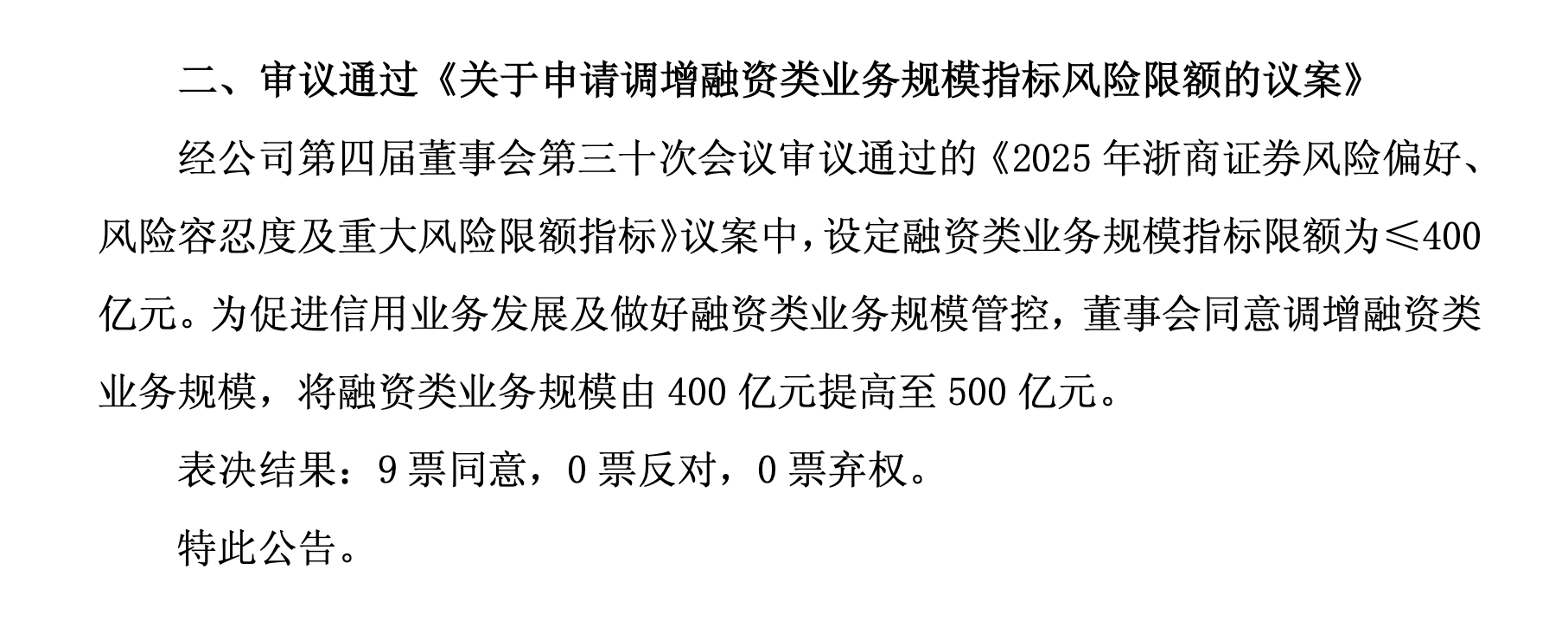
浙商证券融资上限增至500亿元,券商两融扩张信号显现
Sou Hu Cai Jing· 2025-09-26 10:29
Core Viewpoint - The recent increase in financing business limits by multiple securities firms indicates a strategic response to the growing demand in the A-share margin trading market, aiming to enhance credit business development while managing scale effectively [1][3][4] Group 1: Financing Business Expansion - Zhejiang Securities raised its financing business limit from 40 billion to 50 billion yuan to promote credit business development and scale control [1] - Huayin Securities also increased its credit business limit to 8 billion yuan, marking its second expansion this year [3] - The active margin trading market, with a total balance reaching 2.43 trillion yuan, has prompted securities firms to adjust their internal limits to capture market opportunities [3][4] Group 2: Margin Trading Market Dynamics - The margin trading balance has seen a significant year-on-year increase of 77.14%, with trading accounting for 12.25% of total market transactions, the highest since July 2020 [3] - Key sectors attracting leveraged funds include electronics, power equipment, and communications, with net purchases of 84.51 billion, 43.76 billion, and 24.41 billion yuan respectively [3][4] Group 3: Revenue and Performance Insights - Interest income from margin trading has become a crucial support for securities firms, with a total net interest income of 19.657 billion yuan in the first half of 2025, a 30.66% increase year-on-year [5] - Leading firms like Guotai Junan and Huatai Securities reported significant growth in interest income, with Guotai Junan achieving a 205.43% increase [5][6] Group 4: Risk Management Strategies - Despite rapid expansion, firms like Zhejiang Securities maintain a strong safety margin, with an average collateral maintenance ratio of 280.87% for margin clients [7] - Both Zhejiang and Huayin Securities have implemented comprehensive risk management systems, including client due diligence and dynamic collateral adjustments [7] Group 5: Competitive Landscape and Future Outlook - The competition among securities firms has intensified, with some smaller firms reducing interest rates below 4% to attract clients, impacting profitability [8] - Firms are shifting towards differentiated competition strategies, leveraging technology and smart trading tools to enhance service experiences and optimize client profiles [8]

A股市场两融余额创新高 月内两家券商上调两融业务规模上限
Zheng Quan Ri Bao Zhi Sheng· 2025-09-25 17:39
Core Viewpoint - The rapid expansion of credit business by securities firms reflects optimism about the development opportunities in the industry, as evidenced by recent increases in financing business limits by multiple firms [1][4]. Group 1: Credit Business Expansion - Multiple securities firms are increasing their credit business limits in response to a surge in market activity, with Zhejiang Securities raising its financing business limit from 40 billion to 50 billion yuan [1][2]. - As of June 30, the total margin financing balance in the A-share market reached 1.85 trillion yuan, with a further increase to 2.43 trillion yuan by September 24, indicating a strong growth in credit business income for the securities industry, which saw a 24% year-on-year increase in net interest income [2][4]. - Zhejiang Securities aims to enhance customer engagement and expand its margin financing client base through improved service and operational efficiency [2][3]. Group 2: Risk Management - Zhejiang Securities employs a three-pronged approach to risk management, including strict pre-approval processes, the use of various credit risk management tools, and ongoing post-investment risk management [3]. - The average maintenance guarantee ratio for margin clients at Zhejiang Securities was 280.87% as of mid-year, indicating manageable overall risk levels [3]. Group 3: Competitive Landscape - The competitive landscape is characterized by pressure on interest rates, with some smaller firms lowering rates below 4% to attract clients, which may compress profit margins [5]. - Leading firms like Guotai Junan and Huatai Securities dominate the market, with net interest income of 3.187 billion and 2.037 billion yuan respectively, while some listed firms reported net interest income losses [5]. - To navigate the competitive environment, firms are advised to adopt differentiated pricing strategies, enhance service efficiency through technology, and create a comprehensive financial service ecosystem [5][6].
城商行“一哥”易主:江苏银行全面超越北京银行
Guan Cha Zhe Wang· 2025-09-02 02:33
Core Viewpoint - The competitive landscape among Chinese city commercial banks has undergone a significant change, with Jiangsu Bank emerging as the leader in both asset scale and profitability, surpassing Beijing Bank due to its strategic positioning and regional economic advantages [1][4]. Group 1: Financial Performance - Jiangsu Bank's total assets reached 4.79 trillion yuan, a year-on-year increase of 21.16%, significantly outpacing Beijing Bank's growth of 12.53% [2]. - In the first half of 2025, Jiangsu Bank reported operating income of 44.864 billion yuan, up 7.78%, and a net profit attributable to shareholders of 20.238 billion yuan, up 8.05% [2]. - Jiangsu Bank's net profit exceeded Beijing Bank's by 5.185 billion yuan, highlighting a clear advantage in profitability [2]. Group 2: Asset Quality - Jiangsu Bank's non-performing loan (NPL) ratio improved to 0.84%, with a provision coverage ratio of 331.02%, while Beijing Bank's NPL ratio stood at 1.30% with a coverage ratio below 200% [2][3]. Group 3: Strategic Positioning - Jiangsu Bank's growth is attributed to its deep integration with regional economic development, focusing on high-end manufacturing sectors such as equipment manufacturing and information technology [3]. - The bank's corporate loan balance reached approximately 1.63 trillion yuan, growing by 23.30% year-on-year, with manufacturing loans accounting for 22.20% of its corporate loan portfolio [3]. - Retail banking has also been a significant growth driver, with assets under management (AUM) surpassing 1.59 trillion yuan and retail deposits increasing by 15.25% [3]. Group 4: Challenges Faced by Competitors - Beijing Bank has faced challenges including executive turnover, declining profitability, and regulatory scrutiny, with a net profit growth of only 0.81% in 2024 [3][4]. - The bank was fined 48.3 million yuan for multiple regulatory violations, indicating weaknesses in its internal controls and risk management [3]. Group 5: Industry Trends - The competitive landscape among the 17 A-share listed city commercial banks has formed a clear "three-tier" structure, with Jiangsu Bank leading the first tier alongside Beijing Bank, Ningbo Bank, and Shanghai Bank [5]. - Future development in the city commercial banking sector is expected to shift from a "large and comprehensive" approach to a "small and specialized" strategy, emphasizing differentiated competition [5].



对话罗英瀚:蒙上双眼,也能认出是奥迪
汽车商业评论· 2025-08-20 23:06
Core Viewpoint - Audi is launching its largest product layout in China, aiming to redefine luxury for young consumers by integrating German engineering with Chinese insights [6][7][14]. Group 1: Market Positioning and Strategy - Audi views the evolving definition of luxury among young Chinese consumers as an opportunity rather than a challenge [6]. - The company emphasizes a long-term commitment to the Chinese market, leveraging its 37 years of presence and nearly 10 million users' trust [10][14]. - Audi is adopting a differentiation strategy, focusing on unique product offerings rather than engaging in a price war or feature overload [12][21]. Group 2: Product Development and Innovation - Audi is set to introduce a series of new models, including the Q6L e-tron and A5L, which will cater to various segments from fuel to electric vehicles [17][18]. - The new models will incorporate advanced technologies, such as Huawei's intelligent driving technology and large-capacity batteries from CATL, tailored specifically for Chinese consumers [18][31]. - Audi's approach includes extensive feedback from young Chinese engineers and users during the development phase to ensure alignment with local preferences [21][28]. Group 3: Competitive Advantage and Future Outlook - The integration of "German precision" with "Chinese wisdom" is central to Audi's strategy, aiming to create a unique value proposition that resonates with local consumers [23][24]. - Audi's commitment to long-term strategies and local adaptations is expected to enhance its competitive edge in the rapidly changing luxury car market [14][35]. - The company believes that the essence of luxury is evolving towards smart and innovative experiences, moving beyond traditional performance metrics [21][34].

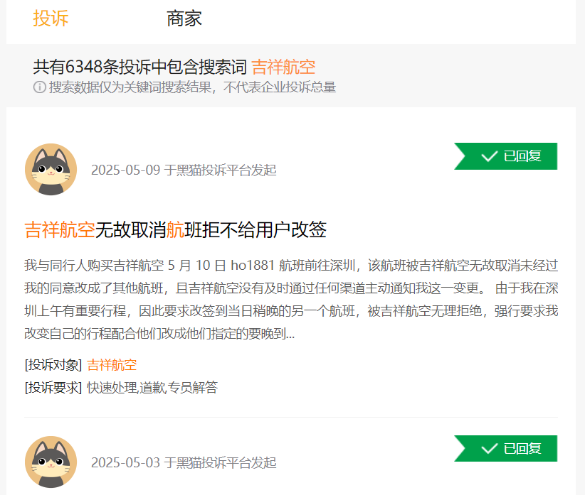
吉祥航空“以价换量”B面:营利增速断崖式下滑,国内业务萎缩
Zheng Quan Zhi Xing· 2025-05-30 08:57
Core Viewpoint - 吉祥航空's 2024 performance report indicates a significant slowdown in revenue growth, with a year-on-year increase of only 9.95%, contrasting sharply with previous years' growth rates [1][2]. Revenue Growth - In 2024, 吉祥航空 achieved revenue of 22.09 billion yuan, marking a 9.95% increase year-on-year, although this is a substantial decline from the previous year's growth of 144.8% [2]. - The net profit attributable to shareholders reached 914 million yuan, up 17.52% year-on-year, but again, this is a stark contrast to the previous year's growth of 118.76% [2]. - In Q1 2024, revenue growth further slowed to just 0.05% year-on-year, compared to 28.77% in the same period last year, while net profit fell by 7.87% [2]. Main Business Performance - The core aviation transportation business accounted for 98.87% of 吉祥航空's revenue in 2023, generating 21.84 billion yuan in 2024, with a growth rate of only 9.84%, down from 145.61% the previous year [3]. - The passenger transport segment, which is the core business, generated 21.21 billion yuan in revenue, reflecting an 8.34% increase, significantly lower than the previous year's 157% growth [3]. - The average revenue per passenger kilometer declined across various aircraft models, indicating a decrease in profitability [3]. Domestic and International Business - Domestic operations faced significant pressure, with revenue declining by 1% to 16.89 billion yuan in 2024, contrasting sharply with a 149.23% increase the previous year [5]. - International business emerged as a key growth driver, with passenger numbers increasing by 142.21% to 3.207 million and revenue soaring by 82.15% to 4.695 billion yuan, raising its share of total revenue from 12.82% to 21.25% [5][6]. - Despite the strong growth in international operations, the growth momentum has slowed compared to the previous year's 112.75% increase [6]. Service Quality Issues - 吉祥航空 has faced multiple service quality issues, which have negatively impacted its brand image and reputation [7]. - Notable incidents include flight delays and poor in-flight conditions, leading to public outcry and criticism on social media [7][8]. - The company has received numerous complaints regarding ticket refunds, flight delays, and unreasonable charges, with a significant number remaining unresolved [10].