
国补政策调整

Search documents
家电行业2026年度策略报告:经营韧性,出海红利,左侧成长-20251126
ZHESHANG SECURITIES· 2025-11-26 11:09
Core Insights - The report emphasizes the resilience of the home appliance industry, particularly the white goods sector, and highlights the ongoing benefits from international expansion and growth opportunities in emerging markets [1][4][5] - The report maintains a positive outlook on leading companies in the white goods sector, suggesting that they possess strong operational resilience and are well-positioned to navigate market challenges [1][5][17] Investment Recommendations - **Main Line 1**: Focus on high dividend yields and high ROE, capitalizing on the operational resilience of leading white goods companies [3][11] - **Main Line 2**: Leverage the ongoing benefits from international expansion, as leading white goods companies have established global production capacities and can adapt to tariff policies [5][4] - **Main Line 3**: Follow valuation trends and sectors with upward beta, indicating potential growth opportunities [7] - **Main Line 4**: Pay attention to new product categories with low penetration and high growth potential, which could offer significant market opportunities [8] Performance Analysis - The report analyzes the performance of key white goods companies during the pressure testing period of Q2 and Q3 2025, noting that Midea Group and Haier Smart Home demonstrated strong operational resilience despite challenges [13][16] - The report provides detailed financial metrics for major players, indicating that Midea Group and Haier Smart Home maintained positive revenue growth, while Gree Electric experienced declines [14][15][16] Market Dynamics - The report discusses the competitive landscape, noting that leading companies have effectively managed pricing strategies to counter competition from emerging brands like Xiaomi [32][36] - It highlights the importance of understanding the impact of government subsidy policies on industry demand, particularly as the market enters a high base period in Q4 2025 [22][24] Global Expansion and Tariff Resilience - The report outlines the global production strategies of leading companies, emphasizing their ability to mitigate risks associated with tariff changes through diversified production locations [41][46] - It notes that China's dominance in global white goods production allows for effective pricing strategies and resilience against policy uncertainties [46][47] Consumer Demand and Economic Indicators - The report indicates that consumer demand in North America is closely tied to real estate trends, suggesting that a potential interest rate cut could stimulate home appliance consumption in 2026 [52][58] - It highlights the correlation between housing sales and appliance consumption, emphasizing the importance of monitoring macroeconomic indicators [58][59]



美的集团第三季度净利润增速放缓,柏林辞任副总裁
第一财经· 2025-10-29 15:47
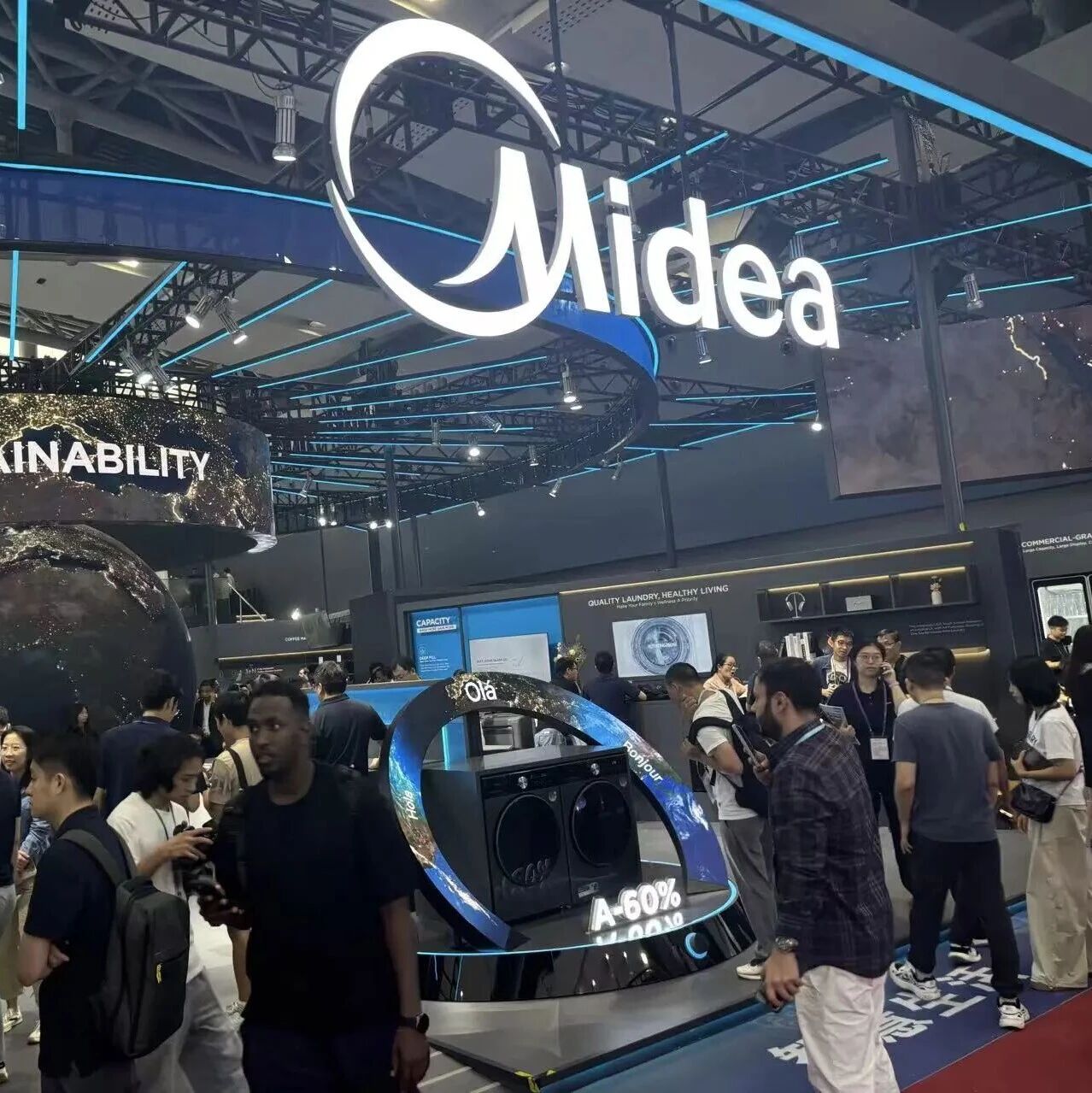
Core Viewpoint - Midea Group reported a double-digit growth in revenue for the first three quarters of the year, but the net profit growth in the third quarter showed signs of slowing down due to pressures in the domestic home appliance market from policy adjustments [2][4]. Financial Performance - For the first three quarters of 2023, Midea Group's revenue increased by 13.82% year-on-year to 363.57 billion yuan, and the net profit attributable to shareholders rose by 19.51% to 37.88 billion yuan [2]. - In the third quarter alone, revenue grew by 10.06% year-on-year to 111.93 billion yuan, while net profit increased by 8.95% to 11.87 billion yuan, indicating a slowdown in profit growth [2]. Management Changes - Midea Group announced the resignation of its former Vice President Berlin, who was the President of the China region, with Wang Chunkai taking over his position [3]. - The organizational structure of Midea's domestic marketing system has been further optimized following these changes [3]. Industry Context - The domestic home appliance market faced challenges in the third quarter due to adjustments in national subsidy policies, affecting not only Midea but also other companies like Hisense and TCL [4]. - Hisense reported a revenue growth of only 1.35% to 71.53 billion yuan for the first three quarters, with a net profit increase of 0.67% to 2.81 billion yuan [4]. - TCL's global TV shipment volume increased by 5.3% to 21.08 million units, but its domestic market experienced a decline of 4.1% [4]. Business Strategy - Midea Group's faster growth compared to competitors is attributed to its focus on expanding ToB (business-to-business) and overseas operations, with ToB revenue increasing by 18% year-on-year [5]. - Specific segments such as new energy and industrial technology, smart building technology, and robotics saw revenue growth of 21%, 25%, and 9% respectively [5]. - Midea's overseas revenue from its own brand accounted for over 45% of its ToC (business-to-consumer) business in the first nine months of the year [5].

“双十一”国补拼手速,平台商家挖掘消费新潜力丨时报经济眼
Zheng Quan Shi Bao· 2025-10-22 00:21
Core Viewpoint - The "Double Eleven" shopping festival is gaining momentum, but many regions have increased the difficulty of claiming national subsidies, requiring consumers to act quickly to secure benefits [1][3] Group 1: National Subsidy Challenges - Multiple regions, including Hunan, Anhui, Guangdong, Chongqing, and Shanghai, have set thresholds for claiming national subsidies, implementing methods like "coupon grabbing" and "lottery draws" [1][3] - The adjustments in subsidy rules aim to optimize the distribution of funds, with some areas citing insufficient remaining funds as a reason for increased barriers [3][4] Group 2: Market Response and Strategies - Despite the challenges posed by subsidy adjustments, major platforms and merchants remain cautiously optimistic about the performance during this year's "Double Eleven," expecting growth driven by product structure optimization and enhanced multi-channel capabilities [5][6] - Leading appliance companies, such as Haier, are proactively offering corporate subsidies, providing discounts of up to 20%, and collaborating with e-commerce platforms to create a "triple subsidy" model involving government, enterprises, and merchants [5][6] Group 3: Long-term Consumer Trends - The long-term outlook suggests that the subsidy-driven model will transition to a value-driven approach, with a focus on identifying consumer trends post-policy benefits [6][7] - The government is expected to shift from short-term stimulus to long-term cultivation of consumer potential, emphasizing the need for a robust policy framework to support sustained consumption recovery [7][8]
690亿,“抽签”式国补背后的博弈与隐忧
Guan Cha Zhe Wang· 2025-10-10 13:31
Group 1 - The article discusses the launch of the "Double Eleven" shopping festival by e-commerce platforms like Taobao and JD.com, coinciding with the distribution of 690 billion yuan in special long-term bonds as part of a national subsidy program [1][3] - The marketing strategies highlight significant discounts exceeding 50%, creating high consumer expectations for a win-win scenario among e-commerce platforms, brands, and consumers [1] - However, there has been a drastic shift in subsidy policies, moving from a "universal" approach to a "precise" one, leading to a mismatch between consumer expectations and reality [3][10] Group 2 - Consumers are facing challenges in accessing subsidies, with many reporting that the application process has become more difficult, akin to a lottery, and popular product categories have been significantly reduced [8][10] - The new subsidy mechanism includes a lottery system for obtaining vouchers, with varying rules across regions, such as Shanghai's bi-weekly draws and other areas having different frequencies [8][10] - The overall chances of winning subsidies have decreased, with reports indicating that the success rate in many regions is around 10%, and some areas dropping below 5% [10]

最后3个月,多地国补再调整,改成 “报名摇号” ...
3 6 Ke· 2025-09-12 02:12
Core Insights - The national subsidy program is facing challenges due to misuse and regulatory scrutiny, leading to changes in how subsidies are distributed [1][3][20] - Several provinces have reported significant amounts of fraudulent use of subsidy funds, totaling over 100 million yuan [2] - The subsidy distribution has shifted from a "no-threshold" approach to a "first-come, first-served" model, and now to a lottery system in some regions [5][9][10][14] Group 1: Subsidy Misuse and Regulatory Response - Reports indicate that six provinces have engaged in fraudulent activities related to the national subsidy, with Hunan accounting for approximately 93.83 million yuan [2] - The initial phase of the subsidy program saw widespread misuse, prompting regulatory bodies to take action and adjust the subsidy distribution methods [3][20] - The adjustments aim to create a more transparent and fair process for subsidy distribution while preventing fraudulent claims [20] Group 2: Changes in Subsidy Distribution Methods - The subsidy distribution has evolved from a "no-threshold" model to a "first-come, first-served" basis, and now to a lottery system in various regions [5][9][10] - In Shanghai, the new lottery system will require consumers to register and participate in a public lottery to receive subsidies, with the first round of registration scheduled from September 20 to 22 [10] - Other regions, such as Anhui, have also adopted similar lottery systems for subsidy distribution, indicating a trend towards more regulated and controlled access to subsidies [14][15] Group 3: Consumer Impact and Sentiment - Consumers have expressed frustration with the new lottery system, feeling that it makes accessing subsidies more difficult [8][12] - The changes in subsidy rules have led to concerns about the overall accessibility and effectiveness of the subsidy program, potentially impacting consumer spending behavior [20][22] - Despite the challenges, the new systems are designed to ensure that subsidies are distributed more fairly and transparently, which may ultimately benefit consumers in the long run [20][22]
