
出海红利

Search documents
中信建投:出海红利与变革周期为家电板块两条投资主线
智通财经网· 2026-02-04 23:49
Core Viewpoint - The home appliance sector is expected to underperform the CSI 300 index in 2025 due to tariff increases, fluctuations in the trade-in policy, and high base expectations in the second half of the year. Long-term competitiveness will return to product innovation and efficiency advantages, with two main investment themes: overseas expansion as a key growth source and transformation dividends [1]. Group 1: Black Goods Market - Domestic demand is gradually under pressure, while Chinese companies accelerate overseas expansion and enhance their positions in high-end markets. The internal sales stimulus effect is weakening, and external sales expectations are improving. The overall shipment volume of the Chinese television market is projected to decline by 6.8% year-on-year in 2025, with retail sales expected to drop by about 10% [2]. - The "national subsidy" policy's continuation is uncertain, and if no alternative stimulus is provided, the shipment volume in 2026 may decline by over 10%. However, the upcoming sports events in 2026 are expected to boost overseas television demand, making overseas market expansion a priority for Chinese television companies [2]. Group 2: Market Share and Competition - TCL and Hisense have increased their domestic and international market shares, with both companies exceeding 13 million units in global shipments in the first half of 2025, achieving a global market share of over 14%. Hisense's domestic and overseas market shares are 21.1% and 12.7%, while TCL's are 18.9% and 13.8% respectively [3]. - The competitive landscape is shifting as Samsung's market share has decreased, providing Chinese brands with significant opportunities to capture market share. Hisense and TCL are expected to lead the global market within three years, with a focus on maintaining growth in global market share [3]. Group 3: High-End Market Trends - The high-end television market is experiencing a recovery, with global high-end television shipments and revenue increasing by 40% and 21% year-on-year respectively in Q2 2025. The average size of televisions shipped globally has also increased, indicating a trend towards larger screens [4]. - MiniLED technology is gaining traction in the high-end market, with its shipment volume and revenue growing by 101% and 66% year-on-year in Q2 2025, respectively. This trend is reducing the importance of OLED technology in the high-end segment, benefiting Chinese brands that promote MiniLED televisions [4]. Group 4: Profitability and Structural Upgrades - Chinese brands are capturing more high-end market share, with TCL's global shipments of televisions 65 inches and above increasing by 26.9% year-on-year in Q2 2025. The average size of TCL's global shipments has risen to 53.4 inches, with significant growth in quantum dot and MiniLED television shipments [5]. - The shift towards larger and higher-end televisions is a key factor in improving profitability for brands like Hisense and TCL, as they leverage their advantages in MiniLED technology and competitive pricing in the LCD segment [5].

华安红利机遇股票发起式A:2025年第四季度利润84.35万元 净值增长率6.78%
Sou Hu Cai Jing· 2026-01-23 01:41
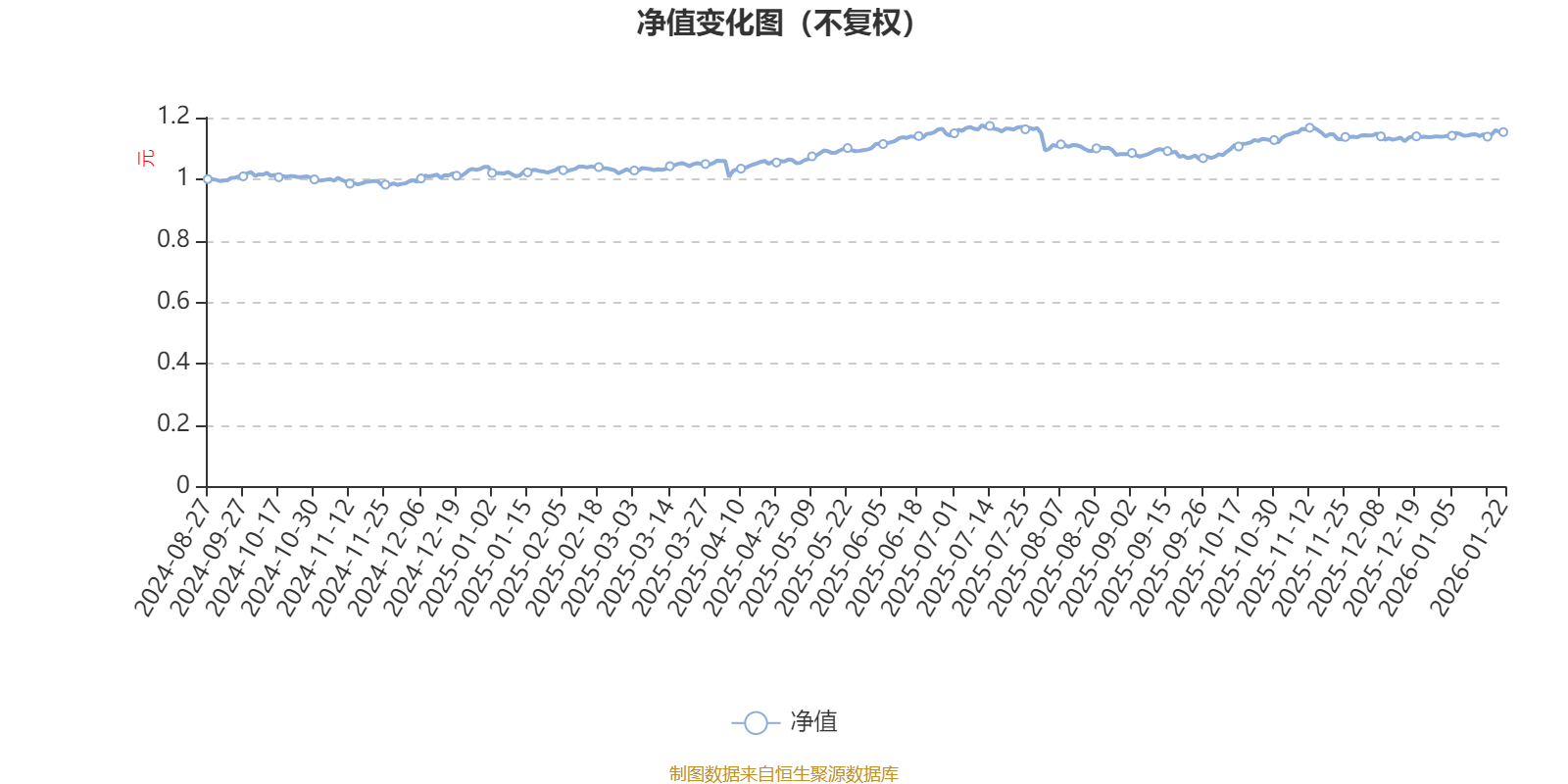
Core Viewpoint - The AI Fund Huazhong Dividend Opportunity Stock Initiation A (021629) reported a profit of 843,500 yuan in Q4 2025, with a net asset value growth rate of 6.78% for the period, and a total fund size of 13.31 million yuan as of the end of Q4 2025 [3][15]. Fund Performance - As of January 22, the fund's unit net value was 1.153 yuan, with a one-year cumulative net value growth rate of 18.23%, ranking 101 out of 119 comparable funds [3][4]. - The fund's performance over the last three months showed a growth rate of 3.11%, ranking 96 out of 121, and over the last six months, it was 3.83%, ranking 106 out of 121 [4]. Fund Management Insights - The fund manager indicated that the appeal of low-volatility dividends has diminished, suggesting a shift in focus towards cyclical and overseas dividends for 2026, while reducing low-volatility dividend assets [3]. - The long-term outlook for dividend investments remains positive, benefiting from the trend of capital migration amid China's ongoing high-quality transformation [3]. Fund Metrics - The fund's Sharpe ratio since inception is 1.5516, indicating a favorable risk-adjusted return [9]. - The maximum drawdown since inception is 5.19%, with the largest quarterly drawdown occurring in Q3 2025 at 5.21% [12]. - The average stock position since inception is 79.07%, compared to the peer average of 88.34%, with a peak stock position of 83.6% at the end of Q1 2025 [14]. Top Holdings - As of Q4 2025, the fund's top ten holdings include Muyuan Food, Hangzhou Bank, China Construction Bank, China National Materials, Hanlan Environment, China Mobile, XCMG, Ping An Insurance, Xiamen Xiangyu, and China Shenhua Energy [18].

Z世代重塑消费新逻辑 公募“掘金”赛道新机遇
Zheng Quan Shi Bao· 2025-12-28 17:56
Core Insights - The public fund investment methodology in the consumer sector is undergoing a significant transformation, moving away from traditional frameworks centered on leading brands to a focus on emerging consumer demands driven by the Z generation [1][2][3] Group 1: Consumer Trends - The Z generation, comprising over 260 million individuals in China, represents 20% of the total population but contributes 40% of consumer spending, driving a market worth over 5 trillion yuan [3] - This demographic prioritizes emotional value and product quality over price-performance ratio, leading to a rise in niche markets such as health products, pet care, and experiential consumption [2][3] - The shift in consumer behavior indicates a dual-track new normal in the consumption industry, characterized by rational material consumption and luxurious spiritual consumption [2][5] Group 2: Investment Opportunities - Investment strategies should focus on high-growth sectors that align with the preferences of the Z generation, such as health food, beauty services, and innovative wellness products [4][6] - The recovery of high-end consumption is expected to accelerate, with a focus on sectors that require less capital investment and have optimized competitive landscapes [4][5] - Companies that possess strong local brand barriers and align closely with the new generation's consumption needs are likely to stand out in the evolving market landscape [3][6] Group 3: Market Dynamics - The consumer confidence index in China is showing signs of recovery, with a K-shaped recovery pattern emerging, where high-end consumption is rebounding faster than mid-to-low-end consumption [4][5] - The supply-demand dynamics in various sectors are shifting, with some areas experiencing oversupply while others are stabilizing, leading to a concentration of competition among leading brands [5][6] - The investment landscape is expected to benefit from the ongoing structural changes in consumer behavior, necessitating a reevaluation of traditional investment frameworks [7][8]

家电行业2026年度策略:经营韧性,出海红利,左侧成长
2025-12-01 16:03
Summary of Key Points from Conference Call Records Industry Overview - **Home Appliance Industry**: The overseas market share of home appliance companies continues to rise, with significant demand recovery expected in the second half of 2026, particularly in the U.S. due to interest rate cuts and real estate demand, which will boost appliance demand and benefit related companies [1][4][6]. Core Insights and Arguments - **Resilience in Operations**: Focus on high dividend and high ROE white goods companies, which have robust assets and strong performance release capabilities. The demand in the U.S. is expected to increase due to interest rate cuts and real estate recovery [4][6]. - **Export Opportunities**: Many export-oriented companies faced challenges in 2025 due to overseas capacity ramp-up and order issues, but a recovery is anticipated in 2026. Chinese home appliance companies are gaining market share from Japanese and Korean firms in emerging markets, with significant growth potential in Europe and the U.S. [4][6]. - **Black Appliance Industry**: The competitive landscape is improving, with a reduction in panel cyclicality and near-monopoly in domestic panel capacity, easing cost pressures. Competitors like Xiaomi are slowing down, allowing Chinese black appliance companies to enhance global market share and profit margins [1][9]. - **Mini LED Products**: Despite an overall decline in the black appliance industry during the 2025 Double Eleven shopping festival, the penetration rate of Mini LED products increased to 47%, with an average price rise of 14%, indicating robust demand for high-end products [1][10]. Additional Important Insights - **North American Market**: Inventory levels in the North American market are becoming rationalized, and consumer demand is expected to gradually recover during the interest rate cut cycle, which will drive the recovery of the black appliance industry [11]. - **European Market Competition**: Price competition in the European market is expected to slow down in 2026, benefiting the profit margins of leading Chinese black appliance companies [12]. - **Clean Appliance Industry**: The competitive landscape is improving, with iRobot's potential bankruptcy benefiting companies like Shark, UFI, and others in the mid-to-low-end product segments. Innovations in products like floor washing robots present investment opportunities [3][14]. - **Investment Strategies for Export Chain Small Appliances**: Focus on companies with low valuations and high earnings elasticity, such as Xinbao, Ousheng Electric, and Dechang, which are expected to recover in 2026 as tariffs ease and U.S. interest rates decline [18][22]. Company-Specific Insights - **Xinbao**: The company is expected to benefit from tariff easing and has a low valuation of about 10 times next year's earnings. It is recommended to focus on Xinbao as order recovery is anticipated in the second quarter of 2026 [19]. - **Ousheng Electric**: The company is rapidly ramping up production in Vietnam and Malaysia, with a focus on smart care robots, which could become a significant growth driver. The expected valuation for next year is around 16 times earnings [21]. This summary encapsulates the key points from the conference call records, highlighting the home appliance industry's outlook, competitive dynamics, and specific company strategies and forecasts.
家电行业2026年度策略报告:经营韧性,出海红利,左侧成长-20251126
ZHESHANG SECURITIES· 2025-11-26 11:09
Core Insights - The report emphasizes the resilience of the home appliance industry, particularly the white goods sector, and highlights the ongoing benefits from international expansion and growth opportunities in emerging markets [1][4][5] - The report maintains a positive outlook on leading companies in the white goods sector, suggesting that they possess strong operational resilience and are well-positioned to navigate market challenges [1][5][17] Investment Recommendations - **Main Line 1**: Focus on high dividend yields and high ROE, capitalizing on the operational resilience of leading white goods companies [3][11] - **Main Line 2**: Leverage the ongoing benefits from international expansion, as leading white goods companies have established global production capacities and can adapt to tariff policies [5][4] - **Main Line 3**: Follow valuation trends and sectors with upward beta, indicating potential growth opportunities [7] - **Main Line 4**: Pay attention to new product categories with low penetration and high growth potential, which could offer significant market opportunities [8] Performance Analysis - The report analyzes the performance of key white goods companies during the pressure testing period of Q2 and Q3 2025, noting that Midea Group and Haier Smart Home demonstrated strong operational resilience despite challenges [13][16] - The report provides detailed financial metrics for major players, indicating that Midea Group and Haier Smart Home maintained positive revenue growth, while Gree Electric experienced declines [14][15][16] Market Dynamics - The report discusses the competitive landscape, noting that leading companies have effectively managed pricing strategies to counter competition from emerging brands like Xiaomi [32][36] - It highlights the importance of understanding the impact of government subsidy policies on industry demand, particularly as the market enters a high base period in Q4 2025 [22][24] Global Expansion and Tariff Resilience - The report outlines the global production strategies of leading companies, emphasizing their ability to mitigate risks associated with tariff changes through diversified production locations [41][46] - It notes that China's dominance in global white goods production allows for effective pricing strategies and resilience against policy uncertainties [46][47] Consumer Demand and Economic Indicators - The report indicates that consumer demand in North America is closely tied to real estate trends, suggesting that a potential interest rate cut could stimulate home appliance consumption in 2026 [52][58] - It highlights the correlation between housing sales and appliance consumption, emphasizing the importance of monitoring macroeconomic indicators [58][59]


