地缘关系

Search documents
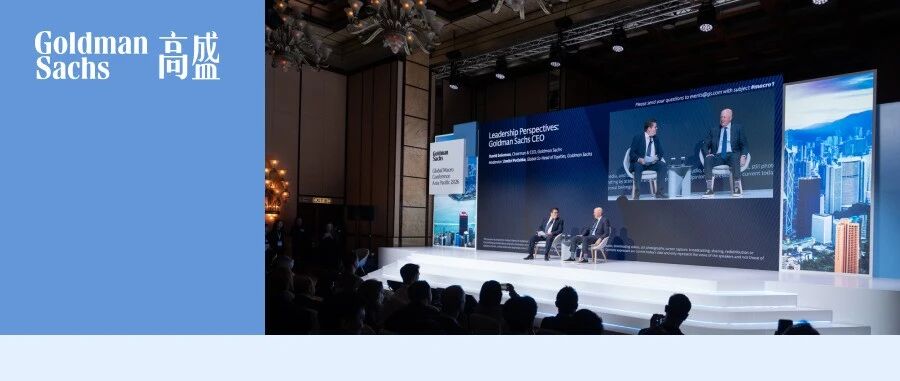
高盛2026年全球宏观论坛精彩回顾
高盛GoldmanSachs· 2026-02-11 09:59
Core Viewpoint - The Goldman Sachs Global Macro Conference highlighted optimistic projections for global economic growth, particularly in the U.S. and Asia, while acknowledging challenges in Europe and the impact of geopolitical tensions on market performance [1][2]. Economic Outlook - Goldman Sachs economists forecast a robust global real GDP growth of 2.9% by 2026, surpassing market expectations, driven by reduced tariff resistance and real income growth [4]. - The U.S. core inflation is expected to decline to 2.1% by the end of 2026, influenced by the waning effects of tariffs and decreasing housing and wage inflation [4]. - In Asia, specifically China, real GDP growth is projected at 4.8% by 2026, supported by strong export growth and ongoing government policy easing, despite weak domestic demand [6]. - The Federal Reserve is anticipated to implement two rate cuts of 25 basis points each in June and September, leading to a final interest rate range of 3-3.25% [6]. - Emerging markets are expected to maintain resilience, with strong growth anticipated in several emerging Asian markets by 2026 [7]. - In Europe, the Eurozone's real GDP growth is projected at 1.3% for 2026, facing challenges from increased export competition with China, while core inflation is expected to drop to 1.8% due to lower energy prices and a stronger euro [9]. Stock Market - The macro environment is favorable for stock growth in the Asia-Pacific region, with stable valuations expected [14]. - The demand for semiconductor manufacturers is anticipated to extend a prolonged super cycle, suggesting continued investment in this sector [14]. - The S&P 500 index is projected to see a 12% earnings growth, which is a key driver of returns in the U.S. stock market [16]. - Companies benefiting from capital expenditures due to investments from other firms are expected to see significant growth, with market consensus forecasts likely to be revised upward [16]. - Despite a challenging macro environment, European bank stocks are outperforming, and there is a positive shift in capital inflows into the European stock market, with increased M&A activity expected among small and medium-sized enterprises [17]. - Over 60% of conference attendees believe that Asian stocks, excluding Japan, will perform the strongest by 2026, with technology stocks anticipated to lead the market [18].


【黄金期货收评】美国9月CPI数据来袭 沪金上涨0.43%
Jin Tou Wang· 2025-10-24 08:02
Group 1 - The core viewpoint indicates that gold prices are experiencing upward momentum due to geopolitical tensions and ongoing issues related to U.S. debt, despite recent price corrections caused by profit-taking from previously crowded long positions [3] - On October 24, the Shanghai gold spot price was quoted at 942.00 yuan per gram, showing a premium of 3.9 yuan per gram over the futures price of 938.10 yuan per gram [1] - Analysts expect the U.S. September core Consumer Price Index (CPI) to maintain a month-on-month increase of 0.3% and a year-on-year increase of 3.1%, which will be a significant indicator for the Federal Reserve ahead of its policy meeting [2] Group 2 - Precious metals prices, including COMEX gold and silver, saw increases of 1.91% and 2.03%, respectively, reflecting market support from geopolitical uncertainties and supply-demand imbalances [3] - The current trading range for COMEX gold is projected to be between 4000 and 4200 USD per ounce, while the Shanghai gold range is expected to be between 920 and 980 yuan per gram [3] - The silver market is also facing supply-demand issues, with COMEX silver expected to trade between 47 and 50 USD per ounce, and Shanghai silver between 11200 and 11800 yuan per kilogram [3]
面对美国50%高关税,最“受伤”的不是印度经济,挨了特朗普的关税闷棍,莫迪转头赴华参会
Sou Hu Cai Jing· 2025-09-01 02:31
Core Viewpoint - The trade conflict between the US and India, particularly the imposition of a 50% tariff by the US, is not just a straightforward trade issue but is deeply rooted in complex geopolitical dynamics, with India adopting a flexible diplomatic stance while facing pressure from the US [1][3]. Group 1: Economic Impact - Indian exporters are projected to lose between $25 billion to $30 billion due to the new tariffs, significantly affecting labor-intensive sectors such as textiles, jewelry, shrimp, furniture, and carpets, with export volumes potentially slashed by 70% [3]. - Despite the tariff impacts, India's economy is not as vulnerable as perceived; the GDP growth rate may drop by 1 percentage point, but this is not catastrophic for the Modi administration, which has implemented various supportive policies like tax reforms and export subsidies [3][8]. - Key sectors such as pharmaceuticals, energy, and electronics remain unaffected by the tariffs, indicating that India still has strategic advantages and reserves [3]. Group 2: Geopolitical Dynamics - Modi's upcoming visit to China for the Shanghai Cooperation Organization summit is strategically timed amidst escalating US-India trade tensions, signaling a potential shift in India's diplomatic focus [4][6]. - The recent thaw in Sino-Indian relations, marked by small diplomatic gestures and a mutual understanding of the need to resolve border issues, suggests that India is looking for opportunities rather than choosing sides in the US-China rivalry [6]. - The narrative of Modi's close relationship with Trump has been undermined, leading to political challenges domestically as opposition parties and even factions within Modi's party question his judgment and approach to US relations [7][8]. Group 3: Trust and Future Outlook - The most significant damage from the tariff situation may not be economic but rather the erosion of trust between India and the US, as well as the disillusionment of Indian elites regarding the benefits of aligning closely with the US [8]. - Modi's response to the crisis indicates a shift towards a more autonomous foreign policy, suggesting that India is willing to explore new partnerships and opportunities beyond its traditional alliances [8].