
全球宏观经济

Search documents
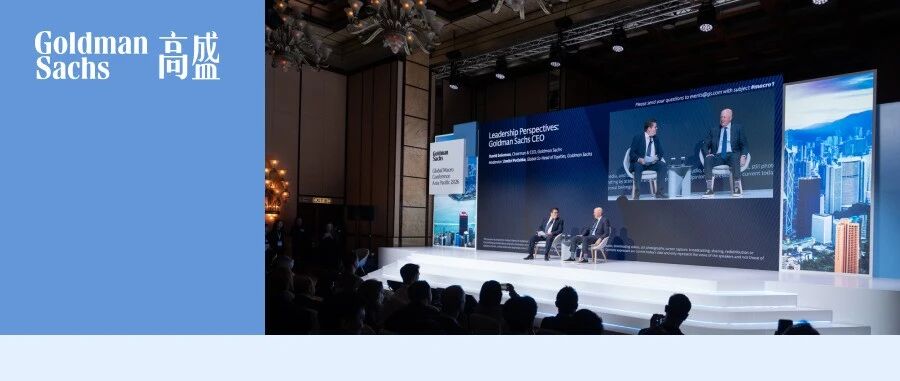
高盛2026年全球宏观论坛精彩回顾
高盛GoldmanSachs· 2026-02-11 09:59
Core Viewpoint - The Goldman Sachs Global Macro Conference highlighted optimistic projections for global economic growth, particularly in the U.S. and Asia, while acknowledging challenges in Europe and the impact of geopolitical tensions on market performance [1][2]. Economic Outlook - Goldman Sachs economists forecast a robust global real GDP growth of 2.9% by 2026, surpassing market expectations, driven by reduced tariff resistance and real income growth [4]. - The U.S. core inflation is expected to decline to 2.1% by the end of 2026, influenced by the waning effects of tariffs and decreasing housing and wage inflation [4]. - In Asia, specifically China, real GDP growth is projected at 4.8% by 2026, supported by strong export growth and ongoing government policy easing, despite weak domestic demand [6]. - The Federal Reserve is anticipated to implement two rate cuts of 25 basis points each in June and September, leading to a final interest rate range of 3-3.25% [6]. - Emerging markets are expected to maintain resilience, with strong growth anticipated in several emerging Asian markets by 2026 [7]. - In Europe, the Eurozone's real GDP growth is projected at 1.3% for 2026, facing challenges from increased export competition with China, while core inflation is expected to drop to 1.8% due to lower energy prices and a stronger euro [9]. Stock Market - The macro environment is favorable for stock growth in the Asia-Pacific region, with stable valuations expected [14]. - The demand for semiconductor manufacturers is anticipated to extend a prolonged super cycle, suggesting continued investment in this sector [14]. - The S&P 500 index is projected to see a 12% earnings growth, which is a key driver of returns in the U.S. stock market [16]. - Companies benefiting from capital expenditures due to investments from other firms are expected to see significant growth, with market consensus forecasts likely to be revised upward [16]. - Despite a challenging macro environment, European bank stocks are outperforming, and there is a positive shift in capital inflows into the European stock market, with increased M&A activity expected among small and medium-sized enterprises [17]. - Over 60% of conference attendees believe that Asian stocks, excluding Japan, will perform the strongest by 2026, with technology stocks anticipated to lead the market [18].


全球宏观及大类资产配置周报-20251208
Dong Zheng Qi Huo· 2025-12-08 04:14
1. Report Industry Investment Rating | Asset Category | Rating | | --- | --- | | Gold | Oscillation | | Dollar | Bearish | | US Stocks | Oscillation | | A-shares | Oscillation | | Treasury Bonds | Oscillation | [23] 2. Core Viewpoints of the Report - Overseas markets were relatively quiet this week. The ADP employment data weakened further, and the September PCE data met expectations. The market fully priced in the December interest rate cut, and risk appetite recovered moderately. The Bank of Japan unexpectedly signaled a possible interest rate hike, causing marginal tightening of market liquidity, but expectations of continuous liquidity release from the Fed in the long term increased. The US economy has not significantly deteriorated, and the Fed's room for interest rate cuts is limited. Risk assets were generally in a high-level oscillation, lacking further catalysts in the short term. Attention should be paid to the risk of profit-taking after the Fed's interest rate meeting next week [4]. - Domestic market expectations for the upcoming Politburo meeting and the relay of economic stabilization policies at the end of the year and the beginning of the next year are relatively low. The tense Sino-Japanese relations also pose certain resistance to the market. The future policy stimulus intensity and rhythm will set the tone for the subsequent market performance [4]. 3. Summary by Directory 3.1 Macro Context Tracking - Overseas markets were quiet. ADP employment weakened, September PCE met expectations, and the market priced in a December rate cut. The Bank of Japan's rate hike signal caused short - term liquidity tightening, but long - term Fed liquidity expectations increased. The US economy remained resilient, and the Fed's rate cut space was limited. Risk assets oscillated at high levels [4]. - Domestic market expectations were low, and Sino - Japanese relations affected the market. The Politburo meeting will determine future policy stimulus [4]. 3.2 Global Asset Class Performance Overview 3.2.1 Equity Markets - Most global stock markets oscillated at high levels. In developed markets, the S&P 500 rose 0.31%, the Nikkei 225 rose 0.47%, the South Korean KOSPI index rose 4.42%, and the German DAX index rose 0.8%. In emerging markets, the Shanghai Composite Index rose 0.37%, the Hong Kong Hang Seng Index rose 0.87%, the Taiwan Weighted Index rose 1.28%, the Brazilian IBOVESPA index fell 1.07%, and the Saudi All - Share Index rose 0.33%. MSCI global indices generally rose, with frontier > emerging > global > developed [6][8]. 3.2.2 Foreign Exchange Markets - The US dollar index continued to weaken, falling 0.46% to 99. Most national currencies appreciated against the US dollar. The RMB exchange - rate index was flat, and the on - shore RMB appreciated slightly to 7.07. The Mexican peso appreciated 0.62%, the Brazilian real depreciated 1.93%, the euro appreciated 0.39%, the yen appreciated 0.53%, the South Korean won depreciated 0.42%, the British pound appreciated 0.69%, and the Australian dollar appreciated 1.38% [10][11]. 3.2.3 Bond Markets - Global major countries' 10 - year government bond yields oscillated upward. In developed countries, the US Treasury yield rose 12bp to 4.14%, the Japanese government bond yield rose 13bp, the British government bond yield rose 1bp, and the German government bond yield rose 11bp. In emerging markets, the Chinese government bond yield rose 1bp to 1.85%, the Brazilian government bond yield rose 16bp, and the Indonesian government bond yield fell 12bp [15][16]. 3.2.4 Commodity Markets - The global commodity market was strong. Energy prices rebounded due to the deadlock in the Russia - Ukraine negotiations. WTI crude oil rose 2.84%, and natural gas rose 9.77%. The metal sector was strong, with LME copper rising 4.38% and LME aluminum rising 1.24%. Gold was in a high - level consolidation, and silver was strong under the short - squeeze situation. COMEX gold fell 0.67%, and silver rose 3%. The domestic commodity market showed differentiation, with precious metals > non - ferrous metals > black metals > industrial products > agricultural products > energy and chemicals [20][21]. 3.3 Weekly Outlook for Asset Classes 3.3.1 Precious Metals - Gold was oscillating around the $4200 mark, lacking upward momentum. The US economic data was mixed, with employment weakening and inflation under control. If the Fed's meeting is less dovish than expected, gold may face a short - term correction. The real interest rate rose, the US dollar index oscillated, and the RMB appreciated. The gold trading heat cooled, and the silver short - squeeze risk decreased. It is advisable to consider going long on the gold - silver ratio [24][29][35]. 3.3.2 US Dollar - The US dollar was bearish. The December interest rate cut was almost certain, and the downward pressure on the US dollar index increased [23]. 3.3.3 US Stocks - US stocks were oscillating. The three major US stock indices continued to recover. The end - of - year seasonal performance was strong, but attention should be paid to the risk of profit - taking after the interest rate meeting next week [39]. 3.3.4 A - shares - A - shares were oscillating. The trading volume did not increase significantly, and funds were in a wait - and - see state. The upcoming macro - week will set the tone for the stock market [50]. 3.3.5 Treasury Bonds - Treasury bonds were oscillating. The Politburo meeting's policy tone is expected to be positive but not exceed market expectations. The short - and medium - term varieties are likely to stabilize, but the trading structure of ultra - long - term bonds is fragile, and whether it can stabilize needs further observation [23][55]. 3.4 Global Macroeconomic Data Tracking 3.4.1 Overseas High - Frequency Economic Data Tracking - The GDPNow model estimated the Q3 growth rate at 3.81%, and the Redbook retail sales growth rate rose to 7.6%. The US economy remained resilient. Crude oil prices rebounded, and inflation expectations rebounded slightly, but inflation risks were controllable. US unemployment claims decreased, and the employment market weakened but did not deteriorate significantly [70]. - Bank reserves were $2.9 trillion, the TGA account balance was $908.5 billion, and overnight reverse repurchase volume decreased. Market liquidity tightened marginally. Corporate bond credit spreads narrowed, and the market's interest rate cut expectations continued to rise, fully pricing in a December rate cut and two rate cuts next year [79]. - The US November ISM manufacturing PMI was 48.2, remaining in the contraction range. The November ISM services PMI rose to 52.6, reaching a nine - month high. The September core PCE increased 2.8% year - on - year, supporting the Fed's rate cut [82]. 3.4.2 Domestic High - Frequency Economic Data Tracking - The real estate industry continued to drag down the economy, with Vanke's bonds falling and the second - hand housing market experiencing a decline in both volume and price. Port container throughput remained high, indicating short - term resilience in external demand [88]. - As of December 5, R007, DR007, SHIBOR overnight, and SHIBOR 1 - week were 1.50%, 1.44%, 1.30%, and 1.42% respectively. The average daily trading volume of inter - bank pledged repurchase increased, and the overnight trading volume ratio decreased [91]. - In October, industrial production, fixed - asset investment, and social retail sales growth rates declined. However, due to the strong economic performance in the first three quarters, achieving the 5% annual growth target is not difficult [92]. - In October, the real estate industry continued to weaken, with declines in real estate investment, sales, and corporate funds [95]. - In October, financial data was weak. Resident and corporate loan growth was negative, government bond issuance decreased, and M1 growth rate declined [98]. - In October, PPI and CPI continued to recover. PPI's year - on - year decline narrowed, and CPI's year - on - year growth rate turned positive. Price increases were affected by overseas factors, policies, and supply - demand contradictions [105]. - In October, export and import growth rates declined. Exports were affected by factors such as fewer working days, high bases, and trade frictions. Imports declined due to weak domestic demand. In the future, export growth is expected to remain resilient [112].
实测:睿盛环球到底是不是传说中的“稳稳的幸福”
Sou Hu Cai Jing· 2025-12-01 11:37
Core Viewpoint - The current market environment is challenging, leading to a shift towards long-term asset allocation with a focus on real-world assets (RWA) as a safer investment strategy [1][2]. Group 1: Long-Term Investment Strategy - The company emphasizes the importance of long-term investments, particularly in RWA, which inherently require time to yield returns, similar to agricultural cycles [1]. - The perception of "locking up" funds is changing, as the company provides transparency regarding the use of funds and the nature of underlying assets, which builds investor confidence [1]. Group 2: Safety and Transparency - Safety is a primary concern for investors, and the company addresses this by providing clear audit reports and detailed monthly updates on risk management and revenue sources [1][2]. - The ease of withdrawal and the regularity of processes are highlighted as critical factors for investor trust, with successful withdrawal experiences reported [2]. Group 3: Community and Market Understanding - Engaging with a knowledgeable community is deemed essential, as discussions among investors focus on macroeconomic trends and the future of the RWA sector, indicating a collective understanding of market dynamics [2]. - The company positions itself as a stabilizing force in an investor's portfolio, suggesting that a slow and steady approach can lead to long-term growth [4].
只是“牛回头”? 分析师看好黄金上行趋势不改
Zheng Quan Shi Bao· 2025-10-22 17:20
Group 1 - The recent sharp decline in gold prices is attributed to a combination of technical selling and a shift in market sentiment, with prices dropping over 6% in London and 3.92% in Shanghai [1] - The significant rise in gold prices since mid-August, exceeding 30%, created a strong profit-taking demand, and the breach of key support levels triggered stop-loss orders, leading to a "flash crash" [1][2] - Geopolitical tensions have shown signs of easing, and a slight adjustment in market expectations regarding Federal Reserve interest rate cuts has diminished gold's short-term appeal as a safe-haven asset [1] Group 2 - Despite the short-term volatility, the long-term outlook for gold remains positive, supported by ongoing global central bank purchases and economic uncertainties [2] - The current market adjustment is seen as a necessary correction to the previous rapid price increase, with expectations that gold will resume an upward trend after this phase [2][3] - Investors are advised to adopt a systematic approach to gold investment, such as regular and incremental purchases, to mitigate timing risks and smooth costs [2]
黄金巨震,券商火速解读!
券商中国· 2025-10-22 14:48
Core Viewpoint - The recent volatility in the gold market, with significant price drops, is attributed to technical sell-offs and shifts in market sentiment, but the long-term outlook for gold remains positive due to ongoing global economic uncertainties and central bank policies [1][3][5]. Market Dynamics - On October 21, the London spot gold price fell over 6%, continuing to decline by more than 1.5% on October 22, indicating a sharp market reaction [1]. - Analysts suggest that the recent price adjustments are a result of profit-taking after a substantial increase in gold prices, which rose over 30% since mid-August [3][4]. Technical Analysis - The sharp decline in gold prices is linked to a breach of key support levels, triggering stop-loss orders and exacerbating the sell-off [3]. - The easing geopolitical tensions and slight adjustments in expectations for Federal Reserve interest rate cuts have diminished gold's short-term appeal as a safe-haven asset [3][4]. Long-term Outlook - Despite short-term fluctuations, the fundamental drivers supporting gold prices, such as central bank purchases and economic uncertainties, remain intact [4][5]. - The historical data indicates that gold price corrections have become quicker, with significant upward movements followed by rapid adjustments [4]. Investment Strategy - Investors are advised to adopt a long-term perspective when considering gold investments, utilizing strategies such as dollar-cost averaging through gold accumulation plans or ETFs to mitigate timing risks [7]. - Gold should be viewed as part of a broader asset allocation strategy, focusing on its long-term value preservation rather than short-term speculation [7].

报名进行中 | 2025彭博市场快评第五期:全球宏观经济与亚太走势展望
彭博Bloomberg· 2025-07-31 06:04
Group 1 - The article emphasizes the need for insight in a rapidly changing macroeconomic landscape, highlighting the importance of professional analysis from Bloomberg's economists and market experts to identify investment opportunities [1] - The focus of the 2025 Bloomberg China Market Review series is on macroeconomic patterns and market dynamics, addressing key industry concerns and providing timely updates [1] Group 2 - The upcoming event on August 5, 2025, will feature discussions on U.S.-China relations and global economic outlook, as well as an analysis of Japan's economic prospects amidst political turmoil and tariff pressures [2] - Key speakers include Bloomberg's Chief Economist for Asia-Pacific, Taro Kimura, and a senior foreign exchange specialist, indicating a strong lineup of expertise for the discussions [2]

活动邀请 | 2025彭博市场快评第五期:全球宏观经济与亚太走势展望
彭博Bloomberg· 2025-07-25 05:54
Group 1 - The article emphasizes the importance of maintaining a high-level perspective and insight in the face of a rapidly changing macroeconomic landscape, particularly focusing on the 2025 Bloomberg China Market Review series [1] - It highlights the upcoming event on August 5, 2025, featuring discussions on key topics such as US-China relations and global economic outlook, as well as the economic prospects for Japan amidst political turmoil and tariff pressures [2] - The event will include expert analyses from Bloomberg's chief economists and senior specialists, providing valuable insights into macro market trends and forecasts [2] Group 2 - The article indicates that the "trade truce" period is nearing its end, suggesting a critical juncture for US-China relations and its implications for the global economy [2] - It mentions the need for a thorough analysis of Japan's economic outlook in light of ongoing political instability and trade challenges [2] - The article promotes the use of terminal analysis tools to gain deeper insights into macroeconomic markets and future trends [2]

特朗普称美日、美菲达成贸易协议!日元跳水
21世纪经济报道· 2025-07-23 00:31
Group 1: US-Japan Trade Agreement - The US and Japan have reached a significant trade agreement, with Japan committing to invest $550 billion in the US, from which the US will gain 90% of the profits [1] - The agreement is expected to create hundreds of thousands of jobs in the US, and Japan will open its market for trade, including automobiles, rice, and other agricultural products [1] - Japan will pay a 15% tariff on imports from the US as part of the agreement [1] Group 2: US-Philippines Trade Agreement - A trade agreement has been reached between the US and the Philippines, with the US imposing a 19% tariff on imports from the Philippines [6][7] - The Philippines will open its market to the US and implement zero tariffs on US goods [7] - There has been no response from the Philippines regarding the agreement as of now [8] Group 3: Global Economic Impact of US Tariffs - The International Monetary Fund (IMF) has reported that the US's tariff policies could significantly impact the global macroeconomic landscape [10] - The increase in tariffs is expected to reduce global demand in the short term, raise import prices, and exacerbate inflationary pressures [10] - The uncertainty surrounding tariffs may weaken consumer and business confidence, leading to increased volatility in financial markets [10] - Countries may respond to the growing trade imbalances by raising trade barriers, potentially leading to greater geopolitical economic divisions and long-lasting damage to the global economy [10]

国际货币基金组织:美国关税政策冲击全球宏观经济
news flash· 2025-07-22 23:00
Core Insights - The report from the International Monetary Fund indicates that the Trump administration's imposition of import tariffs on nearly all trade partners may significantly impact the global macroeconomic landscape [1] Economic Impact - The increase in tariffs is expected to reduce global demand in the short term, leading to higher import prices and exacerbating inflationary pressures [1] - The uncertainty surrounding tariffs may weaken consumer and business confidence, contributing to increased volatility in financial markets [1] Trade Relations - The report suggests that countries may respond to the escalating trade imbalances by raising trade barriers further, which could intensify geopolitical economic divisions [1] - The long-term damage to the global economy from these tariff actions is anticipated to be substantial and enduring [1]
中信证券:预计年中美国制造业PMI或仍在荣枯线以下波动运行
news flash· 2025-06-05 00:32
Core Viewpoint - CITIC Securities predicts that the US manufacturing PMI may continue to fluctuate below the growth line by mid-year, reflecting a broader trend in global manufacturing dynamics [1] Group 1: Global Manufacturing PMI Trends - In May 2025, the global manufacturing PMI index exhibited characteristics of "China's stability, emerging market divergence, European stabilization, and US decline" [1] - The easing of tariffs has provided a short-term boost to exports, but negative expectations for overseas markets are gradually becoming evident [1] Group 2: Regional Manufacturing PMI Insights - The Eurozone manufacturing PMI showed little change, indicating signs of temporary stabilization [1] - The US ISM manufacturing PMI index recorded 48.5 in May, characterized by "weak supply and demand, persistent inflation, a cooling job market, and a significant decline in foreign trade" [1] Group 3: Economic Impact and Forecast - The overall impact of tariff disruptions on the US and global macroeconomy is beginning to manifest, with expectations of a slight decline in US economic readings [1] - CITIC Securities anticipates that the US manufacturing PMI will likely remain below the growth line through mid-year [1]
