股市表现

Search documents
Non-Farm Payrolls Sink -92K in February
ZACKS· 2026-03-06 16:36
Employment Situation - The Employment Situation report for February revealed a disappointing loss of -92K jobs, significantly below the expected +50K and a drop from the revised +126K in January [1] - The Unemployment Rate increased by 10 basis points to 4.4% [1] Sector Performance - The Healthcare sector experienced a loss of -28K jobs, influenced by a 41-day nursing strike [2] - Other sectors also faced declines: Information Systems and Transportation/Warehousing lost -11K jobs each, while Government jobs decreased by -10K [3] - Social Assistance jobs saw a slight increase of +9K, but overall, the report indicated a negative trend in employment [3] Job Revisions and Trends - The December job figures were revised down from +50K to -17K, contributing to a trailing four-month average of -21K jobs per month, marking the first negative average since the Covid pandemic [2] - The Transportation/Warehousing sector has lost a total of -157K jobs over the past year, representing a decline of -2.4% [3] Wage and Participation Metrics - Hourly wages increased by +0.4% month-over-month and +3.8% year-over-year, exceeding expectations by +10 basis points [4] - The Average Workweek decreased to 33.8 hours, and Labor Force Participation fell to 62.0%, the lowest level since December 2021 [4] - The U-6 unemployment rate, which includes underemployment, stood at 7.9% [4] Retail Sales - Retail Sales for January were reported at -0.2%, better than the expected -0.4%, but still lower than the previous month's figure of 0.0% [5] - Excluding autos, retail sales remained flat, but when excluding autos and gas, the figure rose to +0.3%, surpassing the projected +0.2% [5] Market Reaction - Pre-market futures declined significantly due to the weak employment numbers and rising oil prices, with the Dow down -1.37%, S&P 500 down -1.27%, and Nasdaq down -1.56% [6] - Despite the downturn, the Russell 2000 index is still trading positively year-to-date, although major indexes have seen declines of 2-3% recently [7]

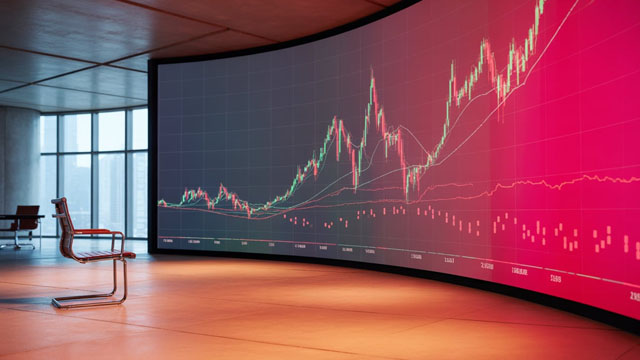
特朗普吹捧股市表现和通胀数据。
Xin Lang Cai Jing· 2026-02-13 18:40
Core Viewpoint - Trump praised the performance of the stock market and inflation data [1] Group 1 - The stock market has shown significant gains, reflecting positive investor sentiment [1] - Recent inflation data indicates a favorable trend, contributing to economic optimism [1]
高盛2026年全球宏观论坛精彩回顾
高盛GoldmanSachs· 2026-02-11 09:59
Core Viewpoint - The Goldman Sachs Global Macro Conference highlighted optimistic projections for global economic growth, particularly in the U.S. and Asia, while acknowledging challenges in Europe and the impact of geopolitical tensions on market performance [1][2]. Economic Outlook - Goldman Sachs economists forecast a robust global real GDP growth of 2.9% by 2026, surpassing market expectations, driven by reduced tariff resistance and real income growth [4]. - The U.S. core inflation is expected to decline to 2.1% by the end of 2026, influenced by the waning effects of tariffs and decreasing housing and wage inflation [4]. - In Asia, specifically China, real GDP growth is projected at 4.8% by 2026, supported by strong export growth and ongoing government policy easing, despite weak domestic demand [6]. - The Federal Reserve is anticipated to implement two rate cuts of 25 basis points each in June and September, leading to a final interest rate range of 3-3.25% [6]. - Emerging markets are expected to maintain resilience, with strong growth anticipated in several emerging Asian markets by 2026 [7]. - In Europe, the Eurozone's real GDP growth is projected at 1.3% for 2026, facing challenges from increased export competition with China, while core inflation is expected to drop to 1.8% due to lower energy prices and a stronger euro [9]. Stock Market - The macro environment is favorable for stock growth in the Asia-Pacific region, with stable valuations expected [14]. - The demand for semiconductor manufacturers is anticipated to extend a prolonged super cycle, suggesting continued investment in this sector [14]. - The S&P 500 index is projected to see a 12% earnings growth, which is a key driver of returns in the U.S. stock market [16]. - Companies benefiting from capital expenditures due to investments from other firms are expected to see significant growth, with market consensus forecasts likely to be revised upward [16]. - Despite a challenging macro environment, European bank stocks are outperforming, and there is a positive shift in capital inflows into the European stock market, with increased M&A activity expected among small and medium-sized enterprises [17]. - Over 60% of conference attendees believe that Asian stocks, excluding Japan, will perform the strongest by 2026, with technology stocks anticipated to lead the market [18].


Dow Retreats on Financials Weakness. Nasdaq Rises 0.3%.
Barrons· 2026-01-23 21:46
Core Viewpoint - A significant decline in financial stocks has led to a decrease in the Dow Jones Industrial Average, marking a second consecutive weekly decline for the index [1] Group 1: Market Performance - The Dow Jones Industrial Average fell by 0.6%, equating to a loss of 274 points on Friday [1] - The S&P 500 index remained flat, while the Nasdaq Composite experienced a gain of 0.3% [1] - Despite the consecutive weekly losses, the Dow is approximately one percent away from its record closing high [1]
The Stock Market Flashes a Warning Seen Twice in 40 Years, and the Federal Reserve Has Bad News About President Trump's Tariffs
Yahoo Finance· 2025-12-11 08:30
Core Insights - The U.S. stock market, represented by the S&P 500, is experiencing a strong year with a 16% increase in 2025 despite economic uncertainties due to President Trump's tariffs [2][8] - A Federal Reserve study indicates that these tariffs will negatively impact economic growth, leading to increased unemployment and slower GDP growth [4][5] - The current valuation of the S&P 500 is at 22.4 times forward earnings, one of the highest in the past 40 years, raising concerns about future stock market performance [8] Economic Impact - The Federal Reserve Bank of San Francisco's research suggests that tariffs will reduce GDP growth by half a percentage point in 2025 and 2026, which could lead to slower corporate earnings growth [5][6] - Historical data shows a correlation between GDP growth and corporate earnings growth, indicating that slower GDP growth could adversely affect stock market performance [6][7] Market Valuation - The S&P 500's current valuation is concerning, as it has only reached similar levels during two other periods in the last 40 years, suggesting potential overvaluation [8] - Comparatively, between 2005 and 2014, nominal U.S. GDP rose by 43% while the S&P 500 achieved a total return of 110%, and between 2015 and 2024, nominal GDP rose by 67% with a total return of 243% for the S&P 500 [9]
Most Gulf stocks muted on weaker oil, Fed rate cut doubts
Reuters· 2025-11-19 09:03
Core Viewpoint - Most Gulf stock markets experienced subdued trading due to falling oil prices, with investors awaiting a delayed U.S. jobs report for insights on the Federal Reserve's interest rate trajectory [1] Group 1: Market Performance - Gulf stock markets were generally subdued in early trade on Wednesday [1] - The decline in oil prices contributed to the lackluster performance of these markets [1] Group 2: Investor Sentiment - Investors are closely monitoring a delayed U.S. jobs report for indications regarding the Federal Reserve's interest rate path [1]

张德盛:10.27黄金今日还会涨吗?未来积存金价格走势分析操作
Sou Hu Cai Jing· 2025-10-27 04:20
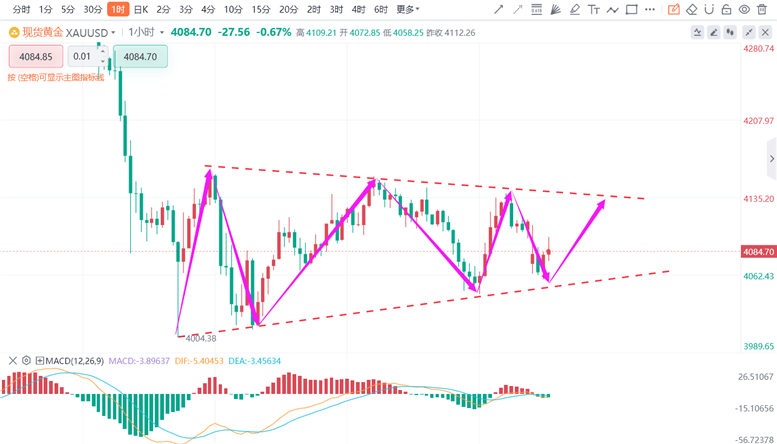
Group 1 - The core viewpoint of the article highlights the significant drop in gold prices, which fell nearly $50 to $4063.80 per ounce, influenced by various factors including international trade dynamics, geopolitical developments, monetary policy expectations, and stock market performance [2] - The U.S. Labor Department's release of the September Consumer Price Index (CPI) data, which was below expectations, has raised the likelihood of an interest rate cut in October, although it did not alter the prevailing inflationary concerns above the 2% target [2] - The market sentiment towards gold has turned cautious despite the support from potential interest rate cuts and lingering geopolitical risks, indicating a mixed outlook for gold's long-term performance [2] Group 2 - Following last week's significant drop, gold has entered a consolidation phase, oscillating between the resistance level of $4150 and the support level of $4000, with expectations that a breakout from this range could determine the next market direction [3] - The technical analysis suggests that as long as gold remains within the $4150/$4000 range, traders should focus on effective trading strategies rather than predicting a clear trend, with potential targets of $4200, $4250, and $4300 if the bullish trend continues [3] - Domestic gold prices, particularly in the Shanghai market, have shown a similar pattern, with support levels at 930 and 925, indicating that as long as these levels hold, significant declines are unlikely [5]
The Stock Market Will Make a Big Move in 2026 if History Repeats Itself, but Fed Chair Jerome Powell Has a Warning for Investors
Yahoo Finance· 2025-10-25 07:55
Core Insights - The S&P 500 has rebounded 14% since January and is on track for double-digit returns for the third consecutive year, a rare occurrence since its inception in 1957 [2] Federal Reserve Actions - The Federal Reserve cut interest rates by a quarter percentage point in September, marking the first rate cut since December 2024 after a lengthy pause due to uncertainties surrounding tariffs and their impact on inflation and employment [5][6] - Historically, the stock market has performed well following such rate cuts, with a median return of 13% in the year after the first cut when rates were held steady for at least six months [7][8] Market Valuation Concerns - Despite the positive historical performance associated with rate cuts, Federal Reserve Chairman Jerome Powell has indicated that stocks are currently richly valued, with the S&P 500 trading at 22.7 times forward earnings, a level seen only during two previous periods [8] Potential Market Upside - If the S&P 500 follows historical trends, it could advance 13% to reach 7,494 over the next year, implying a 12% upside from its current level of 6,700. The potential upside increases to 15% if the economy avoids a recession [9]
纽约银行列三大理由看空黄金,直呼美股才是更佳对冲工具!
Jin Shi Shu Ju· 2025-10-24 08:21
Core Viewpoint - Gold has experienced significant volatility, with a sharp decline following a peak, indicating that U.S. equities may serve as a better hedge against volatility than gold [1][3]. Summary by Sections Gold Market Analysis - Gold prices fell by 6.3% after reaching nearly $4,400 per ounce, dropping below $4,100 again, with a daily decline of over 1.5% [1]. - Concerns about inflation have historically driven investments into commodities like gold and silver, but long-term, equities are viewed as superior inflation hedges [3]. - The recent rise in gold prices was partly attributed to a decline in the U.S. dollar index, which has rebounded by approximately 2.4% since mid-September after an 11% drop earlier this year [3][4]. U.S. Treasury and Inflation Concerns - Fears regarding the depreciation of U.S. Treasuries have led to increased gold investments, but these concerns are considered overstated [4]. - The drop in gold prices on a strong dollar and a decline in the 10-year U.S. Treasury yield below 4% illustrates the market dynamics at play [4]. - Despite market worries about tariffs potentially raising prices, there is no expectation of a significant short-term rise in inflation [4]. U.S. Equity Market Outlook - The financial services company holds an "overweight" position on U.S. equities, predicting they will outperform the overall market [5]. - This outlook is based on the robust performance of the U.S. technology sector and productivity growth, which is more than double that of most other developed countries [5]. - The company forecasts U.S. economic growth of approximately 1.8% this year and 2% next year [5].

Why the Stock Market Couldn't Care Less About a Shutdown—and Whether It Should
Barrons· 2025-10-02 16:16
Core Insights - The government shutdown is leading to a data blackout, impacting the availability of key economic indicators for investors [1] - Despite the data blackout, Wall Street is currently not reacting negatively, indicating a level of resilience among investors [1] Group 1 - The shutdown is causing a lack of access to important data that investors typically rely on for decision-making [1] - Investors are showing a degree of indifference to the shutdown's implications, suggesting confidence in the market's current conditions [1]