基金绩效考核

Search documents
薪酬新规透视 | 大摩研究管理部总监王大鹏业绩踩线仍推新基“大摩港股通多元成长” 4只产品均跑输基准超27%
Xin Lang Cai Jing· 2025-12-11 09:37
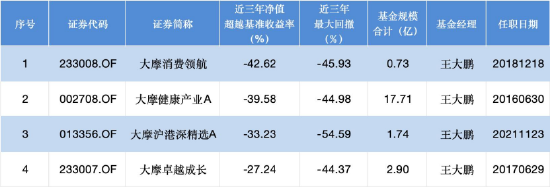
Group 1 - The core viewpoint of the article highlights the significant reform in the public fund performance evaluation system, which has led to nearly a thousand fund managers facing potential salary reductions due to poor performance over the past three years [1][12] - According to the new regulations from the Asset Management Association of China, fund managers whose products underperform the benchmark by more than 10 percentage points and have negative profit margins will see their performance pay cut by at least 30% [1][12] - The new evaluation framework emphasizes the long-term performance of senior fund managers, making their historical results a focal point for market scrutiny [1][12] Group 2 - Data from Wind shows that as of December 10, 2023, 13 funds managed by Morgan Stanley underperformed their benchmarks by over 10 percentage points, with four of these funds managed by Wang Dapeng [1][11] - Specifically, Wang Dapeng's fund "Morgan Stanley Consumption Pioneer" underperformed by 42.62% over the past three years, with a maximum drawdown of 45.93% [2][13] - Other funds managed by Wang Dapeng, such as "Morgan Stanley Health Industry A" and "Morgan Stanley Hong Kong-Shenzhen Select A," also showed significant underperformance, with drawdowns of 39.58% and 33.23% respectively [2][13] Group 3 - Wang Dapeng's investment style shows a high degree of consistency across his funds, with a concentrated focus on sectors such as pharmaceuticals and consumer goods [3][14] - The performance of his top holdings, particularly in the pharmaceutical sector, has been poor, with several stocks experiencing declines of over 10% in the last three months [3][14] - Despite the underperformance of his existing funds, Wang Dapeng is still involved in managing new products, including the "Morgan Stanley Hong Kong Stock Connect Multi-Asset Growth Mixed Fund," which is currently in the subscription phase [5][7][16] Group 4 - The new fund "Morgan Stanley Hong Kong Stock Connect Multi-Asset Growth Mixed Fund" has a performance benchmark set to a combination of indices, indicating a strategic approach to diversify performance metrics [7][18] - Concerns arise regarding the future performance of this new fund due to the historical underperformance of both Wang Dapeng and his co-manager Lei Zhiyong, whose fund "Morgan Stanley Innovation A" also underperformed its benchmark by 33.75% [11][19]

监管重磅出手!基金经理业绩不佳降薪30%,绩效40%强制跟投
Sou Hu Cai Jing· 2025-12-09 12:16
Core Points - The regulatory authority has issued the "Guidelines for Performance Assessment Management of Fund Management Companies (Draft for Comments)", focusing on long-term investment performance and establishing a performance assessment system centered on fund investment returns [1] - The new regulations require that the total compensation changes for companies must be linked to fund investment returns and company performance, with performance indicators accounting for no less than 80% of the assessment for senior executives and fund managers [1] Group 1: Compensation Mechanism - The new regulations detail the compensation adjustment mechanism for active equity fund managers, requiring fund management companies to establish a tiered mechanism based on the comparison of performance benchmarks over the past three years and fund profitability [3] - If a fund manager's product performance over the past three years is more than 10 percentage points below the performance benchmark and the fund's profitability is negative, their performance compensation must decrease significantly from the previous year, with a reduction of no less than 30% [3] - Conversely, if performance significantly exceeds the benchmark and profitability is positive, performance compensation may be reasonably increased [3] Group 2: Long-term Incentive Mechanism - The guidelines further clarify the long-term incentive and restraint mechanisms, requiring senior executives, heads of key business departments, and fund managers to use a certain percentage of their compensation to purchase the company's own or their managed fund products [3] - Senior executives and heads of key business departments must invest at least 30% of their total performance compensation in public funds managed by the company, with at least 60% of that in equity funds [3] - Fund managers face stricter requirements, needing to invest at least 40% of their total performance compensation in the public funds they manage [3] Group 3: Assessment Indicators - The assessment indicators reflect a differentiated and long-term orientation, with the weight of long-term investment return indicators in overall quantitative assessments being no less than 80% for indicators over three years [4] - For senior executives responsible for sales and core sales personnel, the assessment weight for investor profit and loss indicators should be no less than 50% [4] - For senior management assessments, the weight of fund investment return indicators should be no less than 50%, while the weight for performance benchmark comparison indicators for active equity fund managers should not be less than 30% [4]

基金业薪酬监管再升级,有多少基金经理将降薪?
Sou Hu Cai Jing· 2025-12-08 07:41
Core Viewpoint - The new performance evaluation guidelines for public funds shift from a framework-based approach to rigid constraints, emphasizing the priority of investor interests and addressing long-standing industry issues such as scale orientation and profit imbalance [2][5][11] Summary by Sections Performance Evaluation Guidelines - The new guidelines, titled "Performance Evaluation Management Guidelines for Fund Management Companies (Draft for Comments)," aim to enhance the performance evaluation system by quantifying assessment indicators and strengthening salary constraints [2][5] - The previous version released in June 2022 introduced innovative requirements such as deferred performance compensation and self-purchase by executives and fund managers, which received mixed reactions from the market [2][5] Key Changes in Guidelines - The core assessment focus has shifted to prioritize investor returns, with all indicators designed around "actual returns for holders" [5] - Long-term assessment requirements have transitioned from "principle-based" to "rigid constraints," mandating that long-term investment returns account for at least 80% of quantitative assessment indicators [6] - Differentiated assessment requirements for various roles have been established, with specific weightings for executives, fund managers, and sales personnel [7] - The self-purchase requirement for fund managers has increased to a minimum of 40% of their annual performance, with a holding period of at least one year [8] - A tiered salary adjustment mechanism has been introduced, linking performance directly to salary changes, with specific thresholds for reductions based on performance relative to benchmarks [9] - Shareholder dividend constraints have been formalized, requiring adjustments based on fund performance and investor losses [10] - The guidelines address internal salary distribution fairness, aiming to reduce disparities between executive and employee compensation [11] - The scope of the guidelines has been expanded to include subsidiaries and key personnel involved in public fund operations, ensuring comprehensive regulatory coverage [11] New Indicators Introduced - Five new key indicators have been introduced to provide precise quantitative measures for performance evaluation, including fund profit margin and the definition of actively managed equity funds [12][14] - The profit margin indicator measures net returns relative to average net asset value, enhancing the focus on actual profitability [12] - The definition of actively managed equity funds has been clarified to include specific fund types, ensuring rigorous assessment in high-impact areas [14] - The proportion of profitable investors is now a key metric, shifting focus from product performance to actual investor outcomes [14] - A salary total determination mechanism has been established, linking salary adjustments to various performance and operational factors [15] - Deferred payment timelines for performance compensation have been clarified, ensuring alignment with performance verification periods [15] Detailed Assessment Scenarios - The guidelines address common issues in the industry, such as fund managers managing multiple products and the potential for performance manipulation [17] - A dual-weighted assessment approach based on fund size and management duration has been introduced to ensure fair evaluations [17] - The guidelines prohibit the evasion of assessments through increased concurrent roles, promoting specialization and preventing conflicts of interest [18]

利好!多家A股公司,集体公告!
Zheng Quan Shi Bao· 2025-12-08 00:39
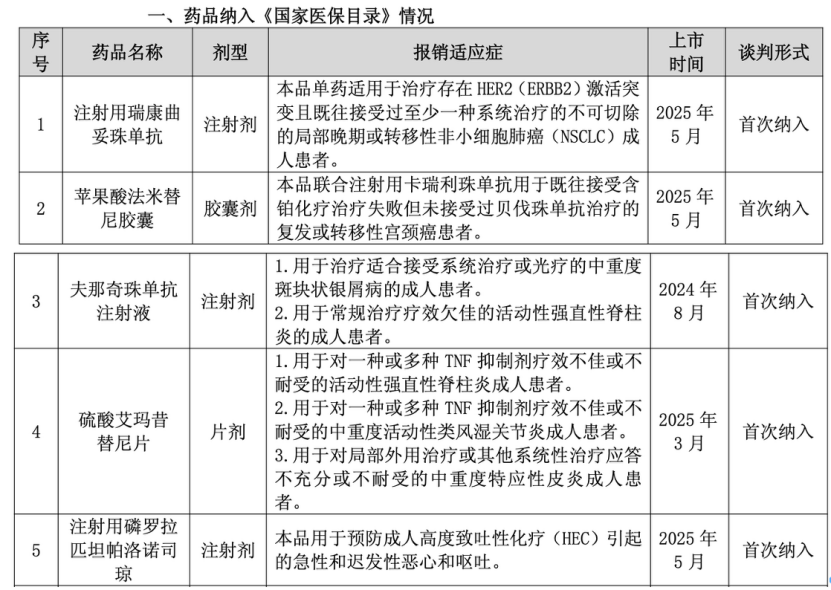
Group 1: National Medical Insurance Drug List Update - The 2025 National Basic Medical Insurance, Maternity Insurance, and Work Injury Insurance Drug List will be released on December 7, 2023, adding 114 new drugs, including 50 innovative Class 1 drugs [2] - The first Commercial Health Insurance Innovative Drug List will also be released on the same day, including 19 drugs, such as CAR-T and Alzheimer's treatment drugs [2] - The new drug list will officially take effect on January 1, 2026 [2] Group 2: Company Announcements - 15 A-share pharmaceutical companies announced that their products were included in the new drug list, with many innovative drug companies benefiting [2] - Zai Lab announced that its self-developed drug, Gilteritinib, was included in the National Medical Insurance Drug List, which is expected to enhance sales and market promotion [2] - Junshi Biosciences, ZhiXiang JinTai, and Elysium also had products included in the list, with Junshi's products gaining new indications and being classified under Category B of the National Medical Insurance [3] Group 3: Sales Impact - Heng Rui Medicine stated that the total sales of the newly included drugs for 2024 are estimated to be approximately 8.66 billion yuan, with 7.55 billion yuan expected for the first three quarters of 2025 [4] - The inclusion of these drugs in the National Medical Insurance Drug List is anticipated to positively impact sales, although the exact effect on operating performance is currently uncertain [4]
利好!多家A股公司,集体公告!
证券时报· 2025-12-08 00:29
Group 1: Core Insights - The 2025 National Basic Medical Insurance, Maternity Insurance, and Work Injury Insurance Drug List was released on December 7, 2023, adding 114 new drugs, including 50 innovative drugs [1] - A new Commercial Health Insurance Innovative Drug List was also published, including 19 drugs, such as CAR-T therapies and Alzheimer's disease treatments [1] - The updated drug list will take effect on January 1, 2026 [1] Group 2: Company Announcements - On December 7, 15 A-share pharmaceutical companies announced that their products were included in the new drug list, particularly many innovative drug companies [2] - Zai Lab announced that its self-developed drug, Jikaxitinib, was included in the National Medical Insurance Drug List, which is expected to enhance sales and market accessibility [2] - Junshi Biosciences and other innovative drug companies also had products included, with Junshi's products gaining new indications in the National Medical Insurance List [2][3] Group 3: Market Impact - Heng Rui Medicine reported that the total sales of its newly included drugs are estimated to be approximately 8.66 billion yuan for 2024 and about 7.55 billion yuan for the first three quarters of 2025 [3] - The inclusion of these drugs in the National Medical Insurance List is expected to positively impact sales and long-term business development for the companies involved [2][3]

【钛晨报】金融监管总局调整保险公司相关业务风险因子;中国央行连续第13个月增持黄金;百度分拆昆仑芯赴港上市?回应:正在评估,不保证上市
Sou Hu Cai Jing· 2025-12-07 23:45
Group 1 - The National Financial Regulatory Administration has adjusted risk factors for insurance companies, reducing the risk factor for stocks held over three years from 0.3 to 0.27 and for stocks held over two years from 0.4 to 0.36 [2][5] - The risk factor for export credit insurance and overseas investment insurance premiums has been lowered from 0.467 to 0.42, and the reserve risk factor from 0.605 to 0.545 [5] - Insurance companies are encouraged to improve internal controls and enhance long-term investment management capabilities [5] Group 2 - The China Securities Regulatory Commission emphasizes the need for securities firms and investment institutions to meet diverse wealth management demands and enhance their service offerings [3] - The focus is shifting from price competition to value competition, with larger institutions encouraged to integrate resources and smaller firms to specialize in niche markets [3] Group 3 - Baidu Group is evaluating the potential spin-off and independent listing of its subsidiary Kunlun Chip, with no guarantee that the process will proceed [4] - There are reports of price adjustments for the core product of Wuliangye, with discounts leading to a potential effective price drop to around 800 yuan per bottle, although the company clarifies that the factory price remains unchanged [4] Group 4 - The China Securities Association has appointed new leadership, with Zhu Jian from Guotai Junan Securities as the new president [7] - China People's Insurance Group is under investigation for alleged serious violations by its vice president, but this does not affect the company's operations [7] Group 5 - The European Union has fined Elon Musk's social media platform X 120 million euros for non-compliance under the Digital Services Act [9] - Musk has publicly criticized the EU's actions, claiming they are targeted at American companies and threatening retaliatory measures [8][9] Group 6 - OpenAI is set to launch its latest model, GPT-5.2, earlier than planned in response to competition from Google's Gemini 3 [10] - The upcoming model is expected to outperform Gemini 3 in reasoning capabilities [10] Group 7 - The new performance assessment guidelines for fund management companies emphasize linking performance pay to fund performance, with specific penalties for underperformance [19][24] - The guidelines require that fund managers whose products underperform by more than 10% must see a significant reduction in their performance pay [24] Group 8 - The Sichuan Provincial Government has launched a three-year action plan to promote enterprise listings and mergers, focusing on various stages of the listing process [14] - The plan includes measures to enhance the quality of listed companies and support their growth [14]
业绩指标考核权重应当不低于80%!基金经理薪酬改革征求意见
Zheng Quan Shi Bao· 2025-12-07 00:42
Core Viewpoint - The newly released "Guidelines for Performance Assessment of Fund Management Companies" aims to standardize performance evaluation and compensation management, enhancing the alignment of interests between fund management companies and fund shareholders [1][2]. Performance Assessment System - Fund management companies are required to establish a performance assessment system centered on fund investment returns, incorporating quantitative indicators such as net asset value growth rate, performance benchmark comparison, fund profit margin, and the proportion of profitable investors [1][4]. - The weight of investment return indicators in the assessment of senior executives should not be less than 50%, while for active equity fund managers, the weight should be at least 80% [5][6]. Compensation Management - The total compensation of fund management companies must be linked to fund investment returns, operational performance, financial status, market levels, risk management, development strategies, and personnel conditions [3]. - A deferred payment system for performance compensation is mandated, with a minimum deferral period of three years and a deferred payment ratio of at least 40% for senior management and key personnel [10]. Long-term Incentives - Long-term incentives may include equity-based and cash incentives, with mechanisms designed to align with the long-term interests of the company and fund shareholders [3]. - Fund management companies are encouraged to optimize compensation distribution structures, ensuring a balance between different positions and levels, while controlling excessive pay disparities [3]. Performance Adjustment Mechanism - A tiered performance salary adjustment mechanism is to be established, where significant underperformance (more than 10% below the benchmark with negative profit margin) results in a salary reduction of at least 30% [11]. - Conversely, significant outperformance with a positive profit margin allows for reasonable salary increases [11]. Deferred Payment and Investment Requirements - Senior management and key personnel must invest a portion of their performance compensation into the company's managed public funds, with specific requirements for the proportion and type of funds [10]. - The guidelines stipulate that at least 30% of the total performance compensation for senior management should be invested in the company's managed public funds, with a minimum of 60% in equity funds [10]. Dividend Distribution Guidelines - Fund management companies are required to establish a scientific and reasonable shareholder dividend mechanism, adjusting dividend frequency and proportion based on the long-term performance of fund products and investor profitability [12].
业绩不佳基金经理或将降薪30% 基金业重大改革来了
2 1 Shi Ji Jing Ji Bao Dao· 2025-12-06 16:05
Core Viewpoint - The China Securities Investment Fund Industry Association has revised the "Guidelines for Performance Evaluation Management of Fund Management Companies (Draft for Comments)" to enhance the performance evaluation and compensation mechanisms for fund managers, aiming to better align their interests with those of investors [1]. Summary by Sections Performance Evaluation Mechanism - The guidelines consist of 7 chapters and 32 articles, focusing on establishing a performance evaluation system centered on fund investment returns, with at least 80% of the evaluation metrics based on long-term indicators over three years [2][5]. Compensation Management - Fund companies are required to implement a total compensation management mechanism and optimize internal compensation distribution structures. The deferred payment amount must be at least 40% for key personnel, including executives and core business staff [2][8]. Investor Interest Alignment - Fund managers and key personnel must increase their investment in their own funds by 10% from previous levels, with a minimum holding period of one year. This aims to strengthen the binding mechanism between their performance compensation and investor interests [6][7]. Performance Penalties - Fund managers with poor performance over the past three years, particularly those whose funds underperform by more than 10% against benchmarks, will face a minimum 30% reduction in performance compensation [4]. Accountability Mechanism - A strict accountability mechanism will be established to enhance the constraints on compensation management, applicable even to departing personnel. This includes potential salary withholding and recovery of performance bonuses in cases of negligence or misconduct [12][13]. Transition Period - Fund companies are given a transition period to comply with the new guidelines, with specific performance metrics needing to meet the new standards by 2026 [14]. Overall Impact - The guidelines are expected to systematically strengthen the linkage between fund personnel's compensation and performance, promoting the principle of prioritizing the interests of fund investors and fostering the sustainable development of the public fund industry [14].
业绩不佳基金经理或将降薪30%,基金业重大改革来了
2 1 Shi Ji Jing Ji Bao Dao· 2025-12-06 15:36
Core Viewpoint - The China Securities Investment Fund Industry Association has revised the "Guidelines for Performance Evaluation Management of Fund Management Companies (Draft for Comments)" to enhance the performance evaluation and compensation mechanisms for fund managers, aiming to better align their interests with those of investors [1][2]. Summary by Sections Performance Evaluation Mechanism - The guidelines consist of 7 chapters and 32 articles, focusing on establishing a performance evaluation system centered on fund investment returns, with at least 80% of the evaluation metrics based on long-term indicators over three years [2][5]. Compensation Management - Fund companies are required to implement a total compensation management mechanism and optimize internal compensation distribution structures, with deferred payments for at least 40% of certain personnel, including executives and key business leaders [2][7]. Investor Interest Alignment - Fund managers and key personnel must increase their investment in their own funds by 10% from previous levels, with a minimum holding period of one year, to ensure their interests are aligned with those of investors [6][7]. Performance-Based Salary Adjustments - Fund managers with poor performance over the past three years may see their performance-based compensation reduced by at least 30%, depending on their fund's performance relative to benchmarks [4][10]. Accountability Mechanism - A strict accountability mechanism is established to enhance the constraints on compensation management, applicable even to departing personnel, including salary withholding and recovery measures for non-compliance [10][11]. Transition Period for Compliance - Fund companies are given a transition period to comply with the new guidelines, with specific performance metrics required to be met by 2025 and 2026 [11]. Overall Impact - The guidelines aim to strengthen the binding mechanism between compensation and performance, promoting the principle of prioritizing the interests of fund shareholders and fostering the sustainable development of the public fund industry [11].
广东省政府投资基金管理办法出台:事关基金绩效考核、管理费等
FOFWEEKLY· 2025-06-04 10:08
Core Viewpoint - The Guangdong Provincial Finance Department has issued the "Guangdong Provincial Government Investment Fund Management Measures," which outlines the investment strategies and performance evaluation criteria for government investment funds [1]. Group 1: Investment Strategies - Government investment funds can invest through either a mother-fund and sub-fund structure or direct project investments [1]. - Sub-funds are primarily expected to invest in direct projects, including single-project special funds, to control fund levels and prevent excessive layering that could hinder policy objectives [1]. Group 2: Performance Evaluation - The performance evaluation of the funds will focus on the comprehensive achievement of policy objectives rather than profit maximization [1]. - There will be no internal benchmark return rate set, and evaluations will not be based on the profit or loss of individual projects or single fiscal years [1]. - Generally, there will be no penetration assessment of individual investment projects within sub-funds [1]. Group 3: Management Fees - Management fees for government investment funds will be determined through market-based negotiations and will be allocated based on the results of fund evaluations [1]. - Management fees should generally be calculated based on the actual contributions or investment amounts, with reasonable standards for fee determination [1]. - Fees will be paid from fund earnings or interest, and it is generally not allowed to charge fees against the principal; however, if the fund has not yet generated earnings or interest, fees may be advanced from the principal and later reimbursed once earnings are available [1].