
多学科融合

Search documents
眼中有光 砥砺前行
Xin Lang Cai Jing· 2026-02-15 17:59
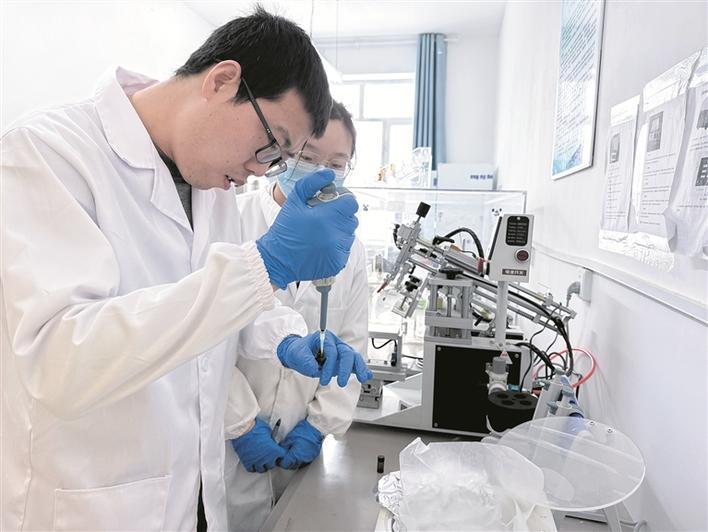
Core Viewpoint - The article highlights the significant contributions of Li Yang, an associate professor at Shihezi University, in the field of perovskite solar cells, focusing on his innovative approaches to enhance stability and scalability for commercial applications [1][4]. Group 1: Research and Development - Li Yang has developed a dual strategy of "dynamic passivation + chemical anchoring" to address the stability issues of perovskite solar cells, achieving an efficiency of 21.26% and significantly improving thermal and environmental stability [4]. - The research conducted by Li Yang's team has led to the successful preparation of high-quality perovskite films in air, addressing the challenges posed by the arid climate of Xinjiang [4]. - The laboratory led by Li Yang has become a key research hub for renewable energy in Xinjiang, undertaking multiple projects including international cooperation initiatives and local technology development projects [4][5]. Group 2: Collaboration and Impact - Li Yang actively collaborates with companies such as Xinjiang Tianye Group and China New Energy Group to solve practical production challenges, earning recognition as an "Outstanding Science and Technology Specialist" in Shihezi City [5]. - He has been involved in international academic exchanges, visiting countries like Turkmenistan, UAE, Thailand, Singapore, and Japan to promote the research achievements of Shihezi University on the global stage [5]. - Li Yang's efforts in fostering international cooperation have led to strategic agreements with institutions like the National University of Malaysia, enhancing collaborative research opportunities [5]. Group 3: Education and Mentorship - As a mentor, Li Yang emphasizes the importance of both professional knowledge and the cultivation of students' research skills and national sentiment, guiding them in practical laboratory work and theoretical understanding [6]. - Under his mentorship, students have achieved notable success in competitions and conferences, including winning awards for best papers and multiple publications in SCI journals [6].

国科大星际航行学院院长朱俊强:3-5年形成本博贯通培养体系
Xin Lang Cai Jing· 2026-01-27 12:24
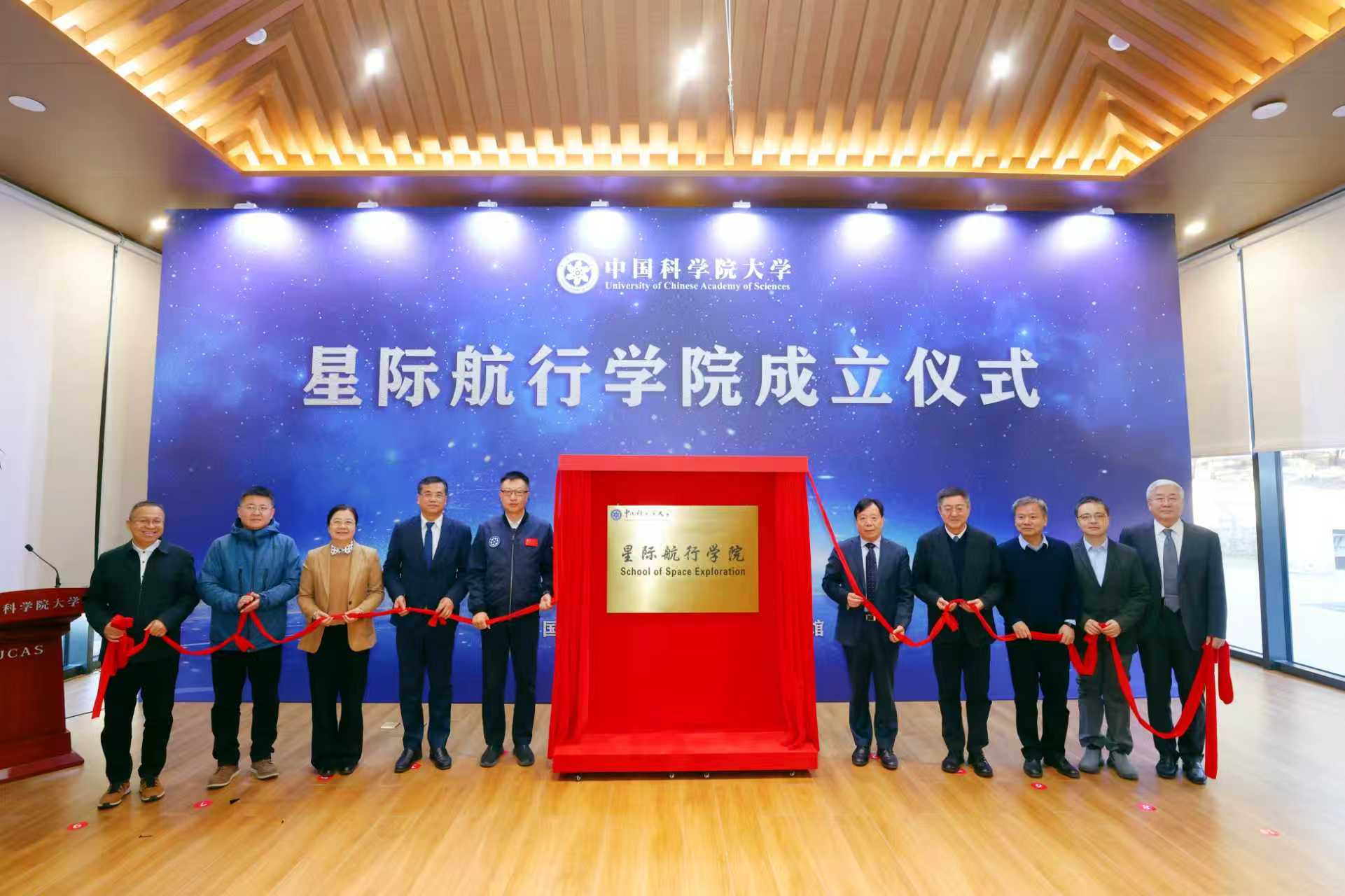
Core Insights - The establishment of the Interstellar Navigation Institute at the University of Chinese Academy of Sciences marks a significant step in advancing China's capabilities in interstellar exploration and talent development [1][5] - The institute aims to integrate 14 disciplines, adding 22 core courses to the existing 97, focusing on cutting-edge areas such as interstellar propulsion, navigation, and planetary sociology [1][5] Group 1: Institute Objectives and Structure - The core mission of the institute is to serve as an innovation hub and talent cultivation base for the long-term development of China's interstellar navigation [1][5] - The institute will collaborate with other research institutes to create a complete chain from basic research to technology development, results transformation, and talent training [1][5] - The focus will be on interdisciplinary integration, breaking down traditional academic barriers to foster collaboration among scientists and engineers from various fields [2][6] Group 2: Talent Development Strategy - The institute plans to attract top domestic and international talents and young educators, aiming to establish a comprehensive training system within 3-5 years [4][6] - A dual mentorship model will be implemented, combining scientists and chief engineers to guide students through practical research and advanced coursework [7] - The goal is to cultivate students with strong mathematical foundations and professional skills, capable of original innovation and engineering transformation [7]
首个星际航行学院来了!对话院长朱俊强,人才培养机制有何不同
Bei Ke Cai Jing· 2026-01-27 10:17
Group 1 - The establishment of the Interstellar Navigation Academy marks a significant step in China's deep space exploration, transitioning from following to leading in the aerospace sector [2][3][4] - The academy is the first specialized institution in China focused on "interstellar navigation," aimed at cultivating high-end talent for deep space exploration [4][5] - The curriculum will cover 14 primary disciplines, adding 22 core courses to the existing 97, focusing on cutting-edge topics such as interstellar propulsion and planetary dynamics [5][10] Group 2 - The academy's first director, Zhu Junqiang, emphasizes a dual mentorship system combining scientists and chief engineers to foster innovation and practical engineering skills among students [7][14] - The academy aims to address critical industry challenges by integrating various disciplines, including aerospace engineering, physics, and artificial intelligence, to create a collaborative research environment [10][11] - In the next 3-5 years, the academy plans to attract top talent and establish a comprehensive interstellar testing ground, with a long-term goal of becoming a globally influential institution [12][13]
(2025.11.24—2025.11.28):骨科手术机器人行业把握:多学科融合与临床需求共振,技术创新驱动研究与产业化加速发展
Huafu Securities· 2025-11-30 09:37
Group 1 - The orthopedic surgical robot industry is characterized by multidisciplinary integration and resonance with clinical needs, driven by technological innovation that accelerates research and industrialization [2][7][10] - Orthopedic surgical robots can create personalized surgical plans preoperatively and guide surgeons during operations, addressing the complexities and high risks associated with traditional orthopedic procedures [2][7] - The demand for orthopedic surgical robots is increasing due to the limitations of traditional methods, such as restricted visibility, significant trauma, high radiation exposure, and increased risk of complications [2][7] Group 2 - Research activity in the field of orthopedic surgical robots has seen a significant increase globally, particularly in the last decade, with China emerging as a major contributor despite starting later [8][9] - From 1993 to 2022, China published the most papers (128) on orthopedic surgical robots, followed by the United States (114), the United Kingdom (68), and Germany (44) [8] - The global surgical robot industry has experienced a notable increase in financing activities, with total funding reaching approximately $8.162 billion over seven years, peaking at $2.798 billion in 2021, a 336% year-on-year increase [9] Group 3 - The domestic surgical robot industry also saw a peak in financing in 2021, with total funding amounting to $1.254 billion, reflecting a 349% year-on-year growth [9] - Recent national policies have emphasized the importance of the surgical robot industry, encouraging domestic medical device companies to innovate and reduce reliance on imported high-end medical equipment [10][13] - The application of joint surgical robots is at a favorable stage due to continuous technological advancements and accumulated clinical experience [10][13]

国际口面肌功能多学科联合治疗研讨会在沪举办
Xiao Fei Ri Bao Wang· 2025-11-07 05:37
Core Insights - The "International Orofacial Myofunctional Multidisciplinary Treatment Symposium" was successfully held in Shanghai, focusing on the integration of multidisciplinary approaches in orofacial myofunctional therapy [1][2] - The event gathered authoritative experts and clinical scholars to discuss clinical collaboration and innovative practices in orofacial myofunctional therapy across various fields such as orthodontics, early intervention, sleep-disordered breathing, and temporomandibular joint disorders [2][4] Group 1: Development and Collaboration - The Chinese Academy of Orofacial Myology is experiencing rapid growth in orofacial myofunctional therapy due to increased interest from physicians and awareness among patients [4] - The association aims to support professionals in the correct diagnosis and standardized treatment of orofacial myofunctional disorders through education and training [4][7] - Strengthening collaboration with the International Association of Orofacial Myology (IAOM) is a priority to bridge international advancements with domestic clinical needs [4][7] Group 2: Clinical Applications and Importance - The symposium featured a presentation by Paula Fabbie, highlighting the significant role of myofunctional training in improving orthodontic outcomes and maintaining long-term stability [5][6] - Emphasis was placed on the necessity of interdisciplinary collaboration, integrating fields such as sleep medicine and speech therapy to achieve optimal treatment results [6] - Early identification and intervention of orofacial myofunctional issues are crucial for preventing complex dental problems in children [6] Group 3: Future Directions and Standardization - The conference reinforced academic exchanges between China and the international OMT community, laying a solid foundation for promoting multidisciplinary collaboration and standardized treatment protocols [7] - Future efforts will focus on enhancing cooperation and research to standardize the application of orofacial myofunctional therapy in clinical settings [7] - The goal is to ensure timely and effective treatment for more patients, with a vision for broader recognition and application of this field in China [7]
华侨华人助力中外农业科技合作
Zhong Guo Xin Wen Wang· 2025-10-14 08:33
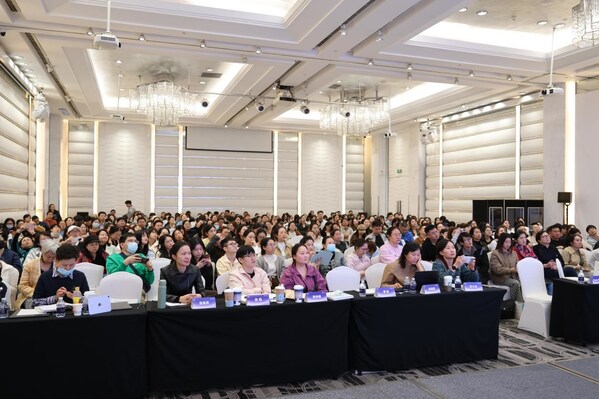
Core Viewpoint - The 2025 World Agricultural Technology Innovation Conference highlighted international collaboration and technology sharing in agricultural science, with a focus on AI-driven innovations and resilient food systems. Group 1: International Collaboration - Chinese and foreign agricultural experts are collaborating on projects such as the "FarmGTEx" initiative, which analyzes gene expression in livestock to identify key genetic markers for disease resistance and productivity [1] - The project involves nearly 100 institutions from 14 countries, showcasing a global effort in agricultural research [1] Group 2: AI and Technology Integration - AI is accelerating agricultural innovation, with developments in smart breeding robots and the launch of an "AI + Livestock Breeding Collaborative Innovation Platform" [2] - China's efficiency in applying smart agriculture technologies across the entire agricultural supply chain is attracting foreign investment and partnerships [2] Group 3: Regional Applications and Needs - In Saudi Arabia, there is a demand for smart greenhouse solutions and efficient irrigation systems due to water scarcity and extreme climate challenges [3] - The integration of Chinese low-cost technology solutions with local data in Saudi Arabia is expected to enhance agricultural efficiency and effectiveness [3]
【直播集锦】陈勉诺:Robomaster是一个要求多学科融合,讲究团队合作的赛事
Guan Cha Zhe Wang· 2025-07-31 06:43
Group 1 - The core viewpoint of the article emphasizes that Robomaster is an event that requires multidisciplinary integration and emphasizes teamwork [1]
两部门:开展重大防控、化学创新药、类器官产品、医疗机器人等计量检测和质量评价关键技术研究
news flash· 2025-07-09 06:54
Core Viewpoint - The State Administration for Market Regulation and the Ministry of Industry and Information Technology have issued the "Measurement Support Action Plan for the Development of New Quality Productive Forces (2025-2030)" focusing on key areas related to public health and biotechnology [1] Group 1: Key Areas of Focus - The plan emphasizes the importance of biotechnology, diagnostic equipment, and drug development in enhancing public health [1] - Specific directions include research on critical technologies for measurement and quality evaluation in pharmaceuticals, vaccines, advanced diagnostic technologies, wearable devices, precision medicine, and testing [1] Group 2: Research and Development Initiatives - Major initiatives will involve significant prevention and control measures, chemical innovative drugs, biopharmaceuticals, high-throughput gene sequencing, cell therapy, biological testing, in vitro diagnostic products, synthetic biology products, organoid products, and medical robots [1] - The plan aims to promote interdisciplinary integration in pharmacology, physiology, and synthetic biology to accelerate the application of related technologies in new drug development, disease treatment, and specialized medical food formulations [1]
