实际增长

Search documents
波黑2025年12月平均净工资1633马克
Shang Wu Bu Wang Zhan· 2026-02-25 13:28
Core Insights - The average net salary in Bosnia and Herzegovina for December 2025 is reported to be 1633 marks, with a nominal month-on-month increase of 2.1% and a real increase of 2.0% [1] - Year-on-year, the nominal salary growth is 14.2%, while the real growth stands at 9.7% [1] Industry Analysis - The Information and Communication Technology (ICT) sector leads with the highest average net salary of 2211 marks [1] - The Financial and Insurance sector follows closely with an average net salary of 2188 marks [1] - The Electricity, Gas, and Steam Supply sector has an average net salary of 2068 marks [1] - The Accommodation and Food Services sector has the lowest average net salary at 1157 marks [1] - The Construction sector has an average net salary of 1287 marks, while the Wholesale, Retail, and Automotive Repair sector stands at 1347 marks, ranking third from the bottom [1] Overall Salary Trends - The national average gross salary in December last year was 2538 marks, with a year-on-year nominal increase of 14.5% and a real increase of 10.0% [1]
杨伟民:化解供强需弱主要矛盾的症结在于分配
和讯· 2025-12-27 04:47
Group 1 - The core viewpoint emphasizes that resolving the supply-demand imbalance during the "14th Five-Year Plan" period hinges on optimizing the distribution structure, which is crucial for enhancing residents' disposable income and sustaining economic growth within a reasonable range [2][4] - The "14th Five-Year Plan" suggests implementing a rural and urban resident income increase plan aimed at effectively raising the income of low-income groups and steadily expanding the middle-income group, while also addressing excessive incomes and illegal earnings to promote an olive-shaped distribution pattern [2][4] - The article highlights that policies should not only focus on expanding demand and optimizing supply but also on improving distribution, creating a cohesive system of supply, demand, and distribution policies to foster a consumption-driven economic development model [2][3] Group 2 - It is proposed that consumption-stimulating policies should gradually shift towards income distribution adjustment policies, including raising minimum wage standards and enhancing ordinary employees' wages, while increasing the intensity of tax, social security, and transfer payments to boost low-income groups' income [3][4] - Economic growth is expected to maintain an average annual growth rate of 4.17% from 2025 to 2035, with a target of 4.5% during the "14th Five-Year Plan" period and 4% during the "15th Five-Year Plan" period, leading to an average of approximately 4.2% over the decade [5][6] - The article stresses the importance of nominal growth remaining above 4.5%, as since 2023, nominal growth in China has been lower than actual growth, which has exacerbated the imbalance between supply and demand and contributed to insufficient domestic demand [5][6]


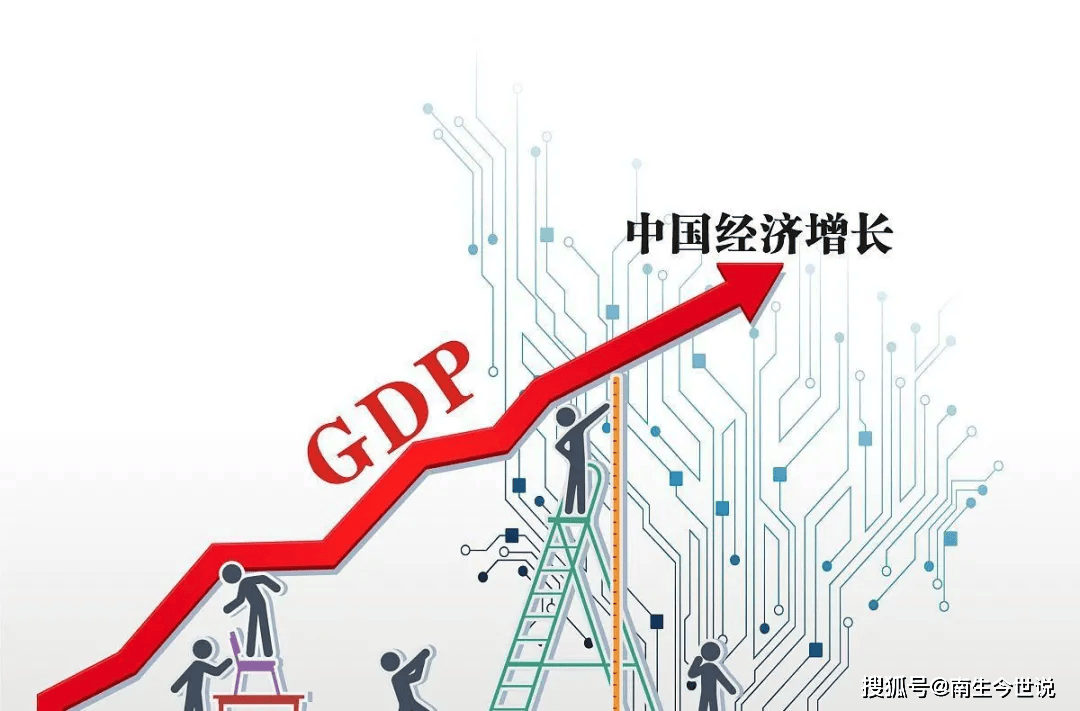
预计:我国2025年GDP上涨5.1%,突破140万亿元,约为19.6万亿美元
Sou Hu Cai Jing· 2025-10-20 15:11
Core Viewpoint - China's economy demonstrates strong resilience amid multiple pressures, achieving a GDP of 1,015,036 billion RMB in the first three quarters of 2025, reflecting a real growth of 5.2% after adjusting for price changes [1][3][4]. Economic Performance - The nominal GDP increased from 975,357.4 billion RMB in the previous year to 1,015,036 billion RMB, with a net increase of 39,678.6 billion RMB, resulting in a nominal growth rate of 4.1% [3][4]. - The difference between the nominal growth rate and the real growth rate indicates a price level decline of approximately 1.1% compared to 2020, suggesting some "contraction" pressure [3][4]. Future Projections - If the current economic recovery momentum continues, a real economic growth of around 5.1% is expected for the entire year of 2025, with nominal GDP projected to increase by approximately 4% from 2024, reaching between 140 trillion and 141 trillion RMB [4][6]. - The GDP in USD terms for the first three quarters of 2025 is estimated at approximately 141,681.89 billion USD, maintaining China's position as the second-largest economy globally [6][9]. Factors Supporting Growth - Robust macroeconomic policies have provided a solid foundation for stable economic performance, with proactive fiscal policies and prudent monetary policies enhancing market vitality [10]. - The acceleration of new and old kinetic energy conversion, particularly in high-tech industries such as new energy vehicles and artificial intelligence, is driving economic growth [10]. - Continuous release of domestic demand potential and effective investment in infrastructure and green transformation are contributing to economic stability [10]. Challenges Ahead - Despite positive growth indicators, challenges remain, including insufficient effective demand in certain sectors and rising uncertainties in the external environment [11]. - The focus will be on maintaining a stable yet progressive approach to ensure high-quality development and consolidate the positive economic recovery trend [11][12].
Tame inflation and stronger real growth are good signs for stock market: WisdomTree's Jeremy Siegel
Youtube· 2025-09-26 19:58
Economic Overview - Year-over-year inflation is reported at 2.9%, which remains above the Federal Reserve's target rate, indicating ongoing inflationary pressures [1] - Recent economic data shows a decrease in the trade deficit and strong durable goods reports, leading forecasters to raise GDP estimates for the third quarter [2] Inflation Insights - Inflation is considered tame based on month-over-month data, although tariffs are expected to create a temporary increase in inflation [3][4] - The Federal Reserve is advised to look beyond tariff-induced price increases, as these do not reflect genuine demand in the economy [4] GDP Projections - The Atlanta Fed has increased its GDP estimate for the third quarter to the high 3% range, while Goldman Sachs projects mid-2% growth, indicating decent but not excessive growth [9] - The first half of the year saw GDP growth under 2%, with the first quarter being negative [9] Retail and Consumer Spending - The upcoming fourth quarter is critical for assessing the impact of tariffs on consumer spending, particularly during the holiday season when retail firms typically generate significant profits [10] Federal Reserve Actions - The Federal Reserve is expected to implement interest rate cuts, with a 25 basis point cut anticipated in the next two meetings [11][13] - Payroll growth has significantly decreased, with estimates for the upcoming employment report suggesting only 50,000 new jobs, compared to previous estimates of 150,000 to 300,000 [12]