
小程序生态

Search documents
QuestMobile2025 全景生态流量年度报告:12.76亿用户月均消费186.2小时,AIGC APP月活用户净增超2亿
3 6 Ke· 2026-02-03 03:40
Core Insights - The report highlights the rapid growth of active users in various digital ecosystems, driven by AI technology and the expansion of mini-programs across platforms [5][8][10]. Group 1: User Growth and Engagement - As of December 2025, the total number of monthly active users (MAU) across the internet reached 1.276 billion, with an average monthly usage time of 186.2 hours, reflecting an 8.4% year-on-year increase [5]. - The AIGC app sector saw a net increase of over 200 million monthly active users, with a year-on-year growth rate of 150.4%, leading the segment [8]. - AI application plugins also demonstrated strong growth, achieving a monthly active user count of 696 million, up 37.8% year-on-year [8]. Group 2: Mini-Programs and Ecosystem Development - Mini-programs have become a crucial channel for user engagement, particularly in the life services sector, with major platforms like WeChat, Alipay, and Baidu seeing significant growth [10]. - In WeChat, the number of life service mini-programs with over 10 million monthly active users reached 68, an increase of 14 compared to the previous year [10]. - The popularity of short dramas has further fueled the growth of video mini-programs within WeChat and Douyin ecosystems, with the top 100 mini-programs in these categories accounting for 17% and 36% of their respective industries [2]. Group 3: Hardware Ecosystem - Smart TVs have emerged as a central hub for scene-based traffic, with active device numbers reaching 289 million [3]. - Key applications on smart TV platforms, such as Galaxy Qiyi and CIBN Cool Cat, have also seen substantial user engagement, with active device counts of 128 million and 126 million, respectively [3]. Group 4: Industry-Specific Insights - The mobile banking sector is witnessing differentiated development paths, with new internet banks leveraging WeChat mini-programs as their primary platform [28]. - In the travel service industry, platforms like Tongcheng Travel and Taobao Flash Purchase have surpassed 200 million in traffic, showcasing the effectiveness of mini-programs in driving user engagement [12]. - The automotive service industry is increasingly utilizing mini-programs for standardized, high-frequency services, establishing them as mainstream entry points [34].

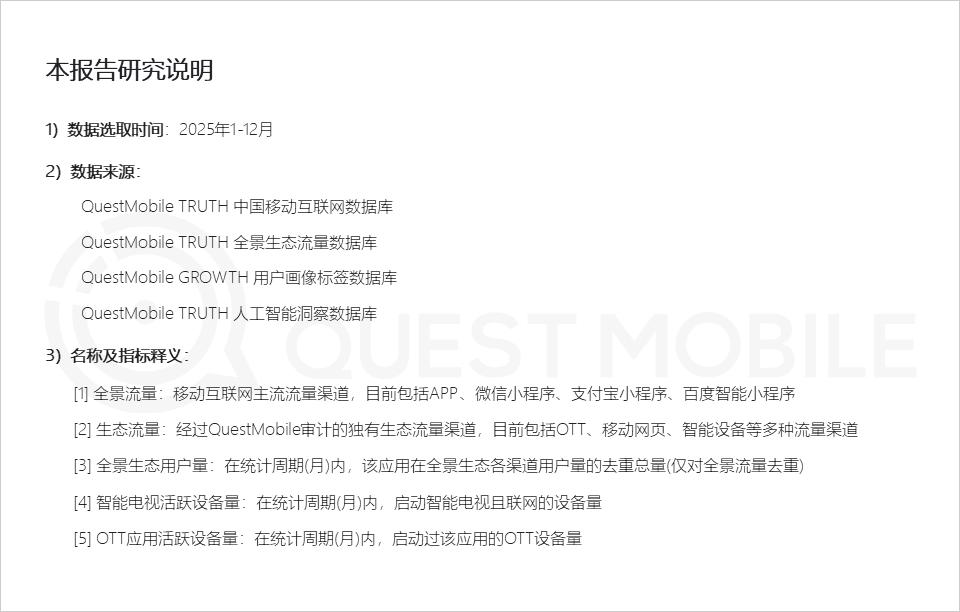
QuestMobile2025 全景生态流量年度报告:12.76亿用户月均消费186.2小时,AIGC APP月活用户净增超2亿
QuestMobile· 2026-02-03 02:00
Core Insights - The article discusses the significant growth and transformation of the mobile internet landscape driven by AI technology and the integration of online and offline services, emphasizing the importance of scenario-based industry restructuring [3] Group 1: User Engagement and Growth Metrics - By December 2025, the total number of monthly active users (MAU) across the internet is projected to reach 1.276 billion, with an average monthly usage time of 186.2 hours, reflecting an 8.4% year-on-year increase [4][11] - The AIGC app sector saw a net increase of over 200 million monthly active users, with a year-on-year growth rate of 150.4%, indicating strong demand for AI-driven applications [4][14] - AI application plugins also demonstrated robust growth, achieving a monthly active user count of 696 million, up 37.8% year-on-year [4][14] Group 2: Ecosystem and Service Expansion - The small program ecosystem is thriving, with life services becoming a core area for platforms like WeChat, Alipay, and Baidu, where the top 100 small programs account for 35%, 50%, and 29% of their respective industries [4][17] - By December 2025, the number of life service small programs on WeChat with over 10 million monthly active users reached 68, a significant increase from the previous year [4][24] - The integration of short dramas and content updates has led to rapid innovation in content platforms, with notable user engagement in platforms like Red Fruit Free Short Drama and Hippo Theater [5][28] Group 3: Hardware and Content Ecosystem - Smart TVs have emerged as a central hub for scenario-based traffic, with active device numbers reaching 289 million, showcasing the growing importance of hardware in the digital ecosystem [6][21] - The top OTT applications for smart TVs include Galaxy Qiyi and CIBN Cool Cat Movies, with active device counts of 128.4 million and 126.1 million, respectively [70] Group 4: Industry-Specific Developments - The mobile video industry is experiencing a surge in short dramas, with platforms like Red Fruit Free Short Drama and Hippo Theater achieving 275 million and 47.2 million monthly active users, respectively [28][30] - In the mobile banking sector, new internet banks are leveraging WeChat small programs as their primary platform, while traditional banks are gradually increasing their investment in small programs [34][36] - The tourism service industry is witnessing a rise in traffic, with platforms like Tongcheng Travel achieving over 240 million in traffic through WeChat small programs [40] Group 5: Brand and Market Dynamics - The restaurant sector is expanding its reach, with over 40 brands achieving monthly active user counts exceeding 1 million, driven by innovative marketing strategies [55] - Domestic sports brands are effectively utilizing small programs to enhance user engagement, with notable growth in user numbers for brands like Xtep and Li Ning [61]



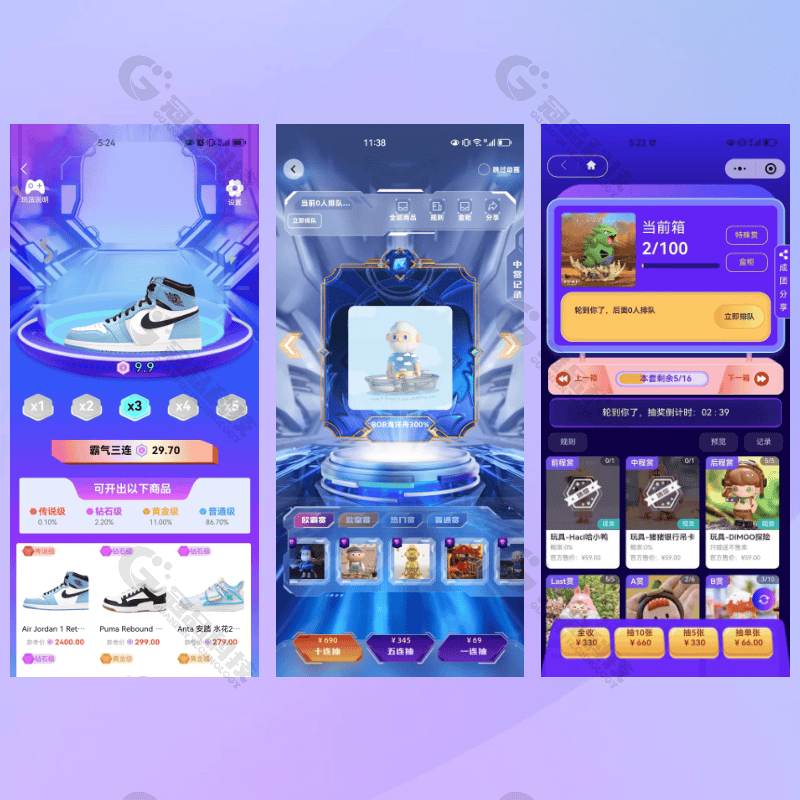
盲盒抽卡机小程序市场前景分析
Sou Hu Cai Jing· 2026-01-04 19:11
Group 1 - The core viewpoint is that blind box card machines as a lightweight entertainment and emotional consumption model are experiencing a growing market space, supported by consumer trends and flow ecology, while facing challenges in compliance and differentiated competition [1][4] Group 2 - Emotional consumption is rising, providing core demand support, with a significant expansion of the user base; the market for emotional consumption is expected to exceed 20 trillion yuan by 2025, with the blind box market projected to surpass 58 billion yuan, achieving a compound annual growth rate of 28% [3] - The preference of young users for lightweight and entertaining formats, combined with the low entry barrier of blind box card machines, creates a stable and large potential user group, particularly among users born in the 1990s and 2000s [3] - The flow advantages of mini-programs significantly reduce customer acquisition costs, accelerating market penetration; platforms like WeChat and Douyin provide a vast user base, allowing for low-cost customer acquisition through user sharing and community dissemination [3][4] Group 3 - Innovation in gameplay and extension of scenarios broaden development boundaries and enhance market vitality; the industry is transitioning from light casual to premium and medium-level games, allowing for the integration of social interaction and thematic updates in blind box card machines [4] - The potential for offline interactions, such as online card draws and offline exchanges for physical merchandise, enriches the consumer experience and extends the profit chain [4] Group 4 - Compliance operations and market competition are core challenges for industry development; regulations require age verification and parental consent for minors purchasing blind boxes, necessitating improvements in operational compliance [4] - The increasing number of similar products intensifies market homogenization, making it crucial for companies to innovate gameplay and content to avoid user attrition [4] - By adhering to compliance standards and continuously optimizing user experience, companies can achieve long-term development and unlock market potential [4]
腾讯因AI让步,苹果为微信松绑
3 6 Ke· 2025-11-21 11:06
Core Insights - Tencent and Apple have reached a significant agreement after over a year of negotiations, ending a long-standing conflict over payment commissions for mini-programs on the App Store [2][3] - Apple will implement a Mini App Partner Program, allowing developers to pay a reduced commission of 15% on in-app purchases, which is half of the standard 30% rate in the Chinese market [2][4][12] - This resolution reflects a shift towards collaboration rather than competition, highlighting the importance of mutual benefits in the business landscape [2][12] Group 1: Background of the Conflict - The "Apple Tax" began in July 2008 when Apple started charging a 30% commission on digital goods sold through the App Store [6] - Disagreements arose in 2017 when Apple classified "public account rewards" as in-app purchases, leading to a temporary removal of the feature from WeChat [6][12] - The growth of WeChat's mini-programs and games attracted Apple's attention, with the market for mini-program games projected to reach approximately 39.84 billion yuan in 2024, a 99.18% increase year-on-year [7][12] Group 2: Financial Implications - Apple's recent financial performance shows a recovery, with Q4 2025 revenue reaching $102.466 billion, an 8% year-on-year increase, and net profit rising by 86% [14] - The services segment, which includes App Store revenues, has become increasingly important, accounting for 42% of Apple's net profit, surpassing iPhone sales [14] - Tencent, which previously did not charge for iOS mini-programs, is now positioned to benefit from the new agreement, potentially increasing its revenue from in-app purchases [15] Group 3: Strategic Considerations - Both companies are looking to integrate AI capabilities into their ecosystems, aiming to become the primary entry points for users in the AI era [16][18] - The collaboration between Tencent and Apple is seen as a strategic move to break down barriers between different applications and platforms, enhancing user experience and developer opportunities [20] - The partnership is expected to lead to a more transparent and regulated mini-program ecosystem, improving transaction data management and user safety [15][20]



微信小程序接入iOS虚拟支付“破冰”
Bei Jing Shang Bao· 2025-11-18 16:01
Core Viewpoint - WeChat Mini Programs have finally enabled virtual payments on iOS, marking a significant development in the ecosystem and resolving long-standing commission disputes with Apple [1][3][7]. Group 1: Announcement and Changes - WeChat announced that it will support virtual payments for Mini Programs on iOS, launching the Mini Apps Partner Program to enhance developer collaboration [1][3]. - Apple has introduced a new Mini Apps Partner Program, reducing the commission rate for eligible in-app purchases from 30% to 15% [3][4]. Group 2: Impact on Developers and Users - The integration of virtual payments on iOS is expected to activate previously limited commercial scenarios, such as knowledge payment, enhancing the overall WeChat ecosystem [4][8]. - The change primarily benefits developers by improving payment convenience for users, allowing for direct purchases of virtual goods within Mini Programs [7][8]. Group 3: Market Dynamics - The collaboration between WeChat and Apple is seen as a strategic move to expand the ecosystem, with expectations that more platforms may adopt similar cooperative models [7][8]. - Analysts suggest that the integration will not create direct competition between WeChat Pay and Apple Pay but will instead provide users with more flexible payment options [5][6][8].

时隔八年终破冰!微信小程序接入iOS虚拟支付,苹果抽成15%
Bei Jing Shang Bao· 2025-11-18 12:44
Core Insights - WeChat Mini Programs have finally enabled virtual payments on iOS, marking a significant development in the ecosystem [1][6] - Apple has introduced a new Mini Apps Partner Program, reducing the commission rate for eligible developers from 30% to 15% for in-app purchases [3][6] - This collaboration is seen as a resolution to the long-standing commission dispute between WeChat and Apple, enhancing the payment experience for developers and users [1][5] WeChat Mini Programs and iOS Integration - WeChat's announcement indicates a commitment to improving the experience for iOS developers and users by integrating virtual payment capabilities [3][6] - The integration allows developers to open a new WeChat payment merchant account and utilize services like bill inquiries and fund withdrawals [4][5] - The current functionality is not available for in-app purchases on iOS, focusing instead on Android and other mobile systems [5][6] Impact on Developers and Users - The change is expected to activate previously limited commercial scenarios, such as knowledge payment, enhancing the overall WeChat ecosystem [5][7] - The integration is anticipated to attract more mid-to-long tail developers, promoting the scale of content payment scenarios [7] - Users will benefit from improved payment convenience, as previous methods often involved workarounds to bypass system restrictions [6][7] Market Implications - The resolution of the commission dispute is viewed as a significant expansion of Apple's ecosystem, with expectations for other platforms to follow suit [6][7] - The collaboration is likely to create a complementary relationship between WeChat Pay and Apple Pay, providing users with more flexible payment options [5][7] - Overall, this development is expected to enhance the transaction scale within the WeChat ecosystem, indirectly strengthening its payment capabilities [5][7]

iOS 为微信小程序「正名」,腾讯移动生态的新转机
3 6 Ke· 2025-11-14 10:15
Core Insights - Apple has launched the Mini Apps Partner Program, establishing a compliance framework for mini-programs in the Chinese market, which is significant for the app ecosystem [3][6][7] Group 1: Commission Structure - Developers participating in the program will only pay a 15% commission on in-app purchases, a significant reduction from the standard 30% Apple tax, benefiting many developers, especially those relying on ad monetization [6][14] - This new commission structure allows mini-programs to finally gain a legitimate commercial position within the iOS ecosystem, which had previously been a gray area for over seven years [7][8][14] Group 2: Regulatory and Technical Requirements - To join the program, mini-programs must comply with Apple's regulatory framework, which includes using specific APIs for transparency and control over transactions and user data [16][19] - The program requires mini-programs to integrate with Apple's In-App Purchase system, ensuring that all transactions are processed through Apple's payment system [19][20] Group 3: Strategic Implications - The partnership between Apple and Tencent is crucial, as both companies rely on each other for access to the vast Chinese market and user base [22][26] - The new policy is seen as a response to global regulatory pressures and aims to provide a controlled environment for mini-programs while allowing Apple to tap into a previously inaccessible market [28][30] Group 4: Future Outlook - The introduction of mini-programs is viewed as a step towards a future where applications are more lightweight and integrated with AI capabilities, potentially transforming how users interact with apps [31][32] - Apple's move to officially recognize mini-programs marks a significant shift in its approach to app distribution and monetization, paving the way for future developments in the app ecosystem [33]
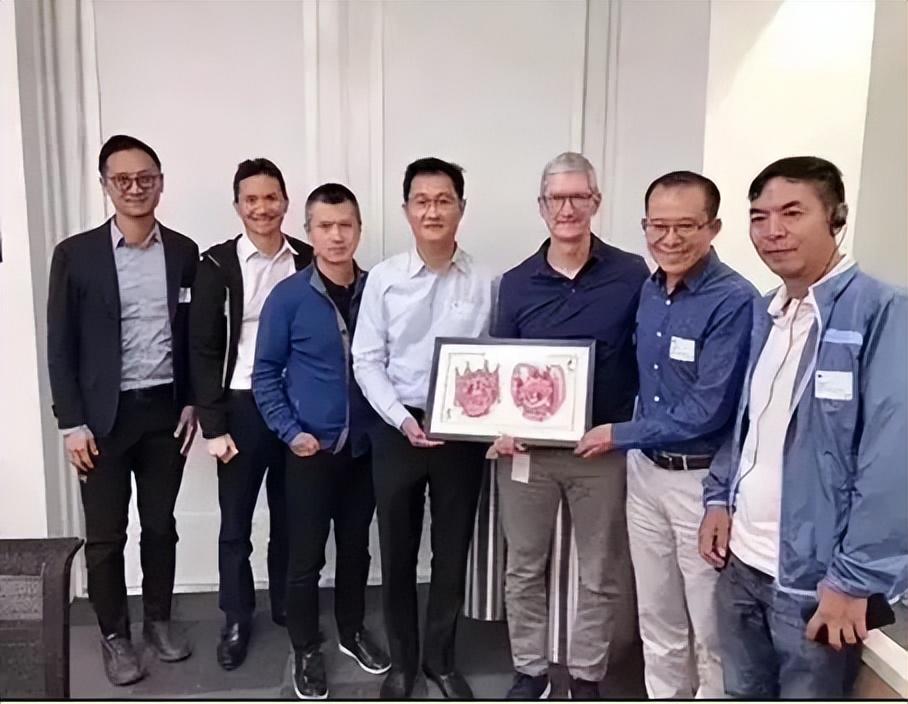
大动作!微信、苹果同日宣布
新华网财经· 2025-11-14 03:01
Group 1 - The core viewpoint of the article highlights the collaboration between Apple and Tencent to enhance the ecosystem of mini-programs and mini-games on the iOS platform, with a focus on improving user experience and developer support [1][3][4]. Group 2 - On November 14, Apple launched the "Mini-Program Partner Program," aimed at helping developers expand their business and improve sales on the App Store, offering a 15% revenue share reduction for qualifying in-app purchases [3]. - A significant agreement was reached between Apple and Tencent regarding a 15% commission for WeChat mini-game payments, indicating a positive ongoing relationship between the two companies [4].

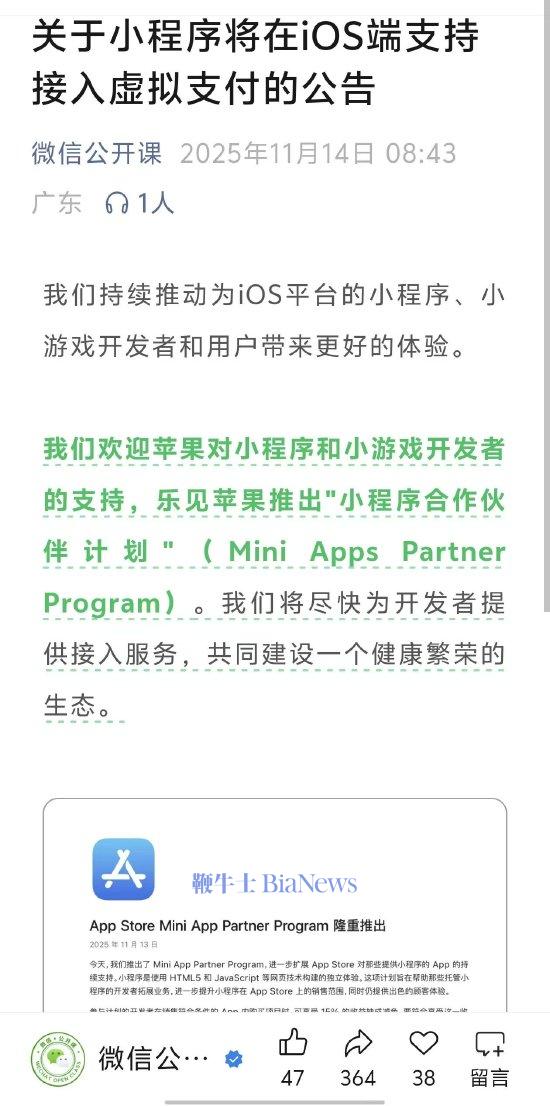
微信官方:乐见苹果推出「小程序合作伙伴计划」
Xin Lang Ke Ji· 2025-11-14 02:32
Core Insights - Tencent and Apple have reached an agreement allowing Apple to handle payments for WeChat mini-games and mini-programs, taking a 15% cut from these transactions, which is significantly lower than the traditional 30% fee for in-app purchases [4][5] - The announcement of the "Mini Apps Partner Program" by Apple marks the formal integration of mini-programs into the iOS ecosystem, providing developers with a new commercial pathway and ensuring compliance under Apple's regulatory framework [5] Group 1 - Tencent is optimistic about its ongoing relationship with Apple and the progress made in developing the mini-game ecosystem, indicating constructive advancements in their collaboration [4] - The "Mini Apps Partner Program" allows developers to create self-contained experiences using web technologies like HTML5 and JavaScript, which can be accessed without installation within a host app [5] Group 2 - The new program offers a reduced revenue share of 15% for digital goods, applicable to all qualifying transactions, regardless of the developer's size, which is a significant shift in Apple's approach to revenue sharing in the Chinese market [5] - This agreement concludes a year-long negotiation between Tencent and Apple, reflecting a major adjustment in Apple's application ecosystem strategy in China [5]
苹果推出小程序合作伙伴计划:App Store抽成降至15%
Feng Huang Wang· 2025-11-13 23:07
Group 1 - Apple launched the "Mini Apps Partner Program" on November 14, reducing the in-app purchase commission rate from 30% to 15% for participating developers [1][2] - Developers must integrate several specified Apple technologies, including advanced business APIs and age rating declaration APIs, to optimize the purchasing process and support content age classification [1] - The program is applicable to apps hosting mini apps or games on iOS and iPadOS platforms, with all content needing to comply with Apple's review agreements [1] Group 2 - Since 2017, Apple has supported the development of mini apps and games using HTML5 and JavaScript, with further technical support for in-app purchases introduced in January [2] - The new partnership program is seen as a continued investment in the mini app ecosystem, aimed at attracting more developers to deepen their content and commercial presence on Apple's platform [2] - Analysts believe that lowering the commission may enhance developers' revenue potential and further drive the commercialization of the mini app ecosystem, reflecting Apple's strategic adjustments in maintaining platform ecology and developer relations [2]