
就业与通胀平衡

Search documents
美联储货币政策面临多重困扰
Xin Hua She· 2025-10-31 00:57
Core Points - The Federal Reserve announced a 25 basis point reduction in the federal funds rate target range to 3.75% to 4.00% during its monetary policy meeting, marking the fifth rate cut since September 2024 [1] - There is significant uncertainty regarding future monetary policy due to internal divisions within the Federal Reserve, the government shutdown affecting key economic data, and ongoing pressures to balance employment and inflation risks [1][2] - Market expectations for a December rate cut have decreased from 90% to below 70% following the Fed's cautious stance [2] Economic Indicators - Employment growth has slowed, with the unemployment rate rising to 4.3% in August, the highest in nearly four years, and non-farm payrolls increasing by only 22,000, significantly below market expectations [2][3] - The personal consumption expenditure price index rose by 2.7% year-on-year in August, exceeding the Fed's long-term inflation target of 2% [3] - Tariff policies have contributed to a 0.44% increase in core personal consumption expenditures, with inflation projected to rise to 3% by December [3] Labor Market Trends - The labor market is showing signs of weakness, with significant job cuts announced by major companies like Amazon and Target, indicating a broader trend of declining employment opportunities [3] - The private sector experienced the largest drop in employment since March 2023, further highlighting the challenges in the labor market [3] Federal Reserve and Government Relations - Tensions remain between the Federal Reserve and the White House, as government officials have pressured the Fed for more aggressive rate cuts, which the Fed has not committed to [4] - The potential appointment of a successor to Fed Chair Powell, who is expected to support lower borrowing costs, raises concerns about the independence of the Fed's monetary policy and its ability to manage inflation [5]
国际观察丨美联储货币政策面临多重困扰
Xin Hua Wang· 2025-10-30 23:28
Core Viewpoint - The Federal Reserve's monetary policy faces significant uncertainty due to internal divisions, the government shutdown affecting data collection, and ongoing pressures from employment and inflation risks [1][3]. Group 1: Federal Reserve Actions - The Federal Reserve announced a 25 basis point reduction in the federal funds rate target range to between 3.75% and 4.00% [1]. - This marks the fifth rate cut since September 2024, following a similar reduction on September 17 [1]. - The Fed's statement indicated that employment growth has slowed, the unemployment rate has risen, and inflation remains high [1]. Group 2: Market Expectations - Market expectations for another rate cut in December have dropped significantly from 90% to below 70% [2]. - Analysts interpret the Fed's lack of clear guidance for December as a dampening of rate cut prospects [1]. Group 3: Internal Divisions and Economic Data - There are notable divisions within the Fed regarding future rate decisions, with some members advocating for larger cuts while others prefer to maintain current rates [3]. - The government shutdown has halted critical economic data collection, complicating the Fed's ability to assess the economic situation accurately [3]. Group 4: Employment and Inflation Concerns - The U.S. labor market shows signs of weakness, with the unemployment rate rising to 4.3% in August, the highest in nearly four years, and non-farm payrolls increasing by only 22,000, significantly below expectations [3][4]. - Inflation remains a concern, with the personal consumption expenditures price index rising by 2.7% year-over-year in August, exceeding the Fed's long-term target of 2% [4]. - Tariff policies have contributed to inflationary pressures, with projections indicating inflation could rise to 3% by December [4]. Group 5: Relationship with the White House - Tensions persist between the Fed and the White House, with government officials previously pressuring the Fed for more aggressive rate cuts [5]. - The Fed's independence may be at risk as the White House indicates a preference for a successor who supports lower borrowing costs [5].
新华社:美联储货币政策面临多重困扰
Sou Hu Cai Jing· 2025-10-30 09:17
Group 1 - The Federal Reserve announced a 25 basis point reduction in the federal funds rate target range to between 3.75% and 4.00% during its recent monetary policy meeting, marking the fifth rate cut since September 2024 [1] - There is increasing internal disagreement within the Federal Reserve regarding future rate decisions, with some members advocating for larger cuts while others prefer to maintain current rates [2] - The ongoing government shutdown has hindered the collection and reporting of key economic data, complicating the Fed's ability to assess the true state of the U.S. economy [2] Group 2 - The U.S. labor market is showing signs of weakness, with the unemployment rate rising to 4.3% in August, the highest in nearly four years, and non-farm payrolls increasing by only 22,000, significantly below market expectations [2][3] - Inflation remains a concern, with the personal consumption expenditures price index rising 2.7% year-over-year in August, exceeding the Fed's long-term target of 2% [3] - The relationship between the Federal Reserve and the White House is tense, as government officials have pressured the Fed for more aggressive rate cuts, which could potentially undermine the Fed's independence [4][5]
【环球财经】美联储货币政策面临多重困扰
Xin Hua She· 2025-10-30 09:04
Core Viewpoint - The Federal Reserve has lowered the federal funds rate target range by 25 basis points to between 3.75% and 4.00%, indicating uncertainty in future monetary policy due to internal divisions and external economic pressures [1][3] Group 1: Federal Reserve Actions - The Federal Reserve's recent rate cut marks the fifth reduction since September 2024, reflecting ongoing concerns about employment and inflation [1] - Market expectations for a December rate cut have dropped significantly from 90% to below 70% [2] Group 2: Economic Conditions - The U.S. labor market is showing signs of weakness, with the unemployment rate rising to 4.3% in August, the highest in nearly four years, and non-farm payrolls increasing by only 22,000, far below expectations [3][4] - Inflation remains a concern, with the personal consumption expenditure price index rising 2.7% year-over-year in August, exceeding the Fed's long-term target of 2% [4] Group 3: Internal and External Pressures - There are significant internal disagreements within the Federal Reserve regarding future rate decisions, with some members advocating for larger cuts while others prefer to maintain current rates [3] - The ongoing government shutdown has hindered the collection of key economic data, complicating the Fed's ability to assess the true state of the economy [3][4] Group 4: Relationship with the White House - The relationship between the Federal Reserve and the White House remains tense, with government officials previously pressuring the Fed for more aggressive rate cuts [5] - Concerns have been raised about the potential impact of political pressures on the Fed's independence and its ability to manage inflation effectively [6]
关键数据全面断供,美联储“盲飞”降息,政策分歧矛盾加剧
Sou Hu Cai Jing· 2025-10-11 15:19
Core Insights - The Federal Open Market Committee (FOMC) meeting held on September 16-17 resulted in a 25 basis point cut in the benchmark interest rate to a range of 4% to 4.25% amidst unprecedented circumstances due to a government shutdown affecting key economic data [1][4][6] - The absence of critical economic indicators such as non-farm payrolls and inflation metrics has created a challenging decision-making environment for the Federal Reserve, balancing employment concerns against persistent inflation [5][6][14] Rate Cut Context - The decision to lower interest rates comes in the context of a data blackout caused by the government shutdown, complicating the Fed's ability to assess economic conditions [3][4] - The employment market is showing signs of slowing growth, while inflation remains stubbornly high, creating a difficult balancing act for policymakers [5][6] Internal Divisions - There are significant internal disagreements within the Federal Reserve regarding the approach to interest rate cuts, with some officials advocating for more aggressive measures due to emerging employment concerns [9][12] - Conversely, a faction of officials emphasizes caution, focusing on the risks posed by high inflation and the potential consequences of loosening monetary policy too quickly [10][11][12] Risk Assessment - The Fed is weighing the risks associated with employment and inflation, recognizing that current interest rates may have delayed effects on the labor market [14][15] - Persistent inflation above target levels poses a risk of altering consumer and business expectations, complicating future monetary policy decisions [15] Market Expectations - Market sentiment indicates a high probability (92.5%) of another rate cut in October, reflecting uncertainty surrounding the economic impact of the government shutdown and internal Fed divisions [17][18] - The complexity of the situation is heightened by varying expectations from different market participants regarding future rate cuts, creating a challenging environment for forecasting [18] Conclusion - The Federal Reserve is navigating a complex landscape characterized by data shortages, internal disagreements, and the need to balance employment and inflation risks, making future monetary policy decisions fraught with uncertainty [20]

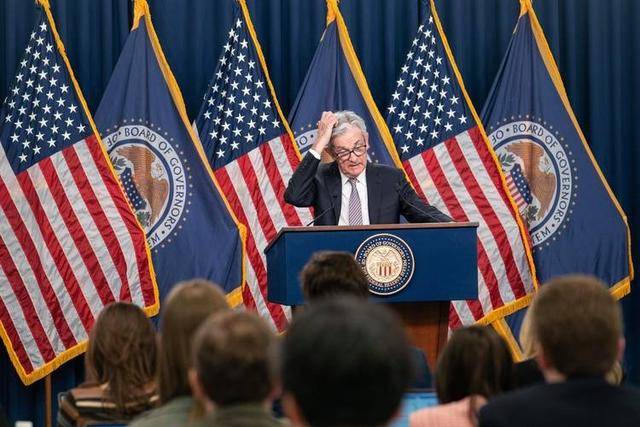
美联储降息25个点!贷款便宜了,积蓄却缩水,普通人仍被割韭菜?
Sou Hu Cai Jing· 2025-10-08 10:38
Group 1 - The Federal Reserve announced a 25 basis point cut in the federal funds rate target range to 4.00%-4.25%, marking the first rate adjustment in nine months and aligning with market expectations [1][2] - The core motivation for the rate cut is the significant cooling of the U.S. job market, with recent employment data showing stagnation and unemployment claims reaching a near four-year high [2][5] - The decision reflects a balancing act between stabilizing employment through accommodative policies while managing inflation, which remains above the 2% target [2][5] Group 2 - The Federal Open Market Committee (FOMC) showed strong unity, with 11 out of 12 members supporting the 25 basis point cut, indicating a more cohesive decision-making process than anticipated [5] - The median rate forecast suggests one more rate cut next year, with some members indicating the possibility of two additional cuts this year, though uncertainty remains [5][7] - The Fed's economic growth outlook has improved slightly, with upward revisions to GDP growth forecasts for 2025, 2026, and 2027, alongside a downward adjustment in unemployment rate expectations [7] Group 3 - The Fed's rate cut creates favorable conditions for the People's Bank of China to implement its own easing measures, such as rate cuts and reserve requirement ratio reductions [9] - Market expectations indicate a potential further reduction of 20-30 basis points in the 5-year LPR, which could lower mortgage rates and stimulate demand in the real estate market [9][10] - The depreciation of the dollar post-rate cut puts upward pressure on the RMB, potentially leading to a short-term appreciation that could lower import costs but also impact export competitiveness [10][11] Group 4 - The narrowing interest rate differential enhances the attractiveness of RMB assets, leading to increased foreign capital inflows into the Chinese market [13] - However, the influx of capital may heighten market volatility and create potential asset bubble risks, necessitating stronger macro-prudential management [13] - Sectors sensitive to interest rates, such as technology and innovative pharmaceuticals, are expected to benefit from the Fed's easing cycle, while traditional industries face increased pressure to adapt [13][15] Group 5 - The Fed's rate cut is expected to provide a relatively loose external environment for the Chinese economy, potentially boosting foreign capital return and market confidence [17] - Long-term challenges include managing imported inflation, currency fluctuations, and the need for industrial transformation [17] - By enhancing industrial upgrades and financial regulation, China aims to convert external opportunities into internal growth drivers, fostering stable development amid global economic adjustments [17]
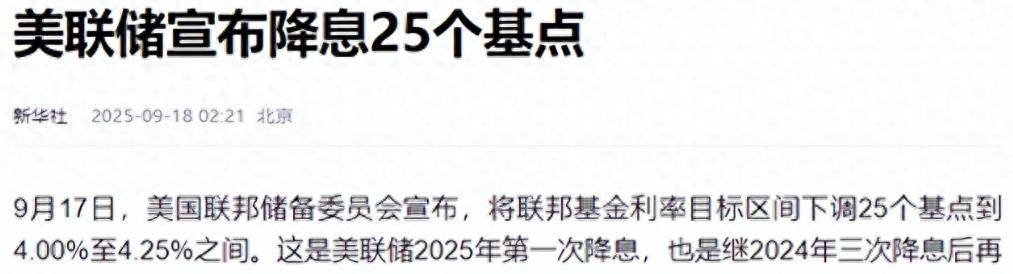
降息易,定调难! 美联储内部现严重分歧,市场紧盯周三决议指引
Zhi Tong Cai Jing· 2025-09-15 01:15
Core Viewpoint - The Federal Reserve is preparing to restart interest rate cuts for the first time in nine months to address a slowing labor market and persistent inflation above the 2% target, but there is significant internal disagreement on the pace and extent of these cuts [1][3]. Group 1: Economic Indicators - Recent weak economic data has raised concerns about a more severe recession in the labor market, potentially dragging down consumer spending and overall economic growth [1]. - The unemployment claims have risen to a nearly four-year high, and employment growth data for 2024-2025 has been revised down by 910,000, reinforcing market expectations for a 25 basis point rate cut this week [3]. - The current inflation rate remains above the Fed's 2% target, with tariff policies posing risks of further price increases [1][3]. Group 2: Federal Reserve's Internal Disagreement - There is a notable division within the Federal Reserve, with some members advocating for no rate cuts while others call for more significant reductions; this week’s decision may see 3 to 4 dissenting votes, potentially the highest since 1990 [1][6]. - Some officials, like former Philadelphia Fed President Pat Harker, express uncertainty about the clarity of the path forward for rate cuts, indicating a complex balancing act between employment and inflation [1][6]. - The potential appointment of Stephen Milan, a Trump ally, to the Fed Board could influence future policy directions, especially if there are further vacancies due to political maneuvers [2][6]. Group 3: Market Reactions and Predictions - Barclays has raised its rate cut forecast following the latest employment report, predicting three additional 25 basis point cuts in 2025 and two more in March and June 2026 [4]. - Analysts are closely monitoring the upcoming Fed rate decision and Powell's press conference for insights into economic strategies, with some economists becoming more optimistic about economic growth prospects if tariff policies stabilize [5].
美联储9月降息:一场明确且必要的政策转向
Di Yi Cai Jing· 2025-08-24 12:17
Group 1: Federal Reserve's Policy Direction - The Federal Reserve is likely to announce a rate cut of at least 25 basis points at the upcoming meeting on September 17, reflecting strong market confidence in a shift in monetary policy [1][8] - The dual mandate of the Federal Reserve focuses on maximizing employment and price stability, with current conditions presenting a dilemma of a weakening labor market and rising inflation pressures [2][3] - Powell emphasized that the rising risks in the labor market are a key factor driving the shift towards a more accommodative monetary policy [2][3] Group 2: Labor Market Conditions - The July employment report indicated a significant slowdown, with only 73,000 non-farm jobs added, well below the expected range of 110,000 to 130,000 [3] - The unemployment rate increased slightly from 4.1% to 4.2%, still at historically low levels, but the rising trend in layoffs and unemployment poses a risk to economic stability [3][9] - Powell warned that the risks of rising layoffs and unemployment highlight the urgency for a rate cut to support the labor market [3][9] Group 3: Inflation Trends - The core PCE price index recorded 2.7% in May 2025, still above the 2% target, indicating persistent inflationary pressures despite a significant drop from the 5.5% peak in 2022 [4][5] - The July CPI remained stable at 2.7%, slightly below expectations, while the core CPI rose to 3.1%, suggesting accumulating price pressures [4][5] - The PPI report showed a 0.9% increase in July, the largest monthly rise since March 2022, driven by tariff policies, which could lead to further inflationary pressures [5][6] Group 4: Market Reactions and Future Outlook - Powell's speech significantly boosted market confidence, with the probability of a September rate cut rising from 76% to 89.2%, leading to increases in stock, gold, silver, and cryptocurrency prices [8] - The upcoming August employment and CPI data will be critical in determining the scale of the rate cut, with expectations leaning towards a 25 basis point reduction [8][9] - A 25 basis point cut is expected to support the labor market but may also heighten inflation risks, necessitating careful monitoring of economic indicators [9][10]