巴菲特指数

Search documents
李丰:2026,关于赚钱、AI与竞争逻辑,我的展望和预判
3 6 Ke· 2026-01-29 01:31
Group 1 - The core viewpoint is that the technological explosion of recent years is just the prologue, with significant societal applications and industrial reshuffling beginning now, particularly in AI and hardware integration in China [1][2] - The second half of the AI technology cycle is expected to see China gaining an advantage, as historically, China tends to catch up and surpass the US in the latter stages of technological waves [1][2] - AI combined with hardware presents a strategic opportunity for China, leveraging its manufacturing supply chain advantages for industrial transformation and upgrades [1][2] Group 2 - The current AI boom is unprecedented, driven by significant capital influx and competition between the US and China in areas such as chips, computing power, models, and applications [5][21] - Historical patterns show that every AI breakthrough leads to a wave of applications when combined with structural changes in industries, which is evident in the current AI landscape [8][9] - The investment logic in the AI era is shifting from mere technological innovation to practical applications that generate revenue, indicating a transition from the initial hype to sustainable business models [25][28] Group 3 - China's AI opportunities are significant, particularly in the context of hardware capabilities and the integration of AI with traditional industries, as highlighted by government initiatives [35][39] - The evolution of AI applications in China is expected to follow a three-stage process, with the first stage focusing on large models, the second on general agents and embodied intelligent robots, and the third on practical, revenue-generating applications [27][28] - The development of AI hardware in China is seen as a strategic advantage, with the potential for new product forms that leverage existing supply chains and technological advancements [36][39] Group 4 - The international landscape is shifting, with the US potentially reducing its military presence globally, which may provide China with a strategic window to enhance its international influence [47][49] - The Chinese economy is undergoing structural adjustments, which could be positively impacted by a more favorable international environment, facilitating the transition to new economic drivers [51][52] - The long-term competition between the US and China will increasingly focus on data and energy, with the country that secures a competitive edge in these areas likely to emerge victorious [66]

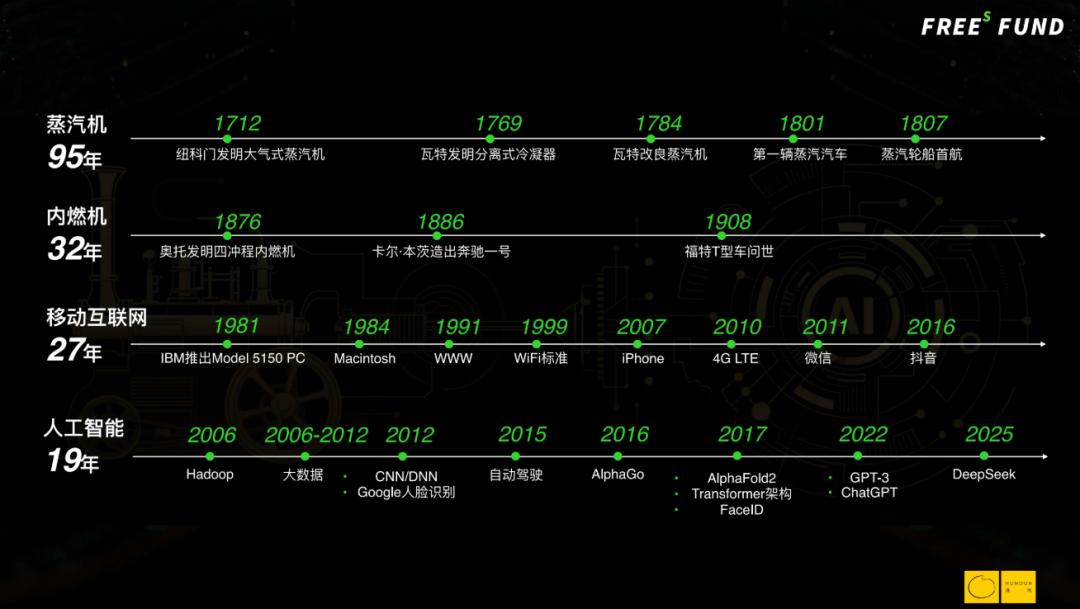
峰瑞资本李丰:2026年,AI投资的逻辑与展望
Sou Hu Cai Jing· 2026-01-06 10:02
Core Viewpoint - The current AI investment wave is characterized as the most financially abundant in history, driven by unprecedented liquidity and technological advancements [2][4][5]. Group 1: AI Investment Landscape - The AI investment boom began in November 2022 with the emergence of ChatGPT, marking three years of heightened interest and competition, particularly between the US and China [3][4]. - Central banks globally expanded their balance sheets by $12 trillion from 2020 to 2021, leading to an extraordinary increase in liquidity, estimated at nearly $50 trillion when considering the money multiplier effect [4][5]. - The influx of capital has resulted in a significant reallocation of investments, with a notable shift towards the US market due to geopolitical uncertainties in Europe and China [5][6]. Group 2: Future Investment Narratives - By 2026, the focus will shift from merely possessing technology to effectively utilizing it for profit, emphasizing the importance of practical applications over theoretical advancements [2][8]. - The AI investment cycle is expected to progress through three stages: initial focus on technology, followed by exploration of its applications, and ultimately, the realization of profitable use cases [8][9]. - Historical patterns suggest that while the US led in the first technology cycle, the second saw a balance between the US and China, and the third may present opportunities for Chinese advancements to surpass those of the US [9][10].

东方富海董事长陈玮:中国股市未来至少会增加100万亿市值
Xin Lang Cai Jing· 2025-12-05 08:24
Core Viewpoint - The Chinese stock market has significant growth potential, supported by unprecedented government policies aimed at boosting the market and direct financing, with a reasonable target for the market to exceed 150% of GDP, indicating that the 4000-point level may just be the beginning, and the 3000-point level may not be seen again [1][2]. Group 1 - The Chinese GDP is projected to surpass the United States by 2037, with an expected increase of 15 trillion USD from the current 18 trillion USD [2][3]. - The Chinese stock market is anticipated to increase by at least 10 trillion USD in market value, rising from the current 11 trillion USD, with this growth driven by new sectors including artificial intelligence [2][3]. - The era of large technology companies in China is emerging, with the largest Chinese company, Tencent, valued at approximately 770 billion USD, compared to nearly 5 trillion USD for the largest U.S. company, highlighting the potential for growth in the number of companies valued at over 1 trillion USD in China [2][3].
市场估值处于什么水平了?
雪球· 2025-10-10 08:09
Core Insights - The article discusses the recent structural bull market in sectors like chips, AI, and computing power, leading to rising valuations across various indices [4]. Market Temperature Analysis - The current market temperature is at 59.86 degrees, indicating a neutral to slightly hot market, which is higher than the temperatures during the bull markets of 2015 and 2021 [10][12]. - A market temperature below 20 degrees is considered a good time for dollar-cost averaging, while above 60 degrees indicates a hot market where opportunities become more selective [7][10]. Valuation Indicators - The stock-bond yield spread is currently at 2.59%, which is within a reasonable range, suggesting that equity assets have a higher value proposition compared to bonds [15]. - The Graham index, which measures the price-to-earnings ratio against the risk-free rate, is at 2.394, indicating a high equity market attractiveness due to low bond yields [19][20]. - The Buffett index, representing the market's total capitalization relative to GDP, is at 97.89%, indicating a high level of market capitalization compared to economic output [22]. Index Temperature Overview - The article provides a detailed analysis of various indices, including core broad-based indices like the CSI 300 and the CSI 500, with their respective temperatures and valuation metrics [26][27]. - Most major broad-based indices are currently in a normal valuation range, with some small-cap indices entering a slightly high valuation phase [28]. Sector and Strategy Indices - The article highlights the importance of dividend indices as a defensive strategy, with several indices showing lower temperatures, indicating potential investment opportunities [38][39]. - It also discusses the characteristics of various sector indices, emphasizing the need for careful selection, especially for new investors [47][49]. Emerging and Cyclical Industries - New and cyclical industries are noted as challenging areas for investment, often subject to volatility and requiring strong industry insight [50][51]. - The article advises against early involvement in emerging and cyclical industry indices for most new investors [52].

3700点的A股,太贵了吗?
天天基金网· 2025-08-15 11:22
Core Viewpoint - The A-share market has shown a strong upward trend since the beginning of 2025, with major indices experiencing significant gains, indicating a potential "slow bull" market [3][29]. Market Performance - As of August 11, 2025, the Shanghai Composite Index has successfully maintained above 3600 points for the first time in three and a half years, with the CSI 300 up 4.77% year-to-date and the Hang Seng Index up 24.16% [3][5]. - The average daily trading volume in the A-share market has exceeded 16,000 billion RMB since July, marking an increase of nearly 10,000 billion compared to the same period last year [3][5]. - Over the past three months, major indices like the CSI 300 and CSI 800 have seen gains of around 8%, while the past year has seen increases of over 20% for most indices, with the ChiNext Index and Hang Seng Tech Index recording around 50% growth [3][5]. Valuation Metrics - The price-to-earnings (P/E) ratios for major indices are around 70% based on a ten-year perspective, indicating a relatively high valuation, except for the ChiNext and Hang Seng Tech indices, which are closer to historical lows [6][7]. - The price-to-book (P/B) ratios for A-share indices are around 40%, suggesting that while P/E ratios may indicate overvaluation, P/B ratios appear more reasonable due to stable net asset growth despite declining profits [8][10]. Investor Sentiment - Investor sentiment has reached a peak, with the A-share market experiencing a consecutive rise since August 4, 2025, and trading volumes surpassing 20 trillion RMB, placing current trading activity at the 99.30% historical percentile [15][19]. - The margin financing balance has also remained above 2 trillion RMB, indicating a high level of leveraged investment activity, although the ratio of margin financing to total market capitalization is at 66.10%, suggesting it is not at an extreme level [19][21]. Sector Performance - Among various sectors, the telecommunications sector has seen the highest increase of 27.91% over the past three months, while the food and beverage sector has declined by 5.52% [22][24]. - A total of 16 sectors have P/E ratios exceeding the historical 50% percentile, indicating potential overvaluation, while sectors like public utilities and non-bank financials are below the 20% percentile, suggesting undervaluation opportunities [25][26]. Investment Considerations - Investors are advised to maintain a diversified portfolio and avoid emotional trading, focusing on long-term value rather than short-term gains [30][31]. - It is recommended to consider broad market indices or well-tested actively managed funds for those uncertain about specific sectors [30][31].

3500点到底是高是低?现在到底贵不贵?
雪球· 2025-07-14 08:25
Core Viewpoint - The article discusses the importance of a stable valuation system for investors to navigate market fluctuations and make informed decisions, especially during periods of market uncertainty [3][4]. Group 1: Market Valuation Insights - On September 12, 2024, the overall market PB reached a historical low, indicating potential investment opportunities [6]. - The current valuation of the A-share market is at 42.36°C, which is considered a normal valuation stage, suggesting that while it is not overly expensive, the safety margin is lower than before [15][23]. - The article emphasizes that opportunities often arise during periods of extreme pessimism, as seen in past market conditions [9][10]. Group 2: Valuation Metrics - The "All Market Temperature" is calculated using a weighted average of PE and PB ratios, with the current temperature indicating a normal valuation phase [15]. - The Graham Index, which reflects the potential return of equity markets relative to risk-free rates, has been adjusted to lower its weight due to recent distortions caused by declining interest rates [16]. - The stock-bond yield spread, currently at 3.32%, indicates that the equity market's earnings yield is approximately double the risk-free rate, which has been a driving force behind recent market rallies [23]. Group 3: Investment Strategy - The article advises against excessive greed or chasing high returns, as current valuations suggest a normal range with insufficient safety margins for new investments [25]. - It highlights the importance of a valuation judgment as a foundational element for long-term investment strategies, helping investors maintain confidence during market uncertainties [26].