开源理念

Search documents
AMD FSR 4开源在即?CES 2026释放重大转型信号
Xin Lang Cai Jing· 2026-01-08 01:30
Core Viewpoint - AMD is considering making its image enhancement technology FSR 4 open source in the future, following a code leak incident that has prompted a reassessment of its technology release strategy [1][4]. Group 1: FSR 4 Technology and Code Leak - The source code for FSR 4 was accidentally leaked in August 2025 due to a brief exposure on GitHub, leading to ongoing discussions about its potential shift to open source [1][4]. - AMD's GPU Technology President and Chief Software Officer, Andrej Zdravković, indicated that the leak was not part of the company's plans but has led to an internal reevaluation of their technology release strategy [1][4]. Group 2: Open Source Strategy - Zdravković emphasized AMD's commitment to promoting technology development in an open manner, stating that the open-source philosophy is already integrated into the company's long-term strategy [3][4]. - When asked about the possibility of FSR 4 becoming fully open source, Zdravković referred to it as a "long-term plan," without providing a specific timeline, which has been interpreted as a move towards openness [3][4]. Group 3: Market Position and User Feedback - Initially, FSR 4 was positioned as a feature exclusive to the Radeon RX 9000 series graphics cards to enhance the competitiveness of new products [5]. - Following the code leak, the open-source community adapted and optimized the algorithm, successfully deploying it on RDNA 3 and earlier Radeon architectures, as well as some GeForce RTX 3000 series graphics cards [5]. - Users reported significant improvements in visual quality when running FSR 4, even on non-native supported hardware, although this may incur some performance overhead [5]. Group 4: User Sentiment and Competitive Landscape - The limitation of FSR 4 to new hardware has led to dissatisfaction among some older users, who feel that this restricts the technology's broader support and fairness in user experience [6]. - The recent statements from AMD executives are seen as a significant adjustment to the company's previous closed strategy, potentially impacting its competitive position and community relations in the graphics processing sector [6].

Linux之父:Vibe编程是入门编程的绝佳方式
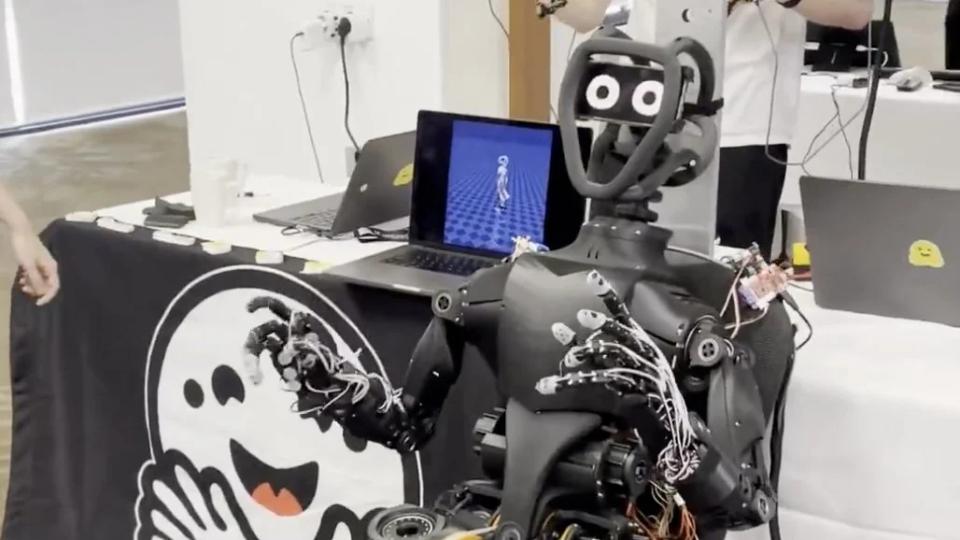
量子位· 2025-12-10 10:54
Core Viewpoint - The discussion highlights the evolving role of AI in programming, emphasizing that while AI-assisted coding can be beneficial for beginners, it poses challenges for long-term code management and maintenance [3][4]. Group 1: AI and Programming - Linus Torvalds views AI-assisted Vibe programming as an excellent entry point for beginners in coding [3]. - However, he warns that using AI-generated code in real-world applications can lead to difficulties in long-term management and repair [4]. - Torvalds asserts that programmers will not be replaced, as there is a continued need for individuals who understand code maintenance [5]. Group 2: Hardware Preferences - During a conversation about hardware, Torvalds expressed a preference for systems with ECC (Error-Correcting Code) memory, criticizing machines without it [11][19]. - He shared a personal experience where a non-ECC memory issue led to significant troubleshooting time, reinforcing his principle of avoiding machines lacking end-to-end ECC protection [19][21]. Group 3: Productivity Metrics - Torvalds criticized the practice of measuring programmer productivity by the number of lines of code written, suggesting that such metrics are not suitable for tech companies [26][28]. - He emphasized that his current role involves more reading and decision-making regarding code merges rather than writing code [22][23]. Group 4: Relationship with Microsoft - The historical tension between Linus and Microsoft has evolved, with both parties now on amicable terms, largely due to the integration of Linux in Microsoft's cloud services [34][38]. - The shift in Microsoft's approach to open source, especially under CEO Satya Nadella, has led to a collaborative relationship, with Microsoft contributing significantly to the Linux kernel [34][36].


美媒:我们能从中国科技成功学到什么
Huan Qiu Wang Zi Xun· 2025-10-30 22:57
Group 1 - The article discusses how the U.S. can learn from China's technological advancements and innovation strategies, emphasizing that underestimating China's achievements could harm the U.S. [1] - China has transformed from a technology laggard to a tech powerhouse in a few decades, showcasing significant infrastructure and technological developments, including high-speed rail and electric vehicles [1][2] - The article highlights China's resilience in the face of economic challenges, noting its position as the world's largest manufacturing and goods trading nation, with substantial advancements in technology [2] Group 2 - China's unique characteristics in technology include self-manufactured hardware, supported by a robust supply chain, infrastructure, and technical expertise [2] - The article points out that China has installed nearly half of the world's industrial robots and holds over 60% of global 5G base stations, indicating its leading role in technology [2] - The open-source philosophy in China's AI sector is creating significant opportunities, potentially allowing China to shape global technology standards [3] Group 3 - The U.S. is encouraged to invest more in research and attract top overseas talent to revitalize its manufacturing sector, particularly in areas like batteries and renewable energy [3] - The article suggests that potential trade agreements should allow Chinese companies to license intellectual property to U.S. firms, which could create jobs and facilitate advanced manufacturing returning to the U.S. [3] - The ongoing competition between the U.S. and China is acknowledged, but the article advocates for collaboration in specific fields to benefit both nations [3]
从马斯克到普通人,我们都输在沟通上
Sou Hu Cai Jing· 2025-09-11 10:51
Core Points - The conflict between Elon Musk and Sam Altman, co-founders of OpenAI, stems from differing ideologies regarding the organization's original commitment to "open-source and non-profit" principles, with Musk accusing Altman of deviating from these ideals while Altman argues for necessary compromises in advancing AI technology [1][4][6] Communication Issues - Effective communication is essential for success; even the most intelligent individuals can fail to advance their goals if they cannot communicate effectively [3][12] - The essence of communication involves focusing less on oneself and more on others, as highlighted in the book "Learn to Communicate," which emphasizes understanding others' needs rather than solely defending one's own position [7][9] Leadership Communication - Leadership communication is about clearly expressing values, vision, and plans while being audience-centered, which enhances a leader's influence [8][10] - The book contrasts leader-centered language with audience-centered language, suggesting that the latter significantly improves communication effectiveness [9] Practical Communication Skills - The book provides practical communication techniques, including maintaining optimism, using simple language, keeping sentences short, focusing on strong verbs, and frequently using "you" to engage the audience [10][11] - These techniques are often overlooked, especially in high-tech fields where professionals may focus too much on technical details at the expense of interpersonal communication [11] Broader Implications - The communication issues observed in the Musk and Altman dispute reflect common challenges faced in everyday work environments, such as misunderstandings in meetings or emails [12][13] - In modern workplaces, technical skills are only part of the equation; communication skills are crucial for translating technical abilities into real-world impact [14][15] Conclusion - While the outcome of the Musk and Altman dispute remains uncertain, improved communication may prevent disagreements from escalating into unnecessary conflicts [16] - The lessons from "Learn to Communicate" are valuable for fostering understanding and respect in professional relationships, making communication a critical skill in an increasingly interactive world [17]

华为盘古团队:否认抄袭!
程序员的那些事· 2025-07-06 12:33
Core Viewpoint - Huawei's open-sourcing of the Pangu Pro MoE 72B model and its inference technology is a significant step in promoting AI innovation and application across various industries, despite facing allegations of non-originality and compliance issues with open-source practices [1][3]. Group 1: Allegations and Concerns - A GitHub study raised concerns about the Pangu Pro MoE model's similarity to Alibaba's Qwen-2.5 14B model, with an average correlation of 0.927 in attention parameter distribution, suggesting a lack of independent development [2]. - The study's author claimed to have found a copyright notice from Alibaba in the Pangu open-source code, indicating potential copyright infringement [2]. Group 2: Huawei's Response - The Pangu team denied the plagiarism allegations, asserting that their evaluation methods were unscientific and emphasized the model's originality, claiming it is the first hybrid expert model designed specifically for the Ascend hardware platform [3]. - Huawei acknowledged that some foundational components referenced industry open-source practices but maintained compliance with open-source licenses, clearly marking copyright statements in the code [3]. - The company reiterated its commitment to open innovation and respect for third-party intellectual property, aiming to foster collaboration with developers for model optimization and technological breakthroughs [3].

从开源模型到开源机器人:Hugging Face的“具身智能”野心
3 6 Ke· 2025-06-03 11:52
Core Insights - Hugging Face has officially entered the embodied AI sector by launching two humanoid robots, HopeJR and Reachy Mini, marking its first venture into hardware after establishing a strong presence in software [2][3] - The acquisition of Pollen Robotics, the creator of the modular humanoid robot Reachy, has provided the technological foundation for this transition, allowing Hugging Face to leverage Pollen's engineering and design principles in its new robots [2][3] - The company aims to expand beyond chatbots and model hosting to create AI systems capable of interacting in real-world environments while maintaining its commitment to open-source principles [2][3] Company Overview - Hugging Face, founded in 2016, initially launched a chatbot application for teenagers before evolving into a comprehensive machine learning development platform that supports model hosting, dataset sharing, and API integration [3] - The company recognizes the necessity for AI to interact with the physical world, prompting its focus on embodied intelligence and robotics, which are designed for experimentation, collaboration, and reproducibility [3] Product Details - HopeJR is a full-sized humanoid robot designed for developers and researchers, featuring a modular platform with multiple cameras, articulated limbs, and voice interaction capabilities, allowing for testing of language models and perception systems in real-world scenarios [6] - HopeJR boasts 66 degrees of freedom (DOF) and aims to achieve walking capabilities in real-world environments following successful simulations [6] - Reachy Mini is a smaller version of the original Reachy robot, designed for educational purposes and independent developers, featuring functionalities like expression display and basic object manipulation [9] - The introduction of Reachy Mini aims to lower barriers for developers, making it easier to experiment without the costs and complexities associated with larger robots [9] Future Outlook - While specific pricing and release dates for HopeJR and Reachy Mini have not been disclosed, both robots will operate under a loose open-source license [10] - The company plans to introduce benchmark challenges, developer toolkits, and a dedicated robot section on Hugging Face Hub, along with deep integration with the PyTorch robotics platform LeRobot [10] - Hugging Face's CEO emphasizes the open-source strategy to prevent monopolization of robotics technology by a few large companies, reiterating the mission to democratize AI and robotics [10]

高毅“研选”书单2025:当AI革命撞上世界变局|高毅读书会
高毅资产管理· 2025-04-22 03:00
Core Insights - The article emphasizes the transformative impact of artificial intelligence (AI) on society and the importance of continuous learning and reading to adapt to rapid technological changes [1] Group 1: Recommended Books on AI - "The Chip that Built the AI Revolution" by Stephen Witt is recommended for its insights into the evolution of GPUs and the integration of software and hardware in driving the AI revolution [2] - "Introduction to Functional Analysis and Applications" by Irving Kreyszig is highlighted for its mathematical foundations behind neural networks, emphasizing that AI is based on measurable operators in Hilbert spaces [4] - "Deep Learning" by Ian Goodfellow, Yoshua Bengio, and Aaron Courville is considered a foundational textbook in deep learning, providing a comprehensive understanding of various technologies and research directions in AI [6] - "Machine Learning for Humans" by Vishal Mani and Samir Sabri is recommended as an accessible introduction to machine learning, suitable for beginners to establish foundational concepts [8] - "Artificial Intelligence Index Report 2025" authored by a Stanford professor reviews the progress of the AI industry in 2024, making it suitable for researchers and practitioners [10] - "The Cathedral and the Bazaar" by Eric S. Raymond discusses the principles of open-source ecosystems, relevant in the context of the growing confidence in large model open-source initiatives [12] Group 2: Video Resources on AI - Stanford AI authority professors provide accessible explanations of AI theoretical foundations, frameworks, and practical case studies [14] - Andrew Ng's courses are noted for their clarity and relevance, making complex AI and machine learning concepts understandable for a broader audience [15] - "Learning AI with Li Mu" focuses on core literature in the field, suitable for those looking to deepen their understanding of AI research [15] Group 3: Broader Economic and Historical Context - "The Economy of the Pursued" by Gu Zhaoming categorizes industrialization into three stages and offers policy suggestions for economies striving to maintain a lead [16] - "The Paradox of American Prosperity and Poverty" by Monica Prasad analyzes the institutional reasons behind social stratification in the U.S. [18] - "Economic Interdependence and War" by Dale Copeland systematically analyzes the economic causes behind major modern conflicts [20] - "Confucian-Legalist State: A New Perspective on Chinese History" by Zhao Dingxin emphasizes the importance of understanding Chinese history for contemporary governance [22] - "The Unmissable Chinese History" by Bohai Xiaoli uses war as a lens to explore historical narratives [24] - "The Unchanging Human Nature and Wealth Mindset" by Morgan Housel discusses how to navigate an unpredictable future through understanding life’s realities [26] - "The King of坪效" by Joe Coulomb and Patty Chivalier shares insights on the growth and positioning of Trader Joe's supermarket, revealing essential retail and business principles [29]