慢慢变富

Search documents
那些嘲笑慢慢变富的人,最终往往快速变穷
雪球· 2026-03-21 13:31
Core Viewpoint - The article emphasizes the importance of slow and steady wealth accumulation over the allure of quick riches, highlighting that true wealth growth is a result of value creation and the power of compounding over time [4][10]. Group 1: The Nature of Wealth Accumulation - Wealth accumulation is fundamentally about the resonance between value creation and time compounding, with historical examples like Warren Buffett illustrating that significant wealth is often built later in life [6][12]. - The misconception that "slow" equates to "inefficient" and "fast" equates to "ability" leads many to chase quick profits, often resulting in substantial losses [7][9]. Group 2: Common Pitfalls of Quick Wealth Pursuit - Individuals attempting to bypass the slow accumulation phase frequently fall into traps such as excessive leverage, which can amplify losses during market downturns [11]. - The pursuit of trending investments often leads to being a "bag holder," as many enter markets at their peak, resulting in financial losses [11]. - Ignoring basic financial safety nets in favor of high-risk investments can lead to devastating consequences when unexpected life events occur [11]. Group 3: Cognitive Framework and Time Perspective - The difference between "quickly becoming poor" and "slowly becoming rich" lies in cognitive frameworks and perspectives on time, where wealth reflects a person's ability to manage emotions and recognize opportunities [12][14]. - Those who initially dismiss the idea of slow wealth accumulation often come to realize that respecting objective laws of time and investment leads to better financial outcomes [13][14].


重阳投资合伙人舒泰峰:慢慢变富的秘诀就是要拥有“四颗心” 祝投资者马到功成、业绩长红!
Xin Lang Cai Jing· 2026-02-13 08:37
Core Viewpoint - The article emphasizes that there are no shortcuts to wealth in investment, but there are principles for gradual wealth accumulation, encapsulated in the concept of "Four Hearts" [1][2][3]. Investment Principles - The "Four Hearts" include: - Patience - Doubt - Caution - Original Intention - These correspond to four types of thinking: - Long-term thinking - Contrarian thinking - Risk thinking - Equity thinking [1][2][3]. Investment Philosophy - Investment is described as a game against human nature, where the secret to wealth compounding lies in understanding time, requiring long-term commitment for occasional moments of success [1][2][3]. Cultural Context - The article connects the New Year celebration with the qualities represented by the horse, such as resilience, courage, and endurance, aligning with the philosophy of slow wealth accumulation [2][4]. Well Wishes - The article concludes with wishes for health, happiness, and success for investors in the new year [1][2][3].
接触太多财富自由的大佬,发现做事的规律都是相通的
Xin Lang Cai Jing· 2026-02-08 13:26
Core Insights - The article discusses the contrasting investment philosophies of two successful individuals, emphasizing the importance of making the right choices over sheer effort [2][4][20] - It highlights the concept of "slow wealth accumulation" and the significance of patience and strategic planning in achieving long-term success [20][23] Group 1: Investment Philosophy - The first individual, referred to as "学长," emphasizes the importance of timely withdrawal from unsuitable ventures, stating that choosing the right path is more critical than hard work [5][6] - He successfully transitioned to e-commerce, creating numerous successful products, and maintained a focus on long-term goals despite initial challenges [8][18] - The second individual, a young PhD, believes in gradual progress and the value of patience, viewing his career as a process of "collecting cards" towards greater achievements [20][23] Group 2: Key Strategies for Success - Both individuals share common traits: they prioritize making informed decisions and actively engage in their pursuits without being deterred by short-term setbacks [23][24] - They understand the value of compounding and approach life as a series of investments, where consistent effort leads to higher returns over time [23][24] - The article suggests that ordinary individuals can adopt similar strategies by focusing on action over perfection and developing resilience during initial phases of their careers [24][25]

巴菲特说要“慢慢变富”,可有人说80岁变富又有啥用?
3 6 Ke· 2025-11-07 00:16
Core Viewpoint - The article emphasizes the importance of gradual wealth accumulation through compounding interest, arguing that this method is the only reliable way for ordinary people to achieve financial security in their later years [1][5][21] Group 1: Wealth Accumulation - The majority of Warren Buffett's wealth was accumulated after the age of 50, highlighting that time is a crucial factor in wealth growth [2][3] - For an average person, a consistent annual return of 8% over 40 years can lead to significant wealth accumulation, contrasting with Buffett's 20% return which results in much higher wealth at retirement [2][6] - Starting to invest early can lead to substantial differences in wealth by retirement age, emphasizing that the earlier one starts, the greater the potential financial security [6][19] Group 2: Financial Security in Old Age - The article discusses the challenges faced by elderly individuals with insufficient financial resources, leading to a lack of dignity and increased vulnerability [7][8] - It highlights the psychological impact of financial insecurity in old age, where individuals may feel desperate and socially isolated due to their financial situation [7][8] - The narrative suggests that financial behavior in youth significantly impacts one's financial status in old age, stressing the need for prudent financial planning [8][19] Group 3: Value of Wealth - Wealth provides a sense of security, which is essential for enjoying life, even in old age [11][12] - The article outlines three core values of wealth: security, choice, and influence, emphasizing that financial resources enhance personal freedom and decision-making [13][15] - It argues that wealth is not merely for spending but also serves as a tool for influence and opportunity, allowing individuals to navigate life more effectively [15][17] Group 4: Life Philosophy - The concept of "slowly becoming rich" is presented as a life philosophy that aligns with long-term thinking and personal growth [21] - The article posits that true wealth accumulation is a continuous process rather than a single event, advocating for a balanced approach to life and finances [21]

对抗不确定性的财富公式:主业、副业与投资的三角联动
吴晓波频道· 2025-08-13 00:29
Core Viewpoint - The article emphasizes the importance of finding small business opportunities in emerging sectors that large capital may overlook, especially during economic downturns [3][4]. Group 1: Economic Trends and Investment Opportunities - As the economy slows down, there is a growing interest in new sectors such as the silver economy, artificial intelligence, and health industries [3]. - The article suggests that ordinary individuals can benefit from small businesses with low investment costs, allowing them to create a minimal business loop [3]. Group 2: Wealth Accumulation Philosophy - The article reflects on the anxiety and impatience of the current era, where quick wealth accumulation is often prioritized over long-term growth [5][6]. - It highlights that true wealth accumulation comes from building skills, compounding investments, and validating business models through side ventures [10]. Group 3: Super Membership Program - The upgraded Super Membership program focuses on three core engines: workplace risk resistance, stable investment growth, and new income from side businesses [12][15]. - Each engine is designed to be interconnected, creating a comprehensive wealth growth formula that combines professional skills, investment strategies, and side business opportunities [12][15]. Group 4: Educational Content and Support - The program includes a variety of courses aimed at enhancing workplace skills, exploring side business opportunities, and providing investment knowledge [16][19][22]. - New features include online and offline classes, personalized learning assistants, and updated wealth planning courses to cover all life stages [26][40][39]. Group 5: Future Outlook - The article concludes by emphasizing the importance of making informed choices in an era where effort alone may not yield results, advocating for a focus on professional expertise and market understanding [42][45].

慢慢变富!优美利投资:做“寿星”,不做明星!曝光穿越周期密码
券商中国· 2025-07-17 11:22
Core Viewpoint - The quantitative investment industry is experiencing significant expansion and competition, with a focus on maintaining stable excess returns amidst increasing market interest [1][8]. Group 1: Company Insights - Youmeili Investment has entered the multi-asset quantitative field early and achieved notable success in the convertible bond sector [2]. - The chairman emphasizes that "slowly becoming rich" is the true wealth strategy, with a focus on stable long-term excess returns as the core logic for success [3][4]. - The company prioritizes low and medium volatility strategies, avoiding trends and focusing on customer experience and absolute returns [3][9]. Group 2: Investment Strategy - Multi-asset and multi-strategy approaches are seen as more scientific investment methods, allowing for better risk management and stable returns [5][21]. - Over the long term, various asset classes like stocks, bonds, and real estate have stable annualized returns, with convertible bonds showing an annualized return of approximately 6% over the past decade, outperforming other equity assets [7][24]. - The company manages nearly 5 billion yuan, with over 2 billion yuan allocated to convertible bonds, which account for more than 50% of its total management scale [26]. Group 3: Market Trends - The quantitative investment sector is still in a favorable cycle, with expectations of entering a "big asset management" era where leading institutions adopt multi-strategy and multi-asset approaches [8][33]. - The chairman notes that the current market environment favors convertible bonds due to their stability and potential for higher returns compared to stocks, especially small-cap stocks [25][27]. Group 4: Risk Management - The company employs strict risk control measures, ensuring that low and medium volatility products are matched with suitable assets or strategies, and utilizes quantitative models for optimal asset selection [23][31]. - The dynamic adjustment of asset proportions is based on the cyclical nature of different assets, aiming for stable long-term returns while managing volatility [20][21]. Group 5: Future Outlook - The company is exploring the integration of AI and quantitative strategies to enhance efficiency and model performance, with a focus on maintaining a strong market presence through stable products [34][35]. - The vision is to grow wealth steadily alongside investors, emphasizing the importance of patience and disciplined execution in investment strategies [41][40].

为什么你总在股市亏钱?原因找到了↓
Sou Hu Cai Jing· 2025-06-21 02:02
Core Viewpoint - The article discusses the challenges faced by ordinary investors in the stock market and introduces the concept of "survival rules" for investing, emphasizing the importance of building a solid investment framework and avoiding common pitfalls [1]. Group 1: Author Background - The author, Zhang Juying, is an independent investor and a well-known figure in the investment community, recognized for his influence on platforms like Xueqiu and Sina Weibo [5]. - He has published several books aimed at amateur investors, including "10 Rules for Amateur Investors" and "Slowly Becoming Rich," which reflect his 20 years of practical experience in the A-share market [5]. Group 2: Investment Philosophy - The author advocates for a structured investment approach, focusing on three key mindsets: cash mindset, stock price mindset, and equity mindset, which encourages viewing stock purchases as investments in companies [5]. - The selection of investment sectors is deemed a strategic decision, while choosing individual stocks is considered tactical, with recommended sectors including liquor, home appliances, beauty, health, and pharmaceuticals [5]. Group 3: Stock Selection Criteria - The author outlines five essential criteria for stock selection: longevity, stability, profitability, growth potential, and ethical management [5]. - It is emphasized that high-quality investment targets are rare, and once identified, they should be held for the long term [5]. Group 4: Investment Strategy - A combination of "certainty + flexibility" is suggested to navigate market volatility, advocating for a diversified investment portfolio while concentrating on high-quality stocks [6]. - The book serves as a guide for novice investors to avoid market traps and build a robust investment understanding, while also providing seasoned investors with a roadmap for value investing in the A-share market [6].
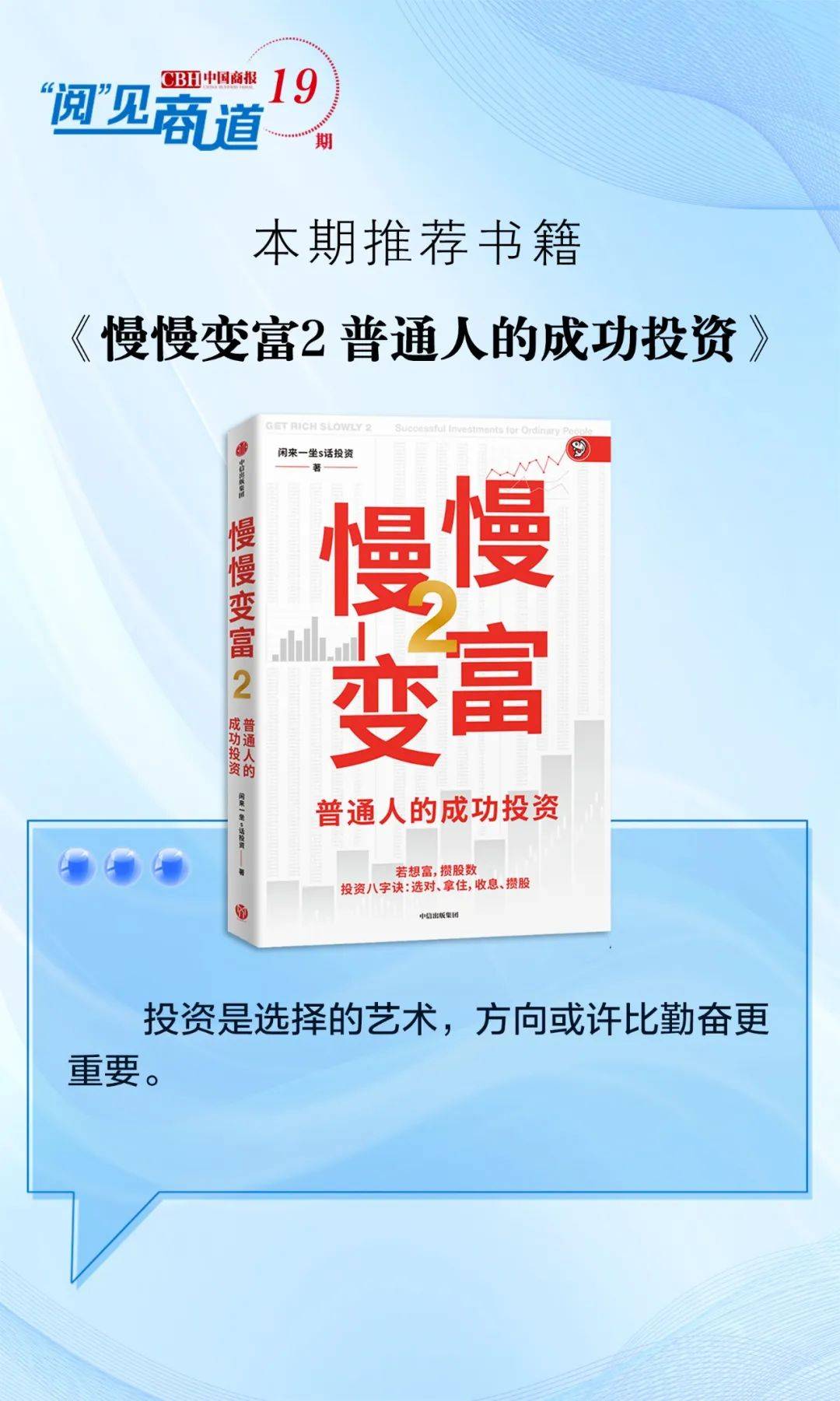
关税缓和,资金回流!股市如何让小钱变成大钱?用好钱的“繁殖力”
券商中国· 2025-05-17 23:20
Core Viewpoint - The article emphasizes the importance of saving and prudent investment strategies, highlighting that wealth accumulation is a gradual process rather than a pursuit of quick riches [2][5]. Group 1: Importance of Saving - Saving every penny is crucial for building initial capital, as illustrated by Warren Buffett's anecdote about picking up a penny, which he equates to getting closer to a billion [3]. - Buffett's frugality is showcased through his choice to drive an old car instead of spending $20,000 on a new one, demonstrating the power of compound interest over time [3][4]. Group 2: Investment Strategies - The article discusses the concept of a "failure cycle" where overspending leads to debt accumulation, emphasizing the need to avoid high-interest debt, particularly from credit cards [4][5]. - It suggests that individuals should match their consumption with income and avoid irrational borrowing for consumption, which can hinder wealth accumulation [5]. Group 3: The Power of Compound Interest - The article highlights the extraordinary "reproductive power" of money, where initial capital can grow significantly through wise investments, as illustrated by Buffett's investment strategies [6]. - Buffett's successful investments in traditional industries, despite missing out on tech booms, demonstrate that consistent, sound investment in stable companies can yield substantial returns over time [6]. Group 4: Investment in Stable Companies - The article advocates for investing in companies with high cash flow, high dividend yield, and low valuation, as these are more likely to provide reliable returns [7]. - It contrasts the excitement of investing in transformative companies with the reliability of investing in stable, established firms, suggesting that the latter is a more prudent approach for ordinary investors [7].