
抑制通胀

Search documents
卢旺达国家银行实施近三年来最大幅度加息
Jin Rong Jie· 2026-02-19 16:48
Group 1 - The central bank of Rwanda has implemented its largest interest rate hike in nearly three years, increasing the rate from 6.75% to 7.25% [1] - The primary objective of this rate increase is to curb inflation in the short term [1]
光大期货:1月16日有色金属日报
Xin Lang Cai Jing· 2026-01-16 01:13
Copper - Copper prices fluctuated overnight, with domestic refined copper imports remaining unprofitable. The macroeconomic context shows that initial jobless claims in the U.S. fell to 198,000, significantly below the market expectation of 215,000 and the previous value of 208,000, indicating a resilient labor market [2][12] - The U.S. Kansas City Fed President stated there is currently no reason to cut interest rates, as doing so could hinder progress in controlling inflation and would not benefit the labor market [2][12] - The People's Bank of China announced a 0.25 percentage point reduction in various structural monetary policy tool rates. Inventory levels showed a decrease in LME copper stocks by 500 tons to 141,125 tons, while Comex stocks increased by 4,653 tons to 488,720 tons [2][12] - Domestic copper prices rose again, but downstream enterprises are cautious in purchasing, focusing on essential needs. Additionally, import losses have widened, and the export window is gradually opening, which may benefit first-quarter export demand [2][12] - Trump indicated that there would be no temporary tariffs on key minerals like copper. The geopolitical situation between the U.S. and Iran, along with volatility in precious metals, has spilled over, causing instability in high copper prices [2][12] Nickel & Stainless Steel - LME nickel prices fell by 1.04% to $18,590 per ton, while SHFE nickel prices decreased by 0.24% to 146,880 yuan per ton. LME nickel inventory increased by 624 tons to 285,282 tons, and SHFE warehouse receipts rose by 1,700 tons to 41,972 tons [3][13] - The Indonesian Ministry of Energy and Mineral Resources announced a reduction in the nickel ore production target for 2026 from 364 million tons to approximately 250-260 million tons, which may create a global primary nickel supply-demand gap, potentially driving nickel prices higher [3][13][14] - The production of primary nickel increased significantly by 18.5% to 37,200 tons, indicating strong demand for hedging in the market [3][13] Aluminum & Aluminum Alloys - Aluminum oxide prices showed a weak trend, with AO2605 settling at 2,749 yuan per ton, down 1.33%. SHFE aluminum prices also declined, with AL2603 at 24,320 yuan per ton, down 0.59% [6][15] - The SMM aluminum oxide price fell to 2,650 yuan per ton, and aluminum ingot spot premiums expanded to 130 yuan per ton. The market is experiencing high inventory levels, leading to low premium purchasing sentiment and continued cost pressure [6][15] - The end of environmental controls and the cancellation of export tax rebates are expected to impact the market, with aluminum prices maintaining a high rhythm and spot premiums continuing to narrow [6][15] Industrial Silicon & Polysilicon - Industrial silicon prices showed a slight increase, with the main contract at 8,730 yuan per ton, up 0.46%. The inventory of industrial silicon is gradually shifting towards intermediate links, with hidden inventory increasing [7][16] - Polysilicon prices experienced a slight decline, with the main contract at 48,670 yuan per ton, down 0.38%. The market is facing pressures from logistics disruptions and speculative trading sentiment is cooling down [7][16] Lithium Carbonate - Lithium carbonate futures fell by 1.31% to 163,220 yuan per ton, with average prices for battery-grade lithium carbonate dropping by 4,000 yuan to 159,000 yuan per ton [8][17] - Supply-side production increased by 70 tons to 22,605 tons, while demand for lithium materials is expected to decline in January 2026, with a projected decrease in production for various battery types [8][17] - Despite current raw material price increases potentially suppressing terminal demand, the overall market sentiment remains bullish on lithium prices due to low inventory levels and speculative demand [8][17]


美联储官员施密德:认为目前几无理由降息
Sou Hu Cai Jing· 2026-01-15 18:39
Group 1 - The core viewpoint is that there is currently little reason for the Federal Reserve to lower interest rates, as the existing policy stance does not appear overly restrictive [1] - Lowering interest rates could hinder the progress of controlling inflation and would not benefit the labor market [1]
美联储穆萨莱姆:将抑制通胀的任务寄望于生产率提升,为时尚早。
Sou Hu Cai Jing· 2026-01-13 15:23
Core Viewpoint - The Federal Reserve's Musalem emphasizes that the task of controlling inflation relies on productivity improvements, indicating that it is still early to assess the effectiveness of current measures [1] Group 1 - The Federal Reserve is focusing on productivity as a key factor in managing inflation [1] - Musalem suggests that it is premature to evaluate the success of inflation control strategies [1]
圣路易斯联储行长Musalem:美联储需要继续抑制通胀
Sou Hu Cai Jing· 2025-11-13 20:44
Core Viewpoint - The St. Louis Federal Reserve President Alberto Musalem emphasizes the need for the Federal Reserve to continue suppressing inflation, which remains above the 2% target, and advises caution regarding further interest rate cuts [1] Group 1: Inflation Control - Musalem supports recent interest rate cuts to bolster the labor market but insists that policymakers must maintain restrictive interest rates to combat persistent inflation [1] - He indicates that the current policy stance is between moderately restrictive and neutral, highlighting the importance of continuing to suppress inflation above target levels [1] Group 2: Labor Market Support - Musalem acknowledges the necessity of providing some support to the labor market while still focusing on controlling inflation [1] - He expresses that there is limited room for further easing without making monetary policy excessively loose [1]
英财政大臣定调秋季预算案:抑制通胀为核心 为降息铺路
Xin Hua Cai Jing· 2025-11-04 10:02
Core Viewpoint - The UK Chancellor of the Exchequer, Rachel Reeves, announced that the upcoming autumn budget on November 26 will focus on controlling inflation and creating conditions for the Bank of England to lower key interest rates [1][2] Group 1: Budget and Economic Policy - The autumn budget aims to control government debt while ensuring public service spending [1] - Reeves emphasized that her decisions will focus on reducing inflation to support economic growth and improve living costs for the public [1] - There is a possibility of increasing household taxes, as many economists believe that under constrained fiscal space, tax hikes may be the only viable option to achieve debt reduction, maintain public services, and stabilize the macroeconomy [1] Group 2: Monetary Policy and Market Expectations - The market widely expects the Bank of England's Monetary Policy Committee to keep the benchmark interest rate at 4.00% during the meeting on November 7 [1] - Despite recent weak economic data opening the door for potential rate cuts, most economists believe policymakers will wait for more sustained evidence of cooling inflation and details from the autumn budget [2] - Current UK inflation is still nearly double the 2% target, leading to a cautious stance from the Bank of England [2] - Barclays and Goldman Sachs suggest that policymakers might consider a 25 basis point cut to 3.75% due to recent disappointing inflation, employment, and output data, although this expectation is not mainstream [2] - Investors are currently betting that the December 18 meeting will be a more likely window for rate cuts, with the probability of a December cut rising to nearly 60% [2] - The Bank of England faces challenges related to "data dependence" and "policy coordination," with short-term interest rate paths being influenced not only by inflation trends but also by the clarity of fiscal positions [2]
英财政大臣拟推预算降通胀,为英国央行降息铺路
Sou Hu Cai Jing· 2025-10-22 00:33
Core Viewpoint - The UK Chancellor of the Exchequer, Reeves, is committed to controlling inflation and alleviating the cost of living pressures through a series of measures in the upcoming budget, aiming to create room for further interest rate cuts by the Bank of England [1] Group 1: Budget Measures - Reeves plans to implement targeted price measures in the budget to reduce household bills and lower living costs [1] - The Treasury is considering options such as reducing electricity costs to help decrease overall inflation [1] Group 2: Policy Review - Reeves will meet with cabinet ministers to review decisions in their respective policy areas that may contribute to inflation or rising costs [1]
纽约联储主席威廉姆斯:支持降息25基点年内或再降两次
Sou Hu Cai Jing· 2025-09-30 02:46
Core Viewpoint - New York Fed President Williams supports interest rate cuts to balance inflation control and employment support [1] Group 1: Interest Rate Decisions - Williams indicated that a "moderate reduction in rates" and "slight easing of policy restrictions" are reasonable to ensure healthy labor market development while applying downward pressure on inflation above target [1] - The Federal Reserve lowered the federal funds rate target range by 25 basis points to 4%-4.25% due to rising risks in the labor market, despite the U.S. inflation rate remaining above the 2% target [1] - The dot plot from the September meeting suggests that the Fed may cut rates two more times by the end of the year [1] Group 2: Employment and Inflation Balance - Williams emphasized the need to balance inflation control and employment support, expressing concern over the potential for a slowdown in job growth to spread excessively [1] - He noted that there is still work to be done regarding high inflation, as it remains distant from the 2% target [1] Group 3: Tariff Impact - Williams stated that some factors previously causing high inflation concerns have dissipated, and the impact of tariffs has been less than expected, with no signs of accumulating inflationary pressures [1]
美联储:降息25个基点,年内预计再降两次(附发布会速览)
财联社· 2025-09-17 23:28
Core Viewpoint - The Federal Reserve announced a 25 basis point cut in the federal funds rate target range to 4.00%-4.25%, aligning with market expectations, marking the first rate cut of 2025 and the first reduction in nine months since December 2024 [4][21]. Summary by Sections Federal Reserve Decision - The Federal Open Market Committee (FOMC) decided to lower the federal funds rate target range by 25 basis points to 4.00%-4.25% [4][21]. - The decision reflects a shift in focus from inflation control to supporting employment as the labor market shows signs of cooling [18][21]. Economic Indicators - Recent indicators suggest a slowdown in economic activity during the first half of the year, with a stable low unemployment rate but a deceleration in job growth [6][21]. - Inflation remains slightly elevated, prompting the committee to closely monitor risks associated with its dual mandate [6][21]. Future Rate Projections - FOMC participants predict an additional 50 basis points cut in 2025, followed by 25 basis points cuts in 2026 and 2027 [21]. - The median GDP growth forecasts for 2025, 2026, and 2027 are 1.6%, 1.8%, and 1.9%, respectively, showing an upward revision from previous estimates [21]. Voting Dynamics - The decision saw dissent from member Milan, who advocated for a more aggressive 50 basis point cut, while other members expressed varying views on the extent of future cuts [8][21]. - Among the 19 officials, opinions varied on the number of cuts, with some suggesting a total reduction of up to 150 basis points within the year [21]. Powell's Remarks - Powell characterized the rate cut as a risk management decision, indicating no immediate need for rapid adjustments to rates, suggesting a cautious approach rather than a sustained easing cycle [18][21]. - He emphasized that the Fed's actions are data-driven and not influenced by political pressures, despite external criticisms [19][21].
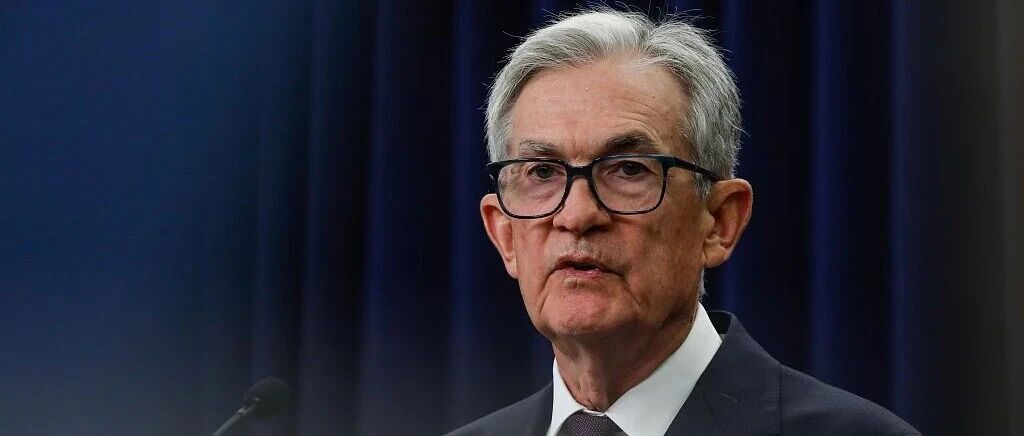
7月25日电,欧洲央行管委维勒鲁瓦表示,欧元的升值正在产生显著的抑制通胀效应。
news flash· 2025-07-25 09:37
Group 1 - The core viewpoint is that the appreciation of the euro is having a significant dampening effect on inflation [1]