
提升上市公司质量

Search documents
“投资者点题 代表委员作答”|如何提高上市公司质量,让投资者更有信心长期持有?·2026全国两会特别策划
证券时报· 2026-03-05 00:32
Core Viewpoint - The article emphasizes the importance of enhancing the quality of listed companies to ensure sustainable returns for investors and strengthen the foundation of the capital market [1]. Group 1: Improving Corporate Governance - The first step in enhancing the quality of listed companies is to improve corporate governance, addressing issues such as ineffective internal controls and lack of independence among independent directors [3]. - Suggestions include establishing a national, non-profit independent director association to promote professional oversight and protect the rights of minority investors [3]. - Recommendations also involve creating sustainability rating standards for companies in the photovoltaic industry to monitor financial metrics and prevent risks [3]. Group 2: Strengthening Dividend Policies - In 2025, A-share listed companies achieved a record cash dividend of 2.55 trillion yuan, highlighting the need for more stable and reliable returns [5]. - High-frequency and high-proportion dividends reflect improved profitability and cash flow, as well as enhanced corporate governance and shareholder awareness [5]. - Suggestions for optimizing dividend policies include making cash flow a core constraint and improving accountability mechanisms for major shareholders [6]. Group 3: Promoting Industrial Upgrades - Enhancing the quality of listed companies is crucial for serving new productive forces and driving industrial upgrades [8]. - Private equity funds are seen as key players in improving corporate governance and facilitating industry consolidation [8]. - Recommendations include relaxing certain regulatory requirements for mergers and acquisitions to encourage collaboration between high-quality funds and listed companies [8]. Group 4: Overall Impact on the Capital Market - The improvement of listed company quality is fundamental for the healthy development of the capital market and enhances investor satisfaction [9]. - As more high-quality companies emerge, the capital market will become more resilient and vibrant, benefiting both investors and the real economy [9].


川投能源:公司高度关注监管方面关于提升上市公司质量的建议
Zheng Quan Ri Bao Wang· 2026-02-05 12:17
Core Viewpoint - The company emphasizes the importance of enhancing the quality of listed companies and recognizes the positive impact of long-term capital entering the market [1] Group 1: Company Strategy - The company management prioritizes core business operations and value enhancement as key tasks [1] - The company is steadily advancing various initiatives to strengthen its business fundamentals [1] - The company believes that solid performance in its main business is essential to attract long-term capital investments [1] Group 2: Shareholder Engagement - The company is committed to returning operating results to all shareholders in the future [1]

绿地控股:将不断提升上市公司质量和投资价值
Zheng Quan Ri Bao Zhi Sheng· 2026-02-04 13:07
Core Viewpoint - Greenland Holdings emphasizes its commitment to adhering to stock listing rules and self-regulatory guidelines for information disclosure, ensuring the principles of truthfulness, accuracy, completeness, and fairness [1] Group 1 - The company will continue to deepen its transformation and upgrade processes to improve operational quality and enhance profitability [1] - There is a focus on continuously improving the quality of the listed company and its investment value [1]

三峡能源:公司将不断提升上市公司质量
Zheng Quan Ri Bao Wang· 2026-01-07 13:10
Group 1 - The core viewpoint of the article is that the stock price fluctuations of China Three Gorges Energy (600905) are influenced by various factors including macroeconomic conditions, market environment, and investor sentiment [1] - The company emphasizes its commitment to continuously improve the quality of the listed company [1] - The company aims to align the market value with the intrinsic value of the listed company through multiple measures [1]

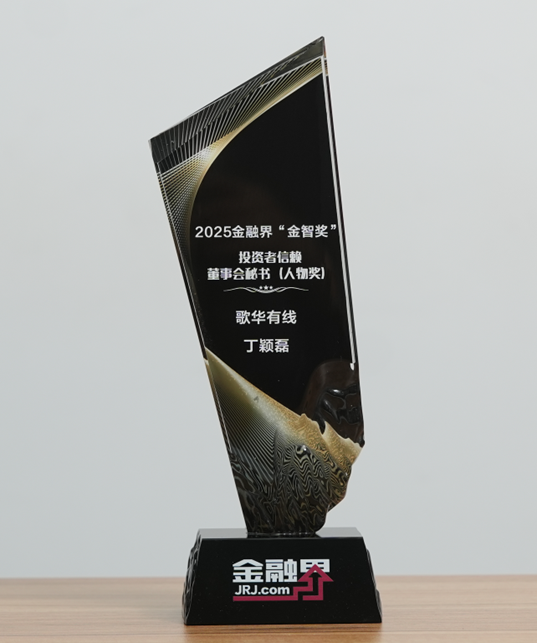
歌华有线丁颖磊荣获第十四届金融界“金智奖”投资者信赖董事会秘书称号
Jin Rong Jie· 2025-12-26 11:06
Group 1 - The "Qihang·2025 Financial Summit" was successfully held in Beijing, focusing on the theme of "New Starting Point, New Momentum, New Journey," gathering hundreds of leaders and guests from various sectors including regulatory bodies, industry associations, financial institutions, listed companies, and media [1] - The 14th "Golden Wisdom Award" results were announced, with Ding Yinglei, Vice General Manager and Secretary of the Board of Directors of Gehua Cable, awarded the "Investor Trustworthy Secretary of the Board" [1][3] Group 2 - The "Golden Wisdom Award" aims to establish benchmarks for high-quality development, guiding listed companies to focus on their main businesses, continue innovation, and fulfill social responsibilities, thereby promoting capital to gather towards quality enterprises [3] - The evaluation covered over 8,000 companies across A-shares, Hong Kong stocks, and Chinese concept stocks, with nearly 200 companies recognized for their high-quality development across six dimensions: social responsibility, industrial contribution, investment returns, growth prospects, innovation efficiency, and outstanding brand [3] Group 3 - The award for "Investor Trustworthy Secretary of the Board" emphasizes the importance of professional competence and responsibility among core governance participants of listed companies, aiming to enhance the standardized governance level of listed companies and protect investors' legal rights [3][4] - Ding Yinglei's recognition is attributed to his extensive professional background and experience in capital market operations, particularly in corporate governance, information disclosure, and investor relations management [4] Group 4 - Ding Yinglei adheres to principles of "integrity in duty and professional empowerment," overseeing key areas such as information disclosure, investor relations management, market value maintenance, and corporate governance [4][5] - He has established a standardized disclosure process to ensure that company announcements are truthful, accurate, complete, and timely, providing reliable decision-making information for the market [4] Group 5 - As a "bridge" between the company and the capital market, Ding Yinglei's practices align with the award's core standards of "value transmission and compliance protection," enhancing market confidence in Gehua Cable and contributing to a transparent, honest, and stable capital market ecosystem [5]

迪瑞医疗:将围绕提升上市公司质量等方面开展相关工作 推动提升公司价值
Zheng Quan Ri Bao Zhi Sheng· 2025-12-17 14:10
Group 1 - The company, DiRi Medical, is focusing on enhancing the quality of the listed company, improving the quality of information disclosure, strengthening investor relations management, and ensuring legal compliance in operations to drive value enhancement [1]

吴清主席署名文章解读:如何建设资本市场?
Huafu Securities· 2025-12-05 10:33
Group 1: Capital Market Development - The capital market will support high-quality development and technological innovation through a multi-layered, inclusive, and resilient market structure during the "14th Five-Year Plan" period[3] - A fair and robust regulatory system will help broaden channels for residents' property income, promoting domestic demand and consumption[3] - Enhancing the quality of listed companies is essential for stabilizing the macroeconomic foundation and boosting confidence in economic development[5] Group 2: Economic Impact and Consumer Behavior - The decline in net income growth for residents since 2022 has negatively impacted consumer willingness, influenced by the downturn in the real estate market and capital market volatility[4] - Expanding channels for residents' property income is crucial for effective income growth and stimulating consumption, which is a key direction for the capital market[4] - The "14th Five-Year Plan" emphasizes the need for a more equitable and effective regulatory system to ensure reasonable and stable returns for investors[17] Group 3: Risk Management - The complex external environment and internal pressures from the real estate cycle necessitate effective risk prevention and resolution in the capital market[6] - Emphasis on risk prevention and addressing major risk hazards is critical for maintaining a stable and healthy capital market during the "14th Five-Year Plan" period[22] - Historical financial crises highlight the importance of being prepared for potential risks in a highly market-oriented capital market[22]
华联控股:公司围绕提升上市公司质量等方面开展工作
Zheng Quan Ri Bao· 2025-11-24 09:44
Core Points - Company emphasizes efforts to enhance the quality of the listed company, improve information disclosure quality, strengthen investor relations management, and operate in compliance with regulations [2] Summary by Categories - **Company Quality Improvement** - Company is focused on enhancing the overall quality of the listed entity [2] - **Information Disclosure** - Company aims to improve the quality of information disclosure to stakeholders [2] - **Investor Relations Management** - Company is strengthening its management of investor relations [2] - **Regulatory Compliance** - Company is committed to operating in accordance with legal and regulatory requirements [2]


北京大学汇丰商学院院长王鹏飞:金融机构对管理人的激励机制应看重长期投资效率
Shang Hai Zheng Quan Bao· 2025-11-21 11:59
Core Insights - The expectation for public funds to stabilize the market and practice long-term investment is often hindered by annual rankings and redemption pressures, leading to situations where funds profit but investors do not [1] - Optimizing the incentive mechanism is crucial, shifting the focus from short-term scale retention to long-term investment returns, thereby encouraging fund managers to concentrate on long-term value creation [1] - Investor education is essential, as past high returns do not guarantee future performance, and high-yield funds showcased by sales platforms may not accurately reflect management capabilities [1] Group 1 - Strengthening the quality of A-share listed companies is vital for transitioning the market from rapid growth to high-quality development, which is a consensus among market participants [1] - Enhancing the authenticity of information disclosure is necessary to build market trust, with regulatory bodies needing to clarify disclosure rules and require companies to explain significant decisions and their implications [2] - Increasing the penalties for financial fraud, insider trading, and market manipulation is essential, along with improving the delisting mechanism to ensure accountability for companies during the delisting process [2] Group 2 - Protecting investors' legal rights is key to promoting sustainable development in the capital market, with suggestions to improve collective litigation systems and reduce the costs and difficulties of investor claims [2] - Establishing diversified dispute resolution channels, such as pre-compensation, professional mediation, and arbitration, can provide investors with more efficient and convenient pathways for rights protection [2]
清华大学五道口金融学院副院长张晓燕:构建中小企业全生命周期服务生态
Zhong Guo Zheng Quan Bao· 2025-11-15 01:40
Core Viewpoint - The Beijing Stock Exchange (BSE) has played a crucial role in the healthy, stable, and sustainable development of China's capital market over the past four years, particularly in serving innovative small and medium-sized enterprises (SMEs) [1] Group 1: BSE's Impact on SMEs - The BSE has established a system that directly links technological innovation capabilities with capital market access, effectively guiding social capital towards the technology innovation sector [2] - The BSE provides valuable and efficient direct financing channels for innovative SMEs, alleviating their funding bottlenecks and supporting their technological research, capacity expansion, and market development [2] - The differentiated listing standards designed by the BSE fundamentally change the evaluation system for innovative SMEs, considering multiple dimensions such as growth potential, R&D investment, and market value, rather than solely focusing on profits [3] Group 2: Financing Efficiency and Innovation - The "small and fast" review process effectively addresses the urgent financing efficiency needs of innovative SMEs, significantly shortening the time from application to listing and reducing costs [3] - The BSE's institutional innovations have alleviated the financing bottlenecks faced by technology innovation enterprises during the results transformation phase, improving the traditional financial evaluation system's time and value mismatches [3] - BSE-listed companies have increased their R&D investment for three consecutive years, with total R&D investment exceeding 9.1 billion yuan in 2024 and nearly 7,000 invention patents by year-end [3] Group 3: Quality and Governance - The BSE's high-quality expansion and enhancement of listed company quality are interrelated, emphasizing the need for a multi-dimensional listing standard focused on specialized and innovative attributes [4] - Improving corporate governance and enhancing investment value are key to raising the quality of listed companies, which includes fostering a culture of respect and return to investors and establishing clear dividend policies [4] Group 4: AI and Technological Empowerment - AI technology is providing new pathways for financing innovative SMEs by improving financing efficiency through assistance in preparing financing materials and matching investors [4] - AI can replace real estate collateral with data credit, transforming business activities and technological potential into quantifiable capital, thus addressing the financing challenges faced by innovative SMEs [4] - The BSE can utilize AI to establish a technology innovation assessment system for listing reviews and ongoing supervision, enhancing the precision of regulatory resources [5] Group 5: Risk Monitoring and System Optimization - A dynamic risk monitoring and early warning system based on multi-source data integration can be developed to identify potential operational anomalies and risks early [6] - The BSE aims to create a comprehensive, digital service system that enhances the functions of the New Third Board and focuses on key areas such as refinancing and mergers and acquisitions [6] Group 6: Dual-Drive Reform - The BSE has significant room for development, and during the 14th Five-Year Plan period, it should focus on introducing long-term capital and optimizing institutional supply as dual drivers for systematic optimization [7] - The introduction of cross-market authoritative indices and the development of ETF products can provide low-cost, high-liquidity allocation channels for institutional capital [7] - The BSE should implement more inclusive and adaptive issuance and refinancing systems to facilitate the gradual growth of enterprises from foundational to innovative layers [7]