
数字经济发展

Search documents
破解企业“走出去”痛点,南沙开设全市首个数据出境服务专窗
Nan Fang Du Shi Bao· 2026-02-12 05:35
Core Viewpoint - The establishment of the "Guangzhou Nansha District Data Exit Service Window" aims to provide a one-stop service hub for enterprises, facilitating compliance with data exit regulations and enhancing the business environment for digital economy development [1][3]. Group 1: Service Overview - The service window offers comprehensive support throughout the data exit process, addressing the complexities and high compliance thresholds faced by enterprises, particularly small and medium-sized innovative companies [3]. - It provides a full lifecycle guidance from data sorting and risk self-assessment to application preparation and subsequent supervision, significantly reducing the time required for compliance actions [3]. Group 2: Target Audience and Functionality - The service targets all market entities with data exit needs, focusing on cross-border e-commerce, digital entertainment, technology innovation, and small to medium enterprises [3]. - Specialized personnel will assist in interpreting key regulations such as the "Data Exit Security Assessment Measures" and "Personal Information Exit Standard Contract Measures" [3]. Group 3: Service Delivery Model - The service combines offline face-to-face consultations with an online intelligent pre-assessment system, allowing enterprises to submit basic information for initial compliance risk screening [4]. - This dual-track model provides 24/7 service, enhancing efficiency and convenience for users [4]. Group 4: Support Infrastructure - The service window connects enterprises to authoritative legal, technical, and security resources in the data cross-border field, facilitating deep compliance consultations and integration into the Greater Bay Area data flow ecosystem [4].


聚焦数据标注产业 激活数字经济发展新引擎
Xin Lang Cai Jing· 2026-01-18 23:36
Core Insights - The data annotation industry in Guiyang and Gui'an has grown significantly, with the number of companies increasing from 11 to 41 and the industry scale rising from 100 million to 570 million yuan, laying a solid foundation for the region's digital intelligence industry upgrade [1] Industry Challenges - The data annotation industry still faces challenges such as insufficient demand release, lack of leading enterprises, and inadequate supporting infrastructure, which restrict the large-scale development of the industry [1] Strategies for Improvement - To enhance the quality and efficiency of the industry, targeted measures must be implemented to address three core bottlenecks: demand, infrastructure, and talent [1] Demand Activation - Leverage the advantages of the national integrated computing power network hub to establish a supply-demand matching mechanism for data centers, compile a public data annotation directory, and promote the implementation of demand across various sectors such as transportation, healthcare, and education [1] Industry Chain Development - Formulate special investment attraction projects to draw leading enterprises' regional headquarters, R&D centers, and operational bases, while establishing a local enterprise cultivation database and providing support measures like order preference, technical assistance, and financing connections to nurture benchmark enterprises [1] Infrastructure Development - Actively revitalize existing resources to create industry demonstration bases, improve supporting facilities, and promote the specialization, standardization, and intensification of infrastructure, while attracting high-level talent teams to enhance talent training effectiveness [1] Ecosystem Construction - Utilize the Digital Expo to build communication platforms, establish open technical service platforms, and form industry associations to set service standards, promoting the standardized and high-quality development of the industry [1]
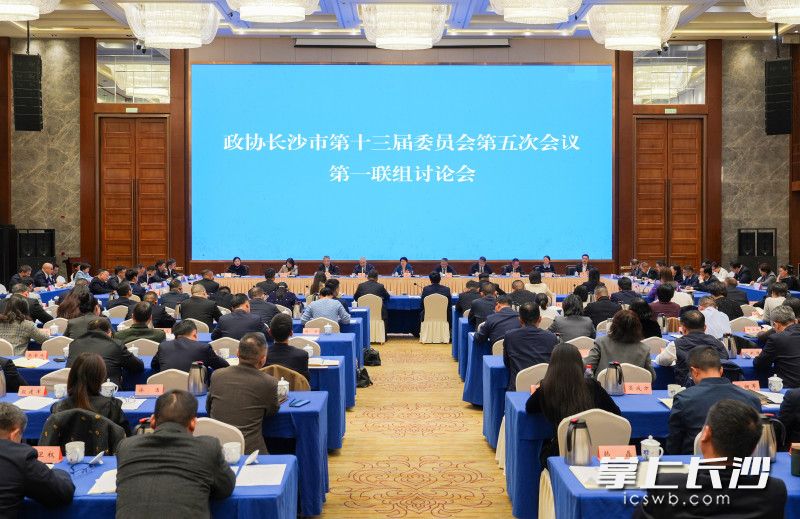
吴桂英参加市政协十三届五次会议第一联组讨论
Chang Sha Wan Bao· 2026-01-09 02:53
Core Viewpoint - The meeting emphasizes the importance of the "14th Five-Year Plan" and the role of the local political consultative conference in promoting high-quality development in Changsha, with a focus on economic growth and technological innovation [1][4][7]. Group 1: Economic Development - The local government aims to enhance effective demand, elevate industrial capabilities, and promote technological innovation during the "15th Five-Year Plan" period [7]. - The city has achieved significant results in various economic and social sectors during the "14th Five-Year Plan" [7]. Group 2: Role of Political Consultative Conference - The conference encourages members to actively contribute ideas and suggestions for the "15th Five-Year Plan" development, acting as a think tank for policy advice [7]. - Members are urged to focus on the effectiveness of policy execution and serve as supervisors to ensure implementation [7]. Group 3: Key Areas of Focus - Discussions included topics such as digital economy development, innovation consortium construction, enhancement of pilot service capabilities, integration of talent and industry chains, and promoting Hunan cuisine internationally [4].
省十四届人大常委会第十九次会议举行联组会议
Liao Ning Ri Bao· 2025-11-28 01:09
Core Viewpoint - Strengthening digital government construction is fundamental for building a strong network nation and a digital China, serving as a crucial initiative for innovating government governance concepts and methods [2] Group 1: Digital Government Construction - The provincial government emphasizes the importance of enhancing digital government construction to drive the development of the digital economy and society [2] - There is a call for a unified approach across the province, enhancing coordination, top-level design, and accountability in digital government initiatives [2] - The government aims to address shortcomings in digital government construction through targeted policies and systematic solutions [2] Group 2: Implementation and Accountability - The provincial government commits to promptly implementing suggestions from the inquiry, assigning responsibilities, and ensuring effective rectification of issues [2] - A focus on institutional innovation and collaborative governance is highlighted to systematically resolve common problems in digital government construction [2] - The government will prioritize the "people first" principle, continuously enriching application scenarios to optimize the business environment through data empowerment [2]
《卫星导航定位基准站管理办法》发布 明年1月1日起施行
Yang Guang Wang· 2025-11-19 02:33
Core Viewpoint - The Ministry of Natural Resources has issued the "Management Measures for Satellite Navigation Positioning Reference Stations" to standardize the construction and operation of reference stations, promote the orderly development of the satellite navigation positioning industry, and ensure national geographic information security, effective from January 1, 2026 [1][3]. Group 1: Importance of Reference Stations - Satellite navigation positioning reference stations are crucial for high-precision positioning and are key infrastructure for the application of the BeiDou satellite navigation system, impacting various sectors such as autonomous driving, disaster monitoring, urban construction, and low-altitude economy [1][2]. - The number of reference stations in China has increased significantly from over 4,000 in 2015 to more than 33,000 currently, reflecting the growing demand for positioning services [1][2]. Group 2: Challenges and Changes - The construction and operation of reference stations face challenges such as repeated construction, insufficient data sharing, non-standard registration, and data security risks, necessitating improved management [2]. - The shift in the main construction entities from government departments to commercial operators has changed the service methods and application targets, expanding beyond traditional surveying to various industries [2]. Group 3: Key Features of the Management Measures - The primary goal of the new management measures is to unify the management of the entire chain of construction and operation of reference stations, ensuring legal compliance and standardization [3]. - The measures emphasize unified planning, standards, and supervision, along with principles of reasonable layout, legal registration, resource sharing, and security assurance [3]. Group 4: Data Management and Security - The management measures include provisions for data confidentiality, requiring compliance with regulations for sensitive data and establishing a classification and grading system for data management [4]. - The "National Satellite Navigation Positioning Reference Station Network" has expanded from 3,363 to 6,951 stations, providing over ten million positioning services daily, and aims for further expansion [4]. Group 5: Future Directions - The Ministry of Natural Resources plans to develop supporting policies to enhance standardized management of reference stations, ensuring national geographic information security and providing high-quality spatial positioning support for the development of a digital China and digital economy [5].
朱光耀:建议“十五五”时期保持4.5%—5%实际经济增速
Zheng Quan Shi Bao Wang· 2025-10-31 06:39
Core Insights - The former Vice Minister of Finance, Zhu Guangyao, highlighted that during the 14th Five-Year Plan period, China's economy increased by 40 trillion yuan, marking a significant achievement [1] - Zhu emphasized that maintaining an economic growth rate of 4.5% to 5% during the 15th Five-Year Plan will lay a solid foundation for China to achieve basic socialist modernization by 2035 [1] Economic Growth and Projections - Zhu noted that if China continues to grow at the projected rate, the GDP will exceed 200 trillion yuan and per capita GDP will surpass $20,000 by 2035 [3] - The current per capita GDP in China is projected to be $13,445 in 2024, with a GNI of $13,660, indicating a gap of $275 from the high-income economy standard [2] International Standards and Comparisons - The World Bank's classification of high-income economies is based on GNI rather than GDP, which includes income generated by citizens abroad [2] - The World Bank's high-income threshold was adjusted downwards from $14,005 to $13,935 due to the appreciation of the dollar and a decrease in global inflation [2] Development Goals and Strategies - Zhu suggested that the actual economic growth rate during the 15th Five-Year Plan should be between 4.5% and 5%, aligning with China's potential productivity [4] - The aim is to achieve nominal growth of 6.5% to 7% while maintaining inflation around 2%, and ensuring the stability of the RMB exchange rate [4] - The focus will be on high-quality development, leveraging opportunities in green development and digital economy, while upgrading traditional industries [4]
“十五五”规划来了!普通人如何抓住未来5年的赚钱机会?
Sou Hu Cai Jing· 2025-10-28 13:14
Core Insights - The recent "14th Five-Year Plan" outlines the direction for China's economic development over the next five years, impacting job opportunities and entrepreneurship for individuals. Group 1: Upgrading the Real Economy - The focus is on upgrading the manufacturing sector to be more advanced and intelligent, requiring a workforce skilled in technology [2] - Skills in operating CNC machines, maintaining smart devices, or programming industrial robots will be in high demand, with good income potential even for less technical roles like technical sales or equipment maintenance [4] Group 2: Emerging Industries - Industries such as renewable energy, artificial intelligence, and biomedicine are expected to experience significant growth, creating job opportunities in areas like electric vehicle infrastructure, battery recycling, and solar power [5] - The low-altitude economy, including drone delivery and passenger flight services, will also require a large number of operators and maintenance personnel, with relatively low training costs [7] Group 3: Opportunities in Elderly Care - With an increasing elderly population, there is a growing market for elderly care services, which can include home care, meal delivery, and community activity centers [8] - Innovative services like smartphone training for seniors can yield high income, as demonstrated by individuals earning substantial monthly salaries in this field [10] Group 4: Rapid Development of the Digital Economy - The integration of the internet across all industries will deepen, necessitating talent skilled in content creation, operations, and data analysis [11] - Skills in video editing, community management, and e-commerce customer service can be learned online, offering flexible work options with decent income [13] Group 5: Educational and Career Development - For students, selecting relevant majors in emerging fields like renewable energy, AI, elderly care, and digital economy is crucial for future job prospects [14] - For current employees, pursuing in-job training to acquire new skills can significantly alter career trajectories, with many online courses available [15] Group 6: Entrepreneurship Opportunities - Starting small businesses that meet local needs, such as childcare services or home cleaning, can be a viable path for entrepreneurs [17] - Real-life examples illustrate that investing in skill development, such as industrial robot operation or elderly care, can lead to substantial income increases and career advancements [17]

全球第二大铜矿宣布停产 铜供给遭遇长期冲击(附概念股)
Zhi Tong Cai Jing· 2025-09-25 23:53
Group 1: Market Impact - The closure of Freeport McMoRan's Grasberg mine due to a fatal landslide is expected to significantly disrupt global copper supply, potentially leading to a price increase and improved profitability for copper companies [1] - Analysts estimate a loss of 500,000 tons of copper supply over the next 12 to 15 months, with further potential losses of 1 to 2 million tons, equating the impact to the simultaneous closure of three major copper mines [1][3] - The expected impact on global copper production in Q4 2025 is approximately 470,000 tons due to the Freeport closure [3] Group 2: Demand Dynamics - Copper is increasingly recognized as a critical material for green energy transition and digital economy development, with electric vehicles using four times more copper than traditional fuel vehicles [2] - High demand for copper is driven by the growth in AI data centers, with Goldman Sachs predicting an additional consumption of 1 million tons of copper by 2030 for data centers serving AI servers [2] Group 3: Price Forecasts - Goldman Sachs has adjusted its price forecast for copper, indicating an upward risk due to the Grasberg mine closure, with expectations for copper prices to stabilize between $10,200 and $10,500 per ton [2] - The long-term outlook for copper prices remains bullish, with projections of reaching $10,750 per ton by 2027, driven by challenges such as increased mining depth and declining ore grades [2] Group 4: Company Performance - Jiangxi Copper Co. reported a revenue of approximately 256.03 billion RMB in H1 2025, a decrease of 4.97% year-on-year, while net profit attributable to shareholders increased by 19.78% to 4.45 billion RMB [4] - Zijin Mining produced 566,853 tons of copper in H1 2025, a year-on-year increase of 9.3%, with copper sales revenue accounting for 27.8% of total revenue [4] - Luoyang Molybdenum Co. achieved a copper production of 353,600 tons in H1 2025, with a revenue of 31.446 billion RMB, reflecting a year-on-year growth of 29.05% [4] - Minmetals Resources reported a total copper production of 140,368 tons in Q2 2025, a 54% increase year-on-year, driven by improved output from three copper mines [5]

港股概念追踪 | 全球第二大铜矿宣布停产 铜供给遭遇长期冲击(附概念股)
Zhi Tong Cai Jing· 2025-09-25 23:40
Group 1: Market Impact - The closure of Freeport McMoRan's Grasberg mine due to a fatal landslide is expected to significantly disrupt global copper supply, potentially leading to a price increase and improved profitability for copper companies [1][2] - Analysts predict a loss of 500,000 tons of copper supply in the next 12 to 15 months, with possible further losses of 1 to 2 million tons, equating the impact to the simultaneous closure of three major copper mines [1][3] Group 2: Demand Dynamics - Copper is increasingly recognized as a critical material for green energy transition and digital economy development, with electric vehicles using four times more copper than traditional fuel vehicles [2] - Goldman Sachs forecasts that by 2030, data centers powering AI servers could consume an additional 1 million tons of copper, indicating strong future demand [2] Group 3: Price Forecasts - Goldman Sachs has adjusted its price forecast for copper, suggesting an upward risk to its previous estimate of $9,700 per ton for December 2025, now expecting prices to stabilize between $10,200 and $10,500 per ton [2] - The long-term outlook for copper prices remains bullish, with expectations of reaching $10,750 per ton by 2027 due to challenges such as increased mining depth and declining ore grades [2] Group 4: Company Performance - Jiangxi Copper Co. reported a revenue of approximately 256.03 billion yuan for the first half of 2025, a decrease of 4.97% year-on-year, while net profit attributable to shareholders increased by 19.78% to about 4.45 billion yuan [4] - Zijin Mining's copper production reached 566,853 tons in the first half of 2025, a year-on-year increase of 9.3%, with copper sales contributing 27.8% to total revenue [4] - Luoyang Molybdenum Co. achieved a copper production of 353,600 tons in the first half of 2025, with revenue from mining operations increasing by 29.05% to 31.446 billion yuan [4] - Minmetals Resources reported a total copper production of 140,368 tons in Q2 2025, a 54% increase year-on-year, driven by improved output from three copper mines [5]

交易平台上线!2025年中拉技术合作发展交流会在东莞开幕
Nan Fang Du Shi Bao· 2025-09-04 10:31
Group 1 - The 2025 China-Latin America Technology Cooperation Development Exchange Conference was officially opened in Dongguan, Guangdong Province, with over 350 representatives from China, Latin America, and the Caribbean participating [1][2] - The "China-Latin America Technology Partnership Program" was launched, focusing on six key actions including strategic alignment in technology development, joint research, cultural exchanges, and technology transfer to enhance regional cooperation and support economic growth [1][3] - The establishment of the China-Latin America Digital Education University Alliance aims to promote smart education innovation and cultivate international talents with bilingual capabilities and technical expertise [2] Group 2 - The China-Latin America and Caribbean Countries Trading Platform was launched, providing comprehensive services for bilateral enterprise investments and international trade [2] - The conference included parallel sessions on digital education transformation and digital economy development to deepen technology innovation cooperation and promote collaboration between industry, academia, and research [2] - The China-Latin America Technology Transfer Center is a comprehensive multinational technology transfer organization approved by the Ministry of Science and Technology, aimed at fostering deep cooperation in economic construction and technology exchange [3]