
新保险合同会计准则

Search documents
2025年保险行业的五大特点与2026年四大趋势
Yuan Dong Zi Xin· 2026-03-09 06:20
Investment Rating - The report does not explicitly state an investment rating for the insurance industry in 2025 and 2026 Core Insights - The insurance industry is entering a critical phase of restructuring under deepening regulation, market changes, and policy guidance, with a notable "Matthew Effect" where leading companies gain market share at the expense of smaller firms [4][5] - Premium income remains resilient but growth is slowing, with total premium income reaching 6.12 trillion yuan in 2025, a year-on-year increase of 7.4%, although the growth rate has decreased by 3.7 percentage points compared to 2024 [10][11] - The asset allocation of insurance companies is shifting, with a significant increase in equity assets, while bond assets continue to dominate, accounting for 50.3% of total investments [15][37] - The solvency ratios of the insurance industry have declined, particularly in the life insurance sector, with the comprehensive solvency ratio at 186.3%, down 13.1 percentage points from the end of 2024 [24][25] - Capital replenishment remains robust, with 23 insurance companies issuing bonds totaling 104.2 billion yuan in 2025, despite a slight decrease from 2024 [27] Summary by Sections Regulatory Environment - The regulatory body is advancing the "reporting and operation integration" policy, which is reshaping the competitive landscape and increasing market concentration, leading to a more pronounced "Matthew Effect" [5][6] Premium Income Trends - Premium income is showing resilience but at a slower growth rate, with property insurance premiums at 1.47 trillion yuan, a 2.6% increase, and life insurance premiums at 4.65 trillion yuan, a 9.1% increase [10][11] Asset Allocation - Insurance companies are primarily investing in bonds, with a balance of 18.18 trillion yuan, while equity investments have surged by 50% to 3.62 trillion yuan, now accounting for 10% of total investments [15][37] Solvency Ratios - The comprehensive solvency ratio for the insurance industry is 186.3%, with a notable decline in the life insurance sector, where the ratio is 175.5%, down 21.1 percentage points [24][25] Capital Replenishment - In 2025, 23 insurance companies issued bonds totaling 104.2 billion yuan, with a significant portion aimed at capital replenishment, indicating ongoing financial health despite regulatory pressures [27]
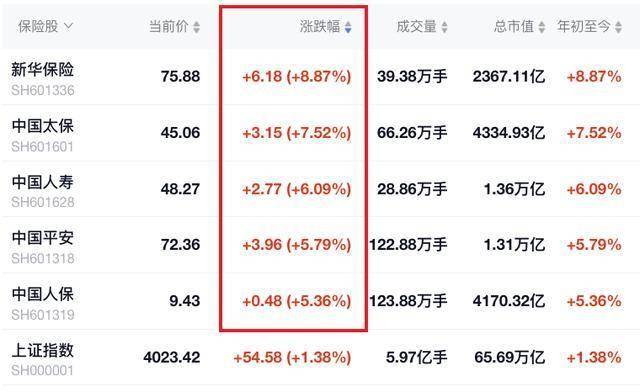
开门红!5家上市险企集体暴走,新华太保再破纪录!
Sou Hu Cai Jing· 2026-01-06 02:46
Group 1 - The core viewpoint is that listed insurance companies have achieved significant gains, with New China Life and China Pacific Insurance reaching historical highs, indicating strong market confidence in the industry [1][3][5] - The five major listed insurance companies, including New China Life and China Pacific, have all seen stock price increases exceeding 5%, with New China Life and China Pacific setting new historical highs [2][3] - The recent performance of these companies is seen as a "good start" for the insurance industry in 2026, reflecting improved liability quality and proactive capital market strategies [6][8] Group 2 - Analysts predict a new round of interest rate cuts in 2026, which may impact the predetermined interest rates for life insurance products [10][15] - The introduction of a dynamic adjustment mechanism for predetermined interest rates in 2025 has led to a recent asymmetric reduction, with expectations for further declines in 2026 [11][13] Group 3 - Investment in capital markets by insurance companies is expected to increase, with the total investment balance exceeding 37 trillion yuan, marking a historical high [17] - The stock investment amount reached 3.6 trillion yuan, reflecting a year-on-year increase of approximately 1.3 trillion yuan, with a growth rate exceeding 55% [17] - All insurance companies will begin implementing new accounting standards in 2026, which may enhance profitability if capital markets perform well [19][21] Group 4 - The development of participating insurance products is accelerating, with premiums surpassing 700 billion yuan and a year-on-year growth of over 10% [24] - The competitive landscape in the insurance sector is intensifying, particularly in the bancassurance channel, which has seen significant growth in premium income [26] Group 5 - New regulations related to asset-liability management and product innovation are expected to promote industry transformation, with a focus on high-quality development [27][35] - The introduction of new health insurance products and the revision of existing regulations are anticipated to enhance the overall quality and accessibility of insurance offerings [30][33]






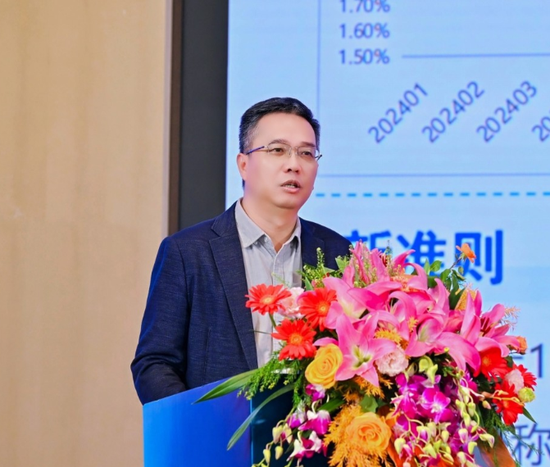
罗振华:新准则下的产品策略
Xin Lang Cai Jing· 2025-12-18 09:25
Core Viewpoint - The insurance industry is undergoing significant transformation, necessitating timely adjustments in operational strategies due to new accounting and financial instrument standards that will reshape revenue, profit, and net asset measurement logic [1][9]. Group 1: Industry Challenges - The industry faces challenges such as team attrition, shrinking intermediaries, and the rise of bank insurance, which are fundamentally linked to the difficulties in asset-liability management [3][11]. - External economic conditions, including a downward trend in interest rates and complex rate environments, pose risks of long-term interest spread losses and current operational difficulties [3][11]. Group 2: Regulatory Environment - Regulatory policies have been introduced, including adjustments to preset interest rates, unified reporting, restrictions on dividends, and limits on scale not exceeding five times net assets [3][11]. - The upcoming new insurance contract accounting standards and financial instrument standards will require companies to adapt their operational strategies accordingly [1][9]. Group 3: Product Strategy - Product strategy is crucial as it reflects the impact of regulatory policies and is closely tied to external economic conditions and the specific circumstances of different companies [3][11]. - A differentiated product strategy is essential, with companies like Huagu Life implementing such strategies effectively, including limiting certain products and focusing on traditional insurance [4][12]. Group 4: Financial Performance - Huagu Life has reported positive growth rates in premium income, revenue, total assets, net assets, internal value, new business value, and profit, with stable solvency ratios [5][12]. - The upcoming new standards set to be implemented in 2026 will lead to a marketing push for dividend insurance, which is expected to become a mainstream product [5][12]. Group 5: Product Selection Considerations - Companies must consider their existing business costs and structures, as well as current assessment criteria when deciding on product strategies between dividend and traditional insurance [13][14]. - The contribution of low-cost and high-cost business models to profit sources varies, necessitating different product strategies for companies based on their cost structures [13][14]. Group 6: Customer Needs - Meeting diverse customer needs is paramount, with high-net-worth clients seeking wealth management solutions and traditional fixed-income products appealing to mass-market clients [15]. - A diversified product strategy that balances stable low returns with high-risk floating returns can effectively cater to different customer segments [15].
中粮资本(002423) - 中粮资本控股股份有限公司投资者关系活动记录表(2025年三季度业绩说明会)
2025-10-31 09:16
Group 1: Investor Relations and Communication - The company emphasizes the importance of investor relations management, establishing a sound value management system, and improving communication mechanisms through regular performance briefings and investor meetings [3] - The third quarter performance briefing was held on October 31, 2025, via the "Value Online" platform, facilitating online communication with investors [2] - The company has received an A-class rating for information disclosure from the Shenzhen Stock Exchange for five consecutive years, reinforcing market trust [4] Group 2: Financial Performance and Management - The company's net profit for the first three quarters of 2025 was CNY 10.25 billion, with a decline in profit contribution compared to the previous year [3] - The company reported a significant decrease in revenue due to changes in insurance contract income recognition, impacting the overall financial performance [3] - The company’s cash flow situation is stable, with a monetary fund of CNY 13.9 billion and a 40% year-on-year increase in operating cash flow for the first three quarters of 2025 [3] Group 3: Cost Control and Operational Efficiency - The company adopts a dual strategy of refined and digitalized cost control, focusing on administrative and operational expenses [3] - The implementation of the "COFCO E+" digital platform has improved process efficiency and achieved cost savings [3] Group 4: Market Position and Strategic Focus - The company is focused on serving the real economy, enhancing its financial work's political and social relevance, and contributing to agricultural modernization through supply chain finance [4] - The company aims to optimize its business structure and develop a second growth curve in its trust business, maintaining a steady and controllable risk profile [4]

股价浮盈计入当期利润,保险股三季报的“虚”与“实”
2 1 Shi Ji Jing Ji Bao Dao· 2025-10-27 12:33
Core Viewpoint - The surge in profits for listed insurance companies in China is primarily driven by a significant increase in investment income due to a favorable capital market environment and the impact of new accounting standards, which amplify profit volatility [1][4][6]. Group 1: Performance Highlights - The CSI 300 index rose by 17.9% in Q3, leading to a profit increase of 40%-70% for major insurance companies like China Life and New China Life [1][2]. - China Life expects a net profit of approximately CNY 156.79 billion to CNY 177.69 billion for the first three quarters of 2025, an increase of about CNY 52.26 billion to CNY 73.17 billion year-on-year [2]. - New China Life anticipates a net profit of CNY 29.99 billion to CNY 34.12 billion, reflecting a year-on-year increase of CNY 9.31 billion to CNY 13.44 billion [2]. Group 2: Investment Strategies - Insurance companies are increasing their equity investments significantly, with the stock allocation reaching CNY 3 trillion by the end of Q2, an 8.92% increase from Q1 and a 47.57% increase from the previous year [2][3]. - The proportion of stocks in the total investment assets of major listed insurance companies rose to 9.3% in H1 2025, the highest in nearly a decade [3]. - The expansion of long-term stock investment trials has allowed insurance companies more flexibility in equity asset allocation, with the approved trial scale increasing from CNY 50 billion to CNY 162 billion [3]. Group 3: Accounting Standards Impact - The new accounting standards implemented in 2023 have led to increased profit volatility, as more assets are classified under fair value measurement, directly affecting current profits [4][5]. - Under the new standards, fluctuations in the market value of trading financial assets are now reflected in current profits, contrasting with the previous standards where unrealized gains did not impact profits unless sold [5]. - The proportion of trading financial assets classified under fair value through profit or loss (FVTPL) is notably high among major insurers, with New China Life and China Life at 81.2% and 77.4%, respectively [6]. Group 4: Market Outlook and Challenges - The sustainability of the current profit growth is questioned, as it heavily relies on capital market performance, which may not be consistent [6][8]. - Analysts express differing views on future performance, with some expecting premium growth to remain around 10%, while others caution that investment income, being cyclical and volatile, may not support high growth rates [8][9]. - The insurance industry is experiencing a "differentiation + volatility" trend, with varying performance among companies under similar market conditions [8][9]. Group 5: Product Strategy and Risk Management - Insurance companies are optimizing their product structures by increasing the sales of dividend insurance and reducing reliance on interest-sensitive life insurance [7]. - Non-auto insurance is expected to benefit from the implementation of a new regulatory framework, potentially reducing the combined cost ratio for related companies by 0.2-0.9 percentage points [7]. - Smaller insurance companies are exploring differentiated survival strategies, such as optimizing capital structures and enhancing capital management capabilities through digitalization [10].
新会计准则落地在即 险企关注应对实施前“最后一公里”
Zhong Guo Jing Ying Bao· 2025-09-26 04:44
Core Insights - The insurance industry is facing multiple challenges including low interest rates, accounting standard changes, and stringent regulatory requirements, necessitating urgent transformation [1] - The 2025 timeline is identified as a critical period for reshaping the insurance landscape, emphasizing the need for strategic alignment and tactical execution [1][4] Group 1: Industry Challenges and Transformation - Insurance companies must navigate low interest rate impacts and adapt to new accounting standards while enhancing their service capabilities to the real economy [1] - The implementation of new insurance contract accounting standards is set to begin on January 1, 2023, for certain companies, with others following in 2026, requiring firms to balance short-term financial performance with long-term strategic goals [2] Group 2: Strategic Directions - The industry is encouraged to adopt a dual approach of "long-termism" and "lean management" to ensure sustainable growth and effective execution of strategies [4] - Companies are advised to refine their implementation strategies for new accounting standards, focusing on areas such as internal controls and asset-liability management [3] Group 3: Risk Management Insights - A survey of over 150 insurance companies revealed ongoing challenges in risk management, including weak data governance and insufficient quantitative modeling tools, despite some improvements compared to the previous year [3] - The integration of risk management into core business planning and budgeting processes remains lagging, with early-stage applications of emerging technologies and artificial intelligence [3]
金融观察员|幻方量化市场总监卷入1.18亿返佣案
Guan Cha Zhe Wang· 2025-08-11 07:04
Group 1 - The Ministry of Science and Technology and six other departments issued policies to encourage insurance funds to participate in major national scientific tasks and promote the development of technology insurance products and services [1] - The Supreme People's Court released 25 measures to support the development of the private economy, focusing on equal treatment, legal compliance, and timely payment of debts owed to private enterprises [1] Group 2 - The Ministry of Finance and the Financial Regulatory Administration jointly issued a notice to guide the implementation of new insurance contract accounting standards, which will apply to listed companies from January 1, 2023, and to other companies from 2026 [2] Group 3 - Huansheng Quantitative, a leading quantitative private equity firm, was involved in a 1.18 billion yuan rebate case, with the market director implicated in fraudulent activities [3] Group 4 - Donghai Securities was fined 60 million yuan for violations in its role as an independent financial advisor during a major asset restructuring project, with penalties also imposed on responsible individuals [5] Group 5 - Changshu Bank reported a net profit of 1.969 billion yuan for the first half of 2025, with total assets reaching 401.227 billion yuan and a non-performing loan ratio of 0.76% [6] Group 6 - Hainan Province is set to launch a cross-border asset management pilot project with an initial quota of 10 billion yuan, attracting banks to participate and promoting the internationalization of the renminbi [6] Group 7 - Changfeng Rural Commercial Bank was fined nearly 3 million yuan for multiple violations, with penalties imposed on 12 responsible individuals [7] Group 8 - Guizhou Daozhen Rural Commercial Bank was fined 1.26 million yuan for providing false statistical data and failing to manage risks properly [8]

两部门细化新保险合同会计准则的实施安排
Zheng Quan Ri Bao· 2025-08-08 07:25
Core Viewpoint - The Ministry of Finance and the Financial Regulatory Administration have jointly issued a notice to further implement the new insurance contract accounting standards, emphasizing the importance of these standards in mitigating major financial risks [1][2]. Implementation Arrangements - Companies listed both domestically and internationally, as well as those listed only abroad that use international financial reporting standards or enterprise accounting standards, must continue to apply the new insurance contract accounting standards. Other companies must start implementing these standards from January 1, 2026, unless they submit a written request for a delay to the Ministry of Finance and the Financial Regulatory Administration [1]. Simplified Processing Regulations - Non-listed companies are allowed to choose simplified processing regulations regarding the grouping, recognition, measurement, and reporting of insurance contracts. Specific requirements for adopting and changing these simplified processes have been outlined [1]. Organizational Implementation Requirements - The implementation of the new insurance contract accounting standards is a crucial measure to address major financial risks. Companies are required to prepare for the implementation through business process restructuring, information system upgrades, management system improvements, and personnel training. Various levels of financial departments and regulatory bodies are tasked with ensuring the effective implementation and coordination of these standards [2].
细化新保险合同会计准则实施安排 为非上市企业提供简化处理选项
Jin Rong Shi Bao· 2025-08-08 07:25
Core Viewpoint - The Ministry of Finance and the Financial Regulatory Administration have issued a notification to further implement the new insurance contract accounting standards, aimed at enhancing the quality of financial information in the insurance industry and supporting high-quality development [1][2][10]. Summary by Sections Background - The new insurance contract accounting standards were revised and issued in December 2020, effective from January 1, 2023, for certain companies, while others will implement it by January 1, 2026 [2][3]. - Initial implementation by ten large listed insurance companies showed a smooth transition, with the impact on net assets and profits aligning with expectations, leading to positive market reactions [2][3]. Implementation Arrangements - The notification clarifies that companies listed both domestically and internationally, as well as those listed only abroad, must continue to follow the new standards, while other companies will adopt them by 2026 [5][6]. - Companies facing difficulties in implementation must submit written explanations to the relevant authorities [5]. Simplified Processing Provisions - Non-listed companies are provided with options for simplified processing in areas such as insurance contract grouping, measurement, and reporting [5][8]. - The simplifications aim to reduce implementation costs without significantly affecting the quality of accounting information [7][10]. Organizational Implementation Requirements - The notification emphasizes the importance of implementing the new standards as part of broader financial risk management strategies [5][6]. - It outlines the need for companies to prepare through process reorganization, system upgrades, and staff training [6][10]. Expected Impact - The notification is designed to facilitate the timely execution of the new standards, particularly for small and medium-sized insurance companies, while not significantly impacting the quality of accounting information for listed companies [10]. - The simplified provisions are specifically tailored for non-listed companies, which have a limited share of the industry in terms of asset size and premium income [10]. Implementation Guidance - The authorities will focus on promoting understanding of the notification's requirements and closely monitoring the implementation of the new standards [12].
推动新保险合同会计准则精准适配
Jing Ji Ri Bao· 2025-06-22 22:06
Core Viewpoint - The Ministry of Finance and the National Financial Regulatory Administration have issued a notice to further implement the new insurance contract accounting standards, providing guidance and simplified options for non-listed companies, while emphasizing the importance of these standards for the insurance industry's high-quality development [1][3]. Implementation Arrangements - The notice clarifies that companies listed both domestically and internationally, as well as those listed only abroad that use international financial reporting standards or enterprise accounting standards, must continue to implement the new insurance contract accounting standards. Other companies must adopt these standards by January 1, 2026, unless they submit a written request for a delay [2]. Simplified Processing Provisions - Non-listed companies are allowed to choose simplified processing options regarding the grouping, recognition, measurement, and reporting of insurance contracts, with specific requirements for adopting and changing these simplified processes [2]. Organizational Implementation Requirements - The notice emphasizes that implementing the new insurance contract accounting standards is a crucial measure to mitigate major financial risks. It requires companies to prepare for implementation through business process restructuring, information system upgrades, management system improvements, and personnel training. It also outlines the roles of various financial departments and regulatory bodies in supporting the implementation [2][3]. Support for Small and Medium-sized Insurance Companies - The notice is designed to address the specific challenges faced by small and medium-sized insurance companies, providing them with support and reducing the complexity and cost of implementation. This approach aims to facilitate a smoother transition to the new standards while promoting orderly development within the insurance sector [3].