
普通型人身保险

Search documents
人身险预定利率研究值微降至1.89%
Jin Rong Shi Bao· 2026-02-03 03:01
Core Viewpoint - The meeting of the Life Insurance Rate Research Expert Advisory Committee highlighted a slight decrease in the predetermined interest rate for life insurance products to 1.89%, marking the fifth consecutive adjustment since the establishment of a dynamic adjustment mechanism linked to market rates [1][2]. Group 1: Rate Adjustments - The current predetermined interest rate for life insurance products is 1.89%, down from 1.90%, reflecting a continuous decline in recent quarters [1]. - The historical adjustments of the predetermined rates were 2.34%, 2.13%, 1.99%, and 1.90% in the previous quarters, with decreasing margins of 21 basis points, 14 basis points, 9 basis points, and 1 basis point respectively [1]. - The dynamic adjustment mechanism has been implemented smoothly, contributing to cost reduction and efficiency improvement in the industry [2]. Group 2: Product Stability - There is currently no pressure to withdraw existing products, as the maximum predetermined interest rate for most life insurance products remains at 2.0%, only 11 basis points above the latest research value [3]. - The report from Donghai Securities indicates that the downward trend in long-term bond rates is exerting some downward pressure on the research value, but the market interest rates are stabilizing, reducing the likelihood of triggering new adjustment thresholds [3]. Group 3: Future Projections - The industry consensus suggests that the predetermined interest rate for life insurance products will likely maintain its current level, with minimal chances of significant fluctuations [4]. - Predictions for the end of 2026 estimate the research value to be around 2.00%, aligning with the current maximum rate for existing products [4]. - The downward adjustment in the research value is attributed to limited space for further rate declines and support from asset returns, indicating a gradual return to rational levels for life insurance rates [5].
人身险预定利率研究值微降至1.89%
Jin Rong Shi Bao· 2026-01-28 00:51
Core Viewpoint - The meeting of the Life Insurance Rate Research Expert Advisory Committee highlighted a slight decrease in the predetermined interest rate for life insurance products to 1.89%, marking the fifth consecutive adjustment since the establishment of a dynamic adjustment mechanism linked to market rates [1][2]. Group 1: Rate Adjustments - The current predetermined interest rate for life insurance products is 1.89%, down from 1.90%, reflecting a continuous decline in recent adjustments [1]. - The historical adjustments for the predetermined interest rate were 2.34%, 2.13%, 1.99%, and 1.90% in the previous quarters, showing a decreasing trend with diminishing adjustment magnitudes [1]. - The downward adjustments have eased market concerns regarding the marginal decline of life insurance predetermined interest rates [1]. Group 2: Dynamic Adjustment Mechanism - The dynamic adjustment mechanism has been successfully implemented, enhancing cost efficiency, market-oriented levels, and risk management capabilities within the industry [2]. - The renaming of the committee to the Life Insurance Rate Research Expert Advisory Committee aligns better with the needs of liability research under new accounting standards [2]. - The meeting emphasized the positive outcomes of industry transformation, removing previous language about "facing challenges" [2]. Group 3: Product Stability - Current life insurance products, such as increasing whole life insurance, do not face delisting pressure as the predetermined interest rate remains within acceptable limits [3]. - Most insurance companies have a predetermined interest rate of 2.0%, which is only 11 basis points above the latest research value of 1.89%, not triggering the regulatory threshold for adjustment [3]. - The long-term bond yield trend is expected to stabilize, reducing the likelihood of new adjustments to the predetermined interest rate [3]. Group 4: Future Projections - The industry anticipates that the predetermined interest rate for life insurance products will maintain its current level, with low probability for significant fluctuations in 2026 [4]. - If the yield curve for government bonds and other interest rates remain stable, the projected predetermined interest rate for the end of 2026 is estimated to be 2.00%, consistent with current product offerings [4]. - Experts suggest that the downward adjustment of the predetermined interest rate is reaching a rational level, with limited room for further declines due to stabilizing asset returns [5].
两大万亿巨头飙涨,历史新高
Zhong Guo Zheng Quan Bao· 2026-01-26 04:41
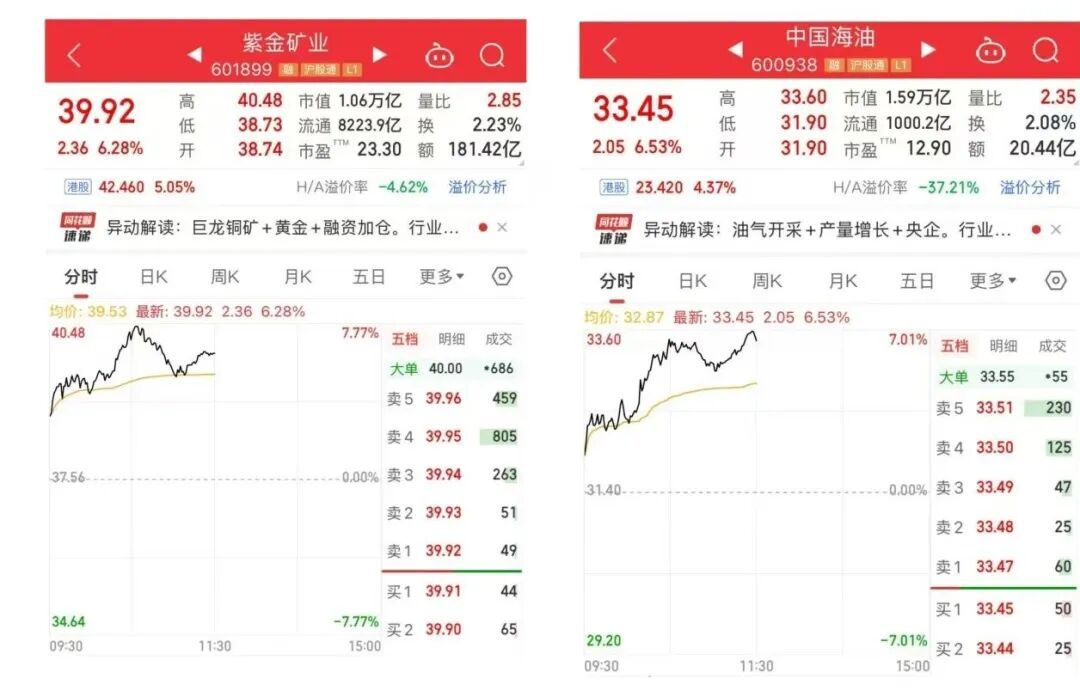
Market Performance - The micro-cap stock index reached a historical high last week, while large-cap indices like the CSI 300 and SSE 50 experienced adjustments [1] - This morning, large-cap stocks strengthened, with the SSE 50 index rising over 1.8% at its peak, while the micro-cap index and the CSI 2000 index both declined, with the latter down 1.39% [1] - By the close of the morning session, the SSE index rose by 0.12%, while the Shenzhen Component Index and the ChiNext Index fell by 0.74% and 0.86%, respectively, with total market turnover exceeding 2.26 trillion yuan [3] Sector Highlights - The non-ferrous metals sector showed strong performance, particularly in precious metals, with companies like Hunan Gold and Zhaojin Gold hitting the daily limit, and leading stocks such as Zijin Mining and China Uranium rising significantly [5] - Spot gold prices surged past $5,000 per ounce, with silver prices also reaching historical highs, driven by geopolitical factors and fluctuations in confidence towards U.S. assets [8] - Major precious metal companies forecast significant profit increases for 2025, with Zijin Mining expecting a net profit of 51 to 52 billion yuan, a year-on-year increase of 59% to 62% [8] Investment Catalysts - Three main catalysts are identified for the non-ferrous metals sector: 1. Recovery in manufacturing and inventory replenishment cycles, with PMI indicators returning to expansion in the U.S. and some emerging economies [9] 2. Long-term demand reshaping due to green and technological trends, particularly in sectors like electric vehicles and renewable energy [9] 3. Liquidity expectations and financial attributes, with rising expectations for interest rate cuts by the Federal Reserve benefiting precious metals [9] Financial Sector Activity - The financial sector was active, with the insurance sector leading gains, as major insurers collectively rose, including New China Life Insurance which increased over 4% [10][12] - The insurance industry is expected to see performance improvements in 2026, driven by a stable long-term interest rate environment and rising equity markets [13]



华创证券:25Q4预定利率研究值为1.89% 2026年预计不再调整预定利率上限
智通财经网· 2026-01-23 03:56
Group 1 - The core viewpoint of the report indicates that the trend of the preset interest rate research value is significantly converging, with no adjustments expected to the preset interest rate ceiling by 2026 [1] - In the short term, there will be no "stop selling" bonus period this year, and the growth rate of liabilities may face pressure in Q3, while the improvement in new business value rate in the second half of the year is expected to be significantly less than the same period last year [1] - In the long term, the preset interest rate research value may stabilize, signaling positive long-term development for the industry, with significant reduction in asset-side reallocation pressure [1] Group 2 - The latest preset interest rate research value is 1.89%, which is 14 basis points away from the downward adjustment threshold, with a significant reduction in the decline compared to the previous quarter [2] - Starting from September 1, 2025, the upper limit for the preset interest rate of ordinary life insurance in the industry will be lowered from 2.5% to 2%, with corresponding limits for participating insurance at 1.75% and universal insurance at 1% [2] - The current interest rate environment may still have the potential for further short-term increases, and the preset interest rate research value is likely to stabilize in the short term, with the next quarter's value expected to remain above 1.75% [2]
保险行业重大事项点评:25Q4预定利率研究值为1.89%,预计2026年上限不作调整
Huachuang Securities· 2026-01-23 00:25
Investment Rating - The industry investment rating is "Recommended" for the year 2026, indicating an expectation of exceeding the benchmark index by more than 5% in the next 3-6 months [20]. Core Insights - The latest predetermined interest rate research value is 1.89%, which is 14 basis points away from the downward adjustment threshold. The decline has significantly narrowed compared to previous quarters [2]. - Starting from September 1, 2025, the upper limit for the predetermined interest rate for ordinary life insurance will be reduced from 2.5% to 2%, with corresponding limits for participating insurance at 1.75% and universal insurance at 1% [2]. - The current interest rate environment may still have potential for short-term increases, and the predetermined interest rate research value is likely to stabilize in the near term. It is expected that the upper limit for ordinary life insurance will remain at the current level of 2% in 2026 [2]. Summary by Sections Interest Rate Research - The predetermined interest rate research value has decreased by 1 basis point from the previous quarter, indicating a significant convergence in the decline [2]. - The 10-year government bond yield's 250-day average is currently at 1.76%, with the current value at 1.83%. A further decline in the yield to 1.56% or below may trigger a reduction in the predetermined interest rate research value to the adjustment threshold of 1.75% [2]. Long-term Outlook - The downward trend in the predetermined interest rate research value is expected to stabilize, signaling positive long-term development for the industry. The pressure for asset reallocation is significantly reduced [8]. - The "spread loss" issue for leading life insurance companies is likely resolved, and the price-earnings value (PEV) for some life insurance targets may recover to above 1x [8].
开门红!5家上市险企集体暴走,新华太保再破纪录!
Sou Hu Cai Jing· 2026-01-06 02:46
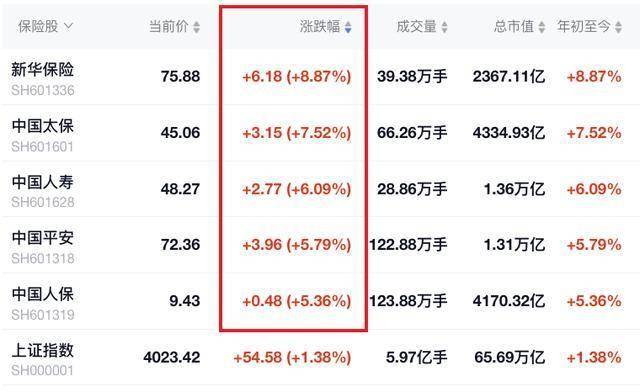
Group 1 - The core viewpoint is that listed insurance companies have achieved significant gains, with New China Life and China Pacific Insurance reaching historical highs, indicating strong market confidence in the industry [1][3][5] - The five major listed insurance companies, including New China Life and China Pacific, have all seen stock price increases exceeding 5%, with New China Life and China Pacific setting new historical highs [2][3] - The recent performance of these companies is seen as a "good start" for the insurance industry in 2026, reflecting improved liability quality and proactive capital market strategies [6][8] Group 2 - Analysts predict a new round of interest rate cuts in 2026, which may impact the predetermined interest rates for life insurance products [10][15] - The introduction of a dynamic adjustment mechanism for predetermined interest rates in 2025 has led to a recent asymmetric reduction, with expectations for further declines in 2026 [11][13] Group 3 - Investment in capital markets by insurance companies is expected to increase, with the total investment balance exceeding 37 trillion yuan, marking a historical high [17] - The stock investment amount reached 3.6 trillion yuan, reflecting a year-on-year increase of approximately 1.3 trillion yuan, with a growth rate exceeding 55% [17] - All insurance companies will begin implementing new accounting standards in 2026, which may enhance profitability if capital markets perform well [19][21] Group 4 - The development of participating insurance products is accelerating, with premiums surpassing 700 billion yuan and a year-on-year growth of over 10% [24] - The competitive landscape in the insurance sector is intensifying, particularly in the bancassurance channel, which has seen significant growth in premium income [26] Group 5 - New regulations related to asset-liability management and product innovation are expected to promote industry transformation, with a focus on high-quality development [27][35] - The introduction of new health insurance products and the revision of existing regulations are anticipated to enhance the overall quality and accessibility of insurance offerings [30][33]





重点改革稳步推进 2025年保险业向“质”而行
Jin Rong Shi Bao· 2025-12-22 09:43
Core Insights - The insurance industry in China is entering a critical year in 2025, focusing on high-quality development and internal reforms despite a complex external environment [1] Group 1: Life Insurance Sector - The life insurance industry is transitioning from reliance on interest rate spreads to a new cycle of value growth, emphasizing risk management and marketing reforms [2] - A dynamic adjustment mechanism for the predetermined interest rate was implemented, with the minimum guaranteed rates set at 2.0% for ordinary products, 1.75% for participating products, and 1.0% for universal insurance [2] - The insurance agent workforce is being upgraded, with a shift towards professional roles such as "health wealth planners" and "insurance wellness consultants" [3] Group 2: Property Insurance Sector - The property insurance sector is addressing challenges such as the difficulty in insuring new energy vehicles and enhancing management of non-auto insurance [4] - The "Good Insurance for Cars" platform was launched, involving 37 property insurance companies and providing coverage for over 1.1 million vehicles, with a total insured amount of 1.1 trillion yuan [5] - Non-auto insurance is undergoing stricter regulation, with a focus on improving compliance and quality, as outlined in the new regulatory framework [5] Group 3: Insurance Capital - Insurance capital is increasingly being utilized as patient capital, with total investment exceeding 37 trillion yuan, a 16.5% year-on-year increase [6] - Policies supporting insurance capital investment have been strengthened, including adjustments to asset allocation ratios and long-term investment assessments [7] - The scale of long-term investment pilot programs has expanded, with a total of 222 billion yuan approved for participation from various insurance companies [8]
2025年保险业向“质”而行
Jin Rong Shi Bao· 2025-12-22 03:02
Group 1: Core Insights - The year 2025 is pivotal for China's insurance industry, marking the end of the "14th Five-Year Plan" and a critical year for high-quality development amidst a complex external environment [1] - The insurance industry is undergoing significant internal reforms, focusing on enhancing service to the real economy and improving public welfare through supply-side structural reforms [1] Group 2: Life Insurance Sector - The life insurance industry is transitioning from reliance on interest spread to a new cycle of value growth, emphasizing risk prevention and marketing system reform as dual engines for transformation [2] - A dynamic adjustment mechanism for the predetermined interest rate in life insurance has been implemented, with the minimum guaranteed rates set at 2.0% for ordinary products, 1.75% for participating products, and 1.0% for universal insurance [2] - The insurance agent workforce is being upgraded, with a shift towards professional and vocational roles, enhancing the industry's talent base for high-quality development [3] Group 3: Property Insurance Sector - The property insurance sector is addressing challenges such as the difficulty in insuring new energy vehicles and is enhancing management of non-auto insurance businesses [4] - The "Good Insurance for Cars" platform has been launched, involving 37 property insurance companies and providing coverage for over 1.1 million vehicles, with a total insured amount of 1.1 trillion yuan [5] - Non-auto insurance is entering a new regulatory phase, with measures to improve compliance and quality, aiming to resolve longstanding issues of high costs and low rates [5] Group 4: Insurance Capital - Insurance capital is increasingly being transformed into patient capital, with the total investment balance exceeding 37 trillion yuan, a year-on-year increase of 16.5% [7] - Policies supporting insurance capital market entry have been strengthened, including adjustments to the regulatory ratios for equity assets, enhancing the role of insurance funds as long-term capital [8] - The scale of long-term investment reform pilot programs has expanded, with a total of 222 billion yuan approved for participation, involving major insurance companies [9]

预定利率下调“倒计时”!分红险竞争优势凸显,险企该如何竞逐?
Huan Qiu Wang· 2025-08-27 11:50
Core Viewpoint - The insurance industry is undergoing a significant shift as the predetermined interest rates for life insurance products are set to decrease, prompting companies to phase out non-compliant products and introduce new ones. This has led to a heightened interest in participating insurance products, which are expected to dominate the market in a low-interest-rate environment [1][3][5]. Group 1: Changes in Predetermined Interest Rates - The China Insurance Industry Association announced a new research value for ordinary life insurance products' predetermined interest rate at 1.99%, down from 2.34% in January and 2.13% in April, marking a significant decline [3][5]. - Major insurance companies, including China Life and Ping An Life, have adjusted their maximum predetermined interest rates, with ordinary life insurance rates dropping from 2.5% to 2%, and participating insurance rates from 2% to 1.75% [3][5][7]. - The new rates will take effect after August 31, with no applications accepted for products exceeding these limits [3]. Group 2: Shift Towards Participating Insurance Products - In response to the declining interest rates, participating insurance products are gaining traction due to their combination of guaranteed and floating returns, appealing to consumers seeking higher returns [5][6]. - Participating insurance allows policyholders to receive a share of the insurer's profits, with a minimum of 70% of the distributable surplus allocated to policyholders each year [5][9]. - The competitive advantage of participating insurance is further enhanced by its flexibility in product design, allowing for additional features such as universal accounts and health management services [7][8]. Group 3: Market Dynamics and Consumer Behavior - The low-interest-rate environment and asset scarcity are driving insurance companies to expand their offerings of participating and other floating-return products [8][9]. - Data from the China Insurance Industry Association indicates that nearly 40% of new life insurance products launched in the first quarter were participating or universal life insurance [8]. - The performance of participating insurance products is closely tied to the company's actual operating results, with the dividend realization rate being a critical measure of their competitiveness [9][10]. Group 4: Consumer Considerations - Consumers are advised to evaluate the dividend realization rate over the past 5-10 years to assess the stability and variability of the insurer's performance [9][10]. - The speed of cash value growth is also crucial, as faster growth indicates better liquidity and shorter lock-in periods for funds [10]. - Additional factors such as the insurer's investment return rates, solvency ratios, and hidden costs like commissions and management fees should be considered when selecting products [10].

人身险 预定利率研究值最新发布
Jin Rong Shi Bao· 2025-08-08 08:01
Core Viewpoint - The adjustment of the predetermined interest rate for life insurance products is a response to the newly established dynamic adjustment mechanism, with the current research value set at 1.99% for the second quarter of 2025, indicating a downward trend in interest rates [1][2]. Group 1: Adjustment Mechanism - The dynamic adjustment mechanism for predetermined interest rates was established in January 2023, linking them to market interest rates such as the 5-year LPR and 10-year government bond rates [2]. - The current maximum predetermined interest rates are 2.5% for ordinary life insurance products, 2.0% for participating products, and 1.5% for universal life products [2]. Group 2: Expected Adjustments - Analysts predict a reduction of 25 basis points in the maximum predetermined interest rate, but some expect a more significant adjustment of 50 basis points to 2.0% due to anticipated further declines in the research value [3][4]. - Major insurance companies, including China Life and Ping An Life, have already announced adjustments to their new insurance products' maximum predetermined interest rates in response to the changes [4]. Group 3: Market Response - Several insurance companies have proactively adjusted their product offerings, with some introducing products with a predetermined interest rate of 1.75% ahead of the official announcement [5]. - The market is witnessing a shift towards participating insurance products, which are expected to become a significant focus for insurance companies, with some firms reporting that over 50% of their total life insurance premiums now come from participating products [6][7]. Group 4: Industry Trends - The insurance industry is increasingly embracing participating insurance products as a strategy to manage liability costs and enhance product competitiveness [6]. - Experts emphasize the need for a transition towards floating yield products, which can help stabilize financial performance and market expectations despite the downward pressure on traditional savings-type products [7].